“Until you step into the unknown,
you don’t know what you’re made of.”
― Roy T. Bennett
Making choices
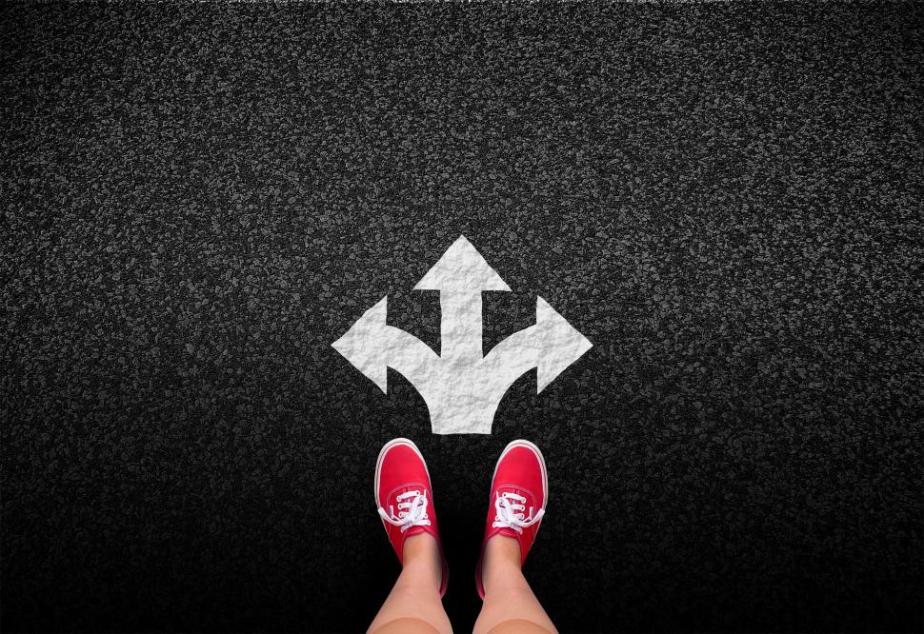
In life there are many avenues to go down, many paths to take, or not as the case may be. Some of these paths lead to dead ends and some to wonderful opportunities. The challenge we have is that we never know beforehand, for certain, if making a particular choice will bring a positive outcome or not. Each time we are stepping into the unknown. We can, however, as the saying goes, learn from our mistakes and use our experience to weigh up the options and make a decision. Some say we should go with our gut, with what feels right, but if this is not tempered with wisdom and experience then we will only be following our instincts, which are primed for survival, not necessarily leading a fulfilling life.
The unknown could be a new job, a new relationship, trying a new hobby or something that changes lots of things in our lives like moving to another town or city. We make these sorts of changes every day, but they still come with uncertainty and some anxiety. Each new change begins with a decision and leads to more decisions along the way. I would argue that no approach to making decisions is the best or the worst, as we each live individual lives and we are all individual people, but there are some things that can help when we are stepping into the unknown, which I will come onto in a moment.
Why do we step into the unknown?
However, first of all I would like to explore why we might feel the need to step into the unknown. It has long been part of the human spirit to push beyond our boundaries into uncharted territories. Human history is full of examples of men and women that have strived beyond the boundaries of their day to create new innovations and break records, whether this is manned powered flight or reaching the South Pole on foot.
For most of us such challenging goals are not things that we aim to do, partly because we are interested in other things and partly because we have commitments in our lives that need our attention and focus. That being said, we all have things that we are passionate about, things that we would happily do for free if time and circumstances permitted. This is the unknown territory that I want to talk about today, the venturing into the things that we are passionate about. Often, we don’t jump into our passions because we have responsibilities that we feel we must commit to or we lack the confidence to do so.
“…the past does not equal the future.”
More often than not we do not follow our passions because we have had bad experiences trying new things in the past and we think that the same thing will happen again. There is an important principle connected to this that I have recently being trying to apply in my life, which is that the past does not equal the future. A lot of people, including myself, are held back by failure, because based on past experience we expect to fail again. The problem is that we see failure as a negative thing because of our past experiences. If we accept that we will fail sometimes then we can employ all of the resources that we have to make it work and to succeed.
Not everything is instantly obtainable
We also live in a time when almost everything is instant. Whatever it is you want to buy, often there is an option to have it delivered the same day. We can do our banking on our mobile phones, we can send an email to someone and they will receive it a few seconds later, no matter where in the world they are. Innovation has made our lives a lot more convenient, but not easier. This is because we expect everything to be instant, but many of the important things in life take time and effort. For example, relationships take time and effort to become strong and durable through the ups and downs of life. It is the little moments of asking how someone’s day is going and caring about the answer, of engaging in small talk in the moments between doing other things. These things help to build strong, healthy relationships.
Too often we are spending time with people without spending time with them. I’ve seen couples in restaurants where they are both on their mobile phones and not looking at or communicating with the person they came to the restaurant with. It has become an accepted thing to do to scroll through our Facebook feed instead of making a connection with the person we are with. This has had a knock-on effect that means young people are finding it difficult to build relationships, because the social skills that are normally built up through trial and error as a child cannot be practiced if they are looking at a screen and not a person.
Failure also seems all the more magnified because if we expect something to be instantly successful, and we fall at the first hurdle, we give up. We are becoming conditioned for insecurity when we should be conditioned to fail our way to success. I guarantee that every successful person who is famous for their success has failed more times than most other people have. It is not about how many times you get knocked down, it is about how many times you keep getting up. Having this sort of mentality will enable us to stride forth into the unknown with the confidence to fail and try again.
For this to work, however, we need to have the right motivation. Wanting to be successful so that we can be rich is a motivation, but it will inevitably lead to an emptiness, because you cannot buy happiness. If, on the other hand, we want to be successful so that we can help more people live better lives, then fulfilment will be our reward. Motivation is key and it has to fit with our values and beliefs, this above all else is important, because to live a fulfilling life our thoughts, speech and actions should reflect what we value and what we believe.
Wisdom guides us
But where do our beliefs and values come from? They are manifestations from the culture and community we grow up in, the examples our parents give us and how they raised us, as well as the experiences that we have had. Through all of this input we piece together what we believe and what we value. All of this then effects the decisions that we make on a day to day basis, but I believe that if we are to make wise decisions in life then we should seek out wisdom, which can be found in any of the many religious scriptures, philosophical and secular texts from around the world. If we have wise guidelines or principles to follow, then stepping into the unknown will seem less scary. I suggest firstly analysing what is holding you back from stepping into the unknown and try to overcome it, through seeking wisdom and figuring out your beliefs and values. These things will guide you on your path. It helps to accept whatever is in front of you on your path and then figure out how to deal with it.
Something to reflect on:
Often what is holding us back is our own misguided beliefs and the baggage we carry from past experiences. Holding on to bad experiences weighs us down. Once we let them go we are more free to move forwards. This is not easy but essential if we are to live a fulfilling life.
 The Fullfilment Project