Suffering Is A Choice

As someone who suffers from chronic pain, I can tell you that our mood and the way we see the pain, makes it worse or better. The pain is still the same, but it feels less intense or more intense depending on our level of focus on it.

I have Fibromyalgia and it causes nerve pain in my joints and muscle across my whole body. Some days are better than others. I’m beginning to master the art of pushing the pain into the background and getting on with my day. It is possible, through practice, for you to do the same.

There is another type of suffering, the psychological kind. We often get attached to things, experiences and people and when we lose them we suffer. It is right to become attached to the people in our lives, but being attached to things like our mobile phone, our car, or our designer wardrobe, means that when they get a tiny amount of damage we suffer.

The none attachment that many eastern religions talk about does not mean that we must get rid of everything we own and live in a monastery, it means we have the things we need, but we avoid becoming too attached to them. It means we own these things and they don’t own us.

We can become attached to pain too, both the physical and the mental kinds. We avoid change and cling on to that which is predictable. Often this is the pain of a broken heart or the judgement of others or simply chronic pain. However, if we freed ourselves and stepped into the future without clinging to such things, then life will be brighter and better than ever before.

The Obstacle Is The Path

Today is referred to as Bonfire Night in the UK to remember the plot to blow up parliament by radical men who wanted to create change in their country. They saw the parliament as an obstacle to the country they wanted to have.

There is a Zen proverb which states “The obstacle is the path.” Guy Faulks and his men, who tried to blow up parliament, may have agreed with this proverb, but taking lives and destroying property is never the right path

What I think the proverb means is that when we face difficulties in our lives, such as writer’s block, overwhelming workloads, or social anxiety then we should lean into the difficulty. Freezing or running from our difficulties will only give them strength.

Make the decision to move towards difficulty and seek support from those around you, as well as upskilling yourself by reading books or accessing online resources. You will grow in confidence and the difficulty that was magnified by your mind becomes something you can break down into small chunks and you can find a way forward. Go, go and be your best self and you will get to the other side.

Means To An End

It is often said that a particular action or actions are a means to an end, usually meaning that the means are unpleasant or undesirable but they will lead to the end result that is wanted.

The problem with this well warn approach is that it is seen by many as an excuse for poor behaviour. There is also the assumption that the means by which we reach the end don’t really matter.

I would argue that the means are more important. We all need something to aim towards, otherwise we can go around in circles and not get anywhere. However, how we act will dictate all of our relationships. If we take take take from those around us, because it is a means to an end, then the relationships we have will break down and trust drops off.

What I am advocating for is what you might call morally right behaviour. It could also be called ‘being a nice person.’ Rather than seeing people as commodities to exploit, see them as human beings.

I am also advocating for you to do work that matters, work that lift others up and makes positive change in the world. It requires an infinite mindset not a finite one. It requires means with excellence.

Disagree More

Often we spend time with those we agree with on the majority of things we have an opinion on. This is good, in that we are spending our time with like minded people, but if we rarely disagree with anyone we can find it difficult to do so and maintain a positive relationship when a disagreement arises.

Social media also does not help with this for two reasons. Firstly, if we disagree with someone that we interact with on social media then we can find it easy to go on a full on rant, as we are not face to face with them, or we can ‘ghost’ them by unfriending and blocking them. An easy solution that does not resolve the disagreement.

Secondly, the content we see on social media is collated to show things similar to what we have liked, commented on and even spoken about within earshot of our device. Google is always listening. This is because the social media companies are selling our attention to the those who pay for it. Our attention is a commodity.

This creates a kind of echo chamber where we only hear our own views reflected back at us in the content we see. This removes the opportunity to develop the skills to disagree with someone respectfully, as many people spend more time online than they do interacting with people face to face.

My advice would be to spend more time interacting with people face to face and to practice disagreeing with them respectfully. Debate topics with people that you trust to be respectful back.

When the opportunity arises to give a different point of view, do it, because what you have to say may well be valuable. We learn more from each other through debate than we do through simply agreeing to avoid conflict. It is not an easy skill to master, but an essential skill to be successful in life.

Don’t Look For A Mentor

This is something that I picked up from Seth Godin. I have been watching a lot of interviews with him on YouTube and there are many wise insights to be had, and this is just one of them.

A lot of performance coaches and motivational speakers will tell you to go and find a mentor who is doing what you want to do and ask them to mentor you. The point Seth Godin has is that the number of people who could be mentors is small and the number of people who are looking for a mentor is high, so the likelihood of getting a mentor to support you is really low.

It is better to find Heroes. Find someone who is doing what you want to do and use the internet to find out what they had to do to get to where they are and reverse engineer your own success.

It is easier to find a ‘hero,’ or more than one, and the insights that their journey and daily practice can provide are freely available, if you do the research. This is a better approach because it has better odds of succeeding and you can do it today.

Sometimes people will use the excuse of not being able to find a mentor to let themselves off the hook, so they don’t have to do the demanding and scary work of putting themselves and their work out there into the world. Be brave, find a hero and do the work you need to do to move forward.

Being Together

Yesterday we went to a Halloween party as a family. The children played musical statues and musical chairs and everyone ate well, danced and had a great time. It was good to be with other people.

There is something special about coming together for a shared celebration and just having a good time. This is something that left a hole in our lives when such things were banned during the several pandemic lockdowns over last year and this year.

We thrive when we are part of a ‘tribe’ and we celebrate together. The shared experience solidifies relationships and helps us to feel as if we belong. To be happy, successful and ultimately fulfilled in life we need to belong and spend time with those in our tribe, our community.

Spending Time

In the UK between the last Sunday in March and the last Sunday in October Greenwich Mean Time goes forward one hour to take advantage of there being more light in the evening than in the morning during the Summer. Which means the clocks went back one hour today. The aim is to give the like of farmers more time to do their work during the Summer.

This moving of time and the hours of the day are agreed upon to allow us to all work to the same timescale. It is a practical use of the time that we have each day, by dividing it into portions that can be allocated and measured. This is without getting into the physics of relative Spacetime.

This brings up the point of how we allocate our time during each day. Many of us will spend a lot of our time on social media or watchng TV or a streaming service like Netflix, which could be seen as a good use of our time or not. A better question would be, is the quality of how we spend time good?

If you spend most of a weekend binge watching a series on Netflix the hours spent on that is high in quantity but I would argue that it is low in quality. Spending the weekend with friends, you could argue, is higher in quality. It depends on what you value, which is different for each of us.

Doing an audit of how we spend our time and thinking about the benefits of each thing we do can mean we move the arch of our lives towards a more meaningful existence.

Communicating With Others

Recently, Facebook, Instagram and WhatsApp stopped working and for many their world suddenly stopped, as they are all owned and operated by Facebook. To be fair it was a shock.

We think of the availability of these apps as a certainty, as if they will always be there, like the air or the sky, but they are just mobile and computer applications and technology does not always work.

There is an argument that we crave other people ‘liking’ or ‘sharing’ one of our posts or someone ‘follows’ us, as if our self worth is tied to it. I think it has more to do with the hit of dopamine we get when we get acknowledgement via a like, share or follow, and how addictive this is.

Many of us use these apps to communicate with others, but often we use social media apps as entertainment or to just sustain our attention, so we can switch off and not have to think.

The problem is that when we get absorbed into the infinite scroll we check out of reality for a while. All sorts could be going on around us but we would have no idea. This is the power of social media.

Communicating with each other is supposed to he done face to face with eye contact and hand shakes and pats on the back. When we spend a lot of time with our eyes down and our attention on a mobile phone we avoid the opportunities to develop the skill of socialising. The ability to make friends and influence people is a skill that is becoming more scarce due to the lack of practice.

I saw the Facebook, Instagram and WhatsApp outage as a blessing to unplug and socialise the old fashioned way. It also highlighted our dependency on technology and social media in particular. We need to rebalance ourselves and reduce screen time and increase actual facetime.

Building Trust

Technology is supposed to make our lives easier, and often it does. The difficulty comes when technology promises to make your life easier and then it does not deliver. This is kills trust.

I have a pre-payment electicity meter, which is a Smart Meter that is not so smart. I can top it up easily enough on the company’s website using my debit card and the promise is that it will reflect on my Smart Meter in my home within 60 minutes. It never does.

When you search for guidance on how to top up the meter manually, you find a video on the company’s website where a man gives instructions on how to manually top up the meter by entering a twenty digit number, one digit at a time.

Each number requires you to press the button repeatedly; eight times for a number seven and once for a zero, twenty times. The man even suggests, in his mannerisms and words, that this is a common problem.

The point I am making is not to have a moan about this poor service. My point is that the company appears to find it easier, and possibly cheaper, to make a video explaining how to manually top up the meter rather than fixing the problem to allow the meters to top up automatically once they are topped up online. This may benefit the company in the short term but trust is lost with their customers, which may be more costly in the long term.

This is a business relationship between a business and a customer, but the same can be said for personal relationships. A quick fix in the short term will not build a strong relationship. For example, you cannot buy trust, you must trust others and act in ways that allow others to trust you, this takes time and consistency.

As another example, if you said that you gave £10 to a homeless person this morning you might get a vague well done. If you said that you gave up your weekend to help paint a community centre then this will be much more respected. The point is that time spent helping others has more meaning and value than money spent, which is quickly done.

The very definition of money is that you are giving an IOU for someone else to provide goods and service in the future, it states this clearly on all bank notes. In effect you are passing the buck.

The fact that it takes time and energy to build trust is true in all human relationships.

The Power Of Asking

There is a saying, “If you do not ask you will never know.” This, you might say, is old school wisdom, but it is still wisdom.

Yesterday I was at work in a call centre and in the canteen area a lady was stocking up the vending machine. I decided to politely ask why they were not stocking the Hummus crisps and only had the standard potato crisps and chocolate options. They used to stock them but stopped. I asked as potato and chocolate unfortunately do not agree with me, but that is a tale for another time.

The lady said she would arrange to have some sent over from a larger call centre near by to stock the vending machine where I work. I thanked her and went on with my day. This story is not remarkable, but it got me thinking about the power of asking. If you are polite and clear with what you ask for, the person you are asking it from are more likely to say yes, if they can.

This applies in many areas of our lives where we are too scared to ask because of the dreaded word “No.” The world will not end if someone says no, it is simply not an option to get what you wanted from that person, and now you know. You could ask someone else or ask for something else, depending on what you need. It is not necessarily the end.

So, just ask, you never know what blessings you might receive.

Back To The Office

Many of us have been working from home over the last 18 months or so while we found a way through this pandemic. We are still in the midst of the pandemic, but it feels like we are closer to being free from it than we are in the middle of it. Over the past couple of months many of us who were office based before the pandemic are returning to the office, even if it is as part of a hybrid way of working, which means we are still working from home some of the time.

I work in a call centre and at my place of work we are using the hybrid model and yesterday was a day when we were all in the office and it felt claustrophobic and as if my senses were on overload. Going from working in a room on my own at home to being surrounded be people talking to customers and with each other felt like too much.

At the end of the day I wanted to relax and switch off, so I watched a film. The film I chose was the Superman film Man Of Steel. In this film it shows the Superman to be as a boy in school dealing with his hyper sensitive senses, seeing his teacher with x-ray vision, hearing talking and sirens in the distance, hearing the whispers of his class mates, etc. It got so much he ran and hid in a store room.

His solution was to focus on his mother’s voice, when she came to help him. He went on to practice and learn to manage and then master what he focused on. To me, even though it was just a film, to me this was a metaphor for how we can get used to being back in the office. It was initially strange to work from home and now it feels strange to be back in the office.

In the end we have an amazing capability to adjust and adapt, the human body is an adapting machine and this new way of working will become normalised. Think of it as an opportunity to develop your ability to adapt and still be effective at your job, and whatever else you put your mind too.

Re-Centre Yourself

Often in life we feel stressed or confused or just out of our comfort zone. In these moments we need to recentre ourselves.

In life we are on one long journey or many short journeys, depending on how you want to think about it. When we get into a primal state of stress or anxiety we need to stop, re-centre ourselves and look at what is ahead of us to decide our next step.

Re-Centre

If you use Google Maps on a mobile phone there is a feature that allows you to tap a symbol on the screen and the app uses the GPS on your mobile phone to bring the map to your exact location. Stopping and re-centring is very much like this, it is being mindful of your present, and moving away from thoughts about what has happened and what may happen.

We live most of our lives thinking about either the past or the future, and these thoughts are more often negative rather than positive. Being mindful and present will solve a lot of our problems and will usually reduce our anxiety.

Opt Out Of Negativity

Google Maps also has a feature where you can choose to avoid motorways or toll road, etc. In life we can also choose what we focus on. We can choose to begin with a new more positive belief about our capabilities or how the world works and opt out of the negative thinking. We can choose to believe that the universe is working for us rather than against us. These beliefs can fundamentally change our world view.

Change Your Beliefs

I heard an example recently of a successful entrepreneur that was out with some movers and shakers and felt that they didn’t belong there. This man was a believer in God and his life coach asked him why God would put him in the wrong place on a Friday night. This man suddenly realised that, to him, this would mean that he belongs everywhere he is. This is a fundamental shift in his world view. He changed a limiting belief to an empowering belief, because he realised that the limiting belief was untrue, more importantly he realised that the opposite was true.

It is almost always the case that our limiting beliefs are untrue. If we look at them and consider what the opposite belief would be and look for evidence of this belief, then we empower ourselves to move forward with confidence.

Don’t Quit, Adjust

When a plane sets off from an airport and the wind starts to push it off course the pilot doesn’t turn the plane around and land, so they can try it again. They adjust their altitude and direction to bring the plane back on course. Often in life we quit new ventures before we get very far because we have come across adversity. Here are some of the reasons why and how to keep moving forward.

Perfectionism

Often we feel that new ventures need to be perfect before we begin. Whatever it is that you want to do, the conditions will never be perfect. Sometimes the conditions are a serious hindrance and waiting is the right thing to do, but most of the time the conditions are fair but not ideal.

Hiding behind wanting things to be perfect is a way of avoiding getting started, because we fear failure. The problem is that every success requires failure, and if we build it into our process and we learn from it, failure can be the reason we succeed. So, whatever it is just start, take the plane into the sky and start your journey.

Fixed Mindset

When we come up against adversity, those with a fixed mindset will either keep pushing forward until they crash and burn or they just quit. A fixed mindset is built around believing that you are clever or beautiful or creative or anything permanent. A growth mindset is built around believing that you are hard working or a good problem solver. A growth mindset looks at a problem as an opportunity, a fixed mindset sees a problem as a barrier.

In basketball, when coming up to the basket, defenders will inevitably try to stop you, but once a player has placed both hands on the ball they have to shoot or pass. If a shot is not possible they will pivot, keeping one foot still, and look for another way to get the ball into the basket, they look for and find an opening to another player. When life throws up barriers, see them as an opportunity to find another way and pivot.

Have A Goal

An example that Simon Sinek gave illustrates this well. If you were asked to walk in a straight line and after a few steps I put a chair in front of you then you would likely stop in your tracks. However, if I asked you to walk to the corner of the room and after a few step I put a chair in front of you then you would likely walk around the chair and keep going.

The point is that when we have a clear goal the method we use to get there can be flexible and adversity causes us to rethink our strategy rather than stopping all together. The strategy we use should never be fixed, it should be flexible, and the goal should be fixed.

Integrity Matters

There are two types of integrity. The first means that you do what you say you will do, to yourself and to others. This could be seen as just being reliable, but if it is done as a matter of principle, then, for me, it falls into integrity, rather than reliability.

The second is living by your values and beliefs. This is being kind, even to those who treat you badly. It is finishing what you started, because you always do. It is a path less travelled, but an honourable path to walk down. In a social media filtered, fake it til you make it culture, living by your values and beliefs is unusual, but essential.

Empowering Yourself

The idea of karma is something that often divides people, though many in the western world don’t spend the time to consider its implications, as they are more familiar with the monotheistic religions. I personally do believe in karma and I was thinking about it recently and I had a couple of insights that are relevant for everybody.

My understanding of karma is twofold, my present circumstances are a result of my past actions and my response to my current circumstances will result in my future circumstances.

If you find yourself in a good situation, you could think to yourself ‘I earned this.’ If you find yourself in a bad situation, you could think to yourself ‘I earned this.’ Owning your current situation based on your past actions is powerful. Thinking this way about bad situations could be seen as a negative thinking pattern, but not if you apply the second insight.

After considering your current situation, ask yourself ‘what do I do now to make things better?’ This will mean that you respond to the situation rather than reacting to it. You are asking yourself to put together a plan of action, you are empowering yourself to own whatever situation you find yourself in and move forward. This opportunity is always available, no matter what your present circumstances are.

Finding Your Passion

There is a lot of talk, particularly from motivational coaches, around finding your passion. Some will give the advice that you should do what you love. This is advice I am inclined to disagree with because there is a danger that you will turn what you love into work that you hate to do. There are two other ways to think about this.

Find Your Why

Simon Sinek explained this very well in his book Start With Why. The idea is that once you have figured out the ‘Why’ behind all that you do, the DNA of your decision making and how you treat others, then you can apply this to ‘How’ you live or work and ‘What’ you do, based on your ‘Why.’ This will allow you to be more passionate about what you do because it will be aligned with who you are.

Be Passionate About What You Do

Seth Godin suggests that if we choose to be passionate about the work we are already doing we are empowered by the act of choosing and it is better than expecting the work we do to give us passion. We will be doing what we choose to do, not what we have to do. The narrative changes.

We can then put our energy into making a difference and creating things that were not there before we decided to do them, and we will also be more fulfilled than we would by trying to do what we love.

I feel that both of these approaches are valid and some mixture of the two will certainly be better than doing what you love.

Be A Hero Not A Superhero

I came across this note I made in my journal some time ago and felt it may resonate with some of you.

I was having a dream that felt like it was happening, but I also knew it was a dream. I was part of a team of superheroes trying to stop bad guys doing something bad, I can’t remember what. I clearly remember a lady I used to work with, who has just had her second child with her husband, appearing in a corridor as I was about to go into ‘battle’.

She said “do you have any milk I could borrow.” I stopped and calmly said, “of course, it’s in the fridge down the corridor on the right.” I then joined the other superheroes to save the world or something. The revelation for me is that when I calmly gave my previous colleague what they needed, this was me being who I am, someone who helps others, not a superhero. This is enough for me.

Also, to help others in simple ways can sometimes make us a hero without intending to be one.

Be Unmistakably You

Doing something for the first time is scary, more so for some and less so for others, but it is still scary. So what we often do is settle for copying how it has been done before. We feel safe on this already trodden ground. But doing the same thing as others have done, or are doing, is rarely of significant use of our time; it does not often improve the lives of others, or ourselves.

Steve Jobs and Steve Wozniak took the idea of using a mouse and being able to move things around on a computer screen and put an Apple personal computer that almost anyone can use into people’s homes, where before in order to use a computer you had to learn to code or use the keyboard to navigate through endless DOS menus by picking option 4, then option 23, and so on.

This changed the world. It is not that Steve Jobs and Steve Wozniak were special people, it was that they pushed their thinking until they got to the boundary of what was deemed as possible and stepped beyond it, because it is beyond this boundary that things of use are created. If we do things as they have always been done we never find a better of doing them. I am not saying that you need to be a Steve Jobs and Steve Wozniak, what I am saying is that what they decided to do was a choice, a choice that we all have.

We often fear the embarrassment and the risk of going first, but those we hold up as exceptional did something new, whether it be Steve Jobs or Steve Wozniak or the painter Jackson Pollack or the author Harper Lee, who wrote To Kill A Mockingbird, they had not done what they did before they did it. They were unmistakably themselves, and what I am inviting you to do is to be unmistakably yourself. Not similar to those you wish to fit in with or different from the people around you that you disapprove of. It is to be unmistakably you.

How To Live A Good Life

I have been thinking recently about how we often hide from taking responsibility for our own journey through life. This story illustrates what can happen if you don’t take ownership. It is a made up tale, but it has a good point.

In a valley there was a town that was starting to be flooded. A van pulled up in front of a man’s house and offered to take him to safety, as they were evacuating the area. He said, “No, God will save me.” When the water level rose up to the first floor of this man’s house a boat came by to take him to safety and again he said, “No, God will save me.” When the water level had reached the rooftop a helicopter came to take the man to safety but again he said “No, God will save me.” The man drowned and when he went up to Heaven he got quite cross with God and asked him why he did not save him. Of course God said, “ I sent you a van, I sent you a boat and I sent you a helicopter.

The moral of the story is that we need to take responsibility for our own journey through life, to be our own rescuer. We also need to be our own cheer leader and take that which scares us as a sign that perhaps it is the direction that we should move in; to do the thing that rhymes with our true selves. To do the work of figuring out what our calling is and go all in on bringing it to life. This is the life long work of living a good life.

The Power Of Imagination

We suffer more in our imagination than we do in reality. This happens to many of us more often than we would like. We look into the future, or the future we think will happen, and we lean towards the worst case scenario. Our brains are wired to do this as a survival mechanism, but it is, I would say, the main cause of stress in people’s lives.

The way to avoid this is to pay attention to our thoughts and find the beliefs at the root of the thoughts and examine them. Most often they will be untrue and if the belief is untrue then some form of the opposite must be true. What then would this look like? If this new belief is true then what actions should then be taken?

Following this process will move you from a disempowering state to an empowering one. If you do this over and over you will change your belief system and the future will look less scary. You will then be able to imagine the future that you do want and how you might act, what you might do and how you might feel.

Your brain does not know the difference between your imagination and reality, so the future you imagine is more likely to come true, because your beliefs dictate your thoughts which influence your actions which cause your results, which reinforce your beliefs, and on it goes. Your future is yours to create.

Dare Greatly

I would like to begin this blog post with a quote from the American president Theodore Roosevelt.

“It is not the critic who counts; not the man who points out how the strong man stumbles, or where the doer of deeds could have done them better. The credit belongs to the man who is actually in the arena, whose face is marred by dust and sweat and blood; who strives valiantly; who errs, who comes short again and again, because there is no effort without error and shortcoming; but who does actually strive to do the deeds; who knows great enthusiasms, the great devotions; who spends himself in a worthy cause; who at the best knows in the end the triumph of high achievement, and who at the worst, if he fails, at least fails while daring greatly, so that his place shall never be with those cold and timid souls who neither know victory nor defeat.”

I became aware of this quote when watching a talk by Brené Brown. Prior to the recent talk I watched, she did a TED Talk called The Power of Vulnerability, which I recommend you watch. The TED Talk went viral and inevitably the trolls of the internet began commenting with personal attacks rather than listening to the very wise content of the talk. Brené Brown stumbled on to this quote after reading the horrible comments about her.

Since then she has decided that if you are not in the arena getting your arse handed to you, if you are not putting your work out there, then she is not interested in your feedback. What I would like to advocate for you is that you do two things. Firstly, have the courage to dare greatly and secondly, to ignore feedback from those who are not daring greatly themselves.

The Dangers of Seeking Reassurance

I have been think lately about why we seek reassurance before we step into doing new things or things that have creative risk and something happened to me this week which illustrates my thoughts on this. I work in a contact centre in a business park and walk for 15 minutes to catch the bus home. Now there are two buses with the same number which stop at my bus stop, one of the buses ends part way along the route and the other goes to where I live.

One bus came by so I waved it down to check if it was my bus, but it was the other bus that I needed, which promptly arrived and overtook the bus I had waved down and drove on by. While sitting at the bus stop waiting 40 minutes for the right bus to come by again I was thinking about why we seek reassurance and I realised that what I had done is outsource responsibility for knowing which was the right bus to the bus driver of the wrong bus.

If I’d have taken ownership of finding out which was the right bus, I could have checked the details on the bus stop timetable and compared them to the details on the front of the bus and could have been at home eating my dinner at the time the next correct bus arrived at the bus stop.

This to me illustrates the consequences we pay for seeking unnecessary reassurance that the thing we want to do is the right thing to do. Not taking responsibility for things in our lives, because we are worried about failing or choosing the wrong path is always the wrong path. We miss opportunities and we are left waiting for others to help us, or save us in some cases. No one is coming to save you, you have to save yourself and those around you will support you on this journey.

No one will give you the perfect answer as to what you should do either, because they are judging it based on what they would do, and they are not you. We need to make a choice and go try it, whatever it is. If it doesn’t work and we fall on our faces, we have learned something. The trick is to know that you will always pick yourself up and try again. A bird does not avoid landing on a tree branch because it is worried that the branch may break, if they did they would never land on a tree branch. A bird’s faith is not in the branch not breaking, it’s faith is in the ability of it’s own wings.

5 Rules On How To Build Trust

Trust is one of those things that can be hard to actively create with other people. We have all built trust with those we spend a lot of our time with, whether they are family, friends or colleagues. The longer we spend with people the more opportunity there is to build trust, so we often trust our friends and family more than we do our colleagues. However, trust is vitally important if we are to work and live together well.

Here are a few rules to follow in order to build trust with others.

Firstly, trust must be shared and we must go first. Always doing what you say you are going to do does not make you trustworthy, it just means that you are reliable. We must give people a certain level of responsibility over something important to us and leave them to do it. The more you do this the more the person feels trusted. They will then trust you with something and on it goes.

Secondly, if someone trusts you to do something or to keep something secret, you must do so, every time. This is the second part of the human covenant that is trust. It must go both ways. Over time the process builds strong trust.

Thirdly, gossip is a trust killer. When someone gossips to you about someone else it does two things; you know that they will share other people’s personal lives and their secrets behind their back to gain attention and that they will likely do it behind your back too. If you gossip you will not be trusted.

Fourthly, the giving of trust should not be given regardless of whether the trust is honoured. Sometimes you can trust someone over and over and the person proves themselves untrustworthy. At some point you need to draw a line in the sand and withdraw your trust. When trusting someone begins to effect your wellbeing it is time to withdraw that trust.

Fifthly, all people should not be trusted equally. The nature of human relationships is that each is unique. This involves differing levels of trust with different people. This is normal, and you should not feel that everyone should always be trusted. Trust is an aspect of a relationship and rules one to four should be applied in each relationship.

How To Deal With Change

“Be like water making its way through cracks. Do not be assertive, but adjust to the object, and you shall find a way around or through it. If nothing within you stays rigid, outward things will disclose themselves. Empty your mind, be formless. Shapeless, like water. If you put water into a cup, it becomes the cup. You put water into a bottle and it becomes the bottle. You put it in a teapot, it becomes the teapot. Now, water can flow or it can crash. Be water, my friend.”

– Bruce Lee

We are in a time of the year that we associate with change, the season of Autumn, when we see leaves turn vibrant colours before falling. The Autumn equinox was on 22nd of September, where the length of the day matched the length of the night and it signals the change from Summer to Autumn. It is the mid-point between the Summer and Winter Solstices. Although change is a constant, it is not so clearly expressed in nature as it is in Autumn.

In day to day life change can be seen when cups of tea or coffee go cold, when children become adults and then become old and the future all to quickly becoming the past. It is a fact of life that things will always change, yet often our experience in life is that some things seem to stay the same. This is usually because the change of these things is slow. Yet over a long enough time-line key features of a generation often seem very familiar. The fashion of today seems a little reminiscent of fashions of the past, which I suppose is to be expected, after-all fashion is an aspect of culture, which defines itself by what has come before, either by being different from it, or being the same as it, and it appears to me that the same fashions come around again every twenty to thirty years, in an ever changing cycle, which goes back again and again to where it came from, though is never exactly the same as it was the previous time, or the time before that. This idea is put well in the book Hagakure, The Book of the Samurai. It says this:

“It is said that what is called “the spirit of an age” is something to which one cannot return. That this spirit gradually dissipates is due to the world’s coming to an end. In the same way, a single year does not have just spring or summer. A single day too, is the same.

For this reason, although one would like to change today’s world back to the spirit of one hundred years or more ago, it cannot be done.”

We often wish that things could be as they were when we were younger, or we wish we could go back to a time in our lives when things were better, but, we always look back at our pasts with rose tinted glasses, and if we did go back, I suspect that it would not be as good as we think it would be, and this would ruin the memory we have of that time. Our perspective of the memories that we have changes too, as we experience new things and gain new understanding of the world around us. This all gives us new understanding of our memories as well, which in turn changes the memories we have. There will certainly be memories from the past 18 months that we would prefer to forget, if we could.

From the perspective of many religions from the East, the present is all that exists, and the past only exists in our present mind, there is only the now, which is itself eternal, because it is always here, yet that which exists always changes in a constantly evolving moment. However, that is not to say that memories are not to be treasured, of cause they are. We all have photo albums documenting our lives and the lives of those we care about. Some of the first baby photos of me that my parents showed to my Wife were those in which I was not wearing any clothes, or I had covered myself in food. Photos are put into albums, not only to be treasured by ourselves, but also so that we can easily show them to other people, and in doing so, share the experiences we had. After-all, life is to be shared, is it not? These moments that our photo albums document are themselves, often, moments of change, the first day of school, all dressed up in our school uniforms, our birthdays, weddings, christenings and so on, these are all times in which we were once one thing and we became another. All very personal moments in our life stories.

On a larger scale, all the changes that occur in the culture around us are a kind of background noise, in comparison to these personal changes that each of us make, or have thrust upon us, each day.  For me personally, getting married was not that much of a change, because my Wife and I carried on happily as we did before we were Mr and Mrs, though the wedding day itself was joyous. Becoming a father was much more of a change for me, and demanded a few inner changes to how I saw the world, as well as some changes to how I lived my life, which is continuing to evolve. This is all a natural part of being a parent, as well as wanting our children to be happy and healthy, no matter what changes life might throw at them.

It can be difficult to walk the fine line between fearing change and embracing it, especially after how devastating the COVID-19 pandemic has been in some people’s lives, through losing loved one, losing regular income with the loss of a job or being separated from those we love. We truly do not know what is around the corner in life, but we do need to find balance in all the potential and real chaos. In Taoism, they have the symbol of the Yin and Yang, which is very familiar to most people. It is a circle with one black part and one white part, each of which has a spot of the opposing colour within them. The general principle behind this symbol is that in every good there is bad and in every bad there is good, if you look for it, and that life is constantly an interplay moving back and forth from good to bad and back again. If we understand that this is how life operates, then finding balance to navigate the events of life can be very beneficial. If we put all of our energy into one thing in our lives, even if it is good, other areas in our lives suffer and eventually the thing we are investing our time in stops being so good for us too.

Equally, if we worry about the bad things that are, or might, happen, then our life also gets out of balance. It is like navigating a boat through the waters of our lives, with one leg on the port side and one on the starboard side. If we tip too much one way or another, then we fall in. Finding balance means checking in with ourselves every day to see if we are looking after every part of our lives. Cultivating our relationships, working hard at work, taking care of our family, managing our finances, focusing on our spirituality, etc.

There is another concept you may have heard before, the concept of flow. The state you are in when everything you are doing is effortless and time disappears, because you are fully engaged and really enjoying what you are doing. In Taoist thinking this is referred to as Wu Wei, the art of non-action. To our Western ears this sounds paradoxical, but it has finally sunk in in my head recently and I finally get it. Wu Wei is flow, it is effortless action, it is doing, not worrying or planning or speculating, it is the act of just doing. Put another way, the art of non-action is to embrace flow instead of effort to achieve a result. Living life through Wu Wei is, as Bruce Lee said in the quotation at the top of this blog post, being like water. He said, “Be like water making its way through cracks. Do not be assertive, but adjust to the object, and you shall find a way around or through it.” And with many Eastern things, this is an art more than a science. My advice would be to try to do everything that you are doing with joy, and then this flow state will be more accessible. As Sadhguru, a Guru from India, has said “Anything you do joyfully is always effortless.”

When big changes appear in our lives, the more flexible we are in our thinking, the easier it will be to manage the challenges each big change brings. Some changes are thrust upon us, as we have experienced, they are things that are out of our control, and we have to some how deal with them in the best way that we can, by focusing on what is in our control, which includes choosing to be in a joyful state. These times of major change are times that will test our characters, they will highlight the strengths we have, and tell us how strong we are inside.  The paradox of Wu Wei is that being humble and flexible is stronger than being full of ego and rigid when we want a positive outcome.

For those of us that are not strong in difficult times, such as a tragedy or a pandemic, there are others, to whom we turn, that are strong and who support us through these hard times. We all have people like this in our lives, perhaps you are the person to whom those around you turn when they need a strong pillar to support them. If you are such a person I commend you, because without people like you many of us would not be able to cope. However, you also need to have people around you to whom you can turn in difficult times.

At the end of reading this blog post you will get on with the things you have planned for today, the rest of the week, and the rest of the year. The seasons will change from Autumn to Winter to Spring to Summer and back to Autumn again, the sun will rise and set as it has for millions of years and change will continue to affect our lives. How we choose to respond to the changes we each face is up to us, but I hope that most of the changes in your lives are for the better and the changes that are hard to bear are lessened by those around you, those who care about you, and those you care about. These are the consistencies that allow us to deal with the changes that life throws at us.

I would like to end with another quotation about Autumn, by Albert Camus. “Autumn is a second spring when every leaf is a flower.” 

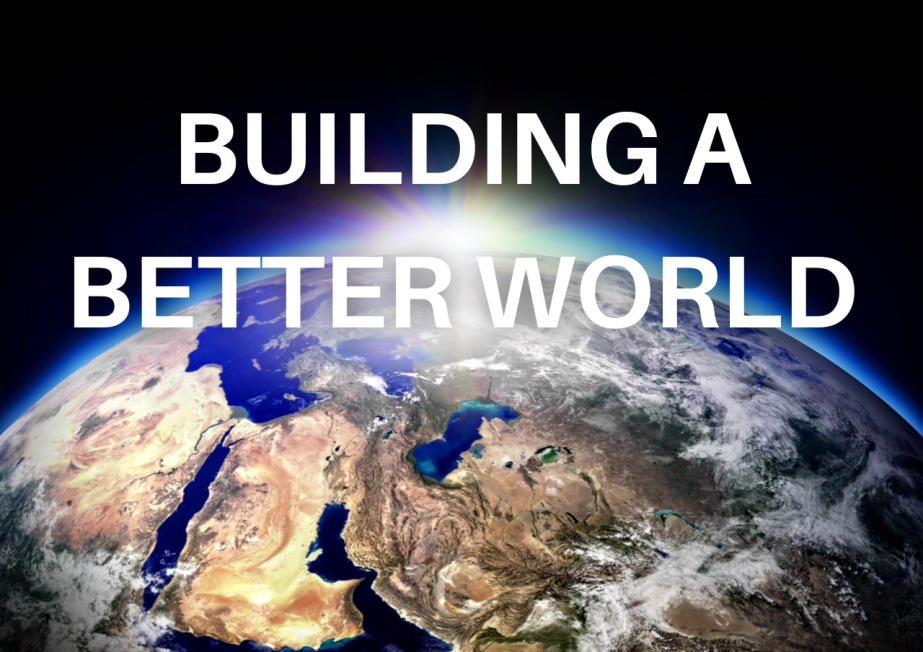
Building A Better World

“Follow your dreams and use your natural-born talents and skills to make this a better world for tomorrow.”

– Paul Watson

This Summer saw the long awaited 2020 Tokyo Olympics, which was an unusual state of affairs, without the spectators. However, it gave a chance for the people of each country to see their Olympic champions battle it out for the highly held Olympic medals. After the way the 2020 Euros lifted the spirits of the nation, there was a hope that the Olympics could keep the national excitement going. In the end more people watched the Tokyo Olympics than did the Rio 2016 Olympics. Records were broken and Britain came a respectable forth in the medals table, which is all pretty positive. Positivity is in great need after the past 18 months and the uncertainty of coming out of the imposed social distancing guidelines, which has left us all feeling a little unsure how to interact with each other in the new normal.

The Olympics have long been held up as the bastion of sportsmanship, of unity in diversity and of excellence. Curious to see the principles behind the organising of the Olympics, I looked up the Vision of the International Olympic Committee, which is “Building A Better World Through Sport.” A worthy vision, and one which is shown in their Values of Excellence, Respect and Friendship. And this got me thinking about how we can make the world a better place after the COVID-19 pandemic put a pause on much of society’s habitual behaviours. During the pandemic the kindness of strangers and the capacity to care flourished amongst neighbours and strangers alike. The concept of Key Workers redefined for many of us who plays an important role in our society and who does not. There was initially talk about going back to normal after the pandemic, or rather a new normal, and it is this idea of a new normal that I want to focus on today.

If we can better choose how we can interact with each other, how we can live together and how we can connect with each other, then this seems like a good time to do it. We can take up the cause of the Olympics of ‘building a better world,’ but not just through sport, but through how we see each other and how we interact with each other. This thing called life is a shared journey from cradle to the grave, but we are capable of lifting each other up, so we may all live better lives.

To illustrate what I am talking about I would like to share a story I saw online recently about a Police Officer in America who pulled a young man over, as his driving licence had expired. The young man explained that he barely had enough money to pay the bills and his rent and could not afford to renew his licence, due to losing his job. He was also on his way to a job interview, in the hope to gain an income and eventually get his licence renewed. The Police Officer left his own car and drove the young man to the job interview and apologised to the Interviewers as he was the reason the young man was late for the interview. The young man got the job and was able to renew his licence in order to legally drive again. Sometimes kindness matters more than the letter of the law. It also matters more than the prejudices and stereotypes that we all have which prevent us from seeing others as equal to ourselves and therefore worthy of kindness.

It is also important to remember how connected we all are. The COVID-19 pandemic showed how our movement around the world can cause diseases to spread, but we can also share our behaviours, our ideas and our values. Kindness and generosity are also infectious. Mother Nature has provided a way to encourage us to be kind and generous. This is how we thrived as a species, by working together. If we are to be generous or kind to someone else without any expectation in return we get a hit of Oxytocin, which makes us feel good. The person we are generous or kind to gets a hit of Oxytocin as well, which means they will likely go and be generous or kind to someone else that day. Even a person just witnessing an act of generosity or kindness will give them a hit a Oxytocin and will encourage them to pay the generosity or kindness forward. We are hard wired to do this, because we are stronger together.

To further show how connected we all are on our planet, here is something from a TV series on Netflix called Connected that blew my mind. It is in the episode on Dust and how important certain dust can be. In Chad, North Africa, in what used to be Lake Mega-Chad, but is now part of the Sahara Desert, there are the remains of fish and other creatures, which once lived in the lake, before the area became a desert. The wind breaks up the skeletons into dust which is then carried by the wind up into the atmosphere and it makes its way all the way to the Amazon Rainforest, in South America, where the dust becomes part of the soil. What is amazing is that the rain in the rainforest washes away most of the nutrients that the plant life needs to grow and survive, but the dust all the way from the Sahara Desert in Chad, North Africa, replenishes it. Around 22,000 tons of phosphorus is deposited in the Amazon Rainforest every year from Lake Mega-Chad, which is about the amount the soil loses every year due to rainfall. Without this process happening, there would be no rainforest. We are truly, globally connected to every other ecosystem on the planet. This is why when we through things away, there is no away. We need to look after our planet as well as each other.

The environmental movement, which includes Greenpeace, sprung to life after a very special photograph was taken when “Apollo 8, the first manned mission to the moon, entered lunar orbit on Christmas Eve, Dec. 24, 1968. That evening, the astronauts-Commander Frank Borman, Command Module Pilot Jim Lovell, and Lunar Module Pilot William Anders-held a live broadcast from lunar orbit, in which they showed pictures of the Earth and moon as seen from their spacecraft. Said Lovell, “The vast loneliness is awe-inspiring and it makes you realize just what you have back there on Earth.” They ended the broadcast with the crew taking turns reading from the book of Genesis.”(1) As they orbited back around the moon toward the Earth the photo Earth Rise was taken as the view of the Earth in the distant blackness of space rose into view over the surface of the moon, which is seen in the foreground of the photo. The sense that if we do not take care of our planet their is no planet B reverberated through the cultures of the West and the rest of the world.

We have now reached a point where taking a trip up to where the Earth’s atmosphere meets outer space is becoming a reality for those who can pay for it. There has been much debate online about the recent endeavours of Billionaires like Sir Richard Branson to develop “rocket planes” that can take people up the edge of space. Sir Richard Branson was the first to have “…successfully reached the edge of space on board his Virgin Galactic rocket plane”(2) recently. The main argument against such endeavours has been why build a rocket plane to take people to the edge of space on tourist trips when there are millions who are homeless, starving and displaced due to war. There are also issues with global warming. It is an argument over priorities and values, over selfishness and selflessness. Tickets to take the Virgin Galactic up to the edge of space cost up to £180,000, again money that could be spent helping our fellow human beings. I guess the main ill feeling comes from the disproportionate distribution of wealth and the fact that there are billionaires in the world where much good can be done if this wealth was shared. If a tenth of the wealth held by the Billionaires of the world was spent on helping those in need, the quality of life for many would be improved. Access to water, electricity and education, for example.

But we are not all Billionaires, far from it. Most of us have enough to survive and a little bit more to save or spend on nice things. This begs the question what can we do to make the world better? If we are to go back to the Vision of the International Olympic Committee, “Building A Better World Through Sport,” we can think about what Vision we might have for our lives. If your Vision began with “Building A Better World Through…” what would come next for you? I would suggest you build a better world through kindness. Kindness to the environment and kindness to the people we interact with each day.

However, it is not always easy to be kind, especially if we are asked to be kind to those we really do not like. In the Bible Jesus asked us to Love our Enemies? You might not think in terms of ‘enemies,’ but you will have people you would rather avoid, people you dislike. How do we build the capacity to be kind to those people? A good place to start is to work on the prejudices and stereotypes we all have, on the barriers we have that create an us and a them, so we can start seeing each other as human first, and then we can increase our generosity and kindness on a daily basis. The more people we are generous and kind to the more people will do the same for others. And you will feel so good at the end of the day.

Reference:

1: https://www.nasa.gov/multimedia/imagegallery/image_feature_1249.html

2: https://www.bbc.co.uk/news/science-environment-57797297

Finding Contentment

“Be thankful for what you have; you’ll end up having more. If you concentrate on what you don’t have, you will never, ever have enough”
― Oprah Winfrey

When thinking about contentment and what to talk about in this blog post I thought about what makes me content. I thought about my wife and daughters, the books that I read, how I feel when I am painting pictures, and then I started thinking about things that make me laugh, things that make me smile. Contentment, as a subject, is a big subject to tackle in something as short as a blog post, but I thought that it was also an important subject to talk about too, especially after the stresses and changes, the grief and the trauma that we have had to deal with over the past 18 months.

So, what then can be the solution to the age-old problem of how to be content? If we are all different people then how can there be one answer to this problem? Many different people have tried to come up with an answer, each with a different perspective on the issue, often driven by their theological or philosophical beliefs. Some we know to be powerful spiritual figures such as the Buddha and Jesus, others were, and are, just philosophers trying to answer the question of how to be content. The rest of us, generally, just try to make the best of things. With all of the difficulties we each face in our lives it is hard to find the time to philosophise about the ways and means of finding contentment. For the majority of us we spend our days working hard to have money to pay the bills and the rent, or mortgage, hoping to have a little left over at the end of the month to treat ourselves, and the ones we love.

Yet, somewhere in the busyness that is our lives we do find some time to set aside to enjoy ourselves, whether it be spending time with the kids, going for a drink with friends, a walk in the woods or just staying in to watch something on the TV, we all do somehow manage to find time to enjoy ourselves a little. This time spent relaxing and enjoying ourselves is greatly necessary for us to go on functioning in the jobs that we do and the responsibilities that we have, we need to laugh and play and get back to the things which make us who we individually are. But is this contentment or is it just making the best of things?

I would say that we can find moments of contentment in these periods of relaxation and enjoyment. We have all, I think, or at least I hope, had moments when we’ve paused and thought ‘my life is good right now, the good things outweigh the bad things and I am happy.’ An attitude of enjoying the small thing in life can be a useful attitude to have, as it helps us deal with the big problems we all face. The old saying ‘The best things in life are free’ is in a similar vein, and is good advice, often given by parents, or grandparents, to children who want things that are expensive and well advertised on the TV.

That being said, contentment can seem a complicated or difficult state of mind to achieve. But perhaps it isn’t contentment that is complicated but ourselves. Perhaps it is our own complications that can make it so difficult for us to achieve contentment, consistently. We have many thoughts running through our minds each day, as well as many emotions, either flaring up, such as anger, or lingering, such as sadness. There is a constant flow of both thoughts and emotions, almost like a river, which swells and runs dry over and over. With such turbulent minds it is no wonder that we find it difficult to settle and be content.

People also deal with things differently. In any situation there are those who are totally emotionally involved, and as a result their emotions jump up and down with the ups and downs of life. Others do not engage their emotions very much at all, and so are quite detached from any ups and downs that life throws at them. We all know people that fit either of these types of behaviour, and we know people who are both negative about life and those who are positive. I can be beneficial to think about how positive or negative we are to life’s us and downs. 

How we feel about our lives is often caused by our reactions to the events within it. Our reactions to the events of life are the responses that our brains throw up almost without us thinking about it, they are habits that we have formed over our whole lifetime. For example, if we disagree with something do we get angry very quickly and say the first thing that comes to mind, while we are angry, or do we take time to create a considered argument to explain how and why we disagree. If something bad happens to us do we react emotionally, getting angry or upset about our favourite cup getting broken or missing the bus to work, or do we think that the cup was only a thing and can be replaced and even though we missed our bus there will be another one along soon?

Things are only good or bad depending on how we see them. Roger Walsh M.D., Ph.D. put it well when he wrote “We do not see things only as they are, but also as we are.” If you think about that for a moment it is actually quite profound. This is only a quotation, but if you think about it in a wider context you could say that everything we see, or even experience, is coloured by the way we are at the time, how we are feeling, if we are tired, if we are in a rush or taking our time. This might be an obvious point that I am making but it is something we often forget when we are reacting to things that happen to us, because we are reacting. But if we remember that what we are experiencing from moment to moment is affected by how we are in those moments then we have a better chance of dealing well with the ups and downs of life, and I would say a better chance of being content as well. This is consciously choosing to be in a beautiful state, not an angry state or a stressed state, but a beautiful one.

Talking of beautiful states, the Euros 2020 final was a big moment in my home country’s footballing history, where England made it to the final of the Euros, something many football fans thought would never happen. Prior to the result of the match, the mood of the nation had been lifted, whether you enjoy football or not, the positivity has been infectious and we have been living in a happier state, generally, until of course we lost in penalties again. But we must remember that both Italy, who we faced in the final, and England have had a really difficult time during the pandemic and the joy we felt in both of our nations up to the final, and more so for Italy now, mark a new chapter in our national stories, it is a great contrast to the suffering we have had. The deeper the turmoil the higher the joy and the better we can choose to live; this is also true even when our football team does not win. And with the Olympics starting in Tokyo I hope each nations spirits will be lifts as they follow their athletes who are competing.

In order to be more content it is perhaps better to act instead of react, by which I mean taking control of the moments before we react so that we can make better decisions in what we say and what we do, in response to any situation. There is a Buddhist Mindfulness practice called the Three Minute Breathing Space to be used when we feel angry or stressed about something. The practice consists of stopping what you are doing and taking some slow and deep breathes for three minutes, or less if you like. It is a quick time out from the stresses of life, which can help enormously if you live particularly stressful lives. Practices like this can reduce stress and give us the presence of mind to avoid reacting to situations without thinking about what we intend to say or do in response to them.

We all have ways that help us de-stress, ways that we have developed through out our lives, hobbies that we have chosen to do, activities that are part of our daily routine, which are enjoyable and fun. But, these things are rarely structured activities as part of a path to find contentment, they are the things that make life enjoyable and fun, when it can be. There is nothing wrong with making the best out of life and enjoying it as much as possible. In many ways I would say that this is a road to contentment itself, but for those that want a more structured approach to finding contentment there is religion or a spiritual path. Here are some words on contentment from the some of the great religions of the world.

The Buddha said: ‘Contentment is the highest wealth.’ (Dhp.204), meaning that when we are content we do not need to get anything, go anywhere or be anything to be happy because we already are, and thus, contentment is more valuable than any possession or accomplishment. The Buddha describes the monk’s contentment like this: ‘He is satisfied with a robe to cover his body and alms food to satisfy his stomach and having accepted no more than is sufficient he goes his way, just as a bird flies here and there taking with it no more than its wings.’(D.I,71).

In the Bible, in the book of Timothy 6:verse 6-8 it says:

“Now there is great gain in godliness with contentment, for we brought nothing into the world, and we cannot take anything out of the world. But if we have food and clothing, with these we will be content.”

In Yoga, in the Hindu tradition, there are the Niyamas, ten ethical guidelines, which are the foundation of skillful living, or living in a morally good way. The second Niyama is called Santosha, or Contentment, and the expectation is this:

Nurture contentment, seeking joy and serenity in life. Be happy, smile and uplift others. Live in constant gratitude for your health, your friends and your belongings, Don’t complain about what you don’t possess. Identify with the eternal You, rather than mind, body or emotions. Keep the mountaintop view that life is an opportunity for spiritual progress. Live in the eternal now.

This is all good advice, and it makes it clear to me that on the road to contentment a spiritual path can be beneficial, because we are given advice on how to live in order to be content. There is a direct relationship between the directions given and the attainment of contentment, as many who have followed spiritual paths have stated in the past.

But what about those of us who are making the best of things, those of us that have busy lives spent doing what we can to provide for our families and ourselves, and follow our own spiritual paths when we can. Life can be difficult, and keeping a calm perspective on things when life doesn’t always go to plan is not an easy thing to do. I recommend using the wisdom of the many religions of the world, and the wisdom of those around us, our friends and family as well, they are our helpers, they sustain us as we sustain them. Our paths through life are also greatly helped by the enjoyment of life itself, our pleasure in the small things, and not wanting more than the world has allowed us to have. I believe it is a blessing to be alive at all, everything else is a bonus.
Craving Connection

“We are like islands in the sea, separate on the surface but connected in the deep.”
― William James

Connection

As you will have heard numerous times over the past year, these are unprecedented times where a virus has infiltrated our communities, causing much devastation and causing us to be separated from each other. With the success of the vaccination role-out in the UK we are beginning to ease out of the lockdown, and many have flocked to go shopping or to go for a freshly pulled pint, often queuing for a very long time to feel a bit more normal, and to restore a part of ourselves lost when isolated at home. Other countries, unfortunately, are still struggling to tackling this virus. I hope and pray that they get the support they need from the rest of the world. What we have longed for during this pandemic has been connection, connection with others where we share the same space and time together. We have craved the feeling of spending time around others. In the UK and other countries, as we move out of the lockdown we will be able to do this more and more, all being well.

I think we will see more and more that people will connect remotely through Zoom, or other software, moving forward, as necessity has highlighted the benefits of it. People have had job interviews and begin to work, without ever having met their new colleagues face to face. Doctors appointments have been done over the phone, or video call, when needed. Companies have started to build teams to work on projects regardless of where the team members are located. Many who follow world faiths are connecting via Zoom. Muslims who are fasting are breaking their fast each night with others via Zoom. Some who have been marginalised by religious groups are finding those in these religious groups are connecting with them during this lockdown. Remote connection has brought flexibility and opportunity where it was not their before. When a crisis affects us all, the best of us will always see others as human first.

However, we must reflect on what will be left behind if we are to take advantage of this new way of connecting. Human beings, for thousands of years have survived and thrived because we are inherently social creatures. We need hand shakes and hugs, eye contact and presence, we need to spend time in the company of those we care about. Without this vital physical connection depression and feelings of isolation will go up. Remotely gathering for worship or a quiz has been a Godsend in comparison to isolating ourselves at home and not seeing anyone other than those we live with. But once we can again gather in the real world, we should not exclude this for the wonders that technology provides.

Feeling Connected

That being said, it is also important to remember that we are all, always connected. We are all part of an interconnected web of life. We can be both individuals and drops of water in the same ocean, each with a place and each essential to the place of others. This is something to reflect on in this time where we are physically separated. We are still all connected, through belief in God, through the oneness of the universe, and through connecting to nature. Many of us have spent more time in our gardens or going for our daily exercise in nature, to connect to something greater than ourselves, and something unaffected by this pandemic. It is comforting to see that Spring is still rising as it has through the metronome of the seasons throughout the existence of our planet earth. To know that nature is still blossoming and new life is beginning all around us can bring some peace to us at this time.

The seasons that return time and time again each year affect each of us, but not always in the same way. For example, during the months of Winter a homeless person experiences this season very differently from those who have a home. When I was living in Liverpool some years ago, around November time, I was heading to our local mini supermarket and spotted a homeless person sat outside. It was a man who was sat against the outside bin crying. A lot of people were walking past him, avoiding eye contact. I decided to stop and have a conversation, and possibly cheer him up a bit. He told me that it was his birthday and he was 40 years old and there was no one he could share it with. He also told me that he was on a waiting list for a hostel, but he had to wait 12 weeks, just as Winter was beginning. I told him to stay where he was and went into the shop to buy him some food. I also went home and filled a bag with warm clothes and a woolly hat and gloves to get him through the cold months ahead until he could move to a hostel. Much like the Good Samaritan in the Bible reading we heard earlier, what I did was not extraordinary, it was simply a willingness to connect with another person in need and providing the help they needed; it is the ability to be compassionate and empathetic.

Prejudice and Peace

When we decide that there are some we do not want to engage with we are choosing not to connect with them. Many do this across cultural, political and religious lines, some across country or county lines, and some between the homeless ad the rest of us. The prejudices and assumptions we have about others divide us and prevent the possibility of connection, which may greatly enrich our lives. However, when we appreciate that we are because others are, that we all Inter-are, then we open the possibilities for collaboration and we cross pollinate ideas. The value of whole the human race is always greater than any one part of it.

And on that note, I would like to end with an extract from a book called Stillness Is The Key by Ryan Holiday. A small book full of wisdom.

“The less we are convinced of our exceptionalism, the greater ability we have to understand and contribute to our environment, the less blindly driven we are by our needs, the more clearly we can appreciate the needs of those around us, the more we can appreciate the larger ecosystem of which we are a part.

Peace is when we realize that victory and defeat are almost identical spots on one long spectrum. Peace is what allows us to take joy in the success of others and to let them take joy in our own. Peace is what motivates a person to be good, to treat every other living thing well, because they understand that it is a way to treat themselves well.”

Something to reflect on…

Our relationships are the glue that holds our lives together. They need our attention and care if we are to avoid loneliness.

Choosing Joy

“I don’t think of all the misery, but of the beauty that still remains.”
― Anne Frank

Recently I have been suffering with what appears to be Sinusitis and Labyrinthitis, which has caused sinus pain, painful ears, dizziness and Tinnitus for the past four months. I have been through several stages of dealing with this seemingly unending suffering. First I thought that it cannot last that long. Then it did and I became somewhat unhappy and a little depressed about it. Then I remembered the words from Man’s Search For Meaning by Viktor E Frankl, “Everything can be taken from a man but one thing: the last of the human freedoms – to choose one’s attitude in any given set of circumstances, to choose one’s own way.”

I began to seek out reasons to be joyful. I work in telephone customer services, so I speak to a lot of people. Some of which, as is normal in customer service, are unhappy and take it out on you. I began asking customers how their day was going and having really lovely conversations about the ups and downs of life living through a pandemic. I focused on how lucky I am to have a Wife and Daughter, to still have my parents, to wake up each morning. The pain, dizziness and noise in my ears remained constant, though subdued through medication periodically throughout the day, but my attitude to how I was physically feeling changed. I decided not to let how I was physically feeling determine how I was mentally feeling. This helped a lot, I began to feel that there is a way to master how we choose to feel each day, joy being the best feeling to aim for.

I then moved into a phase that was reflective. I reflected on how I miss silence and being pain free. I realised that the simple things in life are really important. The ability to sit and meditate without the constant buzzing of Tinnitus will be something that I will savoir once I recover from whatever is going on in my sinuses and ears. It is important to be grateful for everything that we have, as well as the tough experiences we have. The valleys we go through serve to highlight the euphoria of the mountains we climb. We all have, to varying degrees, the ability to choose how we want to feel, by choosing what we focus on. If we are unwell do we focus on how that is making us feel or do we focus on still having the ability to do the things we enjoy, even if the illness reduces these options. We all have the ability “…to choose one’s attitude in any given set of circumstances, to choose one’s own way.”

How To Make The Best Out Of Life

“One way to get the most out of life is to look upon it as an adventure.” William Feather

How do we make the best out of our lives? This is an age-old question that has seen many different suggested ways of achieving it. I believe that we find this question so hard to answer because we have grown up in a world that favours things more than relationships. If there is a scale of what makes people happy, I believe there would be relationships at the happy end and things somewhere towards the other end of the scale. I’m not saying that things can’t make us feel good; buying a new car, a new piece of clothing or a new mobile phone can make us feel good, but this is not happiness. This is a good feeling created because our bodies release dopamine, a hormone released by the brain.

Whenever we achieve something or we get something we want, our brain releases dopamine to make us feel good. This is partly how our ancestors survived, because finding food or a mate felt good, making us want to do it more and more, it is a survival mechanism. There are many other hormones that our brains release in different situations, causing us to be in different states, whether we are anxious or angry, sad or hungry, the state we are in can dictate how we behave and what we do or say. What state we are in matters, and I believe that we can, to some degree, affect what state we are in, by choosing what we focus on and how we respond to the circumstances that we find ourselves in.

If we let our circumstances dictate our lives, we will be like a ship without a rudder or a sale, and we may be thrown against the rocks by our circumstances. To illustrate this, I have an extreme example of how some, even under the most horrendous circumstances, can choose how they respond to these said circumstances. Viktor Frankl, a Jew, who survived being an Auschwitz concentration camp inmate, imprisoned by the Nazis during World War Two, years later wrote the book Man’s Search For Meaning, a reflection on his time in the concentration camp. Viktor Frankl’s experience and his training as a neurologist and psychiatrist gave him a unique perspective on finding meaning in the worst of circumstances.

In this book he wrote “We who lived in the concentration camps can remember the men who walked through the huts comforting others, giving away their last piece of bread. They may have been few in number, but they offer sufficient proof that everything can be taken from a man but one thing: the last of the human freedoms — to choose one’s attitude in any given set of circumstances, to choose one’s own way.” This is an extreme example, as I have said, but I believe what was said in the quote applies to any human experience. Some circumstances will undoubtedly make it very difficult to “choose one’s attitude,” but I believe that this is the key to making the most out of our lives and how we can lead a happy life rather than the opposite. I know from personal experience that this is not easy, but with practice it is possible.

Another example from history is that of Nelson Mandela, who is famous for memorising the poem Invictus, which was read to you earlier, and how the poem helped him stand when all he wanted to do was lie down, during his time in prison. On the first day he arrived at the prison on Robben Island, that would become his home for the majority of his 27 years in prison, he insisted that the guards address him as Mr Mandela, he would not respond to anything else. In the end, the guards gave in and did so. Nelson Mandela chose his attitude to the circumstances and demanded to be treated as an equal. 27 years later, as he was released from prison, becoming a free man, he realised that if he continued to hate those who imprisoned him, he would never be free. He decided to forgive, and in doing so he lead the whole country as its President to peace through forgiveness.

Choosing one’s attitude to the circumstances we find ourselves in is a powerful way to get the most out of life, it puts us in the driving seat of our lives. It allows us to respond to circumstances rather than react to them. One way to do this, that I have found helps me, is to focus on being grateful for as many things as possible. Grateful for having a family, for having a home, for the air I breath, for the relationships I have, for the challenges that test my patience, for opportunities that life sends my way. It is very hard to be angry and grateful, or sad and grateful.

If you are lucky enough to be born in the western world you have effectively won the lottery. There are countries where the citizens do not have access to the Internet or the government controls the media they have access to and people can be executed for things we take for granted in our day to day lives. These are extreme examples but they are true. A large percentage of the world’s population live on less than £1 a day. In comparison, many of us live a dream life. So, perspective can be a great motivator to become more grateful, and gratitude is a powerful force that can bring happiness to your life.

Sometimes life can seem to give us challenge after challenge to the point where we struggle to keep ourselves going. The impact of the Coronavirus pandemic have brought us many struggles, financial and social, many have lost loved ones or have felt the difficulties of isolation, as we keep our distance from each other in order to keep each other safe. Sometimes life can seem out to break us, but what can keep us strong is the relationships we have. Our strength often comes from other people, others pick us up when we are knocked down by life and we pick up others in the same way. We all live in a community of human connections. We may sometimes feel that we have to go on alone, to stand strong by ourselves, but just asking for a little help can change our whole perspective on what is happening.

Sometimes, when life becomes hard, we can feel that we are not making any progress, we might be making little steps forward towards our goals, but because they are little steps they don’t feel significant. However, baby steps still count, as long as we are moving forward. When life is hard we can end up focusing on the negative, which does two things, it can make us feel miserable and it can mean we miss opportunities that come into our lives. This is when we need to consciously focus on the positive and to create an opportunity mindset, which everyday looks for opportunities. You may believe in God, you may believe in Karma, you may believe in luck, but if we don’t see the opportunities that come into our lives then we will miss out. This reminds me of a story I once heard about a flood that left a man stranded on the roof of his house, surrounded by water. A man came past the house in a small boat to help people to safety, but the man refused the help and said, “God will save me.” Then a helicopter came to pick him up and again he refused saying “Gods will save me.” Soon the water level rose above the house and the man drowned. When he went up to heaven he asked God “Why did you not save me?” and God said “I tried, I sent you a boat and I sent you a helicopter.” Sometimes we need to open our eyes to get the most out of life.

Some say that religion can help you live a good life, which I believe is partly true, it depends on how you apply the teachings of the religion. Most religions have good teachings, but like in the Biblical reading, if the teachings are taken to heart, they do form a strong foundation for our lives. The teachings of the world religions invariably preach forgiveness, gratitude and love, they promote the necessity of community and that we should be generous in spirit, these are the ways in which we can make the most out of our lives. We all know this, but we do not always put it into practice. I am guilty of this myself, as we all are, but if we try every day to be better than we were the day before, then we can make our lives a wondrous experience, full of hope and joy, of friendship and love. We can create a community that includes as many people as we choose to include.

Our lives are not just our place of worship community, our job community, our family and friends community, we often live at the intersection of the relationships we have with others, but this is not a bad thing. The best in life exists on the boarders of two neighbouring places, just look at the edges of jungles and open land, or where fresh water meets the sea. Life thrives in these places, and it is the same in our own lives. Our relationships are in a way the framework of our lives. Our beliefs are our foundation and both are needed to be strong enough to withstand the storms of life. Let us all strive to be grateful and generous, joyful and respectful, loving and open to new opportunities, and focused on building positive relationships with those in our lives.

Gratitude For What We Can Give

“Remember this: Whoever sows sparingly will also reap sparingly, and whoever sows generously will also reap generously.”

Bible, 2 Corinthians 9; 6

Thanksgiving

I have been reflecting this past week on what it is that we can be grateful for, given that we, and so many others, have suffered under the pervasive effects of the Coronavirus pandemic. Primarily, this will be the good health of our family and friends, though we have been separated from them, in many cases. Traditionally, at this time of year we would bring in the crop and store it away for the Winter months, and we would give thanks for the harvest we have received. We would thank God for the blessings of nature and take pride in the work of the community to plant and tend and harvest the crops. It is a time of thanksgiving, as it is referred to across the pond in America.

I am also reminded that the turning of the seasons and the times of the year that certain plants grows and come to their fullest occurs without human involvement, but we have harnessed the cycles of nature to our advantage through farming year after year, working with nature to sustain our community, which is now a global community.

It has been an unusual year this year, to say the least, with many of us having to adjust to staying at home, working from home, and being away from our loved ones. It has tested us, individually and as communities. Many have stepped up and supported others in this time of crisis, with neighbours doing the weekly shop for those who have had to self-isolate,  activities have been set up using Zoom, and other online platforms, to allow us to connect, if only virtually, and many raising money and showing support for our incredible NHS, who have above and beyond the call of duty during this pandemic.

Generally speaking, we no longer have the need to plant, tend and harvest crops as a community, so much of our food is sourced from around the world, and we only need to buy the food we need from the supermarket or local shops. In that sense we are out of touch with nature, our lives are not so integrally connected to the ebb and flow of the seasons as they used to be. Our source of food is not dependent on us having worked to produce it, only having the money to pay for it.

Sharing What We Can

Something that has been difficult for some as their hours at work have been reduced or stopped all together, and many have been furl-owed, causing an uptake in those needing to access Food Banks. I recommend that when you are doing your shopping in the supermarket that you buy extra non-perishable goods and put them in the Food Bank baskets on your way out. We are in this together, and if we can share the food we can buy with those who cannot afford to, then we should. We are never a divided society, unless we choose to be, and the greatest we can be is when we take care of the least of us, so we may all thrive.

What has amazed me over these many months of the pandemic is the extraordinary generosity of spirit that has prevailed. The kindness and the love shown by people. There has been fear and confusion. There was panic buying and there was conspiracy theories, as there still are, there are some that like to see division in the world, because they can profit from it, but the vast majority of us have become our better selves, we have risen to the moment. And if we are talking about what we have been able to reap from this year, I think the community spiritedness of the many across the world is something to be extremely grateful for.

Harvest time is also a key time of the year, the changing of the season from Summer to Autumn. The apparent dying back of nature and the transition to the cold, dark and wet Winter months to come. For me it is a reminder that change is constant in our lives, but as Autumn always proves, the journey is beautiful. Even Winter has it’s own beauty, as do all the seasons.

The Cycles of Life

We can also think of our lives in seasons, as we often do, saying that someone is in their Autumn years, for example. What is interesting about this metaphor is that the seasons are cyclical, they go in a cycle, from Spring back around to Spring again, for millions of years, long before the Human species appeared on the Earth. Our lives, though appearing to be linear, have cycles within them. Our relationships begin and end and new ones begin, our careers often begin in one field and change to another, we have significant parts of our lives that teach us important life lessons, causing a wiser understanding and a new way of living. The Native American Indians see life as a circle. In the words of Black Elk, from the book Black Elk Speaks,

“You have noticed that everything an Indian does [is] in a circle, and that is because the Power of the World always works in circles, and everything tries to be round… …Everything the power of the world does is done in a circle. The sky is round and I have heard that the earth is round like a ball and so are all the stars. The wind, in its greatest power, whirls. Birds make their nests in circles, for theirs is the same religion as ours. The sun comes forth and goes down again in a circle. The moon does the same and both are round. Even the seasons form a great circle in their changing and always come back again to where they were.

The life of a man is a circle from childhood to childhood, and so it is in everything where power moves. Our teepees were round like the nests of birds, and these were always set in a circle, the nation’s hoop, a nest of many nests, where the Great Spirit meant for us to hatch our children.”

Native American Indians see their Elders as returning to a kind of childhood, with their wider vision and fewer boundaries on things. The wisdom of the Elders then being passed onto the younger members of their tribe. There is something to be learned from thinking of our lives as moving in circles, much like the metronome of the seasons, which pre-dates us and will continue to circle around long into the future, as the earth circles the Sun and the Moon circles our planet Earth.

Together Is Better

Much of what has helped us get through this pandemic thus far has been the wisdom of collective responsibility, the fact that the least of us is just as important as the rest of us. It has been revealed that those some saw as lesser, who work in customer services, have been essential in this pandemic, and that they always have been. Without them, how could we buy the food that we need. Also, those that have delivered what we have needed, food and other things. Many of these people that keep society working. All people should be given respect, compassion and empathy. A “thank you” and a “good afternoon” can raise the spirits of someone, especially during times such as these.

Along with collective responsibility, there is also the idea that sometimes we plant the seeds of trees in the knowledge that others will benefit from their shade. We sow the seeds knowing that the harvest will be enjoyed by others. Giving without expecting anything in return. A lesson we can take from this harvest time of year and the way many have risen up to help others during this pandemic. If we all thought in this way, relinquishing the need for our actions to have some self-interest, what a world it would be. This is the path of all spiritual seekers, the path of altruism.

Something to think about…

Think about what it is that you have been given, and what of that you can share with others.