The Obstacle Is The Path

Today is referred to as Bonfire Night in the UK to remember the plot to blow up parliament by radical men who wanted to create change in their country. They saw the parliament as an obstacle to the country they wanted to have.

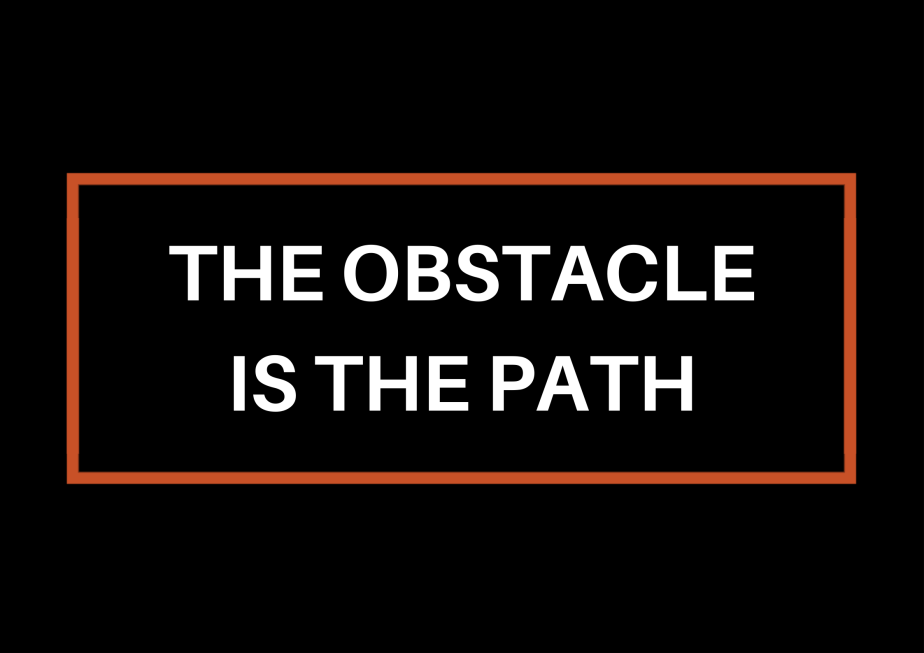
There is a Zen proverb which states “The obstacle is the path.” Guy Faulks and his men, who tried to blow up parliament, may have agreed with this proverb, but taking lives and destroying property is never the right path

What I think the proverb means is that when we face difficulties in our lives, such as writer’s block, overwhelming workloads, or social anxiety then we should lean into the difficulty. Freezing or running from our difficulties will only give them strength.

Make the decision to move towards difficulty and seek support from those around you, as well as upskilling yourself by reading books or accessing online resources. You will grow in confidence and the difficulty that was magnified by your mind becomes something you can break down into small chunks and you can find a way forward. Go, go and be your best self and you will get to the other side.

Finding Contentment

“Be thankful for what you have; you’ll end up having more. If you concentrate on what you don’t have, you will never, ever have enough”
― Oprah Winfrey

When thinking about contentment and what to talk about in this blog post I thought about what makes me content. I thought about my wife and daughters, the books that I read, how I feel when I am painting pictures, and then I started thinking about things that make me laugh, things that make me smile. Contentment, as a subject, is a big subject to tackle in something as short as a blog post, but I thought that it was also an important subject to talk about too, especially after the stresses and changes, the grief and the trauma that we have had to deal with over the past 18 months.

So, what then can be the solution to the age-old problem of how to be content? If we are all different people then how can there be one answer to this problem? Many different people have tried to come up with an answer, each with a different perspective on the issue, often driven by their theological or philosophical beliefs. Some we know to be powerful spiritual figures such as the Buddha and Jesus, others were, and are, just philosophers trying to answer the question of how to be content. The rest of us, generally, just try to make the best of things. With all of the difficulties we each face in our lives it is hard to find the time to philosophise about the ways and means of finding contentment. For the majority of us we spend our days working hard to have money to pay the bills and the rent, or mortgage, hoping to have a little left over at the end of the month to treat ourselves, and the ones we love.

Yet, somewhere in the busyness that is our lives we do find some time to set aside to enjoy ourselves, whether it be spending time with the kids, going for a drink with friends, a walk in the woods or just staying in to watch something on the TV, we all do somehow manage to find time to enjoy ourselves a little. This time spent relaxing and enjoying ourselves is greatly necessary for us to go on functioning in the jobs that we do and the responsibilities that we have, we need to laugh and play and get back to the things which make us who we individually are. But is this contentment or is it just making the best of things?

I would say that we can find moments of contentment in these periods of relaxation and enjoyment. We have all, I think, or at least I hope, had moments when we’ve paused and thought ‘my life is good right now, the good things outweigh the bad things and I am happy.’ An attitude of enjoying the small thing in life can be a useful attitude to have, as it helps us deal with the big problems we all face. The old saying ‘The best things in life are free’ is in a similar vein, and is good advice, often given by parents, or grandparents, to children who want things that are expensive and well advertised on the TV.

That being said, contentment can seem a complicated or difficult state of mind to achieve. But perhaps it isn’t contentment that is complicated but ourselves. Perhaps it is our own complications that can make it so difficult for us to achieve contentment, consistently. We have many thoughts running through our minds each day, as well as many emotions, either flaring up, such as anger, or lingering, such as sadness. There is a constant flow of both thoughts and emotions, almost like a river, which swells and runs dry over and over. With such turbulent minds it is no wonder that we find it difficult to settle and be content.

People also deal with things differently. In any situation there are those who are totally emotionally involved, and as a result their emotions jump up and down with the ups and downs of life. Others do not engage their emotions very much at all, and so are quite detached from any ups and downs that life throws at them. We all know people that fit either of these types of behaviour, and we know people who are both negative about life and those who are positive. I can be beneficial to think about how positive or negative we are to life’s us and downs. 

How we feel about our lives is often caused by our reactions to the events within it. Our reactions to the events of life are the responses that our brains throw up almost without us thinking about it, they are habits that we have formed over our whole lifetime. For example, if we disagree with something do we get angry very quickly and say the first thing that comes to mind, while we are angry, or do we take time to create a considered argument to explain how and why we disagree. If something bad happens to us do we react emotionally, getting angry or upset about our favourite cup getting broken or missing the bus to work, or do we think that the cup was only a thing and can be replaced and even though we missed our bus there will be another one along soon?

Things are only good or bad depending on how we see them. Roger Walsh M.D., Ph.D. put it well when he wrote “We do not see things only as they are, but also as we are.” If you think about that for a moment it is actually quite profound. This is only a quotation, but if you think about it in a wider context you could say that everything we see, or even experience, is coloured by the way we are at the time, how we are feeling, if we are tired, if we are in a rush or taking our time. This might be an obvious point that I am making but it is something we often forget when we are reacting to things that happen to us, because we are reacting. But if we remember that what we are experiencing from moment to moment is affected by how we are in those moments then we have a better chance of dealing well with the ups and downs of life, and I would say a better chance of being content as well. This is consciously choosing to be in a beautiful state, not an angry state or a stressed state, but a beautiful one.

Talking of beautiful states, the Euros 2020 final was a big moment in my home country’s footballing history, where England made it to the final of the Euros, something many football fans thought would never happen. Prior to the result of the match, the mood of the nation had been lifted, whether you enjoy football or not, the positivity has been infectious and we have been living in a happier state, generally, until of course we lost in penalties again. But we must remember that both Italy, who we faced in the final, and England have had a really difficult time during the pandemic and the joy we felt in both of our nations up to the final, and more so for Italy now, mark a new chapter in our national stories, it is a great contrast to the suffering we have had. The deeper the turmoil the higher the joy and the better we can choose to live; this is also true even when our football team does not win. And with the Olympics starting in Tokyo I hope each nations spirits will be lifts as they follow their athletes who are competing.

In order to be more content it is perhaps better to act instead of react, by which I mean taking control of the moments before we react so that we can make better decisions in what we say and what we do, in response to any situation. There is a Buddhist Mindfulness practice called the Three Minute Breathing Space to be used when we feel angry or stressed about something. The practice consists of stopping what you are doing and taking some slow and deep breathes for three minutes, or less if you like. It is a quick time out from the stresses of life, which can help enormously if you live particularly stressful lives. Practices like this can reduce stress and give us the presence of mind to avoid reacting to situations without thinking about what we intend to say or do in response to them.

We all have ways that help us de-stress, ways that we have developed through out our lives, hobbies that we have chosen to do, activities that are part of our daily routine, which are enjoyable and fun. But, these things are rarely structured activities as part of a path to find contentment, they are the things that make life enjoyable and fun, when it can be. There is nothing wrong with making the best out of life and enjoying it as much as possible. In many ways I would say that this is a road to contentment itself, but for those that want a more structured approach to finding contentment there is religion or a spiritual path. Here are some words on contentment from the some of the great religions of the world.

The Buddha said: ‘Contentment is the highest wealth.’ (Dhp.204), meaning that when we are content we do not need to get anything, go anywhere or be anything to be happy because we already are, and thus, contentment is more valuable than any possession or accomplishment. The Buddha describes the monk’s contentment like this: ‘He is satisfied with a robe to cover his body and alms food to satisfy his stomach and having accepted no more than is sufficient he goes his way, just as a bird flies here and there taking with it no more than its wings.’(D.I,71).

In the Bible, in the book of Timothy 6:verse 6-8 it says:

“Now there is great gain in godliness with contentment, for we brought nothing into the world, and we cannot take anything out of the world. But if we have food and clothing, with these we will be content.”

In Yoga, in the Hindu tradition, there are the Niyamas, ten ethical guidelines, which are the foundation of skillful living, or living in a morally good way. The second Niyama is called Santosha, or Contentment, and the expectation is this:

Nurture contentment, seeking joy and serenity in life. Be happy, smile and uplift others. Live in constant gratitude for your health, your friends and your belongings, Don’t complain about what you don’t possess. Identify with the eternal You, rather than mind, body or emotions. Keep the mountaintop view that life is an opportunity for spiritual progress. Live in the eternal now.

This is all good advice, and it makes it clear to me that on the road to contentment a spiritual path can be beneficial, because we are given advice on how to live in order to be content. There is a direct relationship between the directions given and the attainment of contentment, as many who have followed spiritual paths have stated in the past.

But what about those of us who are making the best of things, those of us that have busy lives spent doing what we can to provide for our families and ourselves, and follow our own spiritual paths when we can. Life can be difficult, and keeping a calm perspective on things when life doesn’t always go to plan is not an easy thing to do. I recommend using the wisdom of the many religions of the world, and the wisdom of those around us, our friends and family as well, they are our helpers, they sustain us as we sustain them. Our paths through life are also greatly helped by the enjoyment of life itself, our pleasure in the small things, and not wanting more than the world has allowed us to have. I believe it is a blessing to be alive at all, everything else is a bonus.
Making The Most Of Lockdown

“The oak fought the wind and was broken, the willow bent when it must and survived.”
― Robert Jordan

Challenging Times

It looks like it might be here again in England, full lockdown. We will find out this week, when Parliament debate it. At the start of this week panic buying began again, made worse by the sudden need to Christmas shop, just in case the lockdown continues into December. The fear and the loneliness. The uncertainty and the financial stress. These are challenging time.

Some might say that having a bit more time to ourselves could be used for self-development or devoted to a hobby or passion. It is not so easy if we are worrying if we can pay our bills or our rent or mortgage. However, sometimes deepening a spiritual practice or devoting time to an activity we love can heal the soul, just a little.

Can Escapism Help?

I am not saying that meditating more or finding a hobby will solve everything, but it can certainly help. These sort of things do bring a form of escapism, in some cases, and in others can bring meaning to the experiences we have, both good and bad. Much in religious literature, for example, is guidance on how to deal with suffering.

Mostly, we do not have the time to devote to such nourishing activities, because life has a way of becoming busy. We take on responsibilities in order to progress and our personal lives can be filled with family time and relationship time. Often time for personal activities is at the bottom of our priorities. The irony is often that more focus on doing what we care about or what we love brings more joy and meaning, and we become better and more productive at the other stuff in life.

Attitude Is Everything

Lockdown could be seen as forced imprisonment and restrictions, but on the flip side it can be seen as more available time, time being a resource that cannot be replaced. Even if your finances are becoming uncertain or insufficient, or you are separated from your loved ones, finding something creative or fun or spiritual can build some resilience and lift your spirits.

In life one of the few things we have control over is our attitude to our present circumstances. Something that Viktor Frankl writes about in their book Man’s Search For Meaning, which recounted their experiences as a prisoner in Nazi concentration camps. Some prisoners would give up where as others would go around making sure everyone was as comfortable and reassured as they could be. They chose a mission, to take care of those around them, and it got them through the horrors they were facing.

Our attitude to our circumstances is our first line of defense against despair and depression. If we chose to take care of those around us, whether friend, family, colleague or acquaintance, we choose to make our situation and theirs better. If we choose to use our time wisely, when a lockdown provides us with more of this finite resource, our life becomes fuller and nourishing. 

Conclusion

We can find a way forward, no matter the apparent bleakness before us. So paint, draw, dance, learn, share, sing, build, pray, meditate, contemplate the meaning of things, use your time constructively and this part of your life will be the beginning of better tomorrows.

Lockdown Blues or an Opportunity in Disguise

“There is no power for change greater than a community discovering what it cares about.” – Margaret J. Wheatley

The global pandemic we know as the Coronavirus has had a wide ranging impact on the lives of so many across the world, on our health, our wellbeing and our finances, hitting some much harder than others. Many of us have had to go into self isolation, due to illness or being at high risk. Schools have closed and children are being educated at home through the wonders of the internet. Many adults are also working from home via the internet as well or have lost their jobs and some companies will not survive this pandemic. The way we do everything, including basic things like our shopping, has changed. These are challenging times.

Every Challenge is an Opportunity for a New Possibility

When challenges arise in our lives we really have two ways of looking at them, either to look at the negative impact of the challenge on our lives and how we feel or to look at the things the situation can teach us and the opportunities it provides. Resilience is built on overcoming adversity. If you are in lockdown, imposed by your government, or in self-isolation, as you are following the sensible advice to stay at home, this is an opportunity to reconnect with what is important in your lives and reevaluate your priorities.

Panic at the Supermarket

Panic does not help in situations like this. Panic buying hurts others and therefore it hurts us. When we panic we go into a fight or flight mode of thinking, which only helps when you are in immediate danger, and it should end once that immediate danger is gone. Generally speaking, we are not in immediate danger, this very moment, there is not a tiger about to eat us or a madman with a gun pointed at us, we are in a dangerous situation that requires reasonable steps to keep ourselves and others safe, so we should follow the advice of our Government and health care system.

If those in our society that are supporting us through this pandemic cannot get what they need to live, how can they help us to get through this. Equally, if we are ignorant of the sensible measures we need to implement, then we put ourselves and others in danger. For example, there are some in America who have said that as they are Christian and are covered in the blood of Jesus they are able to go to church with lots of other people and they cannot see that they could get sick or pass the Coronavirus on to others.

I have no issues with the beliefs of others, people can believe what they want, but when people’s actions could cause hurt to others then this is not good. One reaction to a situation like the one we find ourselves in is to dive into our beliefs in religious teachings to make us feel less afraid. The problem here though is that, if taken to an extreme, it is all focused on the individual, the fear makes us selfish and irrational. Part of me does not blame these people for being hijacked by their fight or flight system, but actions do have consequences, and ignorance is no excuse.

Good Health Is Foundational

As we all know our health is important. I would say that our health is central to our entire wellbeing and should be a daily focus, not just when a pandemic hits the fan. We can take this pandemic as a trigger to turn our attention to our health, and if you have to stay at home you have more time to focus on improving your diet, and your physical, mental and energy health. Take up yoga, meditate, go for walks or runs, journal your experiences and take the time to improve your overall health, to either recover from an illness or prepare your body to fend off whatever illnesses you may have to come, even if they are not a global pandemic. We have access to pretty much the entire culmination of human understanding on every topic via the internet. We have to be careful to make sure we check the sources of information when we get it online. I would advise checking at least three different sources to see if they agree, and remember that Wikipedia can be edited by anyone.

Recentre and Recalibrate

It is also a chance to find ourselves again, to spend time with ourselves away from the normal busy lives we lead. To look at our priorities, what we care about and what we should not bother with. It is a perfect time to look at defining our Why, as well as our values and beliefs, as I mention in my Fullfilment Framework. To do some self reflection and set some goals. We do not normally get so much time to do this sort of thing.

Some of you are ‘Key Workers’ and may not have the same time available because you are literally saving lives and supporting our economy, but the effect of this pandemic will be massive on all of us and, like all traumatic situations, we can be crippled by it or rise to the occasion and become better versions of ourselves. All those who are helping others at this difficult time I salute you, you are the best of humanity and the guardian angels that we all need right now. If you are not a Key Worker then please do what you can to support your neighbours, family and friends, and if advised stay at home.

Necessity is the Mother of Invention

We have all had to change how we connect with others, primarily via the internet. Zoom has become and invaluable way for people to connect. Teams at work, exercise classes, spiritual groups, you name it we are gathering together via Zoom. Facebook groups and email groups are exploding into a ferver of interaction to discuss the pandemic and support each other. Positivity is bringing so many people together. It is strange to feel so much community spirit without physically spending time with others, but the best of humanity is coming out to play and it is awesome. I am currently playing a game of chess with my elderly Father via WhatsApp message and he is beating me.

The Importance of Our Relationships

This has all highlighted how important our relationships are, they are the glue that holds our wellbeing together. What this pandemic has highlighted to me is how we cannot deepen our relationships with friends, family or colleagues through a screen as easily as we can face to face. It is the little moments of conversation and interaction, asking how the other person is doing and caring about the answer. It is the difference between a hug and the picture of a hug or a handshake and an emoji of a hi five. Physical connection is vital to healthy relationships and once this pandemic is over we need to not go back to interacting primarily through a device like a mobile phone, but to spend face to face time with those in our lives. This is one of the greatest lessons to learn from this situation.

Final Thoughts

I think this pandemic has also caused much of the superficial things that we thought divided us to drop to the wayside, as this crisis has created a shared human story that we are all experiencing. People out on their daily exercises are waving hi to strangers when they never would have before; we are beginning to see each other as human beings first. This is something I hope we do not lose when this is all over and we find a new normal, one of shared values, of oneness, of an understanding that all aspects of society are important. Without those who work in a supermarket being there for us at this difficult time we would not be able to live. Let’s hope the paradigm shifts to one of equality and respect, and that this paradigm stays for the foreseeable future.