Mindset Is Everything

If we think of a shield we think of it being used for protection, but a shield is designed to be used in battle. In essence it is an instrument of war. In life we often use words and actions as a shield. We might tell a joke or become defensive in order to protect ourselves in some way. The assumption when doing such a thing is that we are in conflict with the world.

I would argue that being in conflict is a state of mind that comes out of the thoughts that we have. It is all tied up in our identity, our past experiences, how we grew up, the relationships we have and have had, etc, but in the present moment it is controlled by our thoughts. If we change our thoughts we change how we interact with the world. If we stop feeling like we are in conflict with the world we will stop needing our defences and we can live more in harmony with others.

To live in peace you must first have a peaceful mind. This can be difficult to achieve but it can be done by doing the work, through meditation, counselling, self analysis and spiritual exploration. In the end we are responsible for how we are in the world and how we treat others and ourselves.

The Power Of Not Reacting

This is an extreme example but it has a point. I was once at a house party and the man who owned the house got into a fight with another man at the party and the owner of the house handed the other man his ass. I then walked the other man out of the house. On the way out he got angry and decided to headbutt me in the nose. It hurt but not that much and I decided not to retaliate. I simply asked the man to leave, which he did.

If I had retaliated another fight would have kicked off and the owner of the house may well have joined in, along with others. It would have escalated. Because I did not react the other man did not know what to do and left the house when I asked him to.

The point of this story is that the power in explosive situations is in not reacting. If someone is shouting at you or being aggressive towards you, give them nothing to react against and they lose their power and you retain yours. This simple principle can be used in a lot of different situations.

Unlearning Our Divisions

We are born into this world without prejudice, without judgement, without hate. We are born one with the human race. We learn to name things and catogerise things and to say what is good and what is bad and who are good and who are bad. We sort the world into this and that, us and them. These are divisions, whether they are small or big, and at the heart of every division is a conflict. Two opposing things set apart by the way we think about them. To understand our place in the world we go through this process of organising everything into divisions, this is natural and necessary.

However, the challenge is to discern one thing from another without having prejudice and judgement of others to cloud our view of the world. To pre-judge or to have prejudice is to assume things about a certain thing or person based on how we have categorised them. It has little to do with them. We think they are this and they are that. Often this way of thinking is passed down from generation to generation and we have whole communities that are in conflict with each other because of what they are told about each other.

To break out of such thinking, when all around us our loved ones think in this way, is very difficult. However, the task of unlearning these divisions is essential in order to live a peaceful and happy life, which is the purpose of a spiritual practice. It is the deliberate practice of dissolving divisions, the end result of which is wisdom.

Building Calm Confidence

I saw footage online of a Park Ranger standing in front of a wild male elephant who was clearly angry and looked ready to charge. The Park Ranger only had a thin stick to defend himself with. He raised his arms openly either side of him and stood still and calm. He gave nothing for the elephant to react to, and seeing no danger the elephant went away.

To me this is the essence of calm confidence. It is confidence in yourself regardless of what you are faced with. It comes from testing yourself, knowing your limits and having a deep understanding of your values, your beliefs and your ethics. It also comes from developing a level of skill that allows you to handle whatever comes your way. It is not boastful confidence or aggressive confidence, it has a stillness that cannot be shaken. This is calm confidence.

Making Positive Change

What we do and what we say shapes the world we live in. Through our interactions we co-create our relationships, which in turn creates our society, which in turn creates our nations and our cultures. How we choose to live our lives will influence everything else, even if just a little.

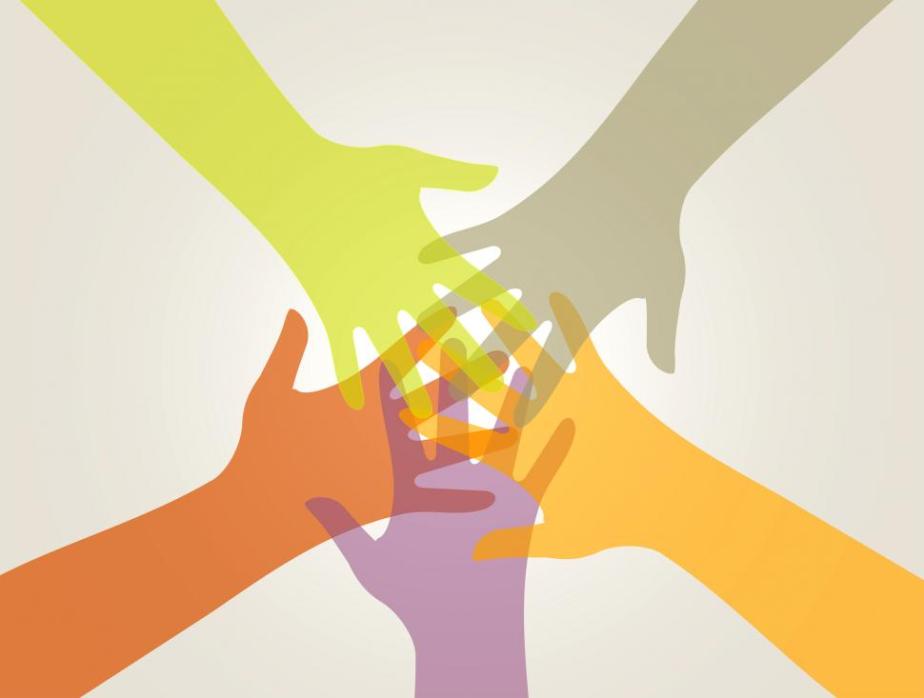
What we need is a harmony revolution, because the only sensible way to counteract division in our own lives is to bring people together in harmony. By harmony I mean, to use a metaphor, the bringing together of very different instruments into an orchestra to create beautiful music. When we come together as human beings and we share what makes us unique, then we can collaborate, cooperate, and co-create. We can make the world a better place to be.

Stress In The Workplace

There are many jobs which are naturally stressful, like being a Fireman/woman or a Police Officer. There are, however, many jobs which are not inherently stressful, but the working environment makes them so. This is the main cause of stress in the workplace, I would say.

If colleagues are pitted against each other in compitition to earn bonuses, a cut throat, winner take all culture will develop. If colleagues are encouraged to collaborate and find fair outcomes for customers, then a supportive and uplifting culture will develop.

Another consideration is whether things like the values and operating rhythm of the workplace match your own. In other words, are you a good fit for your workplace and your role. Figuring out your own values and how you work best is a great place to start.

Sometimes though, the problem is the view you have of the work you do. I work in complaints and I could say that I speak to angry and rude people all day long, but I don’t. In fact, I speak to people who have problems, often caused by the company I work for, and it is my job to fix the problems and rebuild the relationships between the customers and the company. In other words, see them as human beings first and take responsibility for fixing their issues.

The views we have can blind us to the opportunities that problems provide.

Divisions Create Conflict

There are many divisions in our lives and this week, more than most, we turn our attention to them. On Thursday it will be 11th November, the date the First World War ended and peace was declared. On Sunday churches around the country will be holding Remembrance Services.

World Wars, and armed conflict of any kind are horrific in their nature and take a toll on humanity. We also have smaller more personal conflicts in our own lives which are born out of division. Any time there is an Us and a Them there is a division and there is some form of conflict in every division.

During this time of Remembrance let us strive to heal the divisions in our lives by removing the need for a Them and including everyone as Us. When we see people as human first we are better able to use empathy and resolve issues.

When Nelson Mandela came out of prison where he spent 27 years of his life he realised that if he continued to hate those he incarcerated him he would never be free. He later led his country, as President, to forgive and heal after the atrocities of Apartheid. He was a remarkable man, but we can each try to heal the divisions in our lives and use examples like Nelson Mandela as a beacon of hope, hope that it can be done.

Choosing unity or division

“The essence of the beautiful is unity in variety.”

– W. Somerset Maugham

In many areas of our lives there are divisions; between the good and the evil, the reds and the blues, parents and children, the religious and non-religious, the rich and the poor, one religion and another, one political party and another, and many more, but there are also those who strive towards unity, towards the acceptance of and respect for others. However, even with such people in the world our society is divided, in many ways. There is a lot of them and us mentality about, which makes any effort towards unity and acceptance very important, in my view. What often gets in the way of working towards unity is the human need to belong to groups. Belonging to any group automatically creates them and a us situation, which creates a division, whether small or large.

Belonging To Groups

So, what is it that makes us want to belong to a group? It happens in all walks of life, all ages, all genders.  Whatever country we were born in, or religion we were born into, this too is part of our identity, whether we have left them behind or not. And I do think that we need to belong somewhere in order to fill in a piece of who we are. This could be a hobby, a football team, a religion; whatever group we choose to join the group becomes part of who we are. It tells ourselves and others that we are sporty or religious, or whatever, which is part of why, I think, we are drawn towards belonging to groups.

However, if we don’t conform to any of societies accepted groups, then we can become outsiders and the need to belong and not being accepted might leave a gap in our sense of self. I suppose whichever side of this division we fall on, whether we belong or we don’t belong, this is also a key part of our identity. Our past also inform our present, it is the context within which we understand our place in the present. Without a history, without a story, I suppose we might not have a sense of self at all.

Our Mythologies

This could be why across all of human culture there are many mythologies, stories that explain how everything came to be. These stories vary across the world, but usually place humankind either as owners or caretakers of the world or as an equal part of it. In the novel Ishmael, written by Daniel Quinn, this idea is explained with humankind being labelled as Takers or Leavers. In the novel it is explained that “The premise of the Takers story is ‘the world belongs to man,’…The premise of the Leavers story is ‘man belongs to the world’.” The Takers are those who belong to the cultures of the world who might class themselves as civilized, cultures that try to subdue and control nature. Leavers are those who belong to the indigenous cultures of the world like Native American Indians and Australian Aborigines for example, that try to live in harmony with the world.

These cultural stories, these mythologies, can be a significant part of our lives, explaining how everything that exists came to be, and most importantly where we fit into the grand scheme of things. Some cultures, especially in what we call the West, are becoming secular, and our secular societies have their own story given to us by Science. This story is constantly evolving, as new discoveries are made about the world and the universe in particular, but the story still puts human beings at the top of the pecking order, so to speak, creating a division between human beings and the world.

But what of the “Leavers” in our current world? I have heard it said that Native American Indians see all living creatures as their brothers and sisters, the birds in the air, the fish in the rivers and the animals on the land are all family. All life in this regard is a family community, in need of each other. I think a lot can be learned from these indigenous people. They have a lot of wisdom that we can all benefit from, if we can see past our own cultural mythology and understand the cultural mythology of another.

“At the heart of every division is a conflict, created by the division itself.”


Generally, in our civilisation we have come to regard the world as something to be conquered, something to own. Animals being there for us to eat and hunt and breed. This is, generally, our way of seeing things. It is a perspective shared by many people around the world. Yet, dividing ourselves from anything, I think, causes more problems than it solves. At the heart of every division is a conflict, created by the division itself. The moment a division is created there is an us and a them, whichever side you are on.

Do our groups define us?

Problems occur when we see the groups we divide ourselves into as what defines us, rather than our own personal perspectives. We put our faith in the mythology, in the story that is told by our group, this then separates us from others. Even seeing ourselves as human separates us from the rest of the natural world. This “primary boundary,” as Ken Wilber puts it in his book No Boundary, is, according to him, “…that split between the seer and the seen, the knower and the known, the subject and the object. And once this primary boundary occurs, a chain of inevitable consequences follows. A host of other boundaries ensue, each being built upon its predecessor; the various levels of the spectrum exfoliate; the world as we collectively know it leaps into existence; and we become lost, amazed and enchanted, distracted and complexed, loving and loathing our universe of opposites.”

The main point that Ken Wilber makes in this book is that all boundaries are created by ourselves, in order to make sense of the world. But if these boundaries only exist in our minds, if they truly are our collective view of existence, of the world, then surely we can change how we see the world, change how we see others. We can start to see the good in others, to be grateful for their kindness, to see them as equals in this complex and beautiful world in which we live. This is no small task however, given that we have spent our whole lives learning to see the world as we do. We are very good, on the whole, at community spirit, what we need to do is make our communities bigger than our religion, our town and our country. We need to connect to those outside of the groups that we belong to. Our community is our world; it’s up to us how big that world is going to be.