“Follow your dreams and use your natural-born talents and skills to make this a better world for tomorrow.”
– Paul Watson
This Summer saw the long awaited 2020 Tokyo Olympics, which was an unusual state of affairs, without the spectators. However, it gave a chance for the people of each country to see their Olympic champions battle it out for the highly held Olympic medals. After the way the 2020 Euros lifted the spirits of the nation, there was a hope that the Olympics could keep the national excitement going. In the end more people watched the Tokyo Olympics than did the Rio 2016 Olympics. Records were broken and Britain came a respectable forth in the medals table, which is all pretty positive. Positivity is in great need after the past 18 months and the uncertainty of coming out of the imposed social distancing guidelines, which has left us all feeling a little unsure how to interact with each other in the new normal.
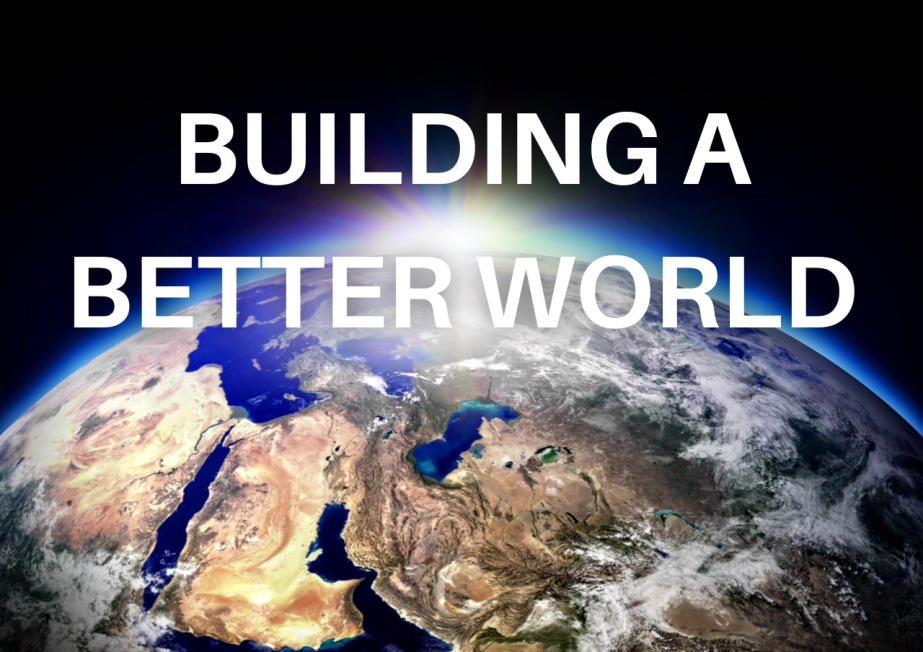
The Olympics have long been held up as the bastion of sportsmanship, of unity in diversity and of excellence. Curious to see the principles behind the organising of the Olympics, I looked up the Vision of the International Olympic Committee, which is “Building A Better World Through Sport.” A worthy vision, and one which is shown in their Values of Excellence, Respect and Friendship. And this got me thinking about how we can make the world a better place after the COVID-19 pandemic put a pause on much of society’s habitual behaviours. During the pandemic the kindness of strangers and the capacity to care flourished amongst neighbours and strangers alike. The concept of Key Workers redefined for many of us who plays an important role in our society and who does not. There was initially talk about going back to normal after the pandemic, or rather a new normal, and it is this idea of a new normal that I want to focus on today.
If we can better choose how we can interact with each other, how we can live together and how we can connect with each other, then this seems like a good time to do it. We can take up the cause of the Olympics of ‘building a better world,’ but not just through sport, but through how we see each other and how we interact with each other. This thing called life is a shared journey from cradle to the grave, but we are capable of lifting each other up, so we may all live better lives.
To illustrate what I am talking about I would like to share a story I saw online recently about a Police Officer in America who pulled a young man over, as his driving licence had expired. The young man explained that he barely had enough money to pay the bills and his rent and could not afford to renew his licence, due to losing his job. He was also on his way to a job interview, in the hope to gain an income and eventually get his licence renewed. The Police Officer left his own car and drove the young man to the job interview and apologised to the Interviewers as he was the reason the young man was late for the interview. The young man got the job and was able to renew his licence in order to legally drive again. Sometimes kindness matters more than the letter of the law. It also matters more than the prejudices and stereotypes that we all have which prevent us from seeing others as equal to ourselves and therefore worthy of kindness.
It is also important to remember how connected we all are. The COVID-19 pandemic showed how our movement around the world can cause diseases to spread, but we can also share our behaviours, our ideas and our values. Kindness and generosity are also infectious. Mother Nature has provided a way to encourage us to be kind and generous. This is how we thrived as a species, by working together. If we are to be generous or kind to someone else without any expectation in return we get a hit of Oxytocin, which makes us feel good. The person we are generous or kind to gets a hit of Oxytocin as well, which means they will likely go and be generous or kind to someone else that day. Even a person just witnessing an act of generosity or kindness will give them a hit a Oxytocin and will encourage them to pay the generosity or kindness forward. We are hard wired to do this, because we are stronger together.
To further show how connected we all are on our planet, here is something from a TV series on Netflix called Connected that blew my mind. It is in the episode on Dust and how important certain dust can be. In Chad, North Africa, in what used to be Lake Mega-Chad, but is now part of the Sahara Desert, there are the remains of fish and other creatures, which once lived in the lake, before the area became a desert. The wind breaks up the skeletons into dust which is then carried by the wind up into the atmosphere and it makes its way all the way to the Amazon Rainforest, in South America, where the dust becomes part of the soil. What is amazing is that the rain in the rainforest washes away most of the nutrients that the plant life needs to grow and survive, but the dust all the way from the Sahara Desert in Chad, North Africa, replenishes it. Around 22,000 tons of phosphorus is deposited in the Amazon Rainforest every year from Lake Mega-Chad, which is about the amount the soil loses every year due to rainfall. Without this process happening, there would be no rainforest. We are truly, globally connected to every other ecosystem on the planet. This is why when we through things away, there is no away. We need to look after our planet as well as each other.
The environmental movement, which includes Greenpeace, sprung to life after a very special photograph was taken when “Apollo 8, the first manned mission to the moon, entered lunar orbit on Christmas Eve, Dec. 24, 1968. That evening, the astronauts-Commander Frank Borman, Command Module Pilot Jim Lovell, and Lunar Module Pilot William Anders-held a live broadcast from lunar orbit, in which they showed pictures of the Earth and moon as seen from their spacecraft. Said Lovell, “The vast loneliness is awe-inspiring and it makes you realize just what you have back there on Earth.” They ended the broadcast with the crew taking turns reading from the book of Genesis.”(1) As they orbited back around the moon toward the Earth the photo Earth Rise was taken as the view of the Earth in the distant blackness of space rose into view over the surface of the moon, which is seen in the foreground of the photo. The sense that if we do not take care of our planet their is no planet B reverberated through the cultures of the West and the rest of the world.
We have now reached a point where taking a trip up to where the Earth’s atmosphere meets outer space is becoming a reality for those who can pay for it. There has been much debate online about the recent endeavours of Billionaires like Sir Richard Branson to develop “rocket planes” that can take people up the edge of space. Sir Richard Branson was the first to have “…successfully reached the edge of space on board his Virgin Galactic rocket plane”(2) recently. The main argument against such endeavours has been why build a rocket plane to take people to the edge of space on tourist trips when there are millions who are homeless, starving and displaced due to war. There are also issues with global warming. It is an argument over priorities and values, over selfishness and selflessness. Tickets to take the Virgin Galactic up to the edge of space cost up to £180,000, again money that could be spent helping our fellow human beings. I guess the main ill feeling comes from the disproportionate distribution of wealth and the fact that there are billionaires in the world where much good can be done if this wealth was shared. If a tenth of the wealth held by the Billionaires of the world was spent on helping those in need, the quality of life for many would be improved. Access to water, electricity and education, for example.
But we are not all Billionaires, far from it. Most of us have enough to survive and a little bit more to save or spend on nice things. This begs the question what can we do to make the world better? If we are to go back to the Vision of the International Olympic Committee, “Building A Better World Through Sport,” we can think about what Vision we might have for our lives. If your Vision began with “Building A Better World Through…” what would come next for you? I would suggest you build a better world through kindness. Kindness to the environment and kindness to the people we interact with each day.
However, it is not always easy to be kind, especially if we are asked to be kind to those we really do not like. In the Bible Jesus asked us to Love our Enemies? You might not think in terms of ‘enemies,’ but you will have people you would rather avoid, people you dislike. How do we build the capacity to be kind to those people? A good place to start is to work on the prejudices and stereotypes we all have, on the barriers we have that create an us and a them, so we can start seeing each other as human first, and then we can increase our generosity and kindness on a daily basis. The more people we are generous and kind to the more people will do the same for others. And you will feel so good at the end of the day.
Reference:
1: https://www.nasa.gov/multimedia/imagegallery/image_feature_1249.html
2: https://www.bbc.co.uk/news/science-environment-57797297
 The Fullfilment Project