Face What Scares You

There is a Buddhist idea that comes from the Sanscrit word ‘maitri’, which means loving-kindness. Quite often, we are hard on ourselves, and we put ourselves down, or we are judgemental towards others. In each of these cases, we are thinking about ourselves or others based on opinions and beliefs that we have collected over the years. Opinions and beliefs that may not have any truth to them at all.

This is also true of the things that scare us. The reason we are scared of people or situations is because of our opinions and beliefs about them. It is as if we are running away from them without actually looking at them. When we apply loving-kindness to ourselves, we are looking at ourselves openly and with an embracing sensibility that diffuses negative thinking until what remains is only positive.

If we apply loving-kindness to the things that scare us, when we are curious, when we are interested in why these things scare us, then they lose their power. They lose their power simply because you have chosen not to run away, we have chose to face them. I am not saying that this will be easy, but it is worth it.

Believe In Yourself

No one will give you the perfect answer as to what you should do in any situation, because they are judging it based on what they would do, and they are not you. We need to make a choice and go try it, whatever it is. If it doesn’t work and we fall on our faces, we have learned something.

The trick is to know that you will always pick yourself up and try again. A bird does not avoid landing on a tree branch because it is worried that the branch may break, if they did they would never land on a tree branch. A bird’s faith is not in the branch not breaking, it’s faith is in the ability of it’s own wings.

Stronger Together

When you get knocked down in life you have two choices. Stay down and give up or find a way to rise again. Sometimes we can rise alone, if we have the internal resources to do so, but usually we need the help of others through the relationships we have and new ones we form or the wisdom in books and online content.

It takes courage to stand after you fall, but often we should not try to stand alone, we should seek support. We are always stronger together. It is often seen as a weakness to ask for help, but it is the most courageous act we can do when we have been knocked down by life. We can stand alone again in the future, but take the support when it is available.

Being Courageous

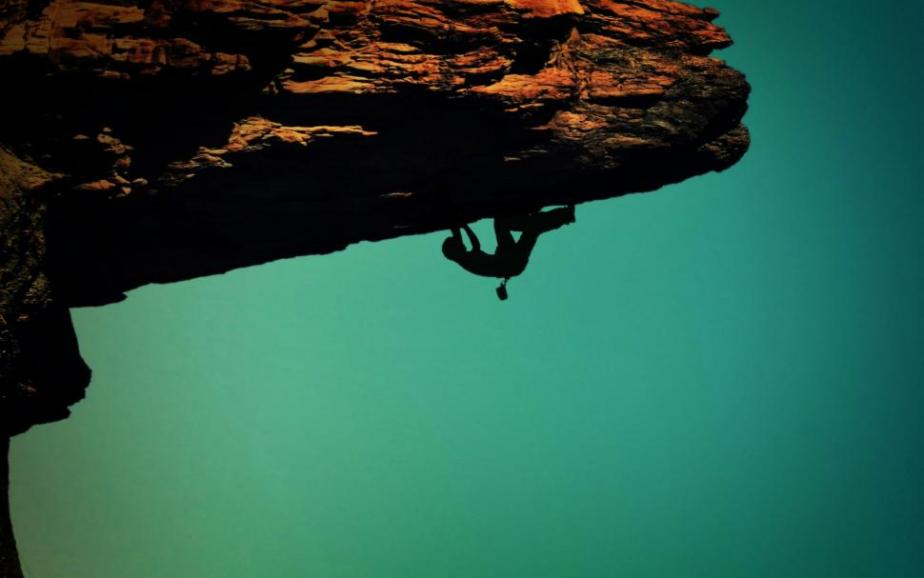
For some, acting with courage it is getting out of bed and leaving their bedroom. For some it is standing on a stage and giving a speech. For some it is challenging the abusive behaviour of a loved one. For some it is stepping into the unknown. For some it is failing and trying again.

With every act of courage there are three things present, a decision, vulnerability and fear. There are many other aspects to courage, but these three are less recognised, especially the last two. For many, when we think of courage we think of being fearless, but you cannot have courage without fear. It is simply not courage if you are not scared.

You are also vulnerable when you act with courage, because you are either stepping into the unknown or you are letting others see who you really are; both of which make you vulnerable. The decision to act with courage is usually made in alignment with a person’s values, beliefs or ethics, or some combination of these.

There has to be a reason why an act of courage is needed, something more important than playing it small and being safe. When we act with courage we are also usually helping others directly or giving others around us permission to be courageous.

A courageous life is a life well lived.

Trying Something New

Where do our beliefs and values come from? They are manifestations from the culture and community we grow up in, the examples our parents give us and how they raised us, as well as the experiences that we have had. Through all of this input we piece together what we believe and what we value.

All of this then affects the decisions that we make on a day to day basis, but I believe that if we are to make wise decisions in life then we should seek out wisdom as well, which can be found in any of the many religious scriptures and philosophical texts from around the world. If we have wise guidelines or principles to follow then stepping into the unknown will seem less scary.

Something else that can help us in our ventures into the unknown is to have an attitude of asking ourselves “what if…?” What if we tried something new, what if we gave it a go, what if? Being open to the many positive possibilities that could result in trying something new means that we will more likely have a positive outcome.

It is also a way of getting past the barrier of failure, a way to overcome our fear of criticism or looking like a fool; what if we succeeded, what if we achieved our dreams. This allows us to consider the possibility of actually succeeding, rather than becoming consumed by the thought of failure.

New Beginnings: It Takes Courage

“Fear wins or freedom wins. And so let us ask ourselves, will my life be about aversion or ascension?” 

Brendon Burchard

In our lives you could argue that every moment is a new beginning, in which we always have a choice in how we respond to the circumstances we find ourselves in. Perhaps a choice of either Fear or Freedom, often a difficult choice to make when the harsh realities of life seem set against us. This is the question that connects the two opening chapters of the book The Motivation Manifesto by Brendon Burchard.

The first chapter is entitled On Freedom and the second is entitled On Fear. The opening words in the third chapter, On Motivation, sum up the opening message of this book. “The dominant motives of Humankind involve either freedom or fear; there are no other pathways in our psychology. One demands engagement with our true self and ambitions, and inevitably leads to independence, growth, happiness, and transcendence. The other causes us to skirt around challenges, avoiding struggle as much as possible – despite struggle often being the very thing required for growth.” [The Motivation Manifesto by Brendon Burchard, page 51]

Whether you agree with this or not, it does bring up the question of how we ourselves respond to the events within our lives. Do we respond with the confidence to tackle the challenges in our lives or do we avoid conflict and therefore forfeit the potential rewards that lie on the other side of these challenges, if we were to tackle them rather than run from them?

We each have our own ways of making decisions, of dealing with the demands that beset our lives. So, what is your default setting, so to speak, when you are faced with a challenge? Most of us are not aware of the how and the why of our decision-making process. It is not until we start to question ourselves, and start to observe ourselves that we get a sense of whether we fall prey to fear or if we embrace freedom.

It has been said that every moment is full of potential and all around us there are metaphorical doors opening to new possibilities, but most of the time we choose not to take opportunities when they appear in our lives. We are too busy, we don’t want to deviate from what we are used to or we are just uncertain of what the outcome might be. When we do take opportunities that come our way, things can go wrong for us, but wonderful things can also happen too.

You may be thinking that it is all well and good suggesting that we take more opportunities when they come our way, but how do we know which opportunities will bring positive results and which will bring negative results? Unfortunately, we don’t really know what the results will be until we walk through the doors of opportunity and see what happens. It is like the act of being brave, you have to do something that scares you, even though you may be terrified, and the bravery comes afterwards. The more opportunities we take the more experience we get and we start to realise which might be good opportunities and which might not be.

We can think about our experiences in similar situations and make a judgement call. It is the difference between intelligence and wisdom, you could say. Intelligence is knowing lots of things, but wisdom is intelligence plus experience. It is the culmination of trying and failing over and over until we don’t fail as often, because we have learned from our experiences and applied some intelligence to our decision making. This is why elders are so respected in so many cultures, because they have the experience that gives them wisdom. I for one would someday like to be an elderly person who has made lots of mistakes, but has not been afraid to keep trying.

I think that as we get older we can develop an instinct for good opportunities, perhaps it is a little bit of wisdom. We can look at an opportunity and have a good or a bad feeling about it, and I think this can guide our decision making. I definitely feel that my good opportunity radar is beginning to work fairly well. I sometimes get the feeling that I should do something and I have tried to trust in this feeling and go with it and see what happens. Don’t get me wrong, it is scary trusting in these feelings, but in my experience trusting in my good opportunity radar has brought good things into my life.

This might be the divine in the world at work, guiding me, I don’t know. I like to think of these situations are karmic sign posts pointing to good things, as the Buddhist in me believes in karma. You may well see these kinds of situations in your own lives in a different way, depending on your own beliefs and experience. You may think that it is God guiding you or that there is no divine hand guiding you or anyone else. Whatever your theological beliefs I do believe that when we begin to trust our feelings about whether we should try something new, or take a chance, then we invite more positive outcomes and experiences into our lives.

Every moment is full of potential, there are doors of opportunity all around us, but it is up to us to walk through these metaphorical doors and try something new, whether this is a new job, a new relationship, rekindling an old relationship, a chance to learn something new or a chance to try something you have never done before, we will always grow as individuals. The outcome might not always be a positive one, but every mistake is an opportunity to learn in itself, even this can lead to making better decisions in the future and therefore a better future, as we become wiser with every mistake we make and every challenge we try to overcome. Go forth, try new things and keep going, and if you fall, fall forwards, pick your self up and try again.

Something To Think About

What opportunities are thee in your life that you are fearful of taking? How would it feel if you give it a try and it works out well for you?


Fearlessness is a dangerous road

“I learned that courage was not the absence of fear, but the triumph over it. The brave man is not he who does not feel afraid, but he who conquers that fear.”

– Nelson Mandela


Fearlessness

In our culture today there is a great emphasis on the need to be fearless. It is found in common turns of phrase, the media. It is also found in advertising, whether it be men’s aftershave or energy drinks, the word ‘fearless’ is banded around as if it was held at the same level as integrity or fortitude. I think we are mistaking being fearless with having courage, and they are not the same thing. The problem with being fearless that it encourages us to mask or block out our emotions and to discount our very natural physical responses to danger and stress, responses that have developed throughout the evolution of human beings in order to keep us safe.

If we were truly fearless then we would have no fear of running in front of a car or train, or skydiving without a parachute. These are extreme example, but this is the point, to be fearless means that there is less preventing us from going too far and putting ourselves  and others in danger. It would be profoundly stupid to skydive without a parachute, and our intellect and experience would tell us that this would not be a good idea. However, there are situations that have unknown aspects and if we leap without looking, without consulting our intelligence, our experience and our capacity for rational thought then we do not know if we are putting ourselves in danger. A balance is needed.

The other extreme is to be so paralysed by anxiety that we do not try anything new and we retreat into our selves, even becoming housebound by our anxiety. I have had my own challenges with anxiety, that caused me to have pain in my chest and my hands to shake when in certain circumstances. This is not a good place to be, to put it mildly. As I have worked through the roots of my anxiety and developed strategies to reduce it, I have found a profound truth about fear that can put us on a more even keel. Fear is an essential part of our defense mechanism, it is integral to our survival, but it is supposed to appear when we are in danger and then dissipate when the danger has gone. To use a well worn example, if our cave man ancestors mistook a rock for a tiger in the long grass, causing then to run fast in the other direction, they would be safe. If they mistook a tiger for a rock and didn’t run, then they would have been the tiger’s lunch.

Finding A Better Path

Some of this is obvious to point out, but I feel in a climate and culture where being fearless is seen as a lordable quality, especially in men, then I think the obvious truth of the situation needs to be pointed out. We should not be pushed into either being fearless or to living with anxiety, a middle road is needed. There is one quality that I feel should be the focus of our intention in life, and that it the quality of courage.

Courage is not the same as being fearless, it is in fact acting in a positive way in spite of fear. It is feeling the fear and doing it anyway. As Nelson Mandela tells us “…courage was not the absence of fear, but the triumph over it.” This of course needs to be reserved for situations that are not life threatening. We are are not, after all, talking about being a soldier or anything like that. I am talking about having the courage to go to job interviews, to tell someone that we love them, to stand up to those who bully us, to stand up for what we think is right, to follow our dreams, to try and improve our skill-set. All of these things are about living a fully, deeper life.

I do think that it is important to try new things and to push past our current limitations, to grow and improve our skill-set, especially in our careers. To live at the edge of our skill-set is a very courageous thing to do. There is also a very important reason we should try and get very familiar with the things that scare us in life. If we run from the things that scare us then we internally harden our hearts. We close down our compassion and we restrict our love. We close ourselves off from having meaningful, deep relationships with people. The people we care about becomes limited to family, friends and those who share our beliefs and values. We become tribal and divided, we get aggressive,  even violent in extreme cases. We become part of the problem that divides up the world into us and them.

If we can extend our compassion to include others we disagree with, those who look different from us, even those who treat us badly, then the world will be better for it. Be warned though, it take courage to love your enemies, but if you can do it, then you will have no enemies.

Something to reflect on:

If you can get familiar with the things that scare you, and have the courage to live there, then the fear will dissolve and you will be stronger for it.

Stepping into the unknown

“Until you step into the unknown,

you don’t know what you’re made of.”

― Roy T. Bennett


Making choices

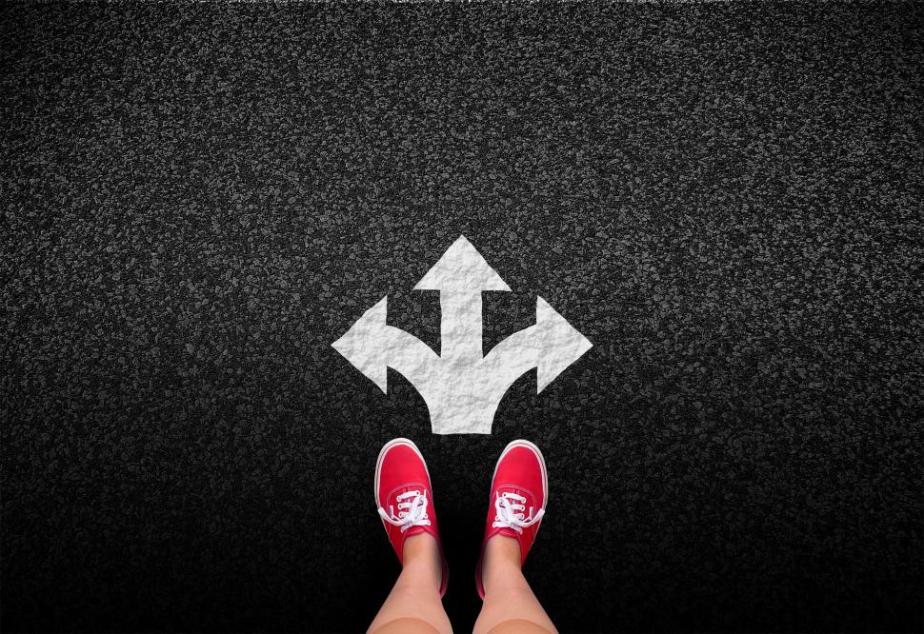
In life there are many avenues to go down, many paths to take, or not as the case may be. Some of these paths lead to dead ends and some to wonderful opportunities. The challenge we have is that we never know beforehand, for certain, if making a particular choice will bring a positive outcome or not. Each time we are stepping into the unknown. We can, however, as the saying goes, learn from our mistakes and use our experience to weigh up the options and make a decision. Some say we should go with our gut, with what feels right, but if this is not tempered with wisdom and experience then we will only be following our instincts, which are primed for survival, not necessarily leading a fulfilling life.


The unknown could be a new job, a new relationship, trying a new hobby or something that changes lots of things in our lives like moving to another town or city. We make these sorts of changes every day, but they still come with uncertainty and some anxiety. Each new change begins with a decision and leads to more decisions along the way. I would argue that no approach to making decisions is the best or the worst, as we each live individual lives and we are all individual people, but there are some things that can help when we are stepping into the unknown, which I will come onto in a moment.


Why do we step into the unknown?

However, first of all I would like to explore why we might feel the need to step into the unknown. It has long been part of the human spirit to push beyond our boundaries into uncharted territories. Human history is full of examples of men and women that have strived beyond the boundaries of their day to create new innovations and break records, whether this is manned powered flight or reaching the South Pole on foot.


For most of us such challenging goals are not things that we aim to do, partly because we are interested in other things and partly because we have commitments in our lives that need our attention and focus. That being said, we all have things that we are passionate about, things that we would happily do for free if time and circumstances permitted. This is the unknown territory that I want to talk about today, the venturing into the things that we are passionate about. Often, we don’t jump into our passions because we have responsibilities that we feel we must commit to or we lack the confidence to do so.


“…the past does not equal the future.”


More often than not we do not follow our passions because we have had bad experiences trying new things in the past and we think that the same thing will happen again. There is an important principle connected to this that I have recently being trying to apply in my life, which is that the past does not equal the future. A lot of people, including myself, are held back by failure, because based on past experience we expect to fail again. The problem is that we see failure as a negative thing because of our past experiences. If we accept that we will fail sometimes then we can employ all of the resources that we have to make it work and to succeed.


Not everything is instantly obtainable

We also live in a time when almost everything is instant. Whatever it is you want to buy, often there is an option to have it delivered the same day. We can do our banking on our mobile phones, we can send an email to someone and they will receive it a few seconds later, no matter where in the world they are. Innovation has made our lives a lot more convenient, but not easier. This is because we expect everything to be instant, but many of the important things in life take time and effort. For example, relationships take time and effort to become strong and durable through the ups and downs of life. It is the little moments of asking how someone’s day is going and caring about the answer, of engaging in small talk in the moments between doing other things. These things help to build strong, healthy relationships.


Too often we are spending time with people without spending time with them. I’ve seen couples in restaurants where they are both on their mobile phones and not looking at or communicating with the person they came to the restaurant with. It has become an accepted thing to do to scroll through our Facebook feed instead of making a connection with the person we are with. This has had a knock-on effect that means young people are finding it difficult to build relationships, because the social skills that are normally built up through trial and error as a child cannot be practiced if they are looking at a screen and not a person.


Failure also seems all the more magnified because if we expect something to be instantly successful, and we fall at the first hurdle, we give up. We are becoming conditioned for insecurity when we should be conditioned to fail our way to success. I guarantee that every successful person who is famous for their success has failed more times than most other people have. It is not about how many times you get knocked down, it is about how many times you keep getting up. Having this sort of mentality will enable us to stride forth into the unknown with the confidence to fail and try again.


For this to work, however, we need to have the right motivation. Wanting to be successful so that we can be rich is a motivation, but it will inevitably lead to an emptiness, because you cannot buy happiness. If, on the other hand, we want to be successful so that we can help more people live better lives, then fulfilment will be our reward. Motivation is key and it has to fit with our values and beliefs, this above all else is important, because to live a fulfilling life our thoughts, speech and actions should reflect what we value and what we believe.


Wisdom guides us

But where do our beliefs and values come from? They are manifestations from the culture and community we grow up in, the examples our parents give us and how they raised us, as well as the experiences that we have had. Through all of this input we piece together what we believe and what we value. All of this then effects the decisions that we make on a day to day basis, but I believe that if we are to make wise decisions in life then we should seek out wisdom, which can be found in any of the many religious scriptures, philosophical and secular texts from around the world. If we have wise guidelines or principles to follow, then stepping into the unknown will seem less scary. I suggest firstly analysing what is holding you back from stepping into the unknown and try to overcome it, through seeking wisdom and figuring out your beliefs and values. These things will guide you on your path. It helps to accept whatever is in front of you on your path and then figure out how to deal with it.


Something to reflect on:

Often what is holding us back is our own misguided beliefs and the baggage we carry from past experiences. Holding on to bad experiences weighs us down. Once we let them go we are more free to move forwards. This is not easy but essential if we are to live a fulfilling life.