The Law Of Authenticity

The fourth Law of Stratospheric Success for the book The Go-Giver is The Law of Authenticity.

“The most valuable gift you have to offer is yourself.”

The Go-Giver

Often in the world we see other people that we would like to be, people we envy or look up to. Often people use social media to present a better version of themselves, a more collated life. This has a lot to do with self esteem and comparing our lives with the lives that others present on social media that seem so much better than our lives because people only share the best bits.

The irony is that when we are more authentically ourselves we are the more likely to be successful. This is because when we live and act authentically we focus on what brings us joy and what we are naturally good at. When we are joyful and doing what we are naturally good at we thrive and achieve great things. People will also trust us more because we are being ourselves all the time. Trust is a big element of success, because we cannot be successful alone. And your authentic You is a gift to the world that you should not hide your awesomeness.

Finding Your Calling

You may ask, how do we find our calling? Usually it is something that you enjoy so much that time passes unnoticed or it just feels right when you do it. It could be a job you have or a vocation you take up. It could be as simple as helping people read or making people laugh. Jim Carrey has said that his purpose in being a comedian, and then a comedic actor, was to free people from concern.

For some people their purpose or calling is coaching and for others it is saving lives, and the list goes on. A good way to find your calling is to try lots of different things, but it really helps to have figured out your values, beliefs and ethics first, as these will act as a compass to guide you towards your calling and will cut down on the time spent trying things out.

A person’s calling is not always something they are good at when they find out what it is they are called to do. Sometimes, it takes effort and consistent trial and error to get good at what it is you are called to do, but you will often have some level of experience and skill already, or at least the passion to do it. The thing to do is to have the courage to try and try again.

Cultivating Wellbeing

Wellbeing is often thought of as an ambition to feel better and laugh more. This is like looking at a garden and focusing on the need to have flowers. This is upside down thinking. If we were to plant the seeds, cultivate the soil, water the ground and ensure there is good sunlight, then flowers will appear. If we cultivate our bodies, so we may feel physically well, cultivate our relationships, so we may feel connected to others, cultivate our thinking, so we may feel mentally well, and cultivate our purpose, so that we have a direct towards which we work, laughter, joy, love and a feeling of wellbeing will blossom all by themselves. Without this wellbeing will never blossom.

How To Live Your Purpose

“If you have a strong purpose in life, you don’t have to be pushed. Your passion will drive you there.”
Roy T. Bennett

Starting With Your Why

The work of Simon Sinek has popularised the idea of having a Why with his book Start With Why: How Great Leaders Inspire Everyone To Take Action and his TED Talk How Great Leader Inspire Action. However, how can you use your Why to figure out what you should be doing in your life, your purpose?

As Simon Sinek rightly tells us, your Why is your origin story, it is the reason behind why you do the things you do. It is how you were raised, the early experiences you had and the decisions you made leading up to adulthood. In essence it is who we are. It is not always clear how to define your Why, but with self-reflection and self-observation you can find it.

Take me for example, I have a desire to figure out how to live life well and to share this with others. I have led worship in Unitarian churches for several years and worked in customer service and special needs education and started this blog without knowing my Why. It took the discovery of Simon Sinek’s book and some focused self-reflection to realise that my Why is to help others to live well, to find fulfilment. In all the areas of my life that I have mentioned I felt at home when helping others.

You might feel comfortable being a leader, being creative, working in a team or working alone. Whatever you do that makes you feel happy or content, these are clues as to your Why, because you feel good doing these things. Your Why is what defines you as a person. If you need guidance on finding your Why I recommend you read Simon Sinek’s book Find Your Why: A Practical Guide for Discovering Purpose for You and Your

Turning Your Why Into Your Purpose

Once you have defined your Why, you will be able to use it as a compass to direct you towards the things you should be doing. Ideally, your job should be aligned with your Why. In other words your work should make you feel happy, successful and fulfilled.

This is largely effected by the environment you work in, the leader(s) you have and the people you work with. But, if you know your Why then you can choose work that is aligned with it. Work that you can really get your teeth into and make a difference in the world.

At the moment, with the difficulties caused by the Coronavirus pandemic, we have to do the work that is available. As needs must we must go. However, if you are interviewing for a job it is a good opportunity to interview them at the same time.

Choosing The Right Work

A good question to ask interviewers is how they reward performance. If they reward good performance with bonuses, money incentives, for hitting the numbers they set, then the company values your output over you. If they reward good performance in a way that values you as an employee then the environment you would work in will be more fulfilling and you will feel looked after.

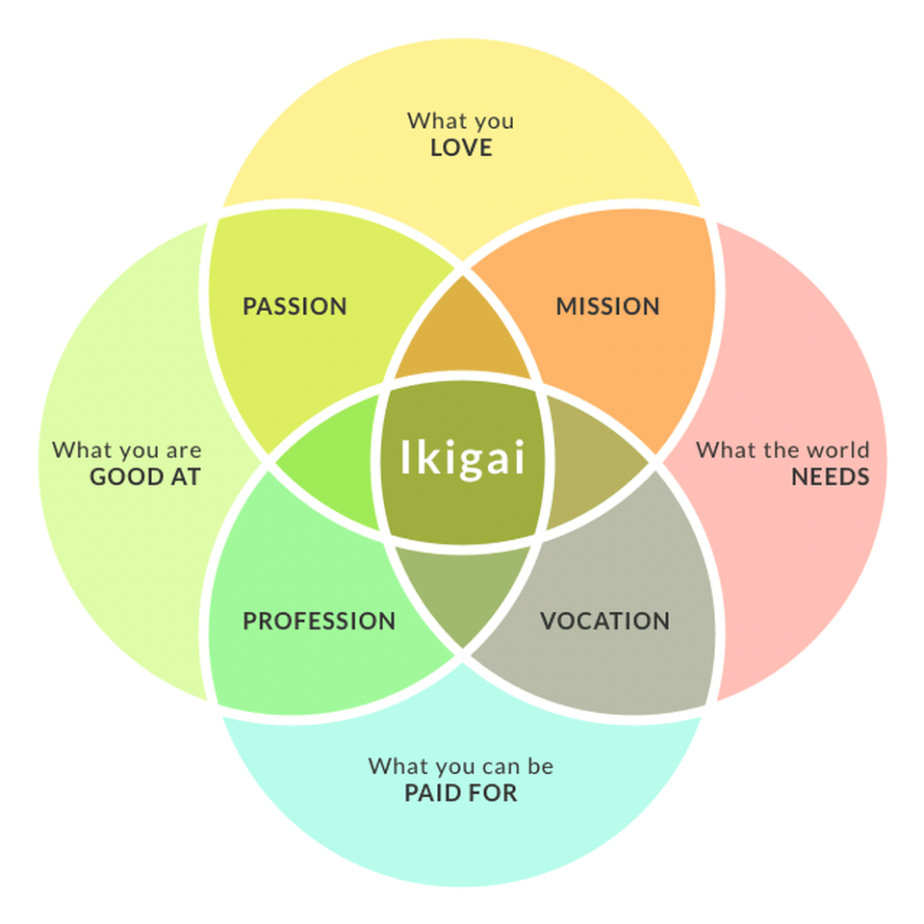
You should also look to work in roles that fit your Why, that align with who you are. The work we do in the world matters. If we are not doing what we are meant to be doing, then resentment and unfulfilment sets in. I recommend using the Ikigai method, where you look at What You Love, What You Are Good At, What You Can Get Paid For and What The World Needs. This will then reveal your Passion, Profession, Vocation and Mission. Knowing your Why will help you fill in these categories and find your Ikigai, your Purpose in life.

Conclusion

When we start with defining our Why we can start to figure out why we do what we do and then what we want to be doing in our life. Once we know our Why we can narrow down what we are meant to be doing, what our Purpose is. And when we live out our purpose, our work feels like a privilege.

Launching The Pathway To Fulfilment

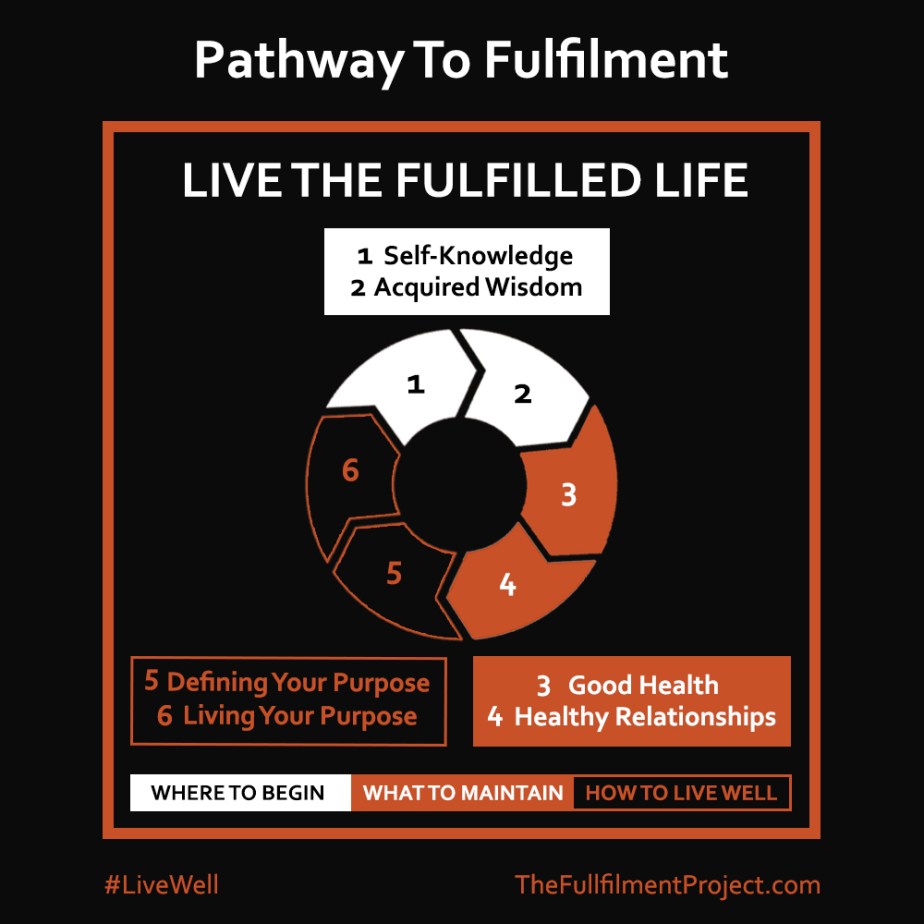
I have done some work on what I have so far called the Fullfilment Framework and renamed it the Pathway To Fulfilment, a more linear and simpler journey. My intention is to create a process by which people can start to live well, and therefore have fulfilment. This is not a life hack or magical cure for what ails you. It is a deeply personal journey of self-discovery, of life balancing and purpose finding. There are four steps of this process which are foundational to a life well lived, they are Self-Knowledge, Acquired Wisdom, Good Health and Healthy Relationships.

The Principles Of A Life Well Lived have been folded into the Acquired Wisdom. I have separated these foundational steps and the other steps of the Pathway To Fulfilment, six steps in total, into Where To Begin, What To Maintain and How To Live Well. Now that I have an outline of a process that I believe will bring about fulfilment in ones life, I aim to add in the detail of the activities and actions you will follow within each step of the journey towards fulfilment and a life well lived. Watch this space and the Facebook Group Community and on Instagram for up and coming updates. This new Pathway To Fullfilment can also be found on the page on this website of the same name.

WHERE TO BEGIN

Step 1: Self-Knowledge

The process begins with getting to know yourself more substantially than you may have before; figuring out what really makes you tick, what you believe and don’t believe, what you think is true and false, what you think is ethical and not ethical, etc. Also, what happiness and success look like to you, personally. It is broad and deep self-knowledge. This is your starting point.

Step 2: Acquired Wisdom

You acquire the wisdom of others, from a variety of sources, spiritual and secular; wisdom that will challenge you and enlighten you, as wisdom should. Often this is achieved by extensive reading, but, with the internet, a lot of this same wisdom can also be obtained through videos, audio books and pod-casts, however you learn best. This wisdom will feed into your self-knowledge, and influence how you see yourself and how you choose to live.

Connected to Acquired Wisdom are ten principles that I believe generate fulfilment, because they are wise principles that will help you navigate the world skilfully and live your life well. I have divided them into those that relate to Yourself and those that relate to Others. The principles related to Self are Growth, Equanimity, Fortitude, Seeking and Self-Competition, and those related to Others are Stewardship, Servant-hood, Reciprocity, Joy Making and Connection. I will be sharing more detail on these moving forward.

WHAT TO MAINTAIN

Step 3: Good Health

Your health should be of great concern, because good health is essential for your well-being and having an active, fulfilling life. I have included the usual physical health and mental and emotional health, and also energy health; all of which could be thought of as a triad of good health. Good physical health includes diet and exercise. Good mental and emotional health includes mastering your emotions and balancing your thoughts. Good energy health includes mastering the Chi (Qi) that flows through your energy system, like blood through your bloodstream, detailed in Traditional Chinese Medicine. To have good health you need to work on all three of these areas.

Step 4: Healthy Relationships

You look at your relationships, and identify those relationships that are good for you and those that are not, and those that are a mixture of the two, that need work to become good. You should continuously work towards all of your relationships being healthy ones; meaning that they bring you happiness rather than stress, they uplift you rather than bring you down. These relationships are in circles of community, which are relationships with yourself, your partner, your family, your friends, your colleagues and your acquaintances, and all are interconnected.

HOW TO LIVE WELL

Step 5: Defining Your Purpose

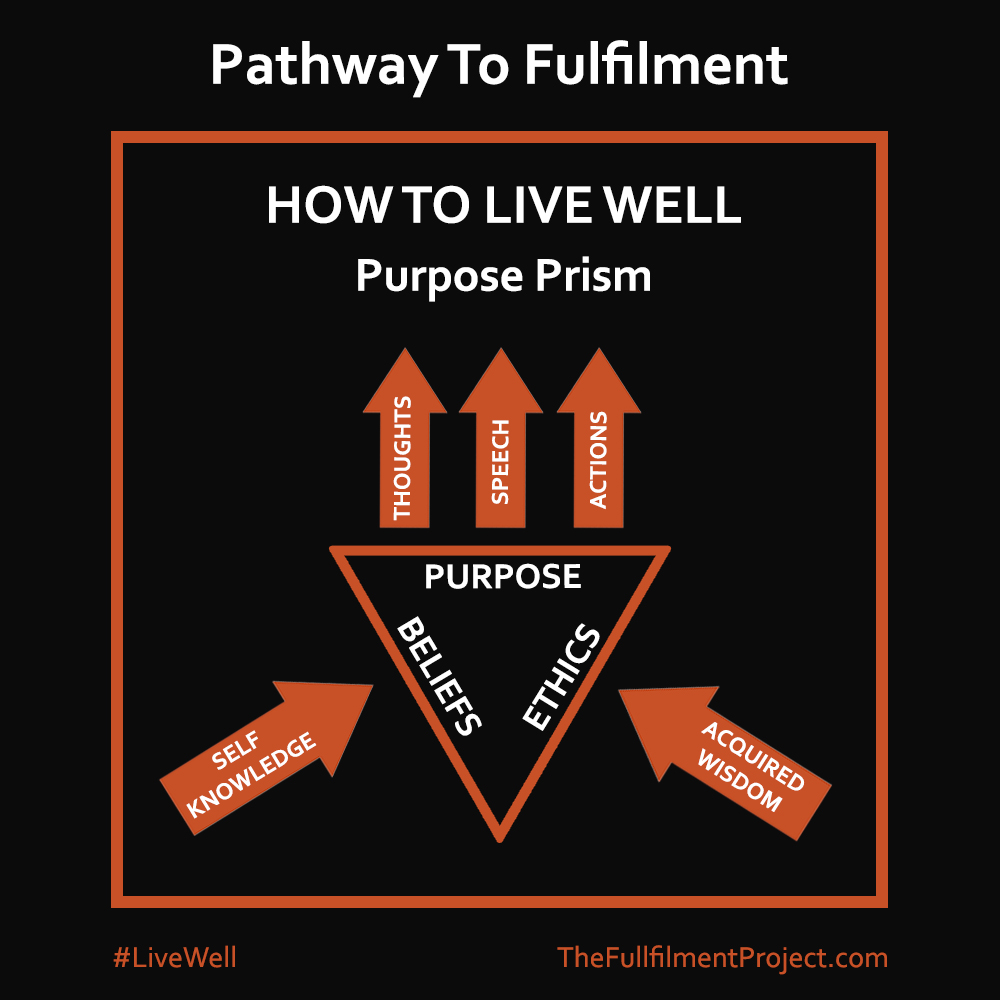
After working your way through this journey so far, you will have a solid foundation for how to start living your life better. From this knew understanding of yourself, your defined beliefs and ethics form part of what I call your Purpose Prism, the third piece of this prism being your purpose. You will go through a process of building on your beliefs and your ethics, weaving in Acquired Wisdom and Principles Of A Life Well Lived, and define your personal purpose. This prism is the filter through which you will see and experience the world, and it will influence your thoughts, speech and actions, making them wiser in nature. Your purpose comes from a vision of a better world that you want to help create.

Step 6: Living Your Purpose

You will then be set to start applying your beliefs, ethics and purpose to your life, to find your best way to live them out in your thoughts, speech and actions, to act on your vision of a better world through everything that you do. This is living your life on purpose. All of this work will mean that both happiness and success become personal, and therefore fulfilling, all three of which are bi-products of a life well lived. They then feed back into your self-knowledge, acquired wisdom, health, relationships and your beliefs, ethics and purpose, and on it goes, because this journey is a life long endeavour. Follow the path to fulfilment and live well my friends.
Book Recommendation: Start With Why by Simon Sinek

Image Source: amazon.co.uk

Buy The Book Here

Why Read This Book

This book elegantly explains the importance of knowing your Why, which I believe is integral to living well, to be happy, successful and fulfilled. Defining your Why is an essential part of my Fullfilment Framework, a framework designed to help you live a fulfilling life.

Contents

INTRODUCTION: WHY START WITH WHY?

PART 1: A WORLDS THAT DOES NOT START WITH WHY

  • Assume you know
  • Carrots and sticks

PART 2: AN ALTERNATIVE PERSPECTIVE

  • The golden circle
  • This is not opinion, this is biology
  • Clarity, discipline, and consistency

PART 3: LEADERS NEED A FOLLOWING

  • The emergence of trust
  • How a tipping point tips

PART 4: HOW TO RALLY THOSE WHO BELIEVE

  • Start with WHY, but know HOW
  • Know WHY. Know HOW. Then WHAT?
  • Communication is not about speaking, it’s about listening

PART 5: THE BIGGEST CHALLENGE IS SUCCESS

  • When WHY goes fuzzy
  • Split happens

PART 6: DISCOVER WHY

  • The origins of a WHY
  • The new competition

 Summary

This book explores what it means to have a Why, which is the purpose behind all that we do. It is essentially a sum total of how we were raised and our experiences up to adulthood; it is who we are as an individual. We only have one Why and the level at which we can best use our Why to live a fulfilling life depends on our depth of understanding of it and if we can articulate it.

Simon Sinek used examples from business and history to explain the importance of knowing your Why. He explains what he calls the Golden Circle, which illustrate how we think and make decisions, we go from Why to How to What. He goes to discuss the impact of knowing your Why can have on leadership and how important it is to take care of those around us, especially if we are in a position of leadership. Also, the way that success can make our Why fuzzy and we can potentially deviate from our Why, as individuals and as a company, which causes problems. Therefore it is important to keep our Why in central focus to avoid getting lost.