Taking Ownership of Your Journey

I’d like to tell you a story (author unknown). One day there was a great flood and a whole town was being evacuated. A van pulled up at a man’s house and the driver shout for him to get in as everyone was being evacuated. The man said, “No thank you God will save me.” Not wanting to risk staying, the van driver drove off to safety.

The water began to rise and was up to the man’s first floor window. A man in a boat came by and offer to take this man to safety, but again the man said “No thank you God will save me.” When the water rose up to the roof a helicopter came to rescue the man, who was then standing on his roof. Again the man said, “No thank you God will save me.”

The water continued to rise and the man drowned. When the man got to heaven he asked God why did you not save me? God said, “I sent a van, I sent a boat and I sent a helicopter.”

The moral of the story is that we have to take accountability and ownership of our own rescue and our own lives. We cannot expect others to do everything for us, even God for that matter, if you believe in him. If we are waiting for others to fix everything, we will miss so many opportunities that can lead us to great joy, fulfilment and success.

So, be humble and take offers of help when they are offered to you and take ownership of your life and your life will be exponentially better.

How To Deal With Change

“Be like water making its way through cracks. Do not be assertive, but adjust to the object, and you shall find a way around or through it. If nothing within you stays rigid, outward things will disclose themselves. Empty your mind, be formless. Shapeless, like water. If you put water into a cup, it becomes the cup. You put water into a bottle and it becomes the bottle. You put it in a teapot, it becomes the teapot. Now, water can flow or it can crash. Be water, my friend.”

– Bruce Lee

We are in a time of the year that we associate with change, the season of Autumn, when we see leaves turn vibrant colours before falling. The Autumn equinox was on 22nd of September, where the length of the day matched the length of the night and it signals the change from Summer to Autumn. It is the mid-point between the Summer and Winter Solstices. Although change is a constant, it is not so clearly expressed in nature as it is in Autumn.

In day to day life change can be seen when cups of tea or coffee go cold, when children become adults and then become old and the future all to quickly becoming the past. It is a fact of life that things will always change, yet often our experience in life is that some things seem to stay the same. This is usually because the change of these things is slow. Yet over a long enough time-line key features of a generation often seem very familiar. The fashion of today seems a little reminiscent of fashions of the past, which I suppose is to be expected, after-all fashion is an aspect of culture, which defines itself by what has come before, either by being different from it, or being the same as it, and it appears to me that the same fashions come around again every twenty to thirty years, in an ever changing cycle, which goes back again and again to where it came from, though is never exactly the same as it was the previous time, or the time before that. This idea is put well in the book Hagakure, The Book of the Samurai. It says this:

“It is said that what is called “the spirit of an age” is something to which one cannot return. That this spirit gradually dissipates is due to the world’s coming to an end. In the same way, a single year does not have just spring or summer. A single day too, is the same.

For this reason, although one would like to change today’s world back to the spirit of one hundred years or more ago, it cannot be done.”

We often wish that things could be as they were when we were younger, or we wish we could go back to a time in our lives when things were better, but, we always look back at our pasts with rose tinted glasses, and if we did go back, I suspect that it would not be as good as we think it would be, and this would ruin the memory we have of that time. Our perspective of the memories that we have changes too, as we experience new things and gain new understanding of the world around us. This all gives us new understanding of our memories as well, which in turn changes the memories we have. There will certainly be memories from the past 18 months that we would prefer to forget, if we could.

From the perspective of many religions from the East, the present is all that exists, and the past only exists in our present mind, there is only the now, which is itself eternal, because it is always here, yet that which exists always changes in a constantly evolving moment. However, that is not to say that memories are not to be treasured, of cause they are. We all have photo albums documenting our lives and the lives of those we care about. Some of the first baby photos of me that my parents showed to my Wife were those in which I was not wearing any clothes, or I had covered myself in food. Photos are put into albums, not only to be treasured by ourselves, but also so that we can easily show them to other people, and in doing so, share the experiences we had. After-all, life is to be shared, is it not? These moments that our photo albums document are themselves, often, moments of change, the first day of school, all dressed up in our school uniforms, our birthdays, weddings, christenings and so on, these are all times in which we were once one thing and we became another. All very personal moments in our life stories.

On a larger scale, all the changes that occur in the culture around us are a kind of background noise, in comparison to these personal changes that each of us make, or have thrust upon us, each day.  For me personally, getting married was not that much of a change, because my Wife and I carried on happily as we did before we were Mr and Mrs, though the wedding day itself was joyous. Becoming a father was much more of a change for me, and demanded a few inner changes to how I saw the world, as well as some changes to how I lived my life, which is continuing to evolve. This is all a natural part of being a parent, as well as wanting our children to be happy and healthy, no matter what changes life might throw at them.

It can be difficult to walk the fine line between fearing change and embracing it, especially after how devastating the COVID-19 pandemic has been in some people’s lives, through losing loved one, losing regular income with the loss of a job or being separated from those we love. We truly do not know what is around the corner in life, but we do need to find balance in all the potential and real chaos. In Taoism, they have the symbol of the Yin and Yang, which is very familiar to most people. It is a circle with one black part and one white part, each of which has a spot of the opposing colour within them. The general principle behind this symbol is that in every good there is bad and in every bad there is good, if you look for it, and that life is constantly an interplay moving back and forth from good to bad and back again. If we understand that this is how life operates, then finding balance to navigate the events of life can be very beneficial. If we put all of our energy into one thing in our lives, even if it is good, other areas in our lives suffer and eventually the thing we are investing our time in stops being so good for us too.

Equally, if we worry about the bad things that are, or might, happen, then our life also gets out of balance. It is like navigating a boat through the waters of our lives, with one leg on the port side and one on the starboard side. If we tip too much one way or another, then we fall in. Finding balance means checking in with ourselves every day to see if we are looking after every part of our lives. Cultivating our relationships, working hard at work, taking care of our family, managing our finances, focusing on our spirituality, etc.

There is another concept you may have heard before, the concept of flow. The state you are in when everything you are doing is effortless and time disappears, because you are fully engaged and really enjoying what you are doing. In Taoist thinking this is referred to as Wu Wei, the art of non-action. To our Western ears this sounds paradoxical, but it has finally sunk in in my head recently and I finally get it. Wu Wei is flow, it is effortless action, it is doing, not worrying or planning or speculating, it is the act of just doing. Put another way, the art of non-action is to embrace flow instead of effort to achieve a result. Living life through Wu Wei is, as Bruce Lee said in the quotation at the top of this blog post, being like water. He said, “Be like water making its way through cracks. Do not be assertive, but adjust to the object, and you shall find a way around or through it.” And with many Eastern things, this is an art more than a science. My advice would be to try to do everything that you are doing with joy, and then this flow state will be more accessible. As Sadhguru, a Guru from India, has said “Anything you do joyfully is always effortless.”

When big changes appear in our lives, the more flexible we are in our thinking, the easier it will be to manage the challenges each big change brings. Some changes are thrust upon us, as we have experienced, they are things that are out of our control, and we have to some how deal with them in the best way that we can, by focusing on what is in our control, which includes choosing to be in a joyful state. These times of major change are times that will test our characters, they will highlight the strengths we have, and tell us how strong we are inside.  The paradox of Wu Wei is that being humble and flexible is stronger than being full of ego and rigid when we want a positive outcome.

For those of us that are not strong in difficult times, such as a tragedy or a pandemic, there are others, to whom we turn, that are strong and who support us through these hard times. We all have people like this in our lives, perhaps you are the person to whom those around you turn when they need a strong pillar to support them. If you are such a person I commend you, because without people like you many of us would not be able to cope. However, you also need to have people around you to whom you can turn in difficult times.

At the end of reading this blog post you will get on with the things you have planned for today, the rest of the week, and the rest of the year. The seasons will change from Autumn to Winter to Spring to Summer and back to Autumn again, the sun will rise and set as it has for millions of years and change will continue to affect our lives. How we choose to respond to the changes we each face is up to us, but I hope that most of the changes in your lives are for the better and the changes that are hard to bear are lessened by those around you, those who care about you, and those you care about. These are the consistencies that allow us to deal with the changes that life throws at us.

I would like to end with another quotation about Autumn, by Albert Camus. “Autumn is a second spring when every leaf is a flower.” 
Building A Better World

“Follow your dreams and use your natural-born talents and skills to make this a better world for tomorrow.”

– Paul Watson

This Summer saw the long awaited 2020 Tokyo Olympics, which was an unusual state of affairs, without the spectators. However, it gave a chance for the people of each country to see their Olympic champions battle it out for the highly held Olympic medals. After the way the 2020 Euros lifted the spirits of the nation, there was a hope that the Olympics could keep the national excitement going. In the end more people watched the Tokyo Olympics than did the Rio 2016 Olympics. Records were broken and Britain came a respectable forth in the medals table, which is all pretty positive. Positivity is in great need after the past 18 months and the uncertainty of coming out of the imposed social distancing guidelines, which has left us all feeling a little unsure how to interact with each other in the new normal.

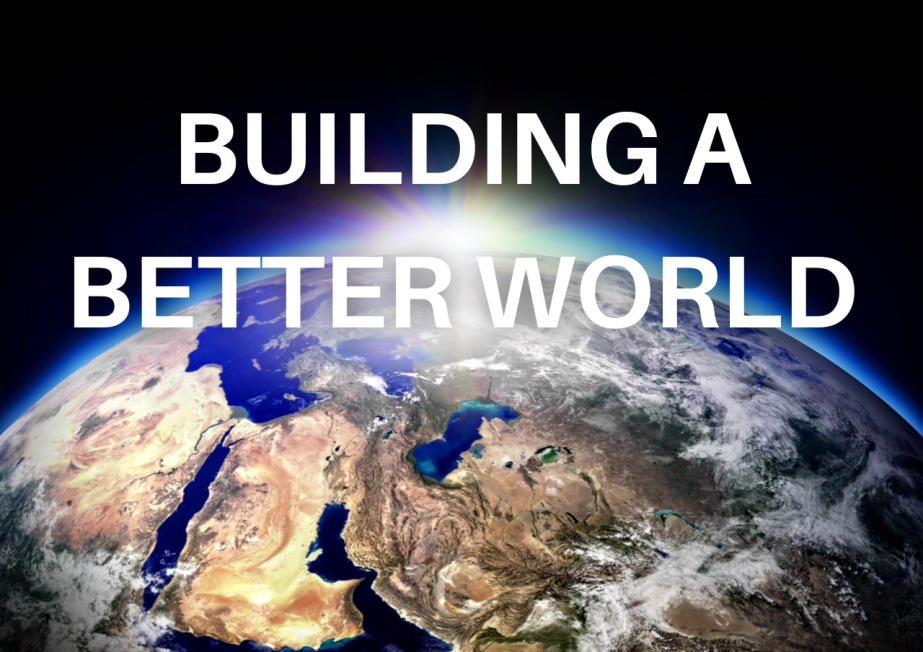
The Olympics have long been held up as the bastion of sportsmanship, of unity in diversity and of excellence. Curious to see the principles behind the organising of the Olympics, I looked up the Vision of the International Olympic Committee, which is “Building A Better World Through Sport.” A worthy vision, and one which is shown in their Values of Excellence, Respect and Friendship. And this got me thinking about how we can make the world a better place after the COVID-19 pandemic put a pause on much of society’s habitual behaviours. During the pandemic the kindness of strangers and the capacity to care flourished amongst neighbours and strangers alike. The concept of Key Workers redefined for many of us who plays an important role in our society and who does not. There was initially talk about going back to normal after the pandemic, or rather a new normal, and it is this idea of a new normal that I want to focus on today.

If we can better choose how we can interact with each other, how we can live together and how we can connect with each other, then this seems like a good time to do it. We can take up the cause of the Olympics of ‘building a better world,’ but not just through sport, but through how we see each other and how we interact with each other. This thing called life is a shared journey from cradle to the grave, but we are capable of lifting each other up, so we may all live better lives.

To illustrate what I am talking about I would like to share a story I saw online recently about a Police Officer in America who pulled a young man over, as his driving licence had expired. The young man explained that he barely had enough money to pay the bills and his rent and could not afford to renew his licence, due to losing his job. He was also on his way to a job interview, in the hope to gain an income and eventually get his licence renewed. The Police Officer left his own car and drove the young man to the job interview and apologised to the Interviewers as he was the reason the young man was late for the interview. The young man got the job and was able to renew his licence in order to legally drive again. Sometimes kindness matters more than the letter of the law. It also matters more than the prejudices and stereotypes that we all have which prevent us from seeing others as equal to ourselves and therefore worthy of kindness.

It is also important to remember how connected we all are. The COVID-19 pandemic showed how our movement around the world can cause diseases to spread, but we can also share our behaviours, our ideas and our values. Kindness and generosity are also infectious. Mother Nature has provided a way to encourage us to be kind and generous. This is how we thrived as a species, by working together. If we are to be generous or kind to someone else without any expectation in return we get a hit of Oxytocin, which makes us feel good. The person we are generous or kind to gets a hit of Oxytocin as well, which means they will likely go and be generous or kind to someone else that day. Even a person just witnessing an act of generosity or kindness will give them a hit a Oxytocin and will encourage them to pay the generosity or kindness forward. We are hard wired to do this, because we are stronger together.

To further show how connected we all are on our planet, here is something from a TV series on Netflix called Connected that blew my mind. It is in the episode on Dust and how important certain dust can be. In Chad, North Africa, in what used to be Lake Mega-Chad, but is now part of the Sahara Desert, there are the remains of fish and other creatures, which once lived in the lake, before the area became a desert. The wind breaks up the skeletons into dust which is then carried by the wind up into the atmosphere and it makes its way all the way to the Amazon Rainforest, in South America, where the dust becomes part of the soil. What is amazing is that the rain in the rainforest washes away most of the nutrients that the plant life needs to grow and survive, but the dust all the way from the Sahara Desert in Chad, North Africa, replenishes it. Around 22,000 tons of phosphorus is deposited in the Amazon Rainforest every year from Lake Mega-Chad, which is about the amount the soil loses every year due to rainfall. Without this process happening, there would be no rainforest. We are truly, globally connected to every other ecosystem on the planet. This is why when we through things away, there is no away. We need to look after our planet as well as each other.

The environmental movement, which includes Greenpeace, sprung to life after a very special photograph was taken when “Apollo 8, the first manned mission to the moon, entered lunar orbit on Christmas Eve, Dec. 24, 1968. That evening, the astronauts-Commander Frank Borman, Command Module Pilot Jim Lovell, and Lunar Module Pilot William Anders-held a live broadcast from lunar orbit, in which they showed pictures of the Earth and moon as seen from their spacecraft. Said Lovell, “The vast loneliness is awe-inspiring and it makes you realize just what you have back there on Earth.” They ended the broadcast with the crew taking turns reading from the book of Genesis.”(1) As they orbited back around the moon toward the Earth the photo Earth Rise was taken as the view of the Earth in the distant blackness of space rose into view over the surface of the moon, which is seen in the foreground of the photo. The sense that if we do not take care of our planet their is no planet B reverberated through the cultures of the West and the rest of the world.

We have now reached a point where taking a trip up to where the Earth’s atmosphere meets outer space is becoming a reality for those who can pay for it. There has been much debate online about the recent endeavours of Billionaires like Sir Richard Branson to develop “rocket planes” that can take people up the edge of space. Sir Richard Branson was the first to have “…successfully reached the edge of space on board his Virgin Galactic rocket plane”(2) recently. The main argument against such endeavours has been why build a rocket plane to take people to the edge of space on tourist trips when there are millions who are homeless, starving and displaced due to war. There are also issues with global warming. It is an argument over priorities and values, over selfishness and selflessness. Tickets to take the Virgin Galactic up to the edge of space cost up to £180,000, again money that could be spent helping our fellow human beings. I guess the main ill feeling comes from the disproportionate distribution of wealth and the fact that there are billionaires in the world where much good can be done if this wealth was shared. If a tenth of the wealth held by the Billionaires of the world was spent on helping those in need, the quality of life for many would be improved. Access to water, electricity and education, for example.

But we are not all Billionaires, far from it. Most of us have enough to survive and a little bit more to save or spend on nice things. This begs the question what can we do to make the world better? If we are to go back to the Vision of the International Olympic Committee, “Building A Better World Through Sport,” we can think about what Vision we might have for our lives. If your Vision began with “Building A Better World Through…” what would come next for you? I would suggest you build a better world through kindness. Kindness to the environment and kindness to the people we interact with each day.

However, it is not always easy to be kind, especially if we are asked to be kind to those we really do not like. In the Bible Jesus asked us to Love our Enemies? You might not think in terms of ‘enemies,’ but you will have people you would rather avoid, people you dislike. How do we build the capacity to be kind to those people? A good place to start is to work on the prejudices and stereotypes we all have, on the barriers we have that create an us and a them, so we can start seeing each other as human first, and then we can increase our generosity and kindness on a daily basis. The more people we are generous and kind to the more people will do the same for others. And you will feel so good at the end of the day.

Reference:

1: https://www.nasa.gov/multimedia/imagegallery/image_feature_1249.html

2: https://www.bbc.co.uk/news/science-environment-57797297

Developing The Pathway To Fulfilment

My intention is to create a process by which you can start to live well. To me living well means to live in a way that brings about happiness and success, which in turn brings about fulfilment in our lives. This is not a life hack or magical cure for what ails you. It is a deeply personal journey of self-discovery, of life balancing and of purpose finding. This is an evolving process, until I feel a clear and actionable ‘Pathway’ is created, so it can be shared and used effectively.

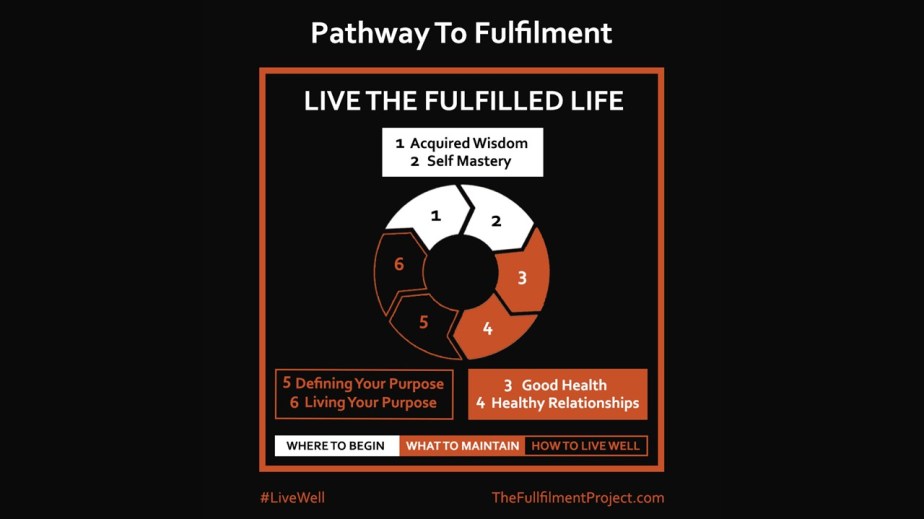
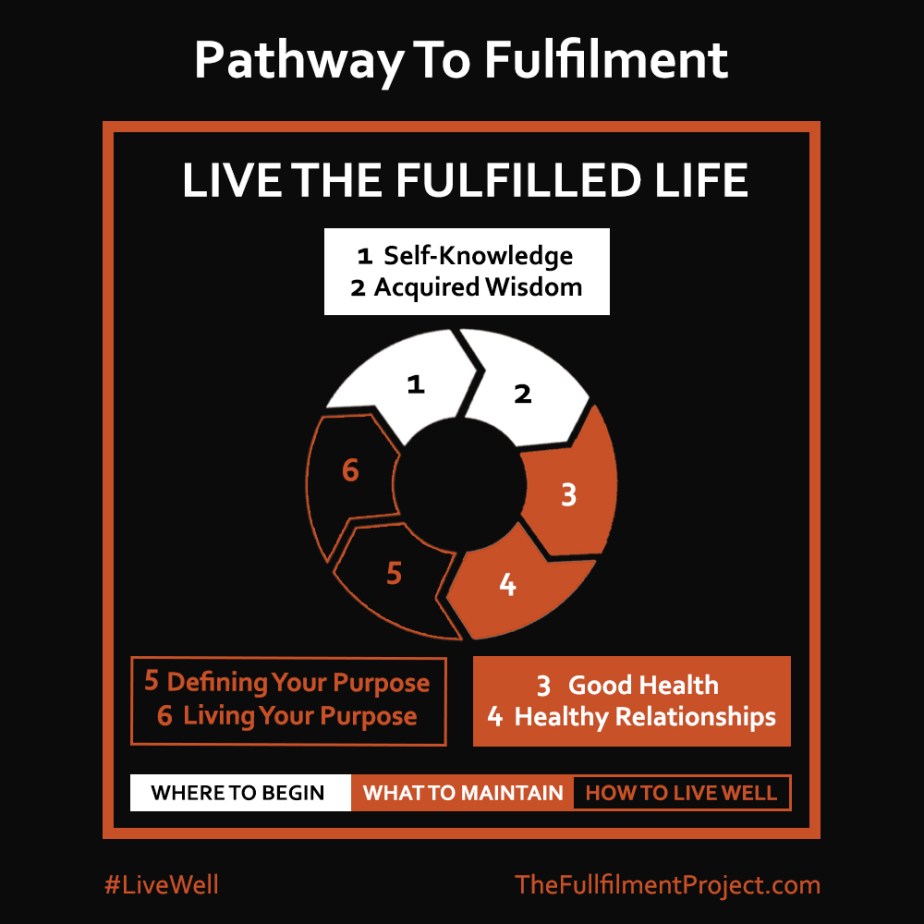
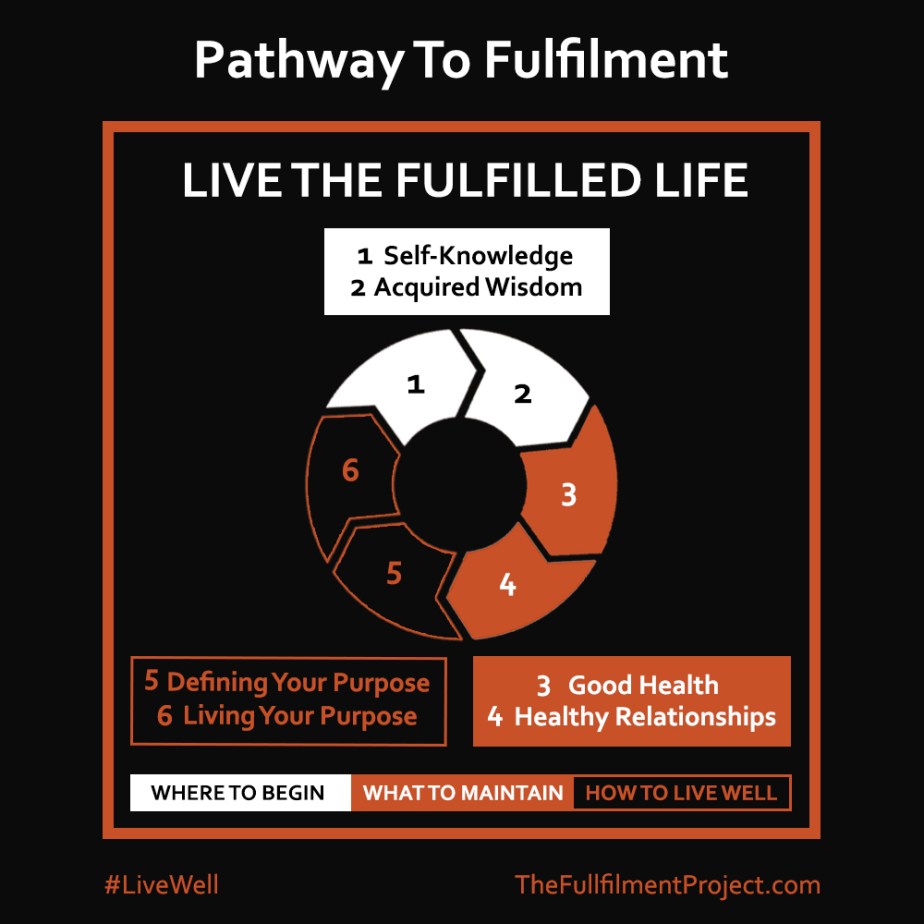
I have reflected on the first two steps to the existing Pathway and have moved Acquired Wisdom to Step 1, as I feel that wisdom gives us a strong foundation from which to build. I have replaced Self Knowledge with Self Mastery and moved it to Step 2, as self knowledge is a useful mental exercise, whereas self mastery is an actionable way of being, which is built on both wisdom and self knowledge. This, I feel, is a more effective part of the journey, as self mastery is required in order to have a life well lived. The six steps  are now Acquired Wisdom, Self Mastery, Good Health, Healthy Relationships, Defining Your Purpose and Living Your Purpose.

The six steps of the Pathway To Fulfilment are divided into Where To Begin, What To Maintain and How To Live Well. Now that I have an outline of a process that I believe will bring about fulfilment in ones life, I aim to add in the detail of the activities and actions you will follow within each step of the journey towards fulfilment and a life well lived. Watch this space and the Facebook Group Community for up and coming updates.

WHERE TO BEGIN

Step 1: Acquired Wisdom

We acquire the wisdom of others from a variety of sources, spiritual and secular. Wisdom challenges us and enlightens us. Often this is achieved by extensive reading, but, with the internet, a lot of this same wisdom can also be obtained through videos, audio books and pod-casts, however you learn best. This wisdom will feed into what you already know about yourself, it will influence how you see yourself and how you choose to live; helping towards self mastery.

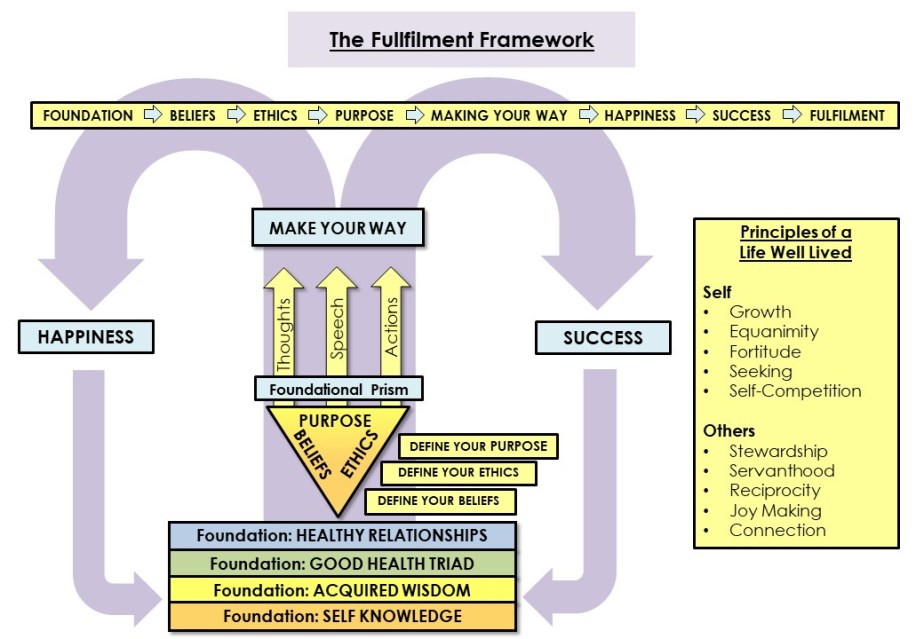
There is a lot of wisdom out there to acquire, and it can sometimes be hard to distinguish wisdom from well sounding ignorance, so to simplify things for you I have broken down the wisdom I have found into ten Principles Of A Life Well Lived that will help you navigate the world skilfully. They are what I consider to be the essential wisdom to acquire. I will delve into each principle and explore how it will enhance your life. I have divided the principles into those that relate to Self and those that relate to Others. The principles related to Self are Growth, Equanimity, Fortitude, Seeking and Self Competition, and those related to Others are Stewardship, Servant-hood, Reciprocity, Joy Making and Connection. I will be sharing more detail on these moving forward.

Step 2: Self Mastery

The process of self mastery begins with getting to know yourself more substantially than you may have before; figuring out what really makes you tick, what you believe and don’t believe, what you think is true and false, what you think is ethical and not ethical, etc. It includes figuring out your beliefs and your ethics. Also, what happiness and success look like to you, personally, because our happiness and success are relative to our values, which are very personal to each of us. Our happiness and our success will not bring about fulfilment if they are not aligned with our values.  Self mastery begins with broad and deep self-knowledge and then in order to gain and maintain mastery of yourself you will need to cultivate both body and mind, the tools for which will come from the ten Principles Of A Life Well Lived.

This will primarily be mastery of your thoughts, which is the same whether you are embarking on self-development or a journey of faith. Our mind and body are in a sort of synergy, which means our thoughts effect the chemistry our brains create in our bodies, which in turn creates sickness or wellness. Wellness, being the optimal state to be in. Also, that if we fine tune our body through exercise, through practices such as Yoga, and if we cultivate strong Qi (Chi) in our energy system, through practices like Tai Chi and Qigong, our physical well-being will flourish and allow our mental mastery and well-being to develop too. Self Mastery is both physical and mental, which leads me to Step 3: Good Health.

WHAT TO MAINTAIN

Step 3: Good Health

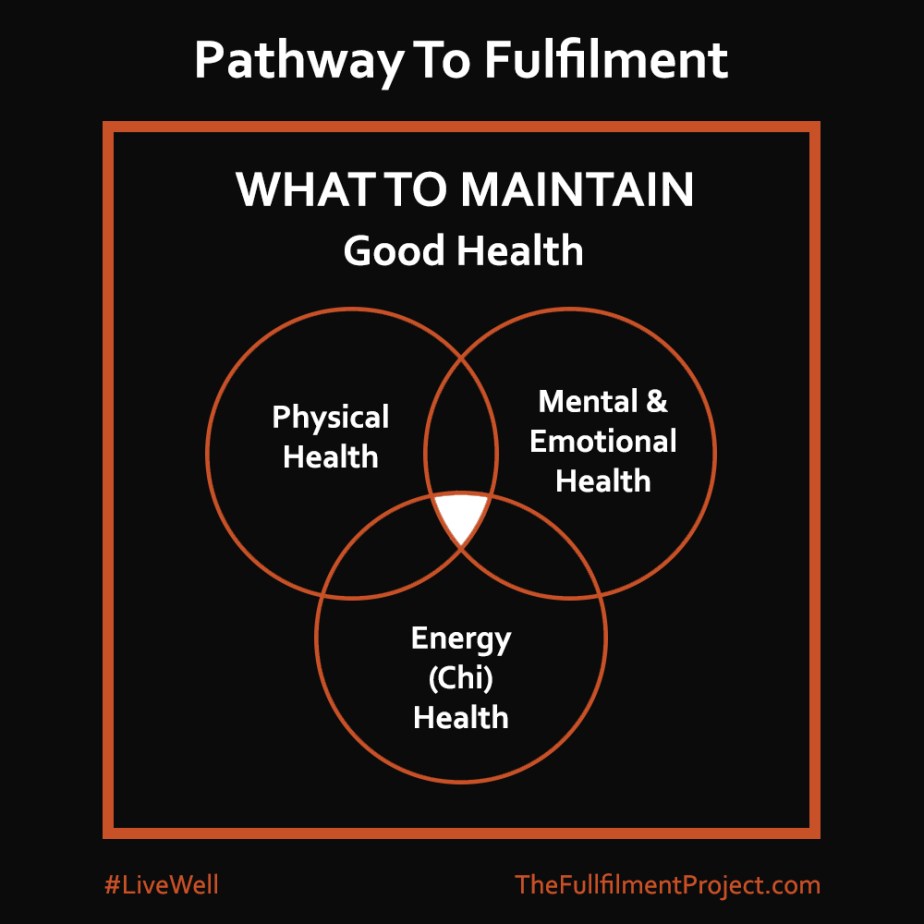
Your health should be of great concern, because good health is essential for your well-being and having an active, fulfilling life. I have included the usual physical health and mental and emotional health, and I have also included energy health; all of which could be thought of as a triad of good health. Good physical health includes diet and exercise. Good mental and emotional health includes mastering your emotions and balancing your thoughts. Good energy health includes mastering the Qi (Chi) that flows through your energy system, like blood through your bloodstream, as detailed in Traditional Chinese Medicine. To have good health you need to work on all three of these areas.

Step 4: Healthy Relationships

In this step you look at your relationships, and identify those relationships that are good for you and those that are not, and those that are a mixture of the two, that need work to become good. You should continuously work towards all of your relationships being healthy ones; meaning that they bring you happiness rather than stress, they uplift you rather than bring you down, and they are aligned with your values and ethics. These relationships are in circles of community, which are relationships with your self, your partner, your family, your friends, your colleagues and your acquaintances, and they are all interconnected.

HOW TO LIVE WELL

Step 5: Defining Your Purpose

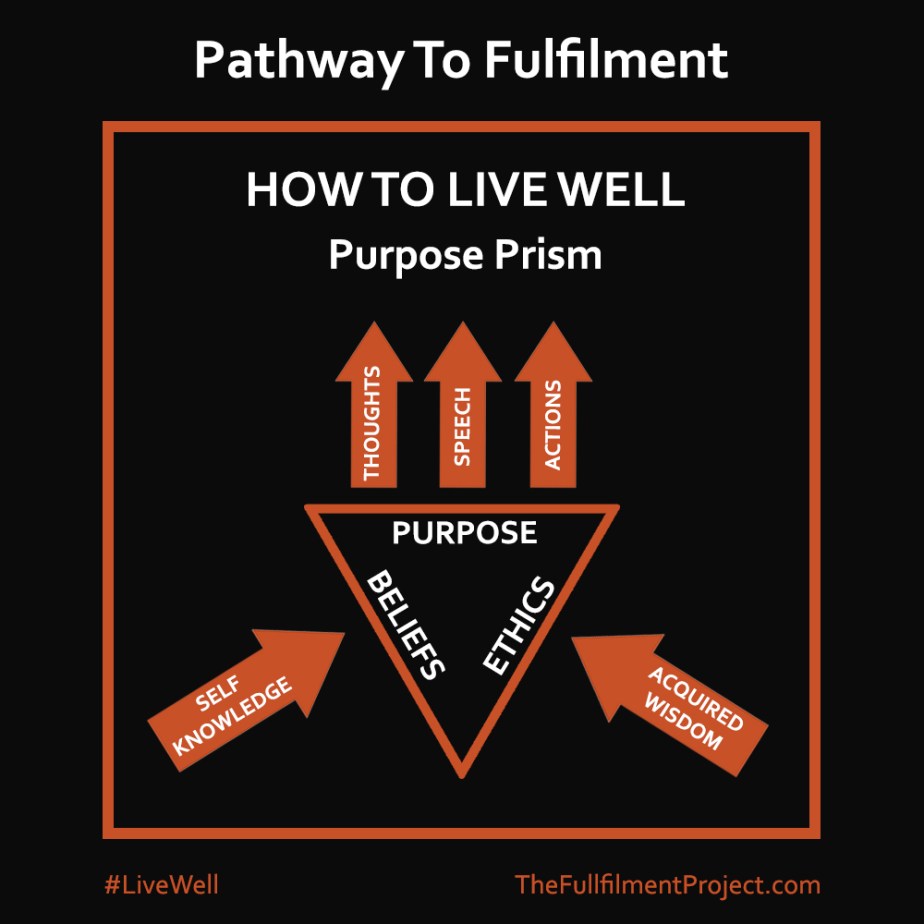
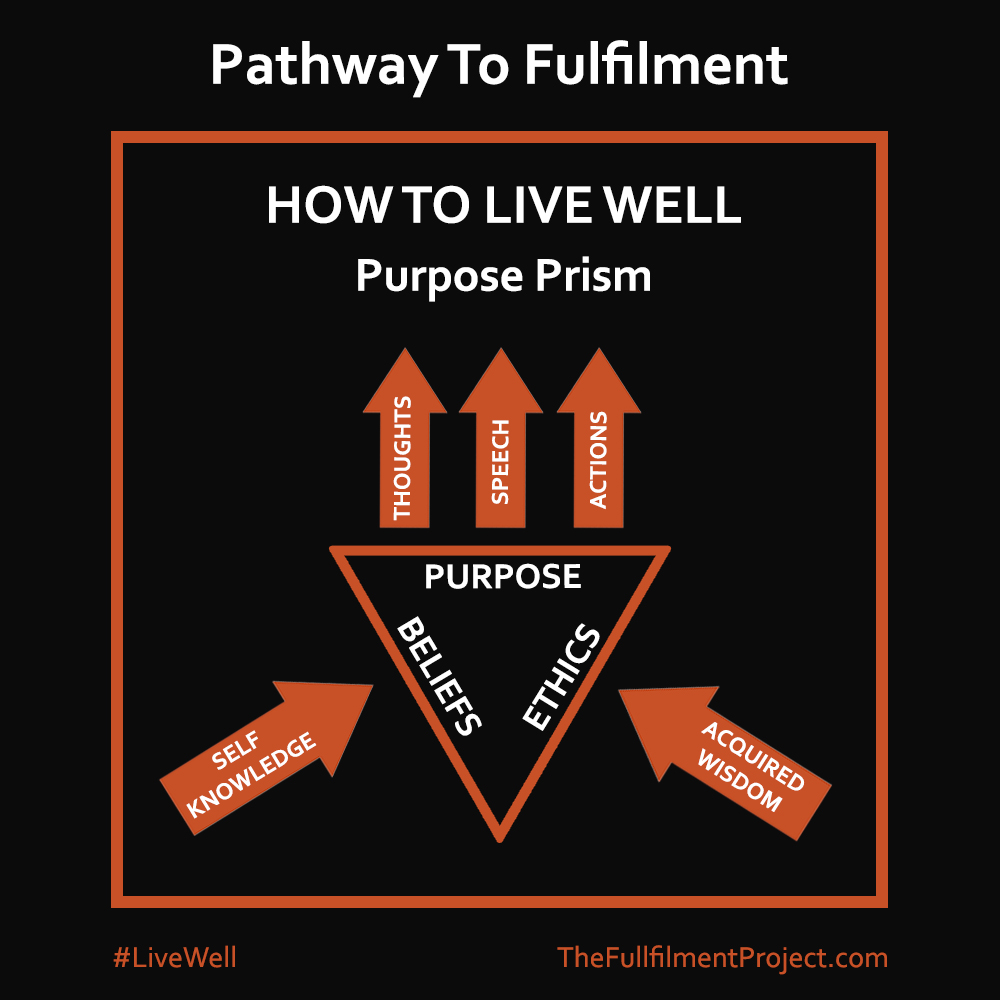
After working your way through this journey so far, you will have a solid foundation for how to start living your life better. From this new understanding of yourself, your defined beliefs and ethics form part of what I call your Purpose Prism, the third piece of this prism being your purpose. You will go through a process of building on your beliefs and your ethics, weaving in Acquired Wisdom and Principles Of A Life Well Lived, and all you have learned from steps 2, 3 and 4 and define your personal purpose. This prism is the filter through which you will see and experience the world, and it will influence your thoughts, speech and actions, making them wiser in nature. Your purpose comes from a vision of a better world that you want to help create.

Step 6: Living Your Purpose

You will then be set to start applying your beliefs, ethics and purpose to your life, to find your best way to live them out in your thoughts, speech and actions; to act on your vision of a better world through everything that you do. This is living your life on purpose. All of this work will mean that both happiness and success become personal, and therefore fulfilling, all three of which are bi-products of a life well lived. When the garden of our lives is tended to properly, these things blossom, but if we focus on achieving them without tending to the important things in our lives then these things will not blossom. Your happiness, success and fulfilment along your journey then feed back into your acquired wisdom, self mastery, health, relationships and your beliefs, ethics and purpose, and on it goes, because this journey is a life long endeavour. Follow the Path To Fulfilment and live well my friends.

Cultivating Wellbeing

Wellbeing is often thought of as an ambition to feel better and laugh more. This is like looking at a garden and focusing on the need to have flowers. This is upside down thinking. If we were to plant the seeds, cultivate the soil, water the ground and ensure there is good sunlight, then flowers will appear. If we cultivate our bodies, so we may feel physically well, cultivate our relationships, so we may feel connected to others, cultivate our thinking, so we may feel mentally well, and cultivate our purpose, so that we have a direct towards which we work, laughter, joy, love and a feeling of wellbeing will blossom all by themselves. Without this wellbeing will never blossom.

Choosing Joy

“I don’t think of all the misery, but of the beauty that still remains.”
― Anne Frank

Recently I have been suffering with what appears to be Sinusitis and Labyrinthitis, which has caused sinus pain, painful ears, dizziness and Tinnitus for the past four months. I have been through several stages of dealing with this seemingly unending suffering. First I thought that it cannot last that long. Then it did and I became somewhat unhappy and a little depressed about it. Then I remembered the words from Man’s Search For Meaning by Viktor E Frankl, “Everything can be taken from a man but one thing: the last of the human freedoms – to choose one’s attitude in any given set of circumstances, to choose one’s own way.”

I began to seek out reasons to be joyful. I work in telephone customer services, so I speak to a lot of people. Some of which, as is normal in customer service, are unhappy and take it out on you. I began asking customers how their day was going and having really lovely conversations about the ups and downs of life living through a pandemic. I focused on how lucky I am to have a Wife and Daughter, to still have my parents, to wake up each morning. The pain, dizziness and noise in my ears remained constant, though subdued through medication periodically throughout the day, but my attitude to how I was physically feeling changed. I decided not to let how I was physically feeling determine how I was mentally feeling. This helped a lot, I began to feel that there is a way to master how we choose to feel each day, joy being the best feeling to aim for.

I then moved into a phase that was reflective. I reflected on how I miss silence and being pain free. I realised that the simple things in life are really important. The ability to sit and meditate without the constant buzzing of Tinnitus will be something that I will savoir once I recover from whatever is going on in my sinuses and ears. It is important to be grateful for everything that we have, as well as the tough experiences we have. The valleys we go through serve to highlight the euphoria of the mountains we climb. We all have, to varying degrees, the ability to choose how we want to feel, by choosing what we focus on. If we are unwell do we focus on how that is making us feel or do we focus on still having the ability to do the things we enjoy, even if the illness reduces these options. We all have the ability “…to choose one’s attitude in any given set of circumstances, to choose one’s own way.”

The Skill of Optimism

“While you can’t control your experiences, you can control your explanations.”
― Martin E.P. Seligman

Much is often said of the optimism of youth and that such a person is optimistic and another person is pessimistic, as if they are both something we have as innate abilities, like being funny or courageous or creative. Much of what we see as personality traits are in fact based on learnable, practicable skills. It all depends on knowing the underlying behaviours and thinking patterns that bring about said optimism or pessimism.

In his book Learned Optimism, How to Change Your Mind and Your Life, Martin E. P. Seligman, Ph.D lays out his evidence for the theory that optimism can be learned and that pessimism left unchecked can make us feel helpless, which is the essence of depression; depression is essentially prolonged helplessness. The root cause of both pessimism and optimism is how we explain bad experiences and good experiences to ourselves, how we explain failure and success.

I will let Martin E. P. Seligman explain this is their own words. “The optimists and the pessimists: I have been studying them for the past twenty-five years. The defining characteristic of pessimists is that they tend to believe bad events will last a long time, will undermine everything they do, and are their own fault. The optimists, who are confronted with the same hard knocks of this world, think about misfortune in the opposite way. They tend to believe defeat is just a temporary setback, that its causes are confined to this one case. The optimists believe defeat is not their fault: Circumstances, bad luck, or other people brought it about. Such people are unfazed by defeat. Confronted by a bad situation, they perceive it as a challenge and try harder.”
So, how do you explain misfortune to yourself, do you say things like “why does this always happen to me?” The emphasis on the always will make it seem like the misfortune will happen again and again and that it all your fault. The language we use to explain misfortune to ourselves matters, because seeing misfortune as permanent, pervasive and our fault makes us feel helpless, with no way to make things better. If we begin to train our thinking to explain misfortune as temporary, specific and caused by factors outside of ourselves then we build our skill of optimism.

Optimists, according to Martin E. P. Seligman’s research, also see success as permanent, pervasive and created by themselves, and pessimists see success in the opposite way. A simple flip of how we explain misfortune and success changes everything, and we go from pessimistic to optimistic. However, the way we explain the events in our lives has been developed and somewhat hard wired into our brains from childhood. It is not a quick process to changes our thinking, but it is possible through repetition.

It helps to monitor how we explain the events in our lives and keeping a journal to document our explanatory style (pessimistic or optimistic) and to create language that develops optimistic thinking can change it over time. This is positive, it means that your success and failure are in your hands. It means that you can develop bulletproof optimism that will lead to a happier and more joyful life full of successes and, ultimately, a more fulfilling life. So, take back control over your life through your explanations of what happens in it and make it a life well lived.

Setting Goals For 2021

“It must be borne in mind that the tragedy of life doesn’t lie in not reaching your goal. The tragedy lies in having no goals to reach.” — Benjamin E. Mays

Another year has begun, and like many people I have set myself goals for the coming year, things I intend to do to improve or enrich my life. I’m sure many of you have at least thought about making new years resolutions, it is something that seems to be a requirement of starting a new year. Often our goals are based on what we have done or not done in the previous year. 2020 has been a very different year for us all. Much of what we had planned at the beginning of the year had to be set aside as we navigated the challenges of living through a pandemic.

We have had to connect through screens to feel close to the people we love, our families, our friends, and many used Zoom to maintain team cohesion at work and fellowship in collective worship. The year 2020 will be a year that we will want to leave behind us. It has taken its toll on us in many ways. However, with the vaccine being rolled out we can look at the year ahead with more optimism. We can hold true to the very human notion that better things are coming our way. There is hope that we will return to a sense of normality. More than ever in our lives, the end of one year and the beginning of another brings with it a sense of both relief and hope. Hope for a better year to come. More than ever, this is also a good time to look at setting goals for what we want to achieve in the year ahead, Coronavirus permitting.

As we set these goals we could consider some of the top new years resolutions, like being more organised, quitting smoking or learning something new. These are all good resolutions to aim for. The general impetus is the improvement of ourselves and our habits, but underneath all of them, I think, is the drive to try and become happier; happier with ourselves and with our lives.

For as long as human beings could conceive of such things, people have been in search of this thing we call happiness, this illusive state that underlies the motives behind much of our thoughts and actions. Aristotle said that “Happiness is the meaning and the purpose of life, the whole aim and end of human existence.” However, it is often something that we experience only in fleeting moments, in brief periods of time that come and then go as we venture on into the future of our lives.

This is often the case because we are seeking happiness out there in the world. We often make the acquiring of things the way in which we try to find happiness. Whether it is a new car, a new TV, recognition for an achievement or becoming wealthier than we currently are, the failure is always going to be in the hope that the things and people in the world are going to match our expectations. Things rarely work out as we expect them to, life, as we have discovered over this passed year, is often not like that. If we look at the many religious and philosophical writings of the world we will find a recurring idea, that the root to happiness is to be found within ourselves rather than in the acquiring of worldly things.

In the Bible in the Gospels of Matthew, Mark and Luke it says “It is easier for a camel to go through the eye of a needle than for someone who is rich to enter the kingdom of God.” A parable I think many of us have frequently heard, and what Jesus means by the ‘Kingdom of God’ is heaven, a place or state where we would have complete and unending happiness. You may not believe that there is such a place or state as heaven, and you are well within your rights to do so. Beliefs are personal and personal beliefs should be respected. But if there was such a thing as unending happiness, it would be such a wonderful thing that most, if not all, of the world religions have this desire at their very heart. Indeed it is at the very heart of what it means to be human. Whether we call it heaven, moksha or nirvana the experience of it will be the same.

Just before the passage in the Bible about the camel and the eye of a needle, Jesus says “Truly I tell you, anyone who will not receive the kingdom of God like a little child will never enter it.” Here I think Jesus means that if we try to receive heaven with expectations then we will never receive it. In other words, if we seek happiness with expectations then we will not become happy, because, as I have said, life rarely conforms to our expectations of it. I say this because one of the main things that separates children from adults is that children begin from a place without expectations, they do things for the pure joy of doing them. They spin around on swings, climb trees, dance and run around because they enjoy doing so. They do not think about the end result of spinning around on a swing, they just do it. We can learn a lot from children; I think we loose a lot when we transition into adulthood.

In the Tao Te Ching, a text written around 500 BCE by Lao Tzu, a Chinese sage, teacher, and scribe, it says,

“Better to stop short than fill to the brim. Oversharpen the blade, and the edge will soon blunt. Amass a store of gold and jade, and no one can protect it. Claim wealth and titles, and disaster will follow. Retire when the work is done. This is the way of heaven.”

To be and to do, this is what is important, rather than to get and to have.

I have heard it said that we struggle to find happiness  because of the very act of seeking it. This might sound crazy, but what I mean is, that if we make the pursuit of happiness a demand, something that we feel we must do, then the pressure of this demand can make us unhappy. The desire to be happy becomes twisted into a demand that we think we have to achieve. What we need to do instead is to create the conditions for happiness in our lives. This could be found in enjoying activities for their own sake, much like children do. When we are engrossed in something we become one with the moment that we are in. There is no past or future, only the now, the moment we are in. When we are engaged in sporting activities, creative activities,  good conversations, listening to a fantastic piece of music, we are lost in the moment, we are centred and content. We have all experienced glimpses of this and once we have had a taste of it we generally want more, and I think this fuels our pursuit of happiness.

The problem with life is that with the fantastic moments also come the sad and painful moments, moments that can make us feel that we may find it difficult to find happiness again, so we immerse ourselves in the pursuit of happiness in the world, when the answer is not in our experiences in the world, but in our understanding of those experiences. Happiness is found in how we view the world and all the people and things within it. It involves our beliefs and our opinions, and it involves letting go of our prejudices and judgements.

There is something else which is important, especially in times such as these, and that is building resilience. Some people are generally more resilient to challenges in their lives, and some really struggle. I recently watched a TED Talk on The Three Secrets of Resilient People and I think they are good pieces of advice. The first is that resilient people now that challenges happen, that everything is not all a bunch of roses, they are realistic about the ups and downs of life. They also do not say to themselves, “why does this happen to me,” which would put them in the position of a victim, which takes away any control they think they have in the situation.

The second is that resilient people are careful where they choose to put their attention. They focus on what they can change and not what they cannot. We are hard wired through evolution to pay attention to the negative, to the things that could harm us, but we no longer have to worry about a sabre-toothed tiger being around the corner. In short, resilient people tune into the good things in life, they focus on being grateful every day. In fact studies show that if we think of three things to be grateful for each day over a period of months our tendency towards depression decreases and we become happier.

The third is that resilient people ask themselves, “is what I am thinking or doing helpful or harmful” and if it is harmful they they stop and change to something more helpful. They are kinder to themselves, and this puts them in the drivers seat of their lives. It gives them control over the decisions they make.

These three actions are things that we can all do, and we are all people who have and will have challenging times, especially at the moment. Following these three steps can make the challenges we face easier to bear and make us more proactive in our own happiness making.

This all being said, should we still make new years resolutions? Of course we should. Without setting goals we will never progress or achieve anything, but I would suggest we should firstly think about what it is we really want, what personal problems we are currently facing and how we might change our thinking or our actions to make them better. However, these goals should come from a desire rather than a demand, within a context of the changes we can make in our lives that will allow our goals to happen. This is creating the conditions for happiness to find us, rather than seeking the happiness we want.

Every living being has the right to be happy, but we should remember that it is OK to be happy with what we already have; we can be content with what we already have. So it can be helpful to think about what in our lives is just as we want it to be, what things don’t need changing, and whatever is left over can become things we aim to improve. Being aware of the good things in our lives first can make us more grateful, and therefore happier without trying to achieve happiness.

We could also set ourselves goals aimed at improving the lives of other people. This could be giving to charity or a food bank, it could be trying to make other people smile each day, whatever we can think of to help other people. Whether we did or didn’t achieve our goals last year let us strive to achieve our goals this year. Let us aim to make it a very good year for ourselves and all of those around us, because some of the best goals are those that enrich and improve the lives of other people.

2020 was a very challenging year, but we got through it. People came together and did extraordinary things in the service of others. The human spirit persevered. We take this energy through to a new year. Let us make it a wonderful year, for us all.

Making The Most Of 2021

“There is nothing magical about the flip of the calendar, but it represents a clean break, a new hope, and a blank canvas.”

― Jason Soroski

The year of 2020 will go down as possibly the worst year we have lived through, especially for those born after World War Two. The Coronavirus has ravaged our health services, our economies and our personal lives through loss and separation. The end of 2020 and the beginning of 2021 was an emotional one for many, as it means that even though we still need to remain vigilant around keeping ourselves and our loved ones safe, through social-distancing measures, 2020 is behind us.

In 2020, many of us had to adjust to living more solitary lives, with us not being able to mix with friends and family as we normally would, and many had to learn new skills around working from home. The term Key Worker took on new meanings, as supermarket assistants became essential to keeping us all going. Those on the front line in hospitals in our battle with this virus went through seemingly unending heartbreak with a kind of hardy stoicism that made them into superheroes in our eyes. The use of technology like Zoom became the way we remained connected to loved ones, to congregations from places of worship and to colleagues for team meetings, where we gathered remotely. Much of which we will be taking with us through to the coming year.

All of the normal things are true about starting a new year. The days will be getting longer and warmer, we get to set goals for the year ahead and there is a new beginning before us; we can rethink what we want out of life and we can reinvent ourselves to a degree. This is our moment to decide what we want our 2021 to be like. There will still be much that we cannot control, as is the nature of life, but if we accept what we cannot control we can put our focus and our energy into the things we can. The prime example of this is our attitude to the circumstances we are in. If we are working from home, we can see this as a barrier to team cohesion or we can see it as an opportunity to learn new skills and work in a more flexible manner to get our work done. If we have to use technology like Zoom to keep in touch we friends and family, we can learn new ways to connect and be grateful that this pandemic is happening now and not before the invention of the internet.

So, when it comes to setting goals for the coming year I would like you to consider that one of the reasons that new year’s resolutions tend not to work is that as we are resolving to make the changes for the year ahead, by default, we are not thinking of them as permanent changes, therefore we are often not 100% committed. Research on this tells us that even if we are 98% committed, we often do not follow through, because that 2% matters. Instead, if we see the new resolutions as life resolutions with 100% commitment, then the decision is made, it is done, and we do not need to deliberate it any more. We are all in on the new changes we are making.

The areas I recommend you look at making goals in are your health, your career, your relationships and in your self mastery. The last one is around developing a growth mindset, seeing confidence, optimism and resilience as skills to be developed. Also, to go all in on the project, the plans or the challenge you have been putting off. If we have learned anything from 2020 it is that life is precious and a long life is not a guarantee. So, let’s go and make 2021 an amazing year, full of ambitions achieved, kindness shared and joy generated.

How To Make The Best Out Of Life

“One way to get the most out of life is to look upon it as an adventure.” William Feather

How do we make the best out of our lives? This is an age-old question that has seen many different suggested ways of achieving it. I believe that we find this question so hard to answer because we have grown up in a world that favours things more than relationships. If there is a scale of what makes people happy, I believe there would be relationships at the happy end and things somewhere towards the other end of the scale. I’m not saying that things can’t make us feel good; buying a new car, a new piece of clothing or a new mobile phone can make us feel good, but this is not happiness. This is a good feeling created because our bodies release dopamine, a hormone released by the brain.

Whenever we achieve something or we get something we want, our brain releases dopamine to make us feel good. This is partly how our ancestors survived, because finding food or a mate felt good, making us want to do it more and more, it is a survival mechanism. There are many other hormones that our brains release in different situations, causing us to be in different states, whether we are anxious or angry, sad or hungry, the state we are in can dictate how we behave and what we do or say. What state we are in matters, and I believe that we can, to some degree, affect what state we are in, by choosing what we focus on and how we respond to the circumstances that we find ourselves in.

If we let our circumstances dictate our lives, we will be like a ship without a rudder or a sale, and we may be thrown against the rocks by our circumstances. To illustrate this, I have an extreme example of how some, even under the most horrendous circumstances, can choose how they respond to these said circumstances. Viktor Frankl, a Jew, who survived being an Auschwitz concentration camp inmate, imprisoned by the Nazis during World War Two, years later wrote the book Man’s Search For Meaning, a reflection on his time in the concentration camp. Viktor Frankl’s experience and his training as a neurologist and psychiatrist gave him a unique perspective on finding meaning in the worst of circumstances.

In this book he wrote “We who lived in the concentration camps can remember the men who walked through the huts comforting others, giving away their last piece of bread. They may have been few in number, but they offer sufficient proof that everything can be taken from a man but one thing: the last of the human freedoms — to choose one’s attitude in any given set of circumstances, to choose one’s own way.” This is an extreme example, as I have said, but I believe what was said in the quote applies to any human experience. Some circumstances will undoubtedly make it very difficult to “choose one’s attitude,” but I believe that this is the key to making the most out of our lives and how we can lead a happy life rather than the opposite. I know from personal experience that this is not easy, but with practice it is possible.

Another example from history is that of Nelson Mandela, who is famous for memorising the poem Invictus, which was read to you earlier, and how the poem helped him stand when all he wanted to do was lie down, during his time in prison. On the first day he arrived at the prison on Robben Island, that would become his home for the majority of his 27 years in prison, he insisted that the guards address him as Mr Mandela, he would not respond to anything else. In the end, the guards gave in and did so. Nelson Mandela chose his attitude to the circumstances and demanded to be treated as an equal. 27 years later, as he was released from prison, becoming a free man, he realised that if he continued to hate those who imprisoned him, he would never be free. He decided to forgive, and in doing so he lead the whole country as its President to peace through forgiveness.

Choosing one’s attitude to the circumstances we find ourselves in is a powerful way to get the most out of life, it puts us in the driving seat of our lives. It allows us to respond to circumstances rather than react to them. One way to do this, that I have found helps me, is to focus on being grateful for as many things as possible. Grateful for having a family, for having a home, for the air I breath, for the relationships I have, for the challenges that test my patience, for opportunities that life sends my way. It is very hard to be angry and grateful, or sad and grateful.

If you are lucky enough to be born in the western world you have effectively won the lottery. There are countries where the citizens do not have access to the Internet or the government controls the media they have access to and people can be executed for things we take for granted in our day to day lives. These are extreme examples but they are true. A large percentage of the world’s population live on less than £1 a day. In comparison, many of us live a dream life. So, perspective can be a great motivator to become more grateful, and gratitude is a powerful force that can bring happiness to your life.

Sometimes life can seem to give us challenge after challenge to the point where we struggle to keep ourselves going. The impact of the Coronavirus pandemic have brought us many struggles, financial and social, many have lost loved ones or have felt the difficulties of isolation, as we keep our distance from each other in order to keep each other safe. Sometimes life can seem out to break us, but what can keep us strong is the relationships we have. Our strength often comes from other people, others pick us up when we are knocked down by life and we pick up others in the same way. We all live in a community of human connections. We may sometimes feel that we have to go on alone, to stand strong by ourselves, but just asking for a little help can change our whole perspective on what is happening.

Sometimes, when life becomes hard, we can feel that we are not making any progress, we might be making little steps forward towards our goals, but because they are little steps they don’t feel significant. However, baby steps still count, as long as we are moving forward. When life is hard we can end up focusing on the negative, which does two things, it can make us feel miserable and it can mean we miss opportunities that come into our lives. This is when we need to consciously focus on the positive and to create an opportunity mindset, which everyday looks for opportunities. You may believe in God, you may believe in Karma, you may believe in luck, but if we don’t see the opportunities that come into our lives then we will miss out. This reminds me of a story I once heard about a flood that left a man stranded on the roof of his house, surrounded by water. A man came past the house in a small boat to help people to safety, but the man refused the help and said, “God will save me.” Then a helicopter came to pick him up and again he refused saying “Gods will save me.” Soon the water level rose above the house and the man drowned. When he went up to heaven he asked God “Why did you not save me?” and God said “I tried, I sent you a boat and I sent you a helicopter.” Sometimes we need to open our eyes to get the most out of life.
Some say that religion can help you live a good life, which I believe is partly true, it depends on how you apply the teachings of the religion. Most religions have good teachings, but like in the Biblical reading, if the teachings are taken to heart, they do form a strong foundation for our lives. The teachings of the world religions invariably preach forgiveness, gratitude and love, they promote the necessity of community and that we should be generous in spirit, these are the ways in which we can make the most out of our lives. We all know this, but we do not always put it into practice. I am guilty of this myself, as we all are, but if we try every day to be better than we were the day before, then we can make our lives a wondrous experience, full of hope and joy, of friendship and love. We can create a community that includes as many people as we choose to include.

Our lives are not just our place of worship community, our job community, our family and friends community, we often live at the intersection of the relationships we have with others, but this is not a bad thing. The best in life exists on the boarders of two neighbouring places, just look at the edges of jungles and open land, or where fresh water meets the sea. Life thrives in these places, and it is the same in our own lives. Our relationships are in a way the framework of our lives. Our beliefs are our foundation and both are needed to be strong enough to withstand the storms of life. Let us all strive to be grateful and generous, joyful and respectful, loving and open to new opportunities, and focused on building positive relationships with those in our lives.

Making The Most Of Lockdown

“The oak fought the wind and was broken, the willow bent when it must and survived.”
― Robert Jordan

Challenging Times

It looks like it might be here again in England, full lockdown. We will find out this week, when Parliament debate it. At the start of this week panic buying began again, made worse by the sudden need to Christmas shop, just in case the lockdown continues into December. The fear and the loneliness. The uncertainty and the financial stress. These are challenging time.

Some might say that having a bit more time to ourselves could be used for self-development or devoted to a hobby or passion. It is not so easy if we are worrying if we can pay our bills or our rent or mortgage. However, sometimes deepening a spiritual practice or devoting time to an activity we love can heal the soul, just a little.

Can Escapism Help?

I am not saying that meditating more or finding a hobby will solve everything, but it can certainly help. These sort of things do bring a form of escapism, in some cases, and in others can bring meaning to the experiences we have, both good and bad. Much in religious literature, for example, is guidance on how to deal with suffering.

Mostly, we do not have the time to devote to such nourishing activities, because life has a way of becoming busy. We take on responsibilities in order to progress and our personal lives can be filled with family time and relationship time. Often time for personal activities is at the bottom of our priorities. The irony is often that more focus on doing what we care about or what we love brings more joy and meaning, and we become better and more productive at the other stuff in life.

Attitude Is Everything

Lockdown could be seen as forced imprisonment and restrictions, but on the flip side it can be seen as more available time, time being a resource that cannot be replaced. Even if your finances are becoming uncertain or insufficient, or you are separated from your loved ones, finding something creative or fun or spiritual can build some resilience and lift your spirits.

In life one of the few things we have control over is our attitude to our present circumstances. Something that Viktor Frankl writes about in their book Man’s Search For Meaning, which recounted their experiences as a prisoner in Nazi concentration camps. Some prisoners would give up where as others would go around making sure everyone was as comfortable and reassured as they could be. They chose a mission, to take care of those around them, and it got them through the horrors they were facing.

Our attitude to our circumstances is our first line of defense against despair and depression. If we chose to take care of those around us, whether friend, family, colleague or acquaintance, we choose to make our situation and theirs better. If we choose to use our time wisely, when a lockdown provides us with more of this finite resource, our life becomes fuller and nourishing. 

Conclusion

We can find a way forward, no matter the apparent bleakness before us. So paint, draw, dance, learn, share, sing, build, pray, meditate, contemplate the meaning of things, use your time constructively and this part of your life will be the beginning of better tomorrows.

How To Live Your Purpose

“If you have a strong purpose in life, you don’t have to be pushed. Your passion will drive you there.”
Roy T. Bennett

Starting With Your Why

The work of Simon Sinek has popularised the idea of having a Why with his book Start With Why: How Great Leaders Inspire Everyone To Take Action and his TED Talk How Great Leader Inspire Action. However, how can you use your Why to figure out what you should be doing in your life, your purpose?

As Simon Sinek rightly tells us, your Why is your origin story, it is the reason behind why you do the things you do. It is how you were raised, the early experiences you had and the decisions you made leading up to adulthood. In essence it is who we are. It is not always clear how to define your Why, but with self-reflection and self-observation you can find it.

Take me for example, I have a desire to figure out how to live life well and to share this with others. I have led worship in Unitarian churches for several years and worked in customer service and special needs education and started this blog without knowing my Why. It took the discovery of Simon Sinek’s book and some focused self-reflection to realise that my Why is to help others to live well, to find fulfilment. In all the areas of my life that I have mentioned I felt at home when helping others.

You might feel comfortable being a leader, being creative, working in a team or working alone. Whatever you do that makes you feel happy or content, these are clues as to your Why, because you feel good doing these things. Your Why is what defines you as a person. If you need guidance on finding your Why I recommend you read Simon Sinek’s book Find Your Why: A Practical Guide for Discovering Purpose for You and Your

Turning Your Why Into Your Purpose

Once you have defined your Why, you will be able to use it as a compass to direct you towards the things you should be doing. Ideally, your job should be aligned with your Why. In other words your work should make you feel happy, successful and fulfilled.

This is largely effected by the environment you work in, the leader(s) you have and the people you work with. But, if you know your Why then you can choose work that is aligned with it. Work that you can really get your teeth into and make a difference in the world.

At the moment, with the difficulties caused by the Coronavirus pandemic, we have to do the work that is available. As needs must we must go. However, if you are interviewing for a job it is a good opportunity to interview them at the same time.

Choosing The Right Work

A good question to ask interviewers is how they reward performance. If they reward good performance with bonuses, money incentives, for hitting the numbers they set, then the company values your output over you. If they reward good performance in a way that values you as an employee then the environment you would work in will be more fulfilling and you will feel looked after.

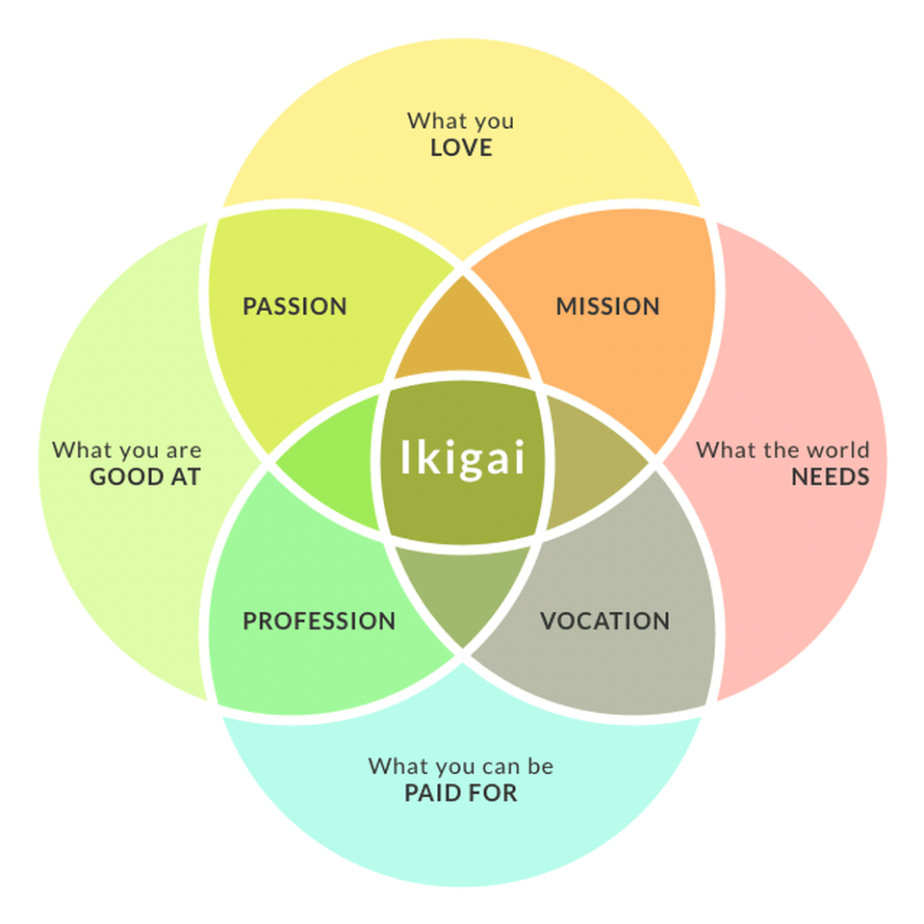
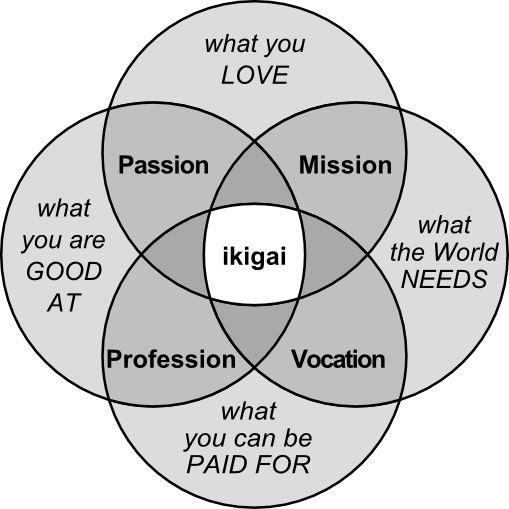
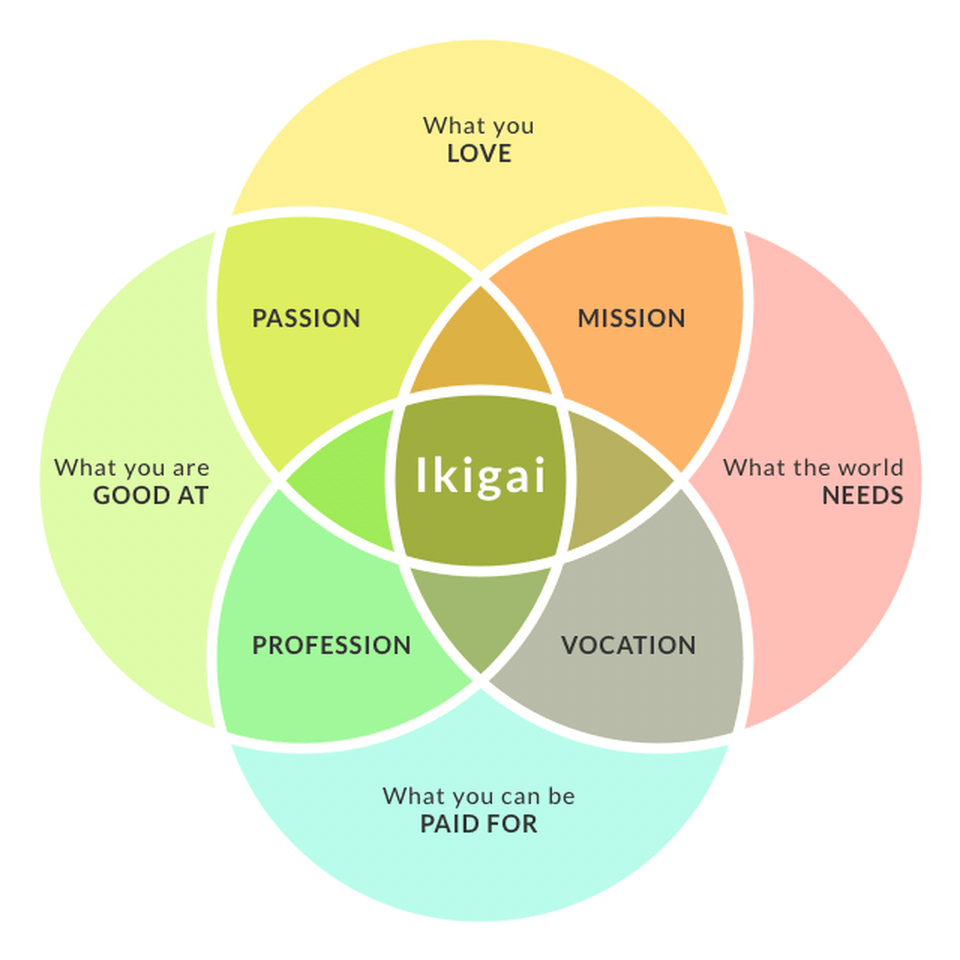
You should also look to work in roles that fit your Why, that align with who you are. The work we do in the world matters. If we are not doing what we are meant to be doing, then resentment and unfulfilment sets in. I recommend using the Ikigai method, where you look at What You Love, What You Are Good At, What You Can Get Paid For and What The World Needs. This will then reveal your Passion, Profession, Vocation and Mission. Knowing your Why will help you fill in these categories and find your Ikigai, your Purpose in life.

Conclusion

When we start with defining our Why we can start to figure out why we do what we do and then what we want to be doing in our life. Once we know our Why we can narrow down what we are meant to be doing, what our Purpose is. And when we live out our purpose, our work feels like a privilege.

Defining Your Purpose

Starting With Yourself

The Pathway To Fulfilment has the steps that it does because the end result are thoughts, speech and actions that are aligned with your purpose that you will define. They come from your Purpose Prism, which includes your beliefs, your ethics and your purpose.

You will have gained deep Self-Knowledge (Step 1), which is when you will define your beliefs and ethics, and you will have Acquired Wisdom (Step 2). A purpose can then be defined aligned with these elements from Step 1 and Step 2 that together will make your thoughts, speech and actions full of altruism and wisdom.

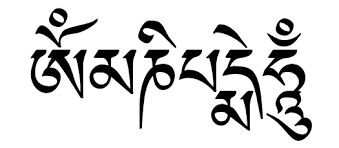
Om Mani Padme Hum

In regards to altruism and wisdom, there is a Buddhist mantra, Om Mani Padme Hum, which explains how, in Buddhist understanding, one reaches enlightenment. Om is made up of through sounds A – U – M. These represent thoughts, speech and actions, and once we are enlightened these are pure. Mani means Jewel, which represents altruism. Padme means Lotus, which represents wisdom. Hum is unity of both infinite altruism and infinite wisdom, both of which are needed to become enlightened, in Buddhist understanding.

The reason I am asking you to begin with self-knowledge, then to acquire wisdom, and to figure out your beliefs and your ethics, is so that your purpose will be imbued with both altruism and wisdom, and that your purpose becomes your unity, your Hum. Your thoughts, speech and actions dictate how your life will be, because whether your life is good or bad, enjoyable or not is firstly based on your thoughts, of how you see the world, and secondly the impact that your speech and actions have on those around you.

How We Walk Through The World

If we walk lightly through the world, trying to live in balance and to help others, then we will live a more fulfilling life. Also, in order for us to find a purpose in life, we need to know ourselves really well, to have gone deep into the parts of our minds that we often shy away from, but also to develop a wise understanding of how the world works and how we can have a positive impact on it.

This is why Defining Your Purpose and Living Your Purpose are Steps 5 and 6. There is work you must do with yourself before a purpose can become clear. This work will not always be easy, but it is necessary, and I will be putting together a guide to help you along this Pathway to Fulfilment. It will take time to put together, as I want the pathway to be simple and the steps to be clearly defined, which means there is a lot to distill down into a clear and effective pathway. The outline of the pathway is set out below.

Something To Think About…

Think about how you currently live your life, how you treat others and how you earn a living. Are these ways that make you feel good? If not, what changes could you make?

Recommended Book: Bushido, the Soul of Japan by Inazo Nitobé

“Kumazawa:—”When others blame thee, blame them not; when others are angry at thee, return not anger. Joy cometh only as Passion and Desire part.”
― Inazo Nitobe, Bushido, The Soul Of Japan

Image Source: Amazon UK

Buy the book here

Why Read This Book

This book gives you an in-depth understanding of the Samurai, as well as Japanese culture. Some of the principles explained in the book are principles we could live by, others such as redress not so much. Bushido, as a way of living is very profound and can enhance your life exponentially.

Contents

  • Bushido as an Ethical System
  • Sources of Bushido
  • Rectitude or Justice
  • Courage, the Spirit of Daring and Bearing
  • Benevolence, the Feeling of Distress
  • Politeness
  • Veracity or Truthfulness
  • Honor
  • The Duty of Loyalty
  • Education and Training of a Samurai
  • Self-Control
  • The Institutions of Suicide and Redress
  • The Sword, the Soul of the Samurai
  • The Training and Position of Woman
  • The Influence of Bushido
  • Is Bushido Still Alive?
  • The Future of Bushido

Summary

The book begins by looking at Bushido as an ethical system and the history of it, to give you a grounded understanding of Bushido. The main content of the book are chapters on the different principle of Bushido that all Samurai wee expected to follow. Many of these principles are universal, but the way they are established and used are intertwined with the Japanese culture and the book ends with a look at the future of Bushido. If you are interested in Japanese or Samurai culture, or you are looking for a better way to live, I recommend you read this book.

Gratitude For What We Can Give

“Remember this: Whoever sows sparingly will also reap sparingly, and whoever sows generously will also reap generously.”

Bible, 2 Corinthians 9; 6

Thanksgiving

I have been reflecting this past week on what it is that we can be grateful for, given that we, and so many others, have suffered under the pervasive effects of the Coronavirus pandemic. Primarily, this will be the good health of our family and friends, though we have been separated from them, in many cases. Traditionally, at this time of year we would bring in the crop and store it away for the Winter months, and we would give thanks for the harvest we have received. We would thank God for the blessings of nature and take pride in the work of the community to plant and tend and harvest the crops. It is a time of thanksgiving, as it is referred to across the pond in America.

I am also reminded that the turning of the seasons and the times of the year that certain plants grows and come to their fullest occurs without human involvement, but we have harnessed the cycles of nature to our advantage through farming year after year, working with nature to sustain our community, which is now a global community.

It has been an unusual year this year, to say the least, with many of us having to adjust to staying at home, working from home, and being away from our loved ones. It has tested us, individually and as communities. Many have stepped up and supported others in this time of crisis, with neighbours doing the weekly shop for those who have had to self-isolate,  activities have been set up using Zoom, and other online platforms, to allow us to connect, if only virtually, and many raising money and showing support for our incredible NHS, who have above and beyond the call of duty during this pandemic.

Generally speaking, we no longer have the need to plant, tend and harvest crops as a community, so much of our food is sourced from around the world, and we only need to buy the food we need from the supermarket or local shops. In that sense we are out of touch with nature, our lives are not so integrally connected to the ebb and flow of the seasons as they used to be. Our source of food is not dependent on us having worked to produce it, only having the money to pay for it.

Sharing What We Can

Something that has been difficult for some as their hours at work have been reduced or stopped all together, and many have been furl-owed, causing an uptake in those needing to access Food Banks. I recommend that when you are doing your shopping in the supermarket that you buy extra non-perishable goods and put them in the Food Bank baskets on your way out. We are in this together, and if we can share the food we can buy with those who cannot afford to, then we should. We are never a divided society, unless we choose to be, and the greatest we can be is when we take care of the least of us, so we may all thrive.

What has amazed me over these many months of the pandemic is the extraordinary generosity of spirit that has prevailed. The kindness and the love shown by people. There has been fear and confusion. There was panic buying and there was conspiracy theories, as there still are, there are some that like to see division in the world, because they can profit from it, but the vast majority of us have become our better selves, we have risen to the moment. And if we are talking about what we have been able to reap from this year, I think the community spiritedness of the many across the world is something to be extremely grateful for.

Harvest time is also a key time of the year, the changing of the season from Summer to Autumn. The apparent dying back of nature and the transition to the cold, dark and wet Winter months to come. For me it is a reminder that change is constant in our lives, but as Autumn always proves, the journey is beautiful. Even Winter has it’s own beauty, as do all the seasons.

The Cycles of Life

We can also think of our lives in seasons, as we often do, saying that someone is in their Autumn years, for example. What is interesting about this metaphor is that the seasons are cyclical, they go in a cycle, from Spring back around to Spring again, for millions of years, long before the Human species appeared on the Earth. Our lives, though appearing to be linear, have cycles within them. Our relationships begin and end and new ones begin, our careers often begin in one field and change to another, we have significant parts of our lives that teach us important life lessons, causing a wiser understanding and a new way of living. The Native American Indians see life as a circle. In the words of Black Elk, from the book Black Elk Speaks,

“You have noticed that everything an Indian does [is] in a circle, and that is because the Power of the World always works in circles, and everything tries to be round… …Everything the power of the world does is done in a circle. The sky is round and I have heard that the earth is round like a ball and so are all the stars. The wind, in its greatest power, whirls. Birds make their nests in circles, for theirs is the same religion as ours. The sun comes forth and goes down again in a circle. The moon does the same and both are round. Even the seasons form a great circle in their changing and always come back again to where they were.

The life of a man is a circle from childhood to childhood, and so it is in everything where power moves. Our teepees were round like the nests of birds, and these were always set in a circle, the nation’s hoop, a nest of many nests, where the Great Spirit meant for us to hatch our children.”

Native American Indians see their Elders as returning to a kind of childhood, with their wider vision and fewer boundaries on things. The wisdom of the Elders then being passed onto the younger members of their tribe. There is something to be learned from thinking of our lives as moving in circles, much like the metronome of the seasons, which pre-dates us and will continue to circle around long into the future, as the earth circles the Sun and the Moon circles our planet Earth.

Together Is Better

Much of what has helped us get through this pandemic thus far has been the wisdom of collective responsibility, the fact that the least of us is just as important as the rest of us. It has been revealed that those some saw as lesser, who work in customer services, have been essential in this pandemic, and that they always have been. Without them, how could we buy the food that we need. Also, those that have delivered what we have needed, food and other things. Many of these people that keep society working. All people should be given respect, compassion and empathy. A “thank you” and a “good afternoon” can raise the spirits of someone, especially during times such as these.

Along with collective responsibility, there is also the idea that sometimes we plant the seeds of trees in the knowledge that others will benefit from their shade. We sow the seeds knowing that the harvest will be enjoyed by others. Giving without expecting anything in return. A lesson we can take from this harvest time of year and the way many have risen up to help others during this pandemic. If we all thought in this way, relinquishing the need for our actions to have some self-interest, what a world it would be. This is the path of all spiritual seekers, the path of altruism.

Something to think about…

Think about what it is that you have been given, and what of that you can share with others.

Launching The Pathway To Fulfilment

I have done some work on what I have so far called the Fullfilment Framework and renamed it the Pathway To Fulfilment, a more linear and simpler journey. My intention is to create a process by which people can start to live well, and therefore have fulfilment. This is not a life hack or magical cure for what ails you. It is a deeply personal journey of self-discovery, of life balancing and purpose finding. There are four steps of this process which are foundational to a life well lived, they are Self-Knowledge, Acquired Wisdom, Good Health and Healthy Relationships.

The Principles Of A Life Well Lived have been folded into the Acquired Wisdom. I have separated these foundational steps and the other steps of the Pathway To Fulfilment, six steps in total, into Where To Begin, What To Maintain and How To Live Well. Now that I have an outline of a process that I believe will bring about fulfilment in ones life, I aim to add in the detail of the activities and actions you will follow within each step of the journey towards fulfilment and a life well lived. Watch this space and the Facebook Group Community and on Instagram for up and coming updates. This new Pathway To Fullfilment can also be found on the page on this website of the same name.

WHERE TO BEGIN

Step 1: Self-Knowledge

The process begins with getting to know yourself more substantially than you may have before; figuring out what really makes you tick, what you believe and don’t believe, what you think is true and false, what you think is ethical and not ethical, etc. Also, what happiness and success look like to you, personally. It is broad and deep self-knowledge. This is your starting point.

Step 2: Acquired Wisdom

You acquire the wisdom of others, from a variety of sources, spiritual and secular; wisdom that will challenge you and enlighten you, as wisdom should. Often this is achieved by extensive reading, but, with the internet, a lot of this same wisdom can also be obtained through videos, audio books and pod-casts, however you learn best. This wisdom will feed into your self-knowledge, and influence how you see yourself and how you choose to live.

Connected to Acquired Wisdom are ten principles that I believe generate fulfilment, because they are wise principles that will help you navigate the world skilfully and live your life well. I have divided them into those that relate to Yourself and those that relate to Others. The principles related to Self are Growth, Equanimity, Fortitude, Seeking and Self-Competition, and those related to Others are Stewardship, Servant-hood, Reciprocity, Joy Making and Connection. I will be sharing more detail on these moving forward.

WHAT TO MAINTAIN

Step 3: Good Health

Your health should be of great concern, because good health is essential for your well-being and having an active, fulfilling life. I have included the usual physical health and mental and emotional health, and also energy health; all of which could be thought of as a triad of good health. Good physical health includes diet and exercise. Good mental and emotional health includes mastering your emotions and balancing your thoughts. Good energy health includes mastering the Chi (Qi) that flows through your energy system, like blood through your bloodstream, detailed in Traditional Chinese Medicine. To have good health you need to work on all three of these areas.

Step 4: Healthy Relationships

You look at your relationships, and identify those relationships that are good for you and those that are not, and those that are a mixture of the two, that need work to become good. You should continuously work towards all of your relationships being healthy ones; meaning that they bring you happiness rather than stress, they uplift you rather than bring you down. These relationships are in circles of community, which are relationships with yourself, your partner, your family, your friends, your colleagues and your acquaintances, and all are interconnected.

HOW TO LIVE WELL

Step 5: Defining Your Purpose

After working your way through this journey so far, you will have a solid foundation for how to start living your life better. From this knew understanding of yourself, your defined beliefs and ethics form part of what I call your Purpose Prism, the third piece of this prism being your purpose. You will go through a process of building on your beliefs and your ethics, weaving in Acquired Wisdom and Principles Of A Life Well Lived, and define your personal purpose. This prism is the filter through which you will see and experience the world, and it will influence your thoughts, speech and actions, making them wiser in nature. Your purpose comes from a vision of a better world that you want to help create.

Step 6: Living Your Purpose

You will then be set to start applying your beliefs, ethics and purpose to your life, to find your best way to live them out in your thoughts, speech and actions, to act on your vision of a better world through everything that you do. This is living your life on purpose. All of this work will mean that both happiness and success become personal, and therefore fulfilling, all three of which are bi-products of a life well lived. They then feed back into your self-knowledge, acquired wisdom, health, relationships and your beliefs, ethics and purpose, and on it goes, because this journey is a life long endeavour. Follow the path to fulfilment and live well my friends.

Finding Balance In Troubling Times

“Happiness is not a matter of intensity but of balance and order and rhythm and harmony.” – Thomas Merton

Finding A Way Forward

In times of stress and uncertainty it can be hard to feel grounded and settled. Times like these, with the Coronavirus, economic upheaval and job losses, can cause us to be unsure where we are going, what we should be doing and what might lie ahead of us in the unknown future.

Our reality, however, is still in our control, to a large degree. More so than we think it is. Every crisis is a crossroads, a place where we can either choose to be swallowed by our own anxiety and fear of what might be or we can choose to look for the opportunities.

Seeing The Opportunities

The old saying that when one door closes another door opens is very true, the problem is that we have to be looking for the doors in the first place. An opportunity is only available if we are aware of it. A lost job could be a chance to change career or start a business. An injury can be a chance to pause and review our goals.

If we stop in the moment we are in and ground ourselves in the present, rather than the past that we cannot change or the future that does not yet exist, we can feel like there is ground beneath us, and we can look for opportunities to move forward with excitement and confidence.

Finding Our Centre

Many of us are having to self isolate, which can be hard. Especially when we are separated from our loved ones. Though it can be a chance to pause, to read and reflect, to start meditating or do yoga. It can be a rare chance to figure out what we want to achieve in this thing called life.

These opportunities don’t come along very often, to have time to re-centre ourselves. To step out of the chaos and recalibrate our lives. This is not to say that this is easy or to dismiss people’s hardships in these difficult times. It is just a reminder that in every situation there is a chance to find a positive way forward.

Spreading The Love

So many people are hurting at the moment, either through personal loss, the loss of a job or separation and isolation. This is a time when those of us who are more fortunate can spread some kindness and joy. We can do small acts of kindness. Say good morning to a passerby, rather than keeping away through fear of the Coronavirus. We can still wish people well and great them with a smiling face while social distancing. We can connect through our words while wearing a mask.

We can call people we know to bring some normality to their lives and have a laugh. Laughter is much needed at the moment. A simple act of kindness can brighten up someone’s day or save a life. Many people decide to end it all because they feel lonely and unloved.

Showing people that we are not divided, that we are in this thing called life together and we can live at our best not our worst. The things in life that we experience are often the result of our actions and our thinking. We paint the picture of our lives and we can add some beautiful colours to the lives of others. We are co-creators of our lives.

Balancing Together

These are all things that we can do to re-balance our lives, to ground ourselves, to pause and re-centre, and to spread some joy and connect with others. As long as we do not succumb to fear and anxiety, as long as we problem solve and look for the opportunities we can overcome the challenges we face.

We are none of us alone in our challenges. It can be easy to feel isolated, but we have many ways in which we can connect with others, even if it is just a phone call. We are out of balance when we feel alone, we are meant to be connected to others, but these connections need to be maintained, whether family, friend or colleague. We are responsible for our own balance, but we cannot do it alone.

Something to think about…

What areas of your life seem out of balance or

Book Recommendation: Essential Spirituality: The 7 Central Practices to Awaken Heart and Mind by Roger Walsh

“Our lives are rich with opportunities and our challenge is to live them to the full. All of us can be the creative artists of our lives.”
― Roger Walsh

Image Source: Amazon UK

Get The Book Here

Why Read This Book

This book covers seven practices that religions across the world include, practices that can help restore balance and create happiness in our lives. It is a book to read and then revisit to help you live a balanced and happy life.

Contents

  • Foreword by His Holiness the Dalai Lama
  • Introduction
  • 1.    Unveiling the Sacred
  • 2.    Discovering the Seven Practices
  • 3.    Using This Book
  • 4.    Spiritual Practices: What Do They Do and How Do They Do It?
  • The Seven Practices
  • Practice One: Transform Motivation: Reduce Craving and Find Your Soul’s Desire
  • 5.    The Secret of Happiness
  • 6.    Exercises to Reduce Craving
  • 7.    Find Your Soul’s Desire: Redirect Motivation
  • 8.    Exercises to Redirect Desires
  • 9.    The Higher Reaches of Desire
  • Practice Two: Cultivate Emotional Wisdom: Heal the Heart and Learn to Love
  • 10.    The Gift of Love
  • 11.    The Challenge of Difficult Emotions
  • 12.    Reducing Fear and Anger
  • 13.    Cultivate Love and Gratitude
  • 14.    The Higher Reaches of Love
  • Practice Three: Live Ethically: Feel Good by Doing Good
  • 15.    The Value of Virtue
  • 16.    What is an Ethical Life?
  • 17.    Exercises in Ethical Living
  • 18.    The Higher Reaches of Ethical Life
  • Practice Four: Rest in Peace: Concentrate and Calm the Mind
  • 19.    Your Meandering Mind
  • 20.    Develop a Peaceful Mind
  • 21.     The Higher Reaches of Concentration and Calm
  • Practice Five: Awaken Spiritual Vision: See Clearly and Recognize the Sacred In All Things
  • 22.    The Healing Power of Awareness
  • 23.    Exercises in Awareness
  • 24.    Seeing the Sacred in All Things
  • 25.    Exercises in Sacred Seeing
  • 26.    The Higher Reaches of Vision
  • Practice Six: Cultivate Spiritual Intelligence:  Awakening Wisdom and Understanding Life
  • 27.    What is Wisdom?
  • 28.    Awakening Wisdom
  • 29.    Exercises in Wisdom
  • 30.    The Higher Reaches of Wisdom
  • Practice Seven: Express Spirit in Action: Generosity and the Joy of Service
  • 31.    The Spirit of Service
  • 32.    Developing a Generous Heart
  • 33.    Exercises in Generosity and Service
  • 34.    The Higher Reaches of Generosity
  • 35.    Enjoy Your Self: Awakened Heart, Awakened Mind
  • Source Notes
  • Further Reading
  • Bibliography
  • Index

Summary

This book explores the different behaviours and ideas that cause us to be unhappy and to suffer, and practices to remedy them. There are seven practices, as the title of the book suggests, but there are also exercises within each chapter that are simple, but beneficial, for example “Exercise 9, Discover Your Future Self,” from the section entitled Exercises To Redirect Desires.

The author explores these subjects through the lens of the scriptures of our world religions and the writings of philosophers. It is practical, yet this book includes profound, deep wisdom. Whether you are religious or not, I recommend this book, it will apply some perspective to your life and help you find your path to a life well lived. The book is extensive, but you can dip into the section that relates to your current issues and find the guidance and exercises to help.

The Fullfilment Framework Remastered

I have reworked my Fullfilment Framework, so it has a better journey towards fulfilment. This is a brief summary of the journey, which I will expand on later on this blog. This summary can be found on the Pathway To Fulfilment page.

Where To Begin

The Fullfilment Framework is a pathway to fulfilment. It is a deeply personal journey of self-discovery, of life balancing and purpose finding. The structure of the Fullfilment Framework begins with getting to know yourself more substantially than you may have before; figuring out what really makes you tick, what you believe and don’t believe, what you think is true and false, what you think is ethical and not ethical. Also, what happiness and success look like to you, personally. It is broad and deep self-knowledge. This is your starting place, the first level of the Foundation of the Fullfilment Framework. Next, you look at the wisdom of others, from a variety of sources; wisdom that will challenge you and enlighten you, as wisdom should. This wisdom will feed into your self-knowledge, and influence how you see yourself and how you should live.

Next, you look at Principles of a Life Well Lived, which are divided into those that relate to Yourself and those that relate to Others. The principles are; Self: Growth, Equanimity, Fortitude, Seeking, Self-Competition, and Others: Stewardship, Servanthood, Reciprocity, Joy Making, Connection. These are very much connected to Acquired Wisdom, because they are wise principles that I believe will help you navigate the world skilfully and live your life well.

What To Maintain

Next, you look at your health, which has three areas of concern in this framework. We have physical health, we have mental and emotional health and we have energy health; all of which make the Good Health Triad. Good physical health includes diet and exercise. Good mental and emotional health includes mastering our emotions and balancing our thoughts. Good energy health includes mastering the Chi (Qi) that flows through our energy system, like nerve signals through our nervous system. To have good health we need to work on all three of these areas.

Next, you look at your relationships, and identify those relationships that are good for you and those that are not, and those that are a mixture of the two, that need work to become good. You work towards all of your relationships being healthy ones; meaning that they bring us happiness rather than stress, they uplift us rather than bringing us down. These relationships are in circles of community, and these circles are relationships with yourself, your family, your friends, your colleagues, your acquaintances, and all are connected.

How To Live Well

After working your way through this journey so far, you will have a solid foundation for how to start living your life better. From this new understanding of yourself, your defined beliefs and ethics form part of what I call your Foundational Prism, the third piece of this prism being your purpose. You will go through a process of building on your beliefs and your ethics, weaving in acquire wisdom and the principles of a life well lived, and define your personal purpose, which completes the Foundational Prism. This prism is the filter through which you will see and experience the world, and it will influence your thoughts, speech and actions, making them wiser in nature. Your purpose is a vision of a better world that you want to help create.

You will then be set to start applying your foundation, principles and purpose to your life, to find your best way to live them out in your thoughts, speech and actions, to act on your vision of a better world through everything that you do. This is living your life on purpose. All of this work will mean that both happiness and success become personal, and therefore fulfilling, all three of which are bi-products of a life well lived, and they feed back into your Foundation and your beliefs, ethics and purpose, and on it goes, because this journey is a life long endeavour. Follow the path to fulfilment and live well my friends.

Always strive to be inspired and inspiring.

#LiveWell

Book Recommendation: Managing Oneself by Peter F. Drucker

Source of book cover image: Medium.com

Book can be bought here

Content of book can be read here

Why Read This Book

This is a small book full of deep wisdom around how we function in the workplace, what kind of person we are and what kind of place we should work in. Whether you are young or old, starting your career or further along, this little book can help you both live and work well.

Contents

  • What Are My Strengths?
  • How Do I Perform?
  • What Are My Values?
  • Where Do I Belong?
  • What Should I Contribute?
  • Responsibility for Relationships
  • The Second Half of Your Life
  • About The Author
  • Also By This Author

Summary

This book delves into questions around how we work and questions that we often do not consider when we are choosing where we work and the kind of job we choose to do. Questions like what our values are usually get left out of career conversations. The book goes on to discuss the contributions we make to the workplace and each other, as our relationships matter, and are things we are responsible for growing and maintaining. The book ends with a discussion on the second half of life, and what secondary work we begin in our later years that we are passionate about, whether this be Chair of the church council or Fund Raiser for a charity.

Our Life Long Journey-What Path Should We Follow?

“Your life is a journey. Your attitude is the guide.”
PJ Ferguson

Caught In a Pandemic

Today we are globally in difficult times with the Coronavirus pandemic, but different countries are handling it differently; some better than others, as these are unprecedented events. America seems to be falling into division and chaos, and in the UK there seems to be confusing advice on what we can and cannot do, leading to anxiety in some and other taking advantage and not following sensible advice to keep us. Other countries have done better and worse, depending on your point of view. It can seem that the future is uncertain and full of difficulty, but we cannot necessarily tell what the future will hold, as it has yet to happen.

Whatever our future holds, let us follow the wise words of those who came before us, who led with compassion and love, those who shone a light of hope in difficult times, like the prophets of our many religions and people like Martin Luther King and Nelson Mandela; leaders who helped us move towards a better way of living. Let us always have hope for the best, and as we make our way into the future, many things will come and go, and we will move past this pandemic, hopefully learning collectively and individually how to live a more balanced life. As we have slowed down and been confined indoors it has been an opportunity to pause and reflect on how we want to live. As many have said, when things go back to normal, it will be a new normal. It is up to us how this new normal will look for us, how our beliefs and ideas about life will influence our lives moving forward.

Our Journeys

As we move forward, we will all have different experiences and different journeys that we each take everyday. Before the Pandemic, there were both every day and religious journeys that we would take, those that work had a journey that they took to get to their job each day; whether by car, bus or train. Many are now working from home, including myself. Others who don’t work will have things that they did and places that they went to regularly, which have also changed.

Whatever we do with each day there are habits that we form, and familiar routines that we go through, as we go to familiar places. These journeys always seem to take less time and are comforting in some way, perhaps due to their familiarity, and the fact that they form part of the fabric of our lives and are connected sometimes to our habits and routines, like walking the dog or going to the pub on a Friday night. These journeys can be down the road, or to another town or city, or even to another country. Whatever the journey, and whatever the destination, there is always a reason for the journey, a purpose for going.

The Events In Life

Many of us have significant events that happen to us on the many journeys that we take, occasionally it is an event which we feel we are lucky to walk away from, a car crash, an illness, a decision which might of ended badly if we had made a different choice, all of these can be life changing, they can make us reassess our lives and our priorities. Sometimes these events are something a little less extreme, like meeting someone and falling in love, having a baby, getting the job you wanted, or just coming to a realisation that causes a change in direction in our lives. Everyday any of these things can happen, life is changing all the time, and our interactions with others are often what cause these changes.

We Go Through Life Together

The journey that we each take through life is one that we share with our friends, and our family, and the things that we do are witnessed by our children. Even though we spend our efforts passing on wisdom and knowledge that we have discovered in the course of our lives, we also pass on examples of how to behave through our actions, we are role models for our children and the actions that we take, and the path through life that we choose, can be copied. The path we take can become the path that our children take, so it would be best to live in a way that we want our children to live, to live up to the wise lesson that we try to instill in them.

We are never alone in the life we lead, there are always people with which we interact; people at work, people on the bus, people in a congregation, friends and family. We live very interconnected lives, and in doing so we learn from each other everyday, we always know more than we did the day before, we are always learning through our experiences, our education, our everyday interactions.

Putting Things Into Perspective

In a way this is how mankind has evolved over the centuries, our interactions have manifested in a collaboration of ideas and knowledge, that has given us the development of human beings from early man to our current level of intelligence and development. This trend will continue, and the paths that we all take will inform the wider community, and the human race as a whole. We are all part of a greater society, and our actions are like drops of water in a lake, the ripples spread out along the water’s surface, eventually having a far-reaching effect on the rest of our world.

We are all parts of a whole and we all have individual lives to lead as well. It is a paradox of sorts. We all want to do what is best for ourselves, yet we also want to do what is best for others too. So how then should we live our lives? What paths should we take on our journey from birth to death? That is something we all have to work out for ourselves, though I do advise looking into the teachings of the many prophets, spiritual leaders, and wise sages that have contributed to the pool of spiritual knowledge that can be found in any of the holy texts and scriptures that every culture has.

Every culture has this knowledge because each of them have had someone who has understood it and documented it, and because this knowledge is not restricted to any one culture, it is a universal wisdom which is part of the universe, and is there to be discovered by anyone who has the ability to see it and understand it. So, think about what path you want to make through life, and how you want to live, then take that first step and keep walking.

Something to think about…

Sometimes life gives us a challenge that can be an opportunity. What challenges do you have currently that could be an opportunity?

Poem: Having Purpose

Striving and failing, repeatedly.
The defeated fall below their imposed par;
partly theirs, partly someone else's.
We often strive without direction, without purpose
on the treadmill of life, running and staying.
People, teams, businesses; we mistake rewards for purpose,
the spoils with the destination.
When we have no destination and no map or compass to speak of
we fail in our pursuits. Our purpose defines our destination
and our reason for going there. It is the means by which we transform
the world for the better. It is how we uplift others
and help them become their best selves.
To help others find fulfilment is to fulfil what it means to be human.

Self Knowledge: Limiting Beliefs

“Happiness has to do with your mindset, not with outside circumstance.”
― Steve Marabol

Our Beliefs

One of the key things to figure out when we are aiming to get a deep knowledge and understanding of ourselves is our beliefs. Often our beliefs are subconscious, yet they will dictate our thoughts, speech and actions repeatedly. Our beliefs play a major role in our thinking and how we react to people and situations and how we handle stressful times; do we find the positive or do we crumble? There are beliefs that we have which are very beneficial, but there are also limiting beliefs that get in the way of us progressing and being happy in life. 

Strategies To Change Our Beliefs

It is important to figure out what our limiting beliefs are, so we can replace them with beliefs that will help us to thrive. There are techniques employed by Performance Coaches that get deep into our psyche and make constructive changes. For example, Emotional Freedom Technique (EFT) and Neuro-linguistic Programming (NLP). There is also Byron Katie’s The Work, which is on my list of things to research.


It can also be beneficial to keep a journal, to write about the good and the bad each day, what we plan to do with the day and what we have learned at the end of each day. To write down our thoughts and feelings, so we can become familiar with our thought patterns, to figure out the limiting beliefs from the empowering ones.


For example,  I have limiting beliefs around failure, which can lead me to assume I will fail, that in turn can become a self-fulfilling prophecy. That is unless the thoughts are spotted and corrected when they pop up. If corrected enough these thoughts stop showing up as much, and can even disappear all together. This something I am working on at the moment.


We are capable of the things we believe we can do, with hard work and many hours of practice, if we believe big. It is no different with changing our mental habits, it takes time to remove limiting beliefs at their root. Some are more deeply rooted than others. I would begin by writing a journal to get a sense of your thought processes, and to watch how you react to good and bad situations. It is also important to observe what we consider to be good and bad as well.

Fixed and Growth Mindset

Some see challenge as a prompt to try harder, where as some will think “why does this always happen to me?” The latter is from a fixed mindset, where things are fixed and not flexible; things are the way they are and we can do nothing to change them, or we are the way we are and there is nothing we can do the change ourselves. This is, of course, not true; our brains are very capable of change, they are changing all the time.

Developing a flexible growth mindset that sees adversity as an obstacle that can be navigated is a lot more beneficial. A fixed mindset will be full of limiting beliefs that create barriers where there are opportunities. For example, if our role at work begins to change, like suddenly having to work from home during a global pandemic, you can think about all the issues that you might face, or you can think about the new skills you will learn working remotely, and all the job opportunities this will open up for you in the future in other job roles.

Owning Our Own Thinking

If we are going to work at our best, live at our best and be happier and more successful, it begins with figuring out our limiting beliefs and replacing them with ones which fill our lives with potential, but as the title of Byron Katie’s website suggests, we have to do the work, no one will do it for us. So, take ownership of your own life’s journey and remold your thinking towards happiness and success, and you will start to live better and your level of fulfilment will rise to levels you may never have felt before.

Something To Think About…

What are the goals that you hope to achieve in life and what are the barriers you put in place that prevent you from starting on these goals? What are the beliefs behind the barriers? What beliefs would put you in a better position to achieve your goals, that you could replace the limiting beliefs with?

Self Knowledge: Doing What You Love

There are many ways to ‘find yourself,’ not least the well worn concepts of going to spend time in an ashram or travelling the world, but often we discover at the end of these spiritual or physical journeys that we find ourselves back where we started. It is not the places we go to that cause us to find ourselves, but the experiences we have, the searching we undergo and the inward reflections that we have.

In truth, we can find ourselves right where we are. We do, however, need guidance, ironically the kind that you might in fact find in an ashram. If we do not have our own Guru, we can find wisdom in the writings of others, and processes like Ikigai, a Japanese method to find balance and purpose in life. As I have discussed in my last blog post, recommending a book on the subject of Ikigai, there are four areas to focus on in your life that interact in a Venn diagram layout that creates a centre, which is your Ikigai.

The top area of focus is What You Love, which is an enticing prospect, as doing what you love sounds like great advice, except, those who have rushed out and just done what they loved have often ended up as struggling artists or writers, with no financial plan, or steady income, but are prolific in their work, in the thing they love.

It is not that you should not do what you love, but it should be tempered with the other three areas of the Ikigai Venn diagram; What You Are Good At, What The World Needs and What You Can Get Paid For. Life is a complex meandering journey through strife and happiness, and just doing what you love will not always mean you will automatically live a fulfilling life. It needs to be balanced. Figuring out what you love is important, but the other aspects of Ikigai matter too.

For example, looking at what you can get paid for is important, because money allows you to do things and have things in life, money can be viewed as units of freedom, the more money you have the more freedom you have to do and have things. However, if you only think of yourself, in terms of what you love and what you can get paid for, this can mean others suffer so you can achieve personal goals. The amount of money we have does not equate to how happy we are, because we also need to have good, healthy relationships with other people too in order to be happy in life.

Figuring out what you love is a starting point, as is figuring out what the world needs, or what you are good at, or what you can get paid for. Trying to figure out what you were put on Earth to do is not straight forward, I recommend picking one of the areas of the Ikigai Venn diagram and start figuring out what that means to you and move around all four areas, and when you have a semblance of an answer for each area, then your Ikigai starts to take form and you are on your way to a fulfilling life.

This is, however, a life long pursuit; figuring out our life’s purpose can take a lifetime, and it will be different at different point in our life. So, don’t worry so much about having it all figured out. Start figuring it out and be open to the many, many possibilities that life has for us to explore and start exploring.

Book Recommendation: Ikigai by Justyn Barnes

Book Cover Image Source: Amazon UK

Ikigai Diagram Image Source: ontosomethingnew.org

Buy the book here

Why Read This Book

This is a book that will allow you to clearly figure what your purpose in life is. It is based on a Japanese concept that uses a Venn Diagram to dissect what you do and why you do it to figure out what you want out of life. If you are feeling stuck in a rut or lost in life, this is a must read.

Contents

  • Introduction
  • Aspects of Ikigai
  • What Are You Doing and Why?
  • What You Love
  • What The World Needs
  • What You Can Get Paid For
  • What Are You Good At
  • Finding Your Ikigai
  • Epilogue
  • Recommended Reading
  • Picture Credits

Summary

This book looks at our seven needs, everyday life and how we live longer when we are doing what we are supposed to be doing. It looks at how What You Love and What The World Needs blends to be our Mission, how What the World Needs and What You Can Get Paid for blends to be our Vocation, how What You Can Get Paid For and What You Are Good At blends to be our Profession and How What We Are Good at blends to be our Passion. The centre of all these is our Ikigai, it is a balance life, which incorporates our personal and professional endeavours. This book guides you through the process of completing your own Ikigai diagram to rethink your life.

Book Recommendation: The Boy, The Mole, The Fox and The Horse by Charlie Mackesy

Images Source: Amazon.co.uk

Illustration Copyright Charlie Mackesy

Buy A Copy Here

Why Read This Book

This book is beautifully illustrated that is full of gems of wisdom. There are pages that make you stop and think and others that uplift spirits. A joyful and philosophical book for children and adults alike.

Contents

There are no contents as such.

Summary

The book follows the journey of a boy, a mole, a fox and a horse on a journey through the wilderness. The book can be read from beginning to end, but you can dip into the book anywhere and find a nugget of wisdom and beautiful illustrations.

Two of my favourite pages are one where there is stain from a tea cup on the page and all the characters are illustrated looking at it. The words say “Is it the moon?” asked the boy. “It’s a tea cup stain… said the mole, “and where there’s tea there’s cake.” The mole loves cake. My other favourite page is an illustration of the boy riding the horse with the mole and the fox is walking alongside. The words say “What is the bravest thing you’ve ever said?” asked the boy. “Help”, said the horse. It is a truly beautiful book.

The Missing Piece Of A Life Well Lived

“People who truly understand what is meant by self-reliance know they must live their lives by ethics rather than rules.”

Wayne Dyer

Our Beliefs

We all have our own beliefs, things that we believe to be true. It might be that all children are precious or that the environment needs to be protected or that money is the route of all evil. You may agree with some of these beliefs but maybe not all of them. Our beliefs are part of what makes us who we are, and also what links us to other people; we gravitate towards others who believe in what we believe. This is human nature.

Our Actions

Our actions in life are often directly related to our beliefs. If you believe that being kind is important then you will often be kind to others, for example. However, often our actions are triggered by our emotions and are reactions to the immediate situation we are in. Our character plays a part too, but our actions are not always aligned with our beliefs. We might believe that we should take care of the environment but find it hard to give up on our big fancy car that guzzles fuel.

The Missing Piece

There is often a missing piece between beliefs and actions, and that is ethics. Ethics are moral principles we hold as important, which extend our beliefs into a code to live by. If we have a strong ethical code then our actions will more robustly align with our beliefs. It takes effort to put together an ethical code for ourselves. First we must clearly define our beliefs through self-exploration, by asking ourselves deep questions about what we believe and then putting our beliefs down on paper.

Then once our beliefs are clearly defined we need to reflect on what the ethical extensions are for each belief. For example, if you were to believe that it is important to be kind then the ethic of that would be something like to treat others as they wish to be treated, sometimes called the platinum rule. Your actions would then reflect this ethic and the route belief more consistently.

In order to live well, we need to live intentionally, with purpose. This is the importance of figuring out your Why, your overriding purpose for your life, but this is built on top of your beliefs and your ethics, which is all built on deep self-knowledge. It is to know yourself intimately and have the courage to live by your beliefs, your ethics and your Why. A life well lived is a courageous one aligned with who you are and how you can help those around you to live their best life. Fulfilment in life comes from living well, so join in the fulfilment revolution and figure out your beliefs and your ethics and have the courage to live by them.

Something To Think About

What are your beliefs and their corresponding ethics, and how will you bring these into your life?

Book Recommendation: Stillness Is The Key by Ryan Holiday

Why Read This Book

If life is feeling chaotic and challenging, with the feeling that there is little stillness in your life, this book will help bring you wisdom and bring stillness to your everyday existence. It is a remedy for the challenges of modern life.

Contents

  • PREFACE
  • INTRODUCTION

PART 1: MIND

  • The Domain Of The Mind
  • Become Present
  • Limit Your Inputs
  • Empty The Mind
  • Slow Down, Think Deeply
  • Start Journaling
  • Cultivate Silence
  • Seek Wisdom
  • Find Confidence, Avoid Ego
  • Let Go
  • On To What’s Next…

PART 2: SPIRIT

  • The Domain Of The Soul
  • Choose Virtue
  • Heal The Inner Child
  • Beware Desire
  • Enough
  • Bathe In Beauty
  • Accept A Higher Power
  • Enter Relationships
  • Conquer Your Anger
  • All Is One
  • On To What’s Next…

PART 3: BODY

  • The Domain Of The Body
  • Say No
  • Take A Walk
  • Build A Routine
  • Get Rid Of Your Stuff
  • Seek Solitude
  • Be A Human Being
  • Go To Sleep
  • Find A Hobby
  • Beware Escapism
  • Act Bravely
  • On To The Final Act
  • AFTERWORD
  • WHAT’S NEXT?
  • ACKNOWLEDGEMENTS
  • SOURCES AND BIBLIOGRAPHY

Summary

This little book is a soulful look at the human condition through the lens of the mind, the soul and the body. There are lots of examples of well known people’s lives and how they struggled and succeeded in different ways of being to bring about stillness. There is a lot of advice about how to live in a way that brings about stillness and a clear exploration of the pitfalls that push it away, based on these examples of real situations, including Tiger Woods’s personal demons and the US President John F. Kennedy’s handling of the Cuban missile crisis. Ryan Holiday has the steady voice of a wise elder in this book, someone who deeply understands what it means to live a life with stillness.

Knowing Yourself

Often it can be easy to become the things that those around us want us to be. With peer pressure, the pressure from modern culture to dress a certain way or act a certain way and the expectations of our parents all add to who we think we should be. However, this is not always who we actually are. If the version of ourselves that we present to the world is different from how we are in our own head, or in private, then something is wrong.


The problem is that if we live to other people’s expectations then we are never going to feel fulfilled, because all that we do will be for the benefit of others. To live life as your authentic self takes courage, because you will be judged by someone, maybe many, in your life. But if you do it, if you live as you with conviction then my friends you can become your best selves. Your achievements will then feel worth it.


When the way you live your life is aligned with your values and beliefs then your heart will feel full, contentment will permeate your thoughts and your levels of stress will be reduced. The thing to do is to get to know yourself, deeply.


Your Values


Your values are simply the things in life that you value. I know obvious right? What I mean is the things that you have strong feelings about. The things that stand out as important to you. Is it your family, your friends, is it justice or charity? Is it creativity or making money? None of these are good or bad, but they get to the essence of who you are.

I value creativity, stewardship, kindness and leadership very highly. I value my family highly too. I also value equality and respect for others. Figuring out what values are important to you will fill in part of the picture of who you authentically are.


Your Beliefs 


Beliefs are about how you think the world works and how you think people should behave. Beliefs include religious ideas as well as human ideas. It might be that God’s grace is real. It might be that karma is real. It might be that we should try to lift other up and not put them down. It might be that the winner takes it all and the loser dismissed.


There is a morality to figuring out our beliefs. They define what is right and wrong in your eyes. Figuring out what you believe about all sorts of things is really important. To question the beliefs that are given to you by others and decide if you too believe them, deep down in your heart, is very important too. We are all individuals and living life by someone else’s beliefs can be detrimental to us.

What Is Your Vocation

We all have jobs, generally speaking, but they are often not things that we have chosen because we deeply believe in the work we are doing. Often the job we have is simply a way of exchanging our time and energy for money to live on. If the work is in contrast to our values or beliefs then this can be a stressful situation. Some places of work are also focused on how much productivity they can squeeze out of us rather than helping us to reach our full potential.

Some of you will have things that you do outside of work, things that you have chosen to do. Things that you are passionate about. Things you are literally doing for free, because you love it. One thing I do is preaching in a Unitarian church. You might be a Scout leader, a volunteer in a charity shop, a volunteer in a food bank, a writer or a blogger. These are signs of the things that you could flourish at if you were doing it as you actual job. Your vocation can become your job if you have the courage to take a chance and go for it.

All of this is about figuring out who you are, how you work, what you deeply care about and living your best life, because you know your self. This is life’s mission, a personal journey such as this avoids a life that will feel wasted at it’s end, because you will be living on your terms, in your way, and not living your life through the expectations and peer pressure of others.

Go forth and discover your wonderful self and live according to your values and beliefs. Be courageous and live true to who you are.

Book Recommendation: Man’s Search For Meaning by Viktor E Frankl

Image Source: amazon.co.uk

Buy the book here

Why Read This Book


This book is an insider’s view of the Nazi concentration camps from a Psychiatrist who lived in them as a Jewish prisoner. A view that came to see meaning even in the greatest of suffering. It is a book that reflects the idea that we can choose our attitude in any given circumstances. It is an empowering read that includes Viktor E Frankl’s Logotherapy, which is a structured way to find meaning in one’s life. For someone who wants to reach their full potential this is a must read.

Contents

  • Preface by Gordon W. Allport
  • Preface to the 1992 Edition
  • PART ONE
  • Experiences in a Concentration Camp
  • PART TWO
  • Logotherapy in a Nutshell
  • POSTSCRIPT 1984
  • The Case for a Tragic Optimism
  • About the Author

Summary

As is evident from the contents list this book if primarily about two things, the experiences that Viktor Frankl had while he was a prisoner of Nazi concentration camps, which included harrowing accounts as well as moments of joy. Also, how these experiences and what he witnessed brought him to the realisation that the underlying drive of human beings is to find meaning in life, and that meaning can change depending on the momentary circumstances we find ourselves in and that this meaning can only be realised by the individual themselves. This then lead him to use his training as a Psychiatrist to develop his Logotherapy, which is explained in clear detail in the second part of the book. This book is difficult to read at times, but the challenges of reading Part One bring context and depth to the Logotherapy explanation in Part Two, so I would recommend reading the whole book if you can.