To Read Is To Grow

Many people don’t read on a regular basis. They read social media posts or snippets of news stories on their mobile phones, but reading seems to be something fewer people do for pleasure these days. I may be wrong, but that’s how it seems to me.

Reading has many benefits in terms of keeping the brain active, but the benefits beyond this depend on what you read. If we are to improve ourselves, to become wiser, kinder and happier, then what we read matters more than how often we read.

There are self development books and their are spiritual books, which are also self development books. Books that reach deep into you and show you what not to be and how to be in order to be happy and fulfilled in life. The wiser the content of what you read the happier you feel the more you read it. We all need progress, to varying degrees, and reading good books is the best way I know how to do so. To read is to grow.

Check out my recommended books on the Resources page.
2022 Goals: Acquiring Wisdom

The first Step on my Pathway To Fulfilment is Acquired Wisdom. It is the first step because without wisdom it can be hard to find happiness and success, and therefore fulfilment. On the path through life we can make bad choices and make big mistakes that cause us to suffer, due to a lack of wisdom.

What wisdom can do is reduce the suffering we experience in life, through the usual trial and error, and help us to find the right kind of happiness and success for us.

So, what ways will you seek out wisdom in 2022?

One way to acquire wisdom is to read good books. There are plenty of good books in the Recommended Reading List on the Resources page. You could also find a lot of wisdom on YouTube and where you listen to podcasts. You can also seek out mentors. There are lots of ways to acquire wisdom.

Recommended Book: Bushido, the Soul of Japan by Inazo Nitobé

“Kumazawa:—”When others blame thee, blame them not; when others are angry at thee, return not anger. Joy cometh only as Passion and Desire part.”
― Inazo Nitobe, Bushido, The Soul Of Japan

Image Source: Amazon UK

Buy the book here

Why Read This Book

This book gives you an in-depth understanding of the Samurai, as well as Japanese culture. Some of the principles explained in the book are principles we could live by, others such as redress not so much. Bushido, as a way of living is very profound and can enhance your life exponentially.

Contents

  • Bushido as an Ethical System
  • Sources of Bushido
  • Rectitude or Justice
  • Courage, the Spirit of Daring and Bearing
  • Benevolence, the Feeling of Distress
  • Politeness
  • Veracity or Truthfulness
  • Honor
  • The Duty of Loyalty
  • Education and Training of a Samurai
  • Self-Control
  • The Institutions of Suicide and Redress
  • The Sword, the Soul of the Samurai
  • The Training and Position of Woman
  • The Influence of Bushido
  • Is Bushido Still Alive?
  • The Future of Bushido

Summary

The book begins by looking at Bushido as an ethical system and the history of it, to give you a grounded understanding of Bushido. The main content of the book are chapters on the different principle of Bushido that all Samurai wee expected to follow. Many of these principles are universal, but the way they are established and used are intertwined with the Japanese culture and the book ends with a look at the future of Bushido. If you are interested in Japanese or Samurai culture, or you are looking for a better way to live, I recommend you read this book.

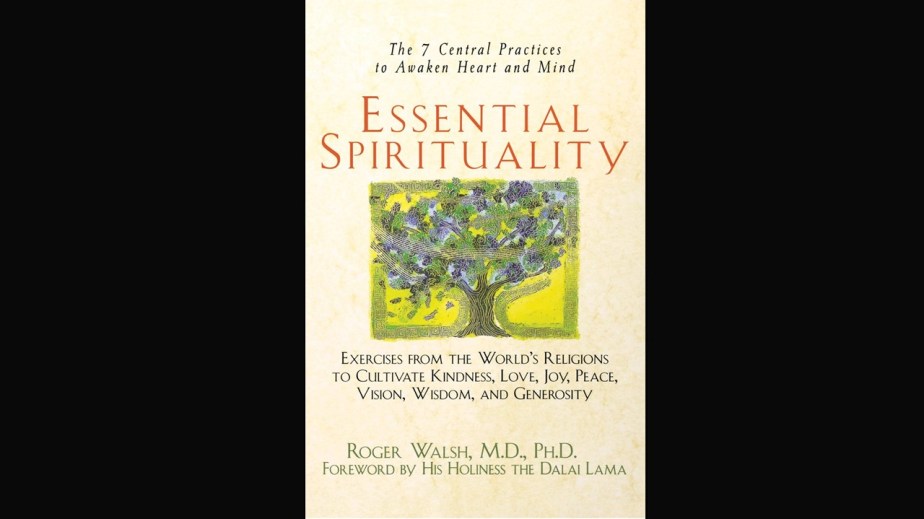
Book Recommendation: Essential Spirituality: The 7 Central Practices to Awaken Heart and Mind by Roger Walsh

“Our lives are rich with opportunities and our challenge is to live them to the full. All of us can be the creative artists of our lives.”
― Roger Walsh

Image Source: Amazon UK

Get The Book Here

Why Read This Book

This book covers seven practices that religions across the world include, practices that can help restore balance and create happiness in our lives. It is a book to read and then revisit to help you live a balanced and happy life.

Contents

  • Foreword by His Holiness the Dalai Lama
  • Introduction
  • 1.    Unveiling the Sacred
  • 2.    Discovering the Seven Practices
  • 3.    Using This Book
  • 4.    Spiritual Practices: What Do They Do and How Do They Do It?
  • The Seven Practices
  • Practice One: Transform Motivation: Reduce Craving and Find Your Soul’s Desire
  • 5.    The Secret of Happiness
  • 6.    Exercises to Reduce Craving
  • 7.    Find Your Soul’s Desire: Redirect Motivation
  • 8.    Exercises to Redirect Desires
  • 9.    The Higher Reaches of Desire
  • Practice Two: Cultivate Emotional Wisdom: Heal the Heart and Learn to Love
  • 10.    The Gift of Love
  • 11.    The Challenge of Difficult Emotions
  • 12.    Reducing Fear and Anger
  • 13.    Cultivate Love and Gratitude
  • 14.    The Higher Reaches of Love
  • Practice Three: Live Ethically: Feel Good by Doing Good
  • 15.    The Value of Virtue
  • 16.    What is an Ethical Life?
  • 17.    Exercises in Ethical Living
  • 18.    The Higher Reaches of Ethical Life
  • Practice Four: Rest in Peace: Concentrate and Calm the Mind
  • 19.    Your Meandering Mind
  • 20.    Develop a Peaceful Mind
  • 21.     The Higher Reaches of Concentration and Calm
  • Practice Five: Awaken Spiritual Vision: See Clearly and Recognize the Sacred In All Things
  • 22.    The Healing Power of Awareness
  • 23.    Exercises in Awareness
  • 24.    Seeing the Sacred in All Things
  • 25.    Exercises in Sacred Seeing
  • 26.    The Higher Reaches of Vision
  • Practice Six: Cultivate Spiritual Intelligence:  Awakening Wisdom and Understanding Life
  • 27.    What is Wisdom?
  • 28.    Awakening Wisdom
  • 29.    Exercises in Wisdom
  • 30.    The Higher Reaches of Wisdom
  • Practice Seven: Express Spirit in Action: Generosity and the Joy of Service
  • 31.    The Spirit of Service
  • 32.    Developing a Generous Heart
  • 33.    Exercises in Generosity and Service
  • 34.    The Higher Reaches of Generosity
  • 35.    Enjoy Your Self: Awakened Heart, Awakened Mind
  • Source Notes
  • Further Reading
  • Bibliography
  • Index

Summary

This book explores the different behaviours and ideas that cause us to be unhappy and to suffer, and practices to remedy them. There are seven practices, as the title of the book suggests, but there are also exercises within each chapter that are simple, but beneficial, for example “Exercise 9, Discover Your Future Self,” from the section entitled Exercises To Redirect Desires.

The author explores these subjects through the lens of the scriptures of our world religions and the writings of philosophers. It is practical, yet this book includes profound, deep wisdom. Whether you are religious or not, I recommend this book, it will apply some perspective to your life and help you find your path to a life well lived. The book is extensive, but you can dip into the section that relates to your current issues and find the guidance and exercises to help.

Book Recommendation: Managing Oneself by Peter F. Drucker

Source of book cover image: Medium.com

Book can be bought here

Content of book can be read here

Why Read This Book

This is a small book full of deep wisdom around how we function in the workplace, what kind of person we are and what kind of place we should work in. Whether you are young or old, starting your career or further along, this little book can help you both live and work well.

Contents

  • What Are My Strengths?
  • How Do I Perform?
  • What Are My Values?
  • Where Do I Belong?
  • What Should I Contribute?
  • Responsibility for Relationships
  • The Second Half of Your Life
  • About The Author
  • Also By This Author

Summary

This book delves into questions around how we work and questions that we often do not consider when we are choosing where we work and the kind of job we choose to do. Questions like what our values are usually get left out of career conversations. The book goes on to discuss the contributions we make to the workplace and each other, as our relationships matter, and are things we are responsible for growing and maintaining. The book ends with a discussion on the second half of life, and what secondary work we begin in our later years that we are passionate about, whether this be Chair of the church council or Fund Raiser for a charity.

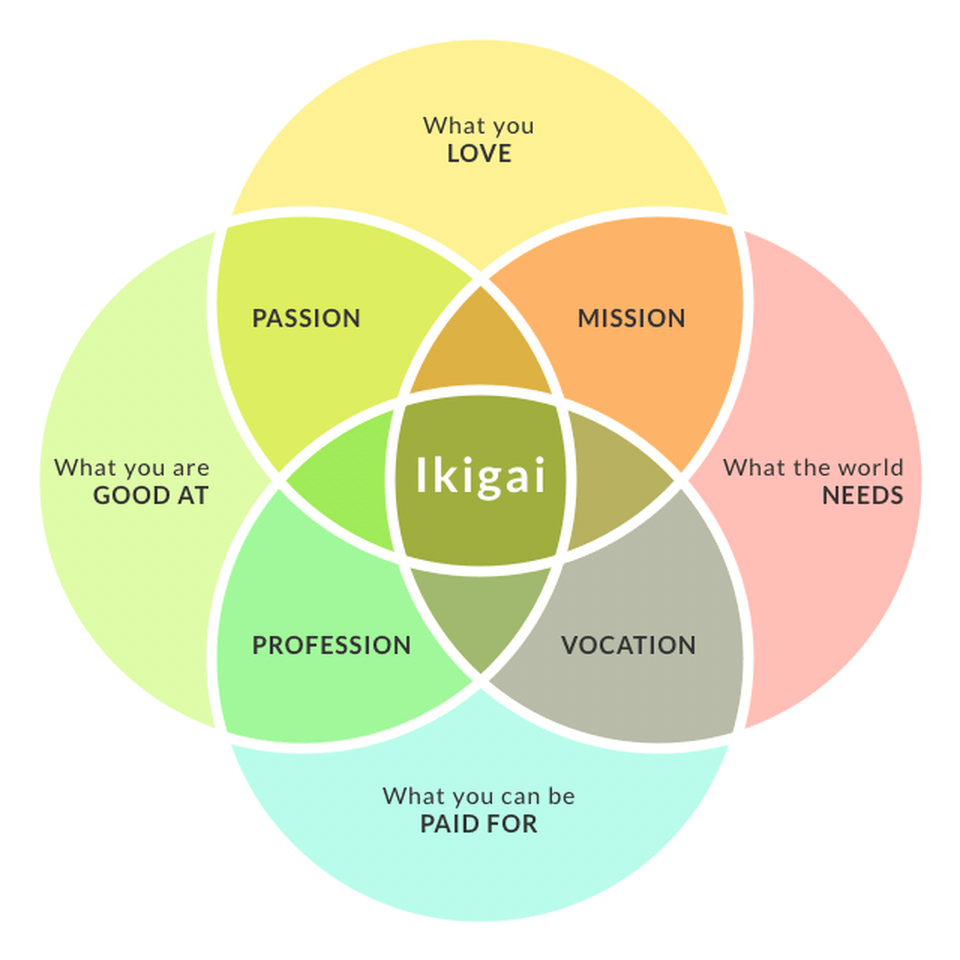
Book Recommendation: Ikigai by Justyn Barnes

Book Cover Image Source: Amazon UK

Ikigai Diagram Image Source: ontosomethingnew.org

Buy the book here

Why Read This Book

This is a book that will allow you to clearly figure what your purpose in life is. It is based on a Japanese concept that uses a Venn Diagram to dissect what you do and why you do it to figure out what you want out of life. If you are feeling stuck in a rut or lost in life, this is a must read.

Contents

  • Introduction
  • Aspects of Ikigai
  • What Are You Doing and Why?
  • What You Love
  • What The World Needs
  • What You Can Get Paid For
  • What Are You Good At
  • Finding Your Ikigai
  • Epilogue
  • Recommended Reading
  • Picture Credits

Summary

This book looks at our seven needs, everyday life and how we live longer when we are doing what we are supposed to be doing. It looks at how What You Love and What The World Needs blends to be our Mission, how What the World Needs and What You Can Get Paid for blends to be our Vocation, how What You Can Get Paid For and What You Are Good At blends to be our Profession and How What We Are Good at blends to be our Passion. The centre of all these is our Ikigai, it is a balance life, which incorporates our personal and professional endeavours. This book guides you through the process of completing your own Ikigai diagram to rethink your life.

Book Recommendation: The Boy, The Mole, The Fox and The Horse by Charlie Mackesy

Images Source: Amazon.co.uk

Illustration Copyright Charlie Mackesy

Buy A Copy Here

Why Read This Book

This book is beautifully illustrated that is full of gems of wisdom. There are pages that make you stop and think and others that uplift spirits. A joyful and philosophical book for children and adults alike.

Contents

There are no contents as such.

Summary

The book follows the journey of a boy, a mole, a fox and a horse on a journey through the wilderness. The book can be read from beginning to end, but you can dip into the book anywhere and find a nugget of wisdom and beautiful illustrations.

Two of my favourite pages are one where there is stain from a tea cup on the page and all the characters are illustrated looking at it. The words say “Is it the moon?” asked the boy. “It’s a tea cup stain… said the mole, “and where there’s tea there’s cake.” The mole loves cake. My other favourite page is an illustration of the boy riding the horse with the mole and the fox is walking alongside. The words say “What is the bravest thing you’ve ever said?” asked the boy. “Help”, said the horse. It is a truly beautiful book.

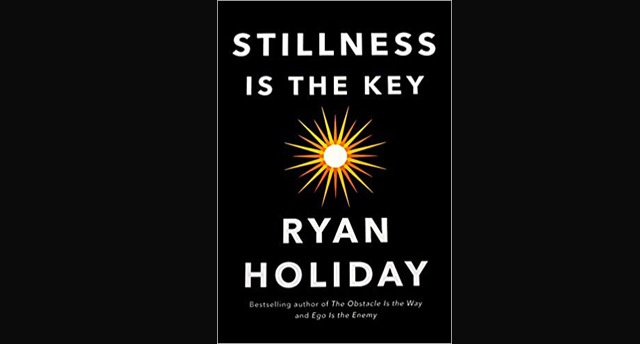
Book Recommendation: Stillness Is The Key by Ryan Holiday

Why Read This Book

If life is feeling chaotic and challenging, with the feeling that there is little stillness in your life, this book will help bring you wisdom and bring stillness to your everyday existence. It is a remedy for the challenges of modern life.

Contents

  • PREFACE
  • INTRODUCTION

PART 1: MIND

  • The Domain Of The Mind
  • Become Present
  • Limit Your Inputs
  • Empty The Mind
  • Slow Down, Think Deeply
  • Start Journaling
  • Cultivate Silence
  • Seek Wisdom
  • Find Confidence, Avoid Ego
  • Let Go
  • On To What’s Next…

PART 2: SPIRIT

  • The Domain Of The Soul
  • Choose Virtue
  • Heal The Inner Child
  • Beware Desire
  • Enough
  • Bathe In Beauty
  • Accept A Higher Power
  • Enter Relationships
  • Conquer Your Anger
  • All Is One
  • On To What’s Next…

PART 3: BODY

  • The Domain Of The Body
  • Say No
  • Take A Walk
  • Build A Routine
  • Get Rid Of Your Stuff
  • Seek Solitude
  • Be A Human Being
  • Go To Sleep
  • Find A Hobby
  • Beware Escapism
  • Act Bravely
  • On To The Final Act
  • AFTERWORD
  • WHAT’S NEXT?
  • ACKNOWLEDGEMENTS
  • SOURCES AND BIBLIOGRAPHY

Summary

This little book is a soulful look at the human condition through the lens of the mind, the soul and the body. There are lots of examples of well known people’s lives and how they struggled and succeeded in different ways of being to bring about stillness. There is a lot of advice about how to live in a way that brings about stillness and a clear exploration of the pitfalls that push it away, based on these examples of real situations, including Tiger Woods’s personal demons and the US President John F. Kennedy’s handling of the Cuban missile crisis. Ryan Holiday has the steady voice of a wise elder in this book, someone who deeply understands what it means to live a life with stillness.

Book Recommendation: Man’s Search For Meaning by Viktor E Frankl

Image Source: amazon.co.uk

Buy the book here

Why Read This Book


This book is an insider’s view of the Nazi concentration camps from a Psychiatrist who lived in them as a Jewish prisoner. A view that came to see meaning even in the greatest of suffering. It is a book that reflects the idea that we can choose our attitude in any given circumstances. It is an empowering read that includes Viktor E Frankl’s Logotherapy, which is a structured way to find meaning in one’s life. For someone who wants to reach their full potential this is a must read.

Contents

  • Preface by Gordon W. Allport
  • Preface to the 1992 Edition
  • PART ONE
  • Experiences in a Concentration Camp
  • PART TWO
  • Logotherapy in a Nutshell
  • POSTSCRIPT 1984
  • The Case for a Tragic Optimism
  • About the Author

Summary

As is evident from the contents list this book if primarily about two things, the experiences that Viktor Frankl had while he was a prisoner of Nazi concentration camps, which included harrowing accounts as well as moments of joy. Also, how these experiences and what he witnessed brought him to the realisation that the underlying drive of human beings is to find meaning in life, and that meaning can change depending on the momentary circumstances we find ourselves in and that this meaning can only be realised by the individual themselves. This then lead him to use his training as a Psychiatrist to develop his Logotherapy, which is explained in clear detail in the second part of the book. This book is difficult to read at times, but the challenges of reading Part One bring context and depth to the Logotherapy explanation in Part Two, so I would recommend reading the whole book if you can.

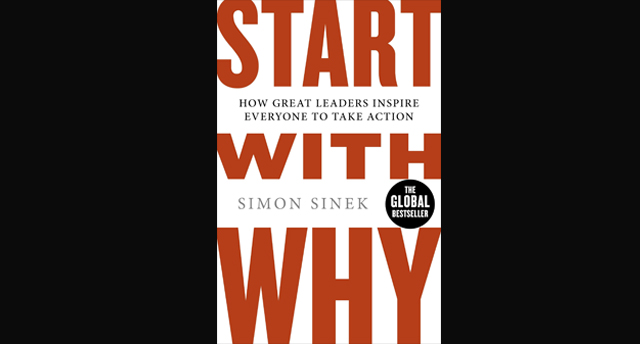
Book Recommendation: Start With Why by Simon Sinek

Image Source: amazon.co.uk

Buy The Book Here

Why Read This Book

This book elegantly explains the importance of knowing your Why, which I believe is integral to living well, to be happy, successful and fulfilled. Defining your Why is an essential part of my Fullfilment Framework, a framework designed to help you live a fulfilling life.

Contents

INTRODUCTION: WHY START WITH WHY?

PART 1: A WORLDS THAT DOES NOT START WITH WHY

  • Assume you know
  • Carrots and sticks

PART 2: AN ALTERNATIVE PERSPECTIVE

  • The golden circle
  • This is not opinion, this is biology
  • Clarity, discipline, and consistency

PART 3: LEADERS NEED A FOLLOWING

  • The emergence of trust
  • How a tipping point tips

PART 4: HOW TO RALLY THOSE WHO BELIEVE

  • Start with WHY, but know HOW
  • Know WHY. Know HOW. Then WHAT?
  • Communication is not about speaking, it’s about listening

PART 5: THE BIGGEST CHALLENGE IS SUCCESS

  • When WHY goes fuzzy
  • Split happens

PART 6: DISCOVER WHY

  • The origins of a WHY
  • The new competition

 Summary

This book explores what it means to have a Why, which is the purpose behind all that we do. It is essentially a sum total of how we were raised and our experiences up to adulthood; it is who we are as an individual. We only have one Why and the level at which we can best use our Why to live a fulfilling life depends on our depth of understanding of it and if we can articulate it.

Simon Sinek used examples from business and history to explain the importance of knowing your Why. He explains what he calls the Golden Circle, which illustrate how we think and make decisions, we go from Why to How to What. He goes to discuss the impact of knowing your Why can have on leadership and how important it is to take care of those around us, especially if we are in a position of leadership. Also, the way that success can make our Why fuzzy and we can potentially deviate from our Why, as individuals and as a company, which causes problems. Therefore it is important to keep our Why in central focus to avoid getting lost.