The Power of Thoughts

Yesterday it was sunny and around 20 degrees Celsius, so I needed to put suncream on my 5 year old. As I was about to put it around her neck she said don’t tickle me and preceeded to wriggle around on the floor giggling as I tried to put on the suncream. I then had her sit up and take some slow breathes to allow me to try again. She let me put on the suncream and she didn’t feel like I was tickling her.

When she prepositioned in her head that it would tickle, that was her experience.  When she prepositioned in her head that it wouldn’t tickle it didn’t, as much.

A more extreme example can be found in Viktor Frankl’s book Man’s Search For Meaning. In the book, the author recounts his experiences in a Nazi concentration camp. He describes how some inmates would give up and others would move around helping others where they could, giving away their last piece of bread. The point being, one’s attitude or thoughts in any given situation can bring about very different states of mind.

Our thoughts become our emotions, and our emotions become our experiences, and our experiences, if repeated enough, become our reality; the world as we see it. Our thoughts are very powerful, and we have the power to choose them. So, we have a choice on how we see the world. Empower yourself by selecting your thoughts.

Mindset Is Everything

If we think of a shield we think of it being used for protection, but a shield is designed to be used in battle. In essence it is an instrument of war. In life we often use words and actions as a shield. We might tell a joke or become defensive in order to protect ourselves in some way. The assumption when doing such a thing is that we are in conflict with the world.

I would argue that being in conflict is a state of mind that comes out of the thoughts that we have. It is all tied up in our identity, our past experiences, how we grew up, the relationships we have and have had, etc, but in the present moment it is controlled by our thoughts. If we change our thoughts we change how we interact with the world. If we stop feeling like we are in conflict with the world we will stop needing our defences and we can live more in harmony with others.

To live in peace you must first have a peaceful mind. This can be difficult to achieve but it can be done by doing the work, through meditation, counselling, self analysis and spiritual exploration. In the end we are responsible for how we are in the world and how we treat others and ourselves.

The Five Laws Of Stratospheric Success

These laws come from a great little book called The Go-Giver. The book weaves a narrative of a man trying to end the third quarter of the business year with improved sales. In desperation he reaches out to someone to help him and they teach him these five laws. They are laws that can have a profound impact on your life if you were to take them to heart and live them out.

In the coming days I will be exploring each of these laws as I start the year releasing a new blog post each day. These are the laws.

  • THE LAW OF VALUE
  • THE LAW OF COMPENSATION
  • THE LAW OF INFLUENCE
  • THE LAW OF AUTHENTICITY
  • THE LAW OF RECEPTIVITY

Many of us set new goals when a new year begins. We set new year resolutions that we often break by the end of January. It almost seems to be expected that we will fail. That is usually because we set a goal but do not change our habits very much. These laws, if taken to heart and followed, will bring about new and different habits. They will unlock a new way of seeing yourself that could bring about ‘stratospheric success’. Let’s own 2024 and make it a successful year.

Program Yourself To Thrive

I was in a taxi on the way to work the other day and while we were stopped at the traffic lights I saw a little blue flower growing out of a crack in the tarmac path. It had no business being there but there it was anyway doing its best to survive and thrive. It got me thinking about the way nature strives to live and grow all of the time, as if it is programmed to thrive anywhere it finds itself.

Often we talk about needing the right resources or the right conditions before trying something new. We overthink new ventures and often talk ourselves out of them. If we were to take examples from nature and aim to thrive no matter the conditions, then we would do well in life. We would take every opportunity with both hands and just get on with it.

Thriving is not about the conditions we have but the mindset that we have. To be excited about a new challenge and to have the courage to give it a go and see what happens, while also applying our skills and common sense to bend our path towards success. We can program ourselves to thrive by the thoughts we have and how we explain both and bad situations to ourselves.

Be like the little blue flower.

The Lessons of Chronic Pain

Being in pain most of each and every day has its drawbacks, clearly. It limits ones capacity to live and move in the world, but it has some unexpected benefits. I know this from the personal experience of living with Fibromyalgia. Here’s what I’ve learned.

Carry On Regardless

Being in pain, as I often am, with pain in my muscles and joints, doing the everyday tasks becomes challenging. Let alone going to work and looking after my family, but I must carry on regardless. Necessity becomes the motivation to keep going, and this becomes a skill, the skill to keep going when all you want to do is stop.

Choosing Your State Of Mind

Being in chronic pain can send you into dark places in the mind. Depression is a slippery slope of despair that feels like the only way to think about the circumstances you are in. This is essentially helplessness, but helplessness is a learned mental state, which can be changed to an optimistic state, you can choose your state of mind. You can be in pain and be joyful. This is a skill and one that is very difficult to master, but with practice you can be in good states of mind no matter your circumstances.

Your Health Is Your Responsibility

Often we assume that our bodies will keep on going until we get old. This is why we drink heavily and spend the weekend partying. This is also why we think we can work long hours and not get enough sleep and keep going. Your body is an amazing machine that functions well when it is well maintained and well looked after, but less so when it is not.

We can’t live life at full throttle and when we get sick expect others to fix us. We can’t go to the GP and say fix me. They will often just give us some pills to take which will mask the problem and cause other problems.

The way to ensure we are healthy is in what we eat and drink, what physical activity we do, how good our relationships are and how we think. This is a lesson hard learned when you are in chronic pain, because you just want someone to come along and make it all go away. You have to be your own saviour.

Self Mastery

We have been blessed with amazing faculties of mind and body, but they do not come with an instruction manual, though much can be understood if you know where to get the correct guidance. Your mind and body are connected in a sort of synergy where each effects the other. Self mastery requires mastery of both, but mastery of the mind is the key. Being in chronic pain, you are brought face to face with the necessity of this kind of self mastery. What begins as survival can become thriving. What seems to be coping strategies can become techniques of self mastery.

It comes down to a choice of how you want to live your life.

How To Develop Confidence

On the way into work yesterday it was quite misty, but it wasn’t thick enough to be fog. It reminded me of something I heard about how driving in fog is a metaphor for life. Often, when moving forward with a new venture, a new relationship, or anything that takes us out of our comfort zone, we are scared because we don’t know what the future holds. This is like driving in fog when you can only see 10 feet in front of you. The way to get clarity on what is ahead of you is to move forward 10 feet and then you can see the next 10 feet.

The lesson here is that we will never be able to predict the future 100%, but this should not stop us from moving forward. The best strategy is to work on your skillset and learn from your experiences. With skills and experience you can make wiser decisions and you can pivot where needed, depending on what life throws at you. If you trust your car brakes, steering, lights etc, then driving in fog is less stressful because your car and you can handle whatever you come across.

In order to improve your skillset and experience, you have to put in the time to try things out and develop skills. However, confidence also comes from our mindset, we have to believe in ourselves and our abilities or the actions we take will largely be ineffective. This mindset has to be a growth mindset, the ability to be agile and flexible requires it. Having a fixed mindset will cause your confidence to crumble when you hit the realities of life.

So, confidence requires skillset, mindset and experience. A seemingly obvious statement, but we often think of confidence as something we are born with. In reality confidence comes from how we behave on a moment to moment basis.

The final piece to the puzzle of confidence is our environment. If we feel safe enough to try and fail and try again, then our confidence goes up. If failure is treated with rejection, then we will develop a fixed mindset, we won’t believe we can do anything and we will not gain the required experience. This is why we need trusting teams at work, and supportive relationships in our lives. Add together all of these elements and you have the recipe for confidence.

Do The Work

I was watching an interview with Jay Shetty on Impact Theory and he said something that resonated with me. It was something that is really obvious, but my brain omitted the logic of what was said to avoid the risk of making a change in my mindset. We often fear change more than staying the way we are.

Jay was talking about his book Think Like A Monk, which he wrote after living for some time in an ashram as a monk. When he left the life of a monk he spent seven years testing what he had learnt in the real world before then writing the book. The logic that struck me was that he put in the work of learning how to think well while training as a monk and spent seven years testing this out.

Essentially, the obvious truth is that in order to gain self mastery you have to put in the work of mastering your mind. I am some way down the path of self mastery, but I am far from mastering myself, and the journey does not have an end point, it is a life long pursuit. Step one is, as always, admitting that there is a problem and that action is required, but you have to do the work. Progress is not automatic.

Change Your Thinking

I saw a Facebook post today that said “Until you change your thinking you will always recycle your experiences.” There is truth in this statement. The way we see things is often based on our thinking. In other words, we don’t see things as they are, we see them as we are.

The way to change the experiences we have is to change our thinking. There are three areas of a person to master, if we are to develop self mastery. Our mind, our body and our chi. The mind is the linchpin, as it controls much of the functioning of the other two. The thoughts we have change the biochemistry that our brains control, because the mind controls the brain. Our thoughts as translated into physical sensations and experiences. Thoughts can ruin our day or uplift our day.

Self mastery begins with mastering our thoughts.

The Key To Being Happy

We often get frustrated that things don’t go as we want them to. Sometimes it feels like the world is against us and nothing goes our way. Thinking about life in these terms is destructive towards our happiness.

If the world was always as you want it to be, then it would not be the way someone else wants it to be. There are billions of people in the world and each person has ups and downs in life. I am glad everything not how you want it to be, because your way is different to the way of so many others.

The key to happiness is not to try and control what happens in the world, or even to expect things to be how you want them to be. The key is to control how you respond to the events of life. Your mindset is the thing that impacts your level of happiness the most. How you explain the events in life to yourself matters.

Saying something bad always happens to you takes away any influence you have on the situation and you end up feeling helpless. It is better to say the bad things happened at a specific time, to limit its power and then decide what positive actions you are going to do next.

You Are What You Think

It has been said that the mind is the source of all our sorrow, but it is also the source of all by our joy. It is true that we say things to ourselves that we would never say to anyone else, we are often our biggest critic. It is also true that the way we think about a situation influences how we understand it and how we feel about it.

If you say to yourself “this always happens to me” or “why me?” you are essentially making yourself into a victim, and a victim has no control over their life, they are helpless. We have thoughts like this all the time, through habit and having heard them when we were growing up. Often we are not even aware of the effect of saying such things out loud or to ourselves.

Our self image is also largely influenced by what we say and think to ourselves. We really are what we think. In the words of William Shakespeare, “…there is nothing either good or bad, but thinking makes it so.”

What Is Your Potential?

Some years ago I gave my daughter a small wooden box which contained an acorn and a picture of a tree. Under the tree I wrote the words “Think like a tree.”

The point of this is that we often look at something like an acorn and we only see an acorn. At best we might see it as a squirrel’s lunch, but not what it could be. Every acorn is a potential oak tree. Likewise, we each have the potential to be the wisest, kindest and happiest version of ourselves.

Don’t look at yourself as you currently are, as an acorn, see yourself as a potential giant oak tree, so to speak. You all have the potential to be many things, what is stopping you is how you see yourselves.

Building Resilience

We have many things in life that can eat away at our resilience, and we all have different level of resilience. Some things are brushed off by some and others will find them very challenging.

A lot of our resilience comes down to our thinking, on whether we have a fixed mindset or a growth mindset, and how we explain positive and negative things to ourselves. A good book on this subject is Learned Optimism by Martin E. P. Seligman, PhD.

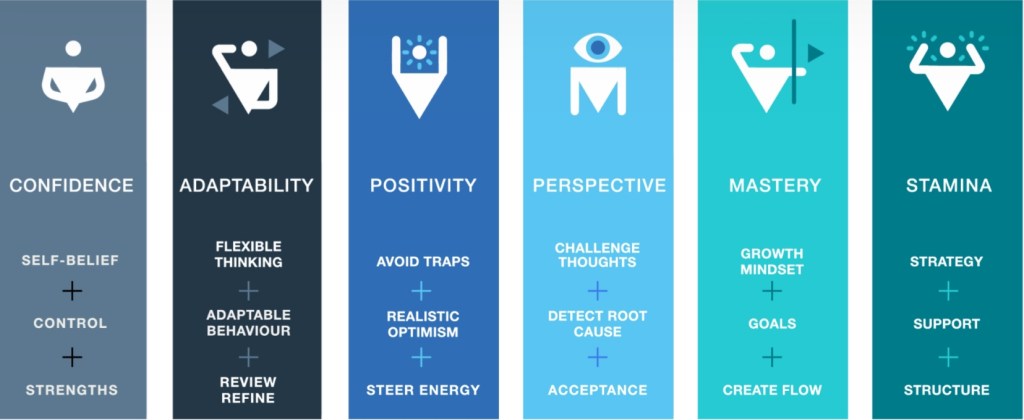
There is also a good model for resilience called the Resilience Edge Model shown below. You can get more information about this model on the website if you follow the link above.

Image Source: resilienceedge.com

Do You Care Enough To Fail

If you work in customer service, as many do, like many you may turn up to work and do what you are told to do and go home again. In other words you serve customers within the boundaries that you feel will avoid you getting into trouble or losing your job. It is the fear of failure that causes the service that many people provide to be average. Not amazing and not poor, just enough to earn a paycheck.

This is the fundamental problem that causes customers to complain about the service they have provided. I work in complaints for a bank and I hear, more often than not, that the Advisor did not show empathy or provide help or that they were rude. Rudeness usually comes from an attitude of that’s not my job or that I need to be quick and get you off the phone because I have to keep calls to 3 minutes and no longer, if you work in a call centre as I do.

On the other hand excellent customer service includes listening to the customer, making a connection, empathising, as well as being efficient. In other words it is a shift in attitude not in time spent on the phone with customers.

This type of customer service takes practice and will involve failing, wishing you had said something different, etc. It is failing small enough to get feedback from a Manager when needed, but not big enough to get fired. The difference is whether you care enough to try and provide excellent service, rather than doing the minimum in order to not get in trouble.

Appreciate Where You Are

They say that every season has its purpose. In nature, Autumn bring the falling of leaves which nourish the soil, that then feeds the tree from which the leaves fell. Summer provides lots of sunlight to help plant life to flourish, which helps all life to flourish.

You might feel like you are in a difficult situation that might be likened to the harshness of Winter, but difficulty can help us to develop resilience. If it was like the Summer all of the time then we may not appreciate what we have. Every year Winter shows us what the absence of Summer is like and we appreciate it all the more when it comes around again.

In life we have challenges and we have moments in the Sun. Each has its purpose and we can use them to our advantage, if our mindset is a growth mindset and we look for the opportunities rather than the difficulties.

Embrace Your Struggles

In life we have many struggles, both small and large. There are also struggles that for some are small but for others the same struggle seems insurmountable. This is because, quite clearly, we all see things differently.

There is a way of seeing struggles that is helpful, and that is to see them as opportunities to find and develop strengths. For example, if you were struggling with confrontation you could see this as an opportunity to learn conversational skills that de-escalate situations and turn them around.

Within every struggle there is an opportunity, even if it is to build your resilience to the hardships of life; to bounce back and keep moving forward each and every time.

Don’t Quit, Adjust

When a plane sets off from an airport and the wind starts to push it off course the pilot doesn’t turn the plane around and land, so they can try it again. They adjust their altitude and direction to bring the plane back on course. Often in life we quit new ventures before we get very far because we have come across adversity. Here are some of the reasons why and how to keep moving forward.

Perfectionism

Often we feel that new ventures need to be perfect before we begin. Whatever it is that you want to do, the conditions will never be perfect. Sometimes the conditions are a serious hindrance and waiting is the right thing to do, but most of the time the conditions are fair but not ideal.

Hiding behind wanting things to be perfect is a way of avoiding getting started, because we fear failure. The problem is that every success requires failure, and if we build it into our process and we learn from it, failure can be the reason we succeed. So, whatever it is just start, take the plane into the sky and start your journey.

Fixed Mindset

When we come up against adversity, those with a fixed mindset will either keep pushing forward until they crash and burn or they just quit. A fixed mindset is built around believing that you are clever or beautiful or creative or anything permanent. A growth mindset is built around believing that you are hard working or a good problem solver. A growth mindset looks at a problem as an opportunity, a fixed mindset sees a problem as a barrier.

In basketball, when coming up to the basket, defenders will inevitably try to stop you, but once a player has placed both hands on the ball they have to shoot or pass. If a shot is not possible they will pivot, keeping one foot still, and look for another way to get the ball into the basket, they look for and find an opening to another player. When life throws up barriers, see them as an opportunity to find another way and pivot.

Have A Goal

An example that Simon Sinek gave illustrates this well. If you were asked to walk in a straight line and after a few steps I put a chair in front of you then you would likely stop in your tracks. However, if I asked you to walk to the corner of the room and after a few step I put a chair in front of you then you would likely walk around the chair and keep going.

The point is that when we have a clear goal the method we use to get there can be flexible and adversity causes us to rethink our strategy rather than stopping all together. The strategy we use should never be fixed, it should be flexible, and the goal should be fixed.

The Skill of Optimism

“While you can’t control your experiences, you can control your explanations.”
― Martin E.P. Seligman

Much is often said of the optimism of youth and that such a person is optimistic and another person is pessimistic, as if they are both something we have as innate abilities, like being funny or courageous or creative. Much of what we see as personality traits are in fact based on learnable, practicable skills. It all depends on knowing the underlying behaviours and thinking patterns that bring about said optimism or pessimism.

In his book Learned Optimism, How to Change Your Mind and Your Life, Martin E. P. Seligman, Ph.D lays out his evidence for the theory that optimism can be learned and that pessimism left unchecked can make us feel helpless, which is the essence of depression; depression is essentially prolonged helplessness. The root cause of both pessimism and optimism is how we explain bad experiences and good experiences to ourselves, how we explain failure and success.

I will let Martin E. P. Seligman explain this is their own words. “The optimists and the pessimists: I have been studying them for the past twenty-five years. The defining characteristic of pessimists is that they tend to believe bad events will last a long time, will undermine everything they do, and are their own fault. The optimists, who are confronted with the same hard knocks of this world, think about misfortune in the opposite way. They tend to believe defeat is just a temporary setback, that its causes are confined to this one case. The optimists believe defeat is not their fault: Circumstances, bad luck, or other people brought it about. Such people are unfazed by defeat. Confronted by a bad situation, they perceive it as a challenge and try harder.”

So, how do you explain misfortune to yourself, do you say things like “why does this always happen to me?” The emphasis on the always will make it seem like the misfortune will happen again and again and that it all your fault. The language we use to explain misfortune to ourselves matters, because seeing misfortune as permanent, pervasive and our fault makes us feel helpless, with no way to make things better. If we begin to train our thinking to explain misfortune as temporary, specific and caused by factors outside of ourselves then we build our skill of optimism.

Optimists, according to Martin E. P. Seligman’s research, also see success as permanent, pervasive and created by themselves, and pessimists see success in the opposite way. A simple flip of how we explain misfortune and success changes everything, and we go from pessimistic to optimistic. However, the way we explain the events in our lives has been developed and somewhat hard wired into our brains from childhood. It is not a quick process to changes our thinking, but it is possible through repetition.

It helps to monitor how we explain the events in our lives and keeping a journal to document our explanatory style (pessimistic or optimistic) and to create language that develops optimistic thinking can change it over time. This is positive, it means that your success and failure are in your hands. It means that you can develop bulletproof optimism that will lead to a happier and more joyful life full of successes and, ultimately, a more fulfilling life. So, take back control over your life through your explanations of what happens in it and make it a life well lived.

Setting Goals For 2021

“It must be borne in mind that the tragedy of life doesn’t lie in not reaching your goal. The tragedy lies in having no goals to reach.” — Benjamin E. Mays

Another year has begun, and like many people I have set myself goals for the coming year, things I intend to do to improve or enrich my life. I’m sure many of you have at least thought about making new years resolutions, it is something that seems to be a requirement of starting a new year. Often our goals are based on what we have done or not done in the previous year. 2020 has been a very different year for us all. Much of what we had planned at the beginning of the year had to be set aside as we navigated the challenges of living through a pandemic.

We have had to connect through screens to feel close to the people we love, our families, our friends, and many used Zoom to maintain team cohesion at work and fellowship in collective worship. The year 2020 will be a year that we will want to leave behind us. It has taken its toll on us in many ways. However, with the vaccine being rolled out we can look at the year ahead with more optimism. We can hold true to the very human notion that better things are coming our way. There is hope that we will return to a sense of normality. More than ever in our lives, the end of one year and the beginning of another brings with it a sense of both relief and hope. Hope for a better year to come. More than ever, this is also a good time to look at setting goals for what we want to achieve in the year ahead, Coronavirus permitting.

As we set these goals we could consider some of the top new years resolutions, like being more organised, quitting smoking or learning something new. These are all good resolutions to aim for. The general impetus is the improvement of ourselves and our habits, but underneath all of them, I think, is the drive to try and become happier; happier with ourselves and with our lives.

For as long as human beings could conceive of such things, people have been in search of this thing we call happiness, this illusive state that underlies the motives behind much of our thoughts and actions. Aristotle said that “Happiness is the meaning and the purpose of life, the whole aim and end of human existence.” However, it is often something that we experience only in fleeting moments, in brief periods of time that come and then go as we venture on into the future of our lives.

This is often the case because we are seeking happiness out there in the world. We often make the acquiring of things the way in which we try to find happiness. Whether it is a new car, a new TV, recognition for an achievement or becoming wealthier than we currently are, the failure is always going to be in the hope that the things and people in the world are going to match our expectations. Things rarely work out as we expect them to, life, as we have discovered over this passed year, is often not like that. If we look at the many religious and philosophical writings of the world we will find a recurring idea, that the root to happiness is to be found within ourselves rather than in the acquiring of worldly things.

In the Bible in the Gospels of Matthew, Mark and Luke it says “It is easier for a camel to go through the eye of a needle than for someone who is rich to enter the kingdom of God.” A parable I think many of us have frequently heard, and what Jesus means by the ‘Kingdom of God’ is heaven, a place or state where we would have complete and unending happiness. You may not believe that there is such a place or state as heaven, and you are well within your rights to do so. Beliefs are personal and personal beliefs should be respected. But if there was such a thing as unending happiness, it would be such a wonderful thing that most, if not all, of the world religions have this desire at their very heart. Indeed it is at the very heart of what it means to be human. Whether we call it heaven, moksha or nirvana the experience of it will be the same.

Just before the passage in the Bible about the camel and the eye of a needle, Jesus says “Truly I tell you, anyone who will not receive the kingdom of God like a little child will never enter it.” Here I think Jesus means that if we try to receive heaven with expectations then we will never receive it. In other words, if we seek happiness with expectations then we will not become happy, because, as I have said, life rarely conforms to our expectations of it. I say this because one of the main things that separates children from adults is that children begin from a place without expectations, they do things for the pure joy of doing them. They spin around on swings, climb trees, dance and run around because they enjoy doing so. They do not think about the end result of spinning around on a swing, they just do it. We can learn a lot from children; I think we loose a lot when we transition into adulthood.

In the Tao Te Ching, a text written around 500 BCE by Lao Tzu, a Chinese sage, teacher, and scribe, it says,

“Better to stop short than fill to the brim. Oversharpen the blade, and the edge will soon blunt. Amass a store of gold and jade, and no one can protect it. Claim wealth and titles, and disaster will follow. Retire when the work is done. This is the way of heaven.”

To be and to do, this is what is important, rather than to get and to have.

I have heard it said that we struggle to find happiness  because of the very act of seeking it. This might sound crazy, but what I mean is, that if we make the pursuit of happiness a demand, something that we feel we must do, then the pressure of this demand can make us unhappy. The desire to be happy becomes twisted into a demand that we think we have to achieve. What we need to do instead is to create the conditions for happiness in our lives. This could be found in enjoying activities for their own sake, much like children do. When we are engrossed in something we become one with the moment that we are in. There is no past or future, only the now, the moment we are in. When we are engaged in sporting activities, creative activities,  good conversations, listening to a fantastic piece of music, we are lost in the moment, we are centred and content. We have all experienced glimpses of this and once we have had a taste of it we generally want more, and I think this fuels our pursuit of happiness.

The problem with life is that with the fantastic moments also come the sad and painful moments, moments that can make us feel that we may find it difficult to find happiness again, so we immerse ourselves in the pursuit of happiness in the world, when the answer is not in our experiences in the world, but in our understanding of those experiences. Happiness is found in how we view the world and all the people and things within it. It involves our beliefs and our opinions, and it involves letting go of our prejudices and judgements.

There is something else which is important, especially in times such as these, and that is building resilience. Some people are generally more resilient to challenges in their lives, and some really struggle. I recently watched a TED Talk on The Three Secrets of Resilient People and I think they are good pieces of advice. The first is that resilient people now that challenges happen, that everything is not all a bunch of roses, they are realistic about the ups and downs of life. They also do not say to themselves, “why does this happen to me,” which would put them in the position of a victim, which takes away any control they think they have in the situation.

The second is that resilient people are careful where they choose to put their attention. They focus on what they can change and not what they cannot. We are hard wired through evolution to pay attention to the negative, to the things that could harm us, but we no longer have to worry about a sabre-toothed tiger being around the corner. In short, resilient people tune into the good things in life, they focus on being grateful every day. In fact studies show that if we think of three things to be grateful for each day over a period of months our tendency towards depression decreases and we become happier.

The third is that resilient people ask themselves, “is what I am thinking or doing helpful or harmful” and if it is harmful they they stop and change to something more helpful. They are kinder to themselves, and this puts them in the drivers seat of their lives. It gives them control over the decisions they make.

These three actions are things that we can all do, and we are all people who have and will have challenging times, especially at the moment. Following these three steps can make the challenges we face easier to bear and make us more proactive in our own happiness making.

This all being said, should we still make new years resolutions? Of course we should. Without setting goals we will never progress or achieve anything, but I would suggest we should firstly think about what it is we really want, what personal problems we are currently facing and how we might change our thinking or our actions to make them better. However, these goals should come from a desire rather than a demand, within a context of the changes we can make in our lives that will allow our goals to happen. This is creating the conditions for happiness to find us, rather than seeking the happiness we want.

Every living being has the right to be happy, but we should remember that it is OK to be happy with what we already have; we can be content with what we already have. So it can be helpful to think about what in our lives is just as we want it to be, what things don’t need changing, and whatever is left over can become things we aim to improve. Being aware of the good things in our lives first can make us more grateful, and therefore happier without trying to achieve happiness.

We could also set ourselves goals aimed at improving the lives of other people. This could be giving to charity or a food bank, it could be trying to make other people smile each day, whatever we can think of to help other people. Whether we did or didn’t achieve our goals last year let us strive to achieve our goals this year. Let us aim to make it a very good year for ourselves and all of those around us, because some of the best goals are those that enrich and improve the lives of other people.

2020 was a very challenging year, but we got through it. People came together and did extraordinary things in the service of others. The human spirit persevered. We take this energy through to a new year. Let us make it a wonderful year, for us all.
Making The Most Of 2021

“There is nothing magical about the flip of the calendar, but it represents a clean break, a new hope, and a blank canvas.”

― Jason Soroski

The year of 2020 will go down as possibly the worst year we have lived through, especially for those born after World War Two. The Coronavirus has ravaged our health services, our economies and our personal lives through loss and separation. The end of 2020 and the beginning of 2021 was an emotional one for many, as it means that even though we still need to remain vigilant around keeping ourselves and our loved ones safe, through social-distancing measures, 2020 is behind us.

In 2020, many of us had to adjust to living more solitary lives, with us not being able to mix with friends and family as we normally would, and many had to learn new skills around working from home. The term Key Worker took on new meanings, as supermarket assistants became essential to keeping us all going. Those on the front line in hospitals in our battle with this virus went through seemingly unending heartbreak with a kind of hardy stoicism that made them into superheroes in our eyes. The use of technology like Zoom became the way we remained connected to loved ones, to congregations from places of worship and to colleagues for team meetings, where we gathered remotely. Much of which we will be taking with us through to the coming year.

All of the normal things are true about starting a new year. The days will be getting longer and warmer, we get to set goals for the year ahead and there is a new beginning before us; we can rethink what we want out of life and we can reinvent ourselves to a degree. This is our moment to decide what we want our 2021 to be like. There will still be much that we cannot control, as is the nature of life, but if we accept what we cannot control we can put our focus and our energy into the things we can. The prime example of this is our attitude to the circumstances we are in. If we are working from home, we can see this as a barrier to team cohesion or we can see it as an opportunity to learn new skills and work in a more flexible manner to get our work done. If we have to use technology like Zoom to keep in touch we friends and family, we can learn new ways to connect and be grateful that this pandemic is happening now and not before the invention of the internet.

So, when it comes to setting goals for the coming year I would like you to consider that one of the reasons that new year’s resolutions tend not to work is that as we are resolving to make the changes for the year ahead, by default, we are not thinking of them as permanent changes, therefore we are often not 100% committed. Research on this tells us that even if we are 98% committed, we often do not follow through, because that 2% matters. Instead, if we see the new resolutions as life resolutions with 100% commitment, then the decision is made, it is done, and we do not need to deliberate it any more. We are all in on the new changes we are making.

The areas I recommend you look at making goals in are your health, your career, your relationships and in your self mastery. The last one is around developing a growth mindset, seeing confidence, optimism and resilience as skills to be developed. Also, to go all in on the project, the plans or the challenge you have been putting off. If we have learned anything from 2020 it is that life is precious and a long life is not a guarantee. So, let’s go and make 2021 an amazing year, full of ambitions achieved, kindness shared and joy generated.