“A people that values its privileges above its principles soon loses both.”
― Dwight D. Eisenhower
There are many sets of rules or principles in our culture that act as guides of how to live, if we choose to follow them. There are religious ones, self-improvement ones and business success ones. One of the oldest known in modern culture are the Ten Commandments, found in the Hebrew bible and the Old Testament in the Christian bible. There are others however.
There is the Golden Rule, ‘do to others what you would have them do to you.’ Which is found in most religious writings across the world, in one form or another. One of my favourite sets of rules is from the small but excellent book, The Go-Giver: A Little Story About a Powerful Business Idea by Bob Burg and John D. Mann. In it the protagonist learns 5 laws of stratospheric success. It is business orientated, but they apply to every day life as well. Here they are:
- The Law of Value: Your true worth is determined by how much more you give in value than you take in payment.
- The Law of Compensation: Your income is determined by how many people you serve and how well you serve them.
- The Law of Influence: Your influence is determined by how abundantly you place other people’s interests first.
- The Law of Authenticity: The most valuable gift you have to offer is yourself.
- The Law of Receptivity: The key to effective giving is to stay open to receiving.
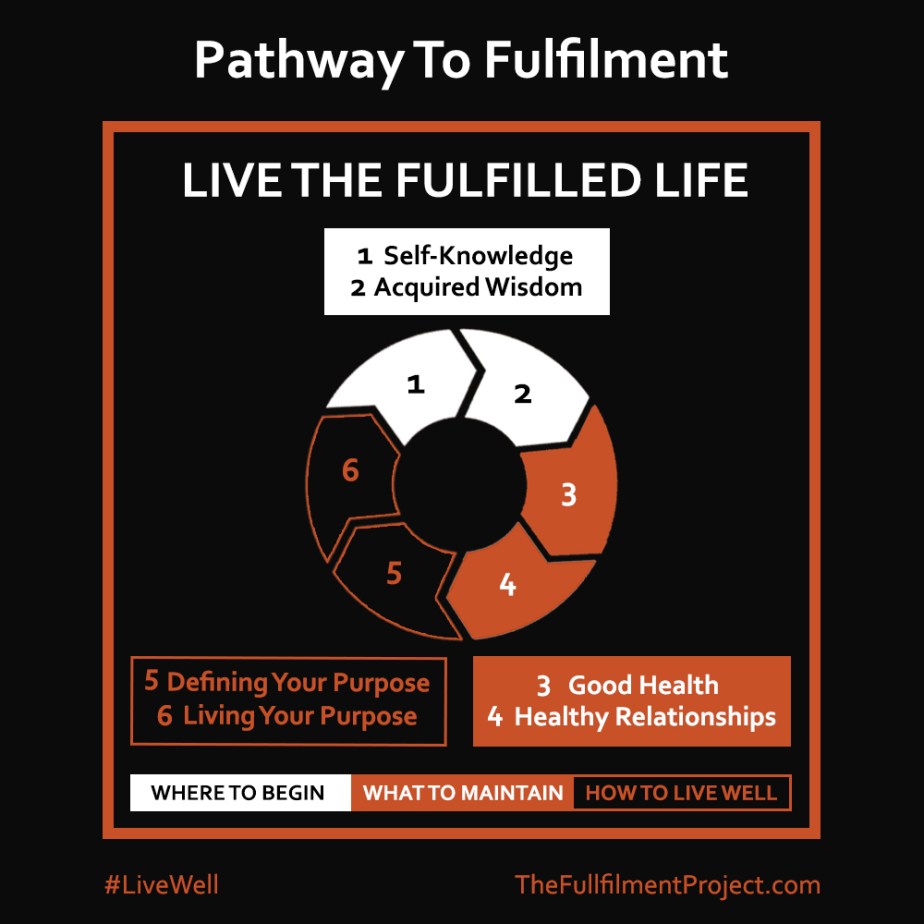
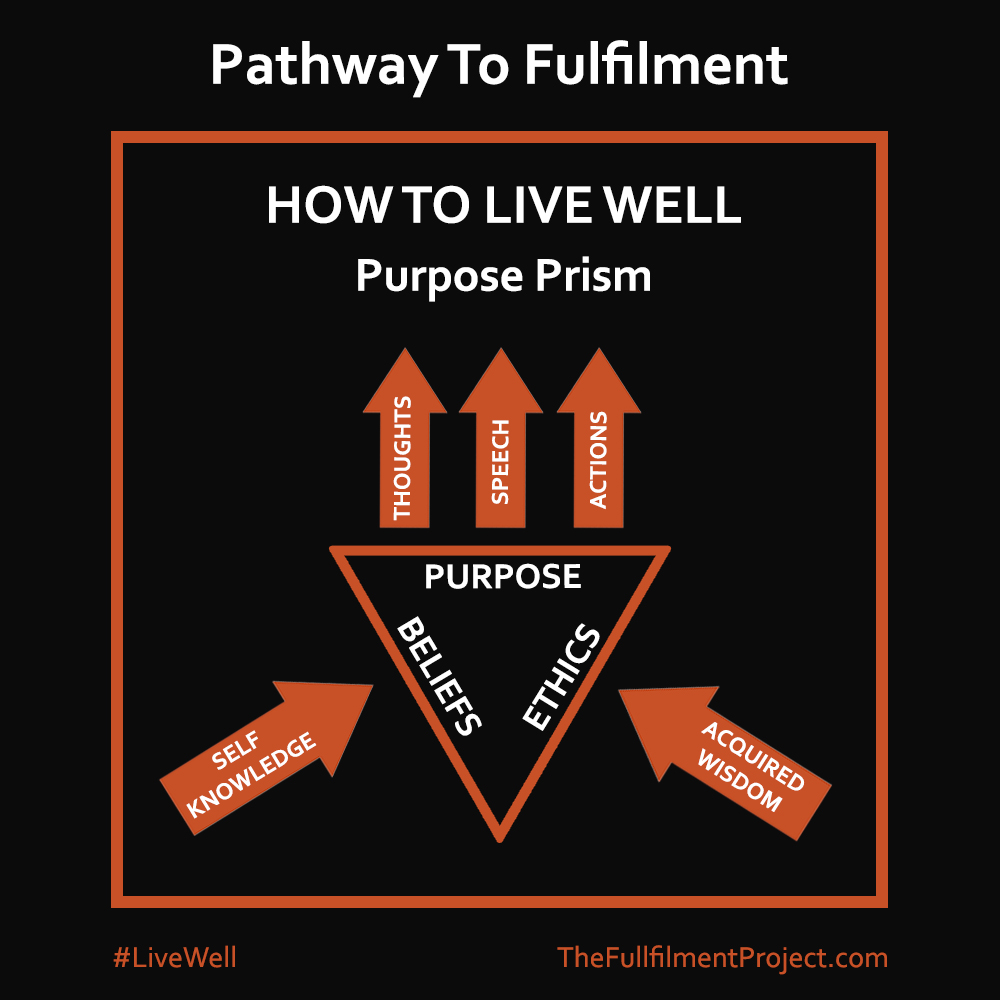
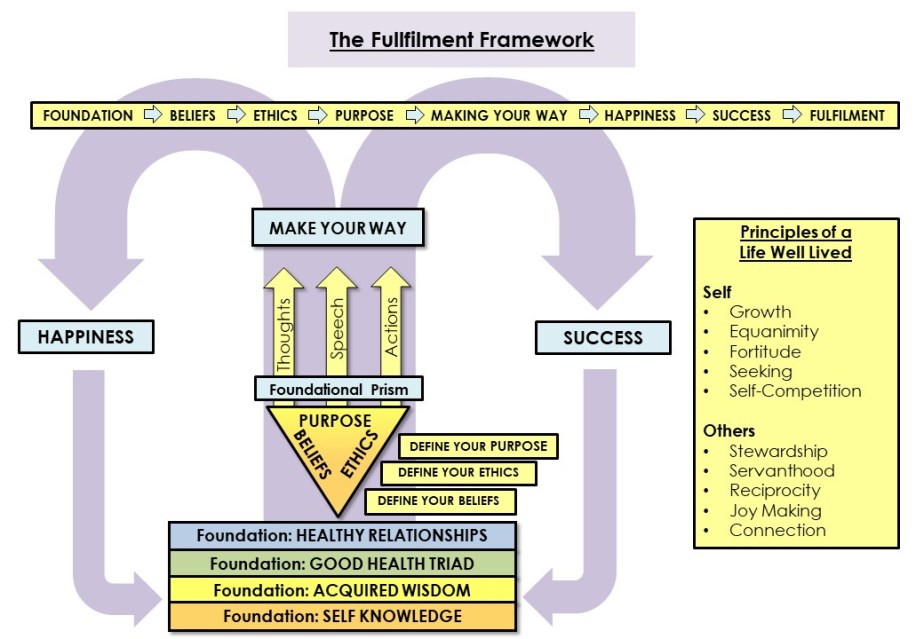
In life however, I think living by rules can sometimes feel restrictive, as constructive as they might be. I personally think it is better to live by principles. This means you have a reason why you do what you do and what you do and how you do it are more flexible, as long as they align with your principles. I have put together ten principle as part of my reworking or the Fullfilment Framework. This is a work in progress, so as ever, feedback is welcomed in the comments.
Principles of a Life Well Lived
I have distilled down principles that are good to live by to ten specific principles that I believe will collectively help us feel happy and successful in life and as a result feel fulfilled. These are the principles of a life well lived, categorised into Self and Others.
Self: Growth
As human beings if we feel we are not growing as individuals then our lives feel like they are stagnating to some degree and we lose any kind of fulfilment. We need to develop in our jobs, if not in our spiritual or personal realms. To gain deeper understandings and to improve is a inner drive that is greater or smaller depending on your personality, but I would say it is always there.
We also need to have a growth mindset to get the best out of life. To have a destination in mind but to be flexible on the route. To favour hard work and problem solving over believing that we have fixed, innate qualities like being creative or not being good with numbers. We become good at anything with learning and practice. Water flows around obstacles and makes its own paths. Equally, a tree that bends in the wind will not break and it continues to grow, as this is its nature, much like growth is part of our nature.
Self: Equanimity
This is very difficult, it is the art of being calm and collected in any given situation, good or bad. It is mastery over our emotions. It is not getting emotionally pulled into situations so much that the situation dictates how we feel and what we do. Self-mastery includes equanimity, keeping experiences in perspective in the greater scheme of things. It is not abstaining from emotions; it is Mastery over them.
Self: Fortitude
We all have challenges in our lives, some are overcoming procrastination to work on something important to us and some are life changing events that threaten derail our whole lives. When we have a goal in life, a North Star that we are aiming for, we need the drive to work on this every day. No matter what our challenges are, having the fortitude to keep going when life pushes back will mean we achieve the good success we deserve.
Self: Seeking
Part of the Fullfilment Foundation is Acquiring Wisdom, which is part of Seeking. What I mean by Seeking is the act of exploring the unknown, to yearn for explanations of why things happen the way they do, but also to have the courage to step into the unknown in life when the prospect fills us with fear. This can be in our job, in relationships and in personal projects, and it can potentially challenge the values and beliefs that we have defined for ourselves.
This is part of the process of seeking, it is being open to change when new experiences bring new information, new wisdom that we have not been aware of before.It is following a spiritual path or a path of self-exploration, depending on your theological beliefs. It is the path of the wisdom warrior, to courageously seek a deeper understanding.
Self: Self-Competition
In life, we often compare ourselves to others, we compete with them, even if this is only in our own minds. This will either make us feel self-important if we are ahead, or feel bad about ourselves, if we are behind. This is not productive at all if winning is everything. Comparing a standard of work with others can be useful, but it is best to compare our current selves with our previous selves. To be better today than we were yesterday.
This is how all the great achievers think, whether individuals or companies, those who innovate and change the world compete with themselves, not their competition. This means they can focus their Why, on bringing to life the vision they have developed from their Why.
Others: Stewardship
Greatness comes from leaving things better than you found them. Not being satisfied with the status quo because it kind of works OK. When this is done with the intention of improving things for others the benefit is magnified for yourself and others. It is planting trees when you know others will benefit from its shade. This is a kind of entrepreneurial spirit, the act of looking for things that need to be improved and making changes to achieve this.
Others: Servanthood
A good leader takes care of those around them, it is not a rank, it is a mindset. A good leader serves others. In life, we do not need to be in the position of a Manager or a Supervisor to be a leader, but we do need to have others who will follow us in our endeavours, to help us advance our vision. Servanthood is a rewarding mindset to have because our biochemistry rewards acts of generosity, kindness and compassion, and it is key to our happiness and feeling of fulfilment. However, it is not about being a dog’s body, it is a partnership of giving and receiving. It builds trust and cooperation and our relationships begin to thrive.
Others: Reciprocity
It is important to give, but it is also important to be humble enough to receive as well. It gives others the opportunity to give. Also, when we help others, we feel a sense of fulfilment, we feel good. Fulfilment itself is reciprocal because it requires the helping of others to find fulfilment in their lives. To help others grow and achieve, to feel joy and happiness. When we do this in our relationships and in our work, we feel fulfilled at the end of each day, but we must be able to accept the help from others too.
Others: Joy Making
Joy is different from happiness, because happiness evokes the idea that we are striving for something. Joy on the other hand is about bringing laughter and smiles to people’s faces. It is enjoying the moment, and we can bring this into our own lives through the attitude that we have, we can be joyful; and when we are the joy spreads. When we bring joy into the interactions, we have with others it feeds the souls, so to speak, it increases our wellbeing ten-fold and our lives and the lives of those around us are better for it. To be joyful is to enjoy life to its fullest, to be an ambassador of joy is to bring joy into the lives of others.
Others: Connection
There are two ways I think we should strive to be connected, with the people in our lives and what is often called the Great Mystery; God, Tao, Brahman, or just the Universe itself, that which is bigger that all of us but contains all of us. In life we need healthy relationships, in our personal lives and in our professional lives.
This involves things like regular contact, spending time together, preferably in person rather than via a device, and caring about the wellbeing of the people we know. When we are waiting for a meeting to start at work, or some other situation, asking how people are and listening to the answer, rather than checking our social media status or emails. This is how we build trust and loyalty, how we build depth into our relationships. Above all else it is caring about the other person beyond how you know them, compassion, empathy and love build strong bonds.
The Great Mystery or God can make some feel uncomfortable, even angry when the subject is brought up. However, I am not suggesting that you have to become religious if you are not. I feel that your beliefs should be dictated by your own conscience based, on your experiences and knowledge, and not the opinions or beliefs of others.
That being said, when we do not feel that we are connected to something greater than ourselves, then I think we can feel separated in our existence or full of self-importance, as if we are what is most important. Feeling connected to something larger than ourselves, even if this is the Universe itself, does two things. It helps us feel like we belong here and it keeps us humble to think of ourselves as like a drop of water in an ocean, an essential part of the greater whole.
Final Thoughts
These principles that I am suggesting will, I think, help you feel happy and successful. You might pick a few of them to follow and leave the rest. That is fine, it is not a definitive list, but I believe that they are the core of what it means to live well.
Something To Think About
Which of these principles would you follow? Also, what other principles have you already decided to follow or could you follow?








 The Fullfilment Project