Purpose Vs Mindfulness

To have a purpose is to have a goal to work towards. It is essentially something we ‘do’. To be mindful it is less about ‘doing’ and more about ‘being’. In a sense ‘doing’ is a more Western approach to life and ‘being’ is a more Eastern approach to life. Depending on where your cultural reference points are you might feel that these are polar opposites.

In fact they are intertwined. You cannot ‘do’ well unless you are present in the moment and you cannot ‘be’ in the moment without a purpose for doing so. They feed each other like Yin and Yang. To separate them would end up causing confusion and frustration and you would not be able to ‘do’ or ‘be’ particularly well.

To be purposeful mindfully or be mindful on purpose are not easy things to do, but once we recognise the interconnected nature of the two elements we can work towards it.

Give Your Life Purpose

I’ve been thinking a lot about Purpose recently and I’m sure I’ve discussed it on this blog before. I may have already covered the points mentioned here, but, as it is with human beings, we forget profound truths because we return to our default behaviours and mental patterns and the wisdom does not stick.

What occurred to me this morning is that life does not give you purpose, you have to figure out what your purpose for living is and apply it to your life. Last night I was feeling a little lost, so I picked up my copy of Man’s Search For Meaning by Viktor E. Frankl, an astounding book that I recommend you read. I dipped into it and found this quote from the section ‘The Meaning Of Life’ that really struck me, “Ultimately, man should not ask what the meaning of life is, but rather he must recognize that it is he who is asked.”

Then the obvious truth became clear, that there can never be one meaning of life, because we are all different people. What you find meaning in cannot be the same as what I find meaning in, though there will be some overlap. The thing to do is to figure out what gives your life meaning and to live that and do that, whatever it may be.

Teams Need A Purpose

In any organisation every team needs a Purpose. Often a company will have an overarching Purpose and/or Values, but if this is either not articulated well or made relevant to every team within the company, then productivity can drop off, as can retention of staff.

Everyone needs a reason to go to work, other than just to pay the bills. If our job gives meaning and purpose to our lives then we will be happier and will work harder for the company we work for. The assumption that staff will only work for a paycheck is a shortsighted view that many leaders have.

So, if you are a leader within your organisation, review how effective your company’s Purpose, Values or Principles are and work to ensure every member of staff feels that they are contributing towards them. This will increase levels of fulfilment and productivity, and will make them want to stay.

Overcome Your Limits

I have had a tough time recently with my Fibromyalgia kicking my ass and developing Visual Vertigo, which mean I am off balance some of the time. I was on a low ebb yesterday and then I realised that I had limited thinking. All I could see was the continuation of my suffering and, without realising it, I was seeing my current condition as permanent, which made me feel helpless.

I then remembered three things. Firstly, the human body has the amazing ability to heal itself, it is works towards optimum health. This is not to discount serious illnesses, but generally speaking the body heals itself.

Secondly, I was using a pessimistic explanatory style, as described in the book Learned Optimism by Martin E.P. Seligman, which adds to the feeling of helplessness. Thinking of my situation as temporary changes everything.

Thirdly, I remembered that my purpose is to help others to thrive and in order to do this I need to figure out how I can thrive. I am the test subject for all my future successes helping others to overcome their challenges. I will not let them down.

So, I began to see my current challenges as opportunities to build resilience and to learn how to help others overcome and thrive. I woke up with a positive mindset this morning and ready to try again.

Finding Your Purpose

I recently watched an interview with Jay Shetty where he talked about his formula for finding your Purpose.

Your Passion
+
Your Strengths
+
Compassion
=
Your Purpose

This seems like a good balance of ideas in order to find Purpose. Your Purpose does have to include what you are passionate about, but if you focus on things that are not your strengths, then you won’t get very far. The inclusion of compassion ensures the Purpose you have is not a selfish one. We thrive more if we are focused on helping others, it is how we are wired.

How We Serve Each Other

We can see colour because the fruits, berries and vegetables that we evolved to eat are colourful. The fruits, berries and vegetables are colourful because we, and other animals, see in colour. All things exist in this inter-related way.

When we focus on our individual dramas and successes we forget that we only exist because everything else exists, that we are dependent on each other. Whatever position we hold in the company we work for, without every other person who works there, from the top to the bottom, we would not have a company to work for. The same could be said of our society, culture and human race.

This line of thinking could extend out to include everything in the universe, but for practical purposes it helps to think on a human level. In short, we have much to be grateful for and much work to do, as everyone else needs us as much as we need them. The challenge we have is to figure out what our part to play actually is. To have a purpose in life is to know where you fit and how you can be the best you that you can. This is how we serve each other.

Choosing Optimism

One of the most important decisions, as Einstein has been quoted as saying, is to decide if we live in a friendly or hostile universe. The key is that it is a decision. We all have a mindset, a perspective that influences how we see everything and this will either leave us feeling as if the world is acting against us or for us.

It might sometimes feel as if the world is against us, but we can choose how we respond to the situations we find ourselves in. During the Second World War some inmates of the Nazi concentration camps gave up, but some went around helping others and giving away their last piece of bread. This is an extreme example, but those who gave themselves a purpose in the most horrendous of circumstances survived.

Life rarely asks that much of us, but we nevertheless have a choice. So, their are two choices that I would like you to make. Firstly, decide that the universe is working for you, and to reflect on what that might be like. What evidence might there be that your life is a gift? Secondly, decide on a purpose, a reason for doing what you do. This could start off being a single act that you feel passionate about and take it from there.

If the universe is working for you, every day is a blessing and everything you do will be influenced by this optimism. Having a purpose means your day will have a drive and a focus and at the end of the day you will feel fulfilled by the way you lived your life on this day and on into the future.

Meaning In Life

We are all here connected to the interconnected web of all existence. We are connected to the tree that have become the wooden chair on which you sit, if you are, and the life that this tree fed and sheltered. We are connected to all that has come before us and all that will come after us, when we are again returned to the universal elements from which we are now composed.

These elements will be as useful in the grand fabric of the universe as they are now, in this very moment. All of this underpins whatever our beliefs may be. If we believe in God or we don’t, if we believe in an existence after we die, either in heaven or through reincarnation, or we don’t, we are all still part of the same ocean of existence.


According to the website ‘www.actionforhappiness.org  “Meaning in life can feel like a mysterious or esoteric topic, one that philosophers through the ages, and later psychologists, have tried hard to pin down. At its core, it’s a sense of being connected to, part of, and/or contributing to something bigger, beyond ourselves.  This might sound huge but it isn’t, we are all connected to the world around us in a myriad of ways which means there are many ways we can make a difference.”

Don’t Focus On Your Strengths

We hear a lot of motivational speakers talk about focusing on your strengths, whether it be your top 5 or your best strength. However, anyone who has become successful at anything had to develop and become good at what they currently do.

Strengths are certainly useful, but they do not provide long term success, because there is no long turm objective, other than to become better at what you are already good at. It is smarter to have a vision or purpose for your life, a reason why you get up in the morning, and centre your development around that.

It could be to help people to read or to make a difference in people’s lives or to run your own company or many other things. Your strengths will often help with these things, but only if they align with your vision, purpose or reason. It is more likely that you will need to develop in areas that you are not strong in currently and with work these then become your strengths. The goal is to live your best life, which will require developing in areas that are not your current strengths.

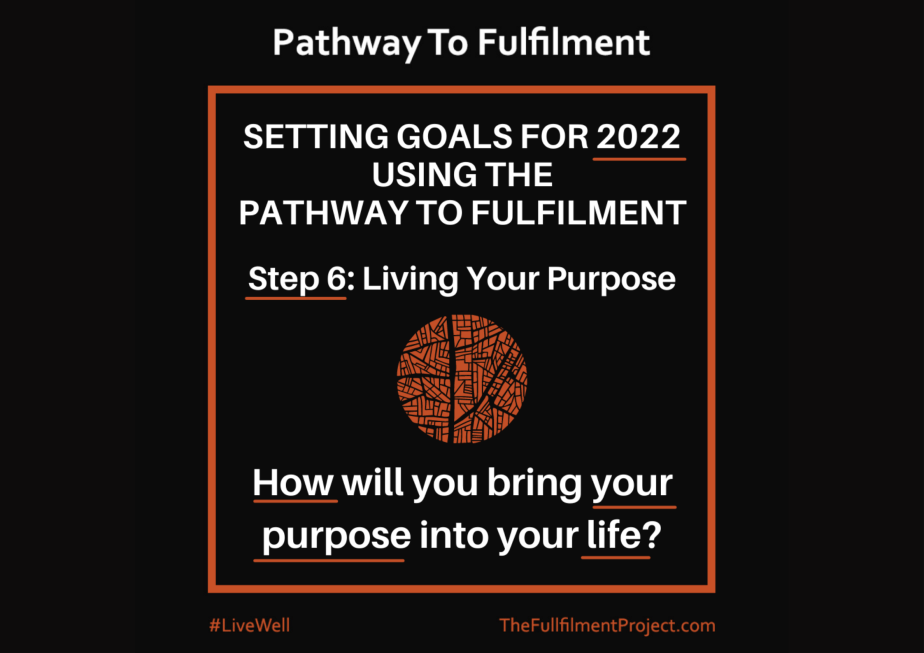
2022 Goals: Living Your Purpose

It is one thing to figure out what your Purpose is, but it is another to act on it. To live by your Purpose takes courage and determination, because it can put you at odds with people in your life and can require you to make some difficult choices.

Step 6 in the Pathway To Fulfilment is Living Your Purpose. Once you have gone through Acquiring Wisdom, Self Mastery and Defining Your Purpose, if you do not live your Purpose it will have all been just a theoretical exercise. In order to live well and have a fulfilling life, you have to live by your Purpose, once you have defined it.

So, what will you do this year to live by your Purpose?

I appreciate that you may not yet have defined your Purpose, but you can work on it this year. While this important work is being undertaken you could figure out your principles, beliefs, values and ethics and live by them. These will be guides to how you live your day to day life.

Once you have defined your Purpose, however, you will be ready to set your sights on your north star and make big decisions on how you want to live your life over the next months and years.

2022 Goals: Defining Your Purpose

There is a lot of talk about finding your Purpose and then everything being good in your life. It is not as simple as that, but it is important to figure it out.

Step 5 in the Pathway To Fulfilment is Defining Your Purpose. This step comes after Step 1 and 2, where you firstly Acquire Wisdom and then develop Self Knowledge and then Self Mastery.

This process involves figuring out what your beliefs, values and ethics are. Then looking at the reason you do everything you do in life. Behind each reason is your Purpose. My Purpose is to help others live well.

So, what will you do this year to work on defining your Purpose?

You could look at what principle you already live by, you could define your beliefs about the important things in life, you could figure what you value or what your ethics are.

Reducing Stress

Stress is caused by two things going on at the same time. Either we have to do something but we don’t want to, because we want to do something else, or we want to do something but we feel that we are not able to.

If there is a profession where everyone has burnout, due to stress, then I would avoid working in that profession, but if some can do it with joy and with stamina, then they are doing what they want to do and they feel they are capable of doing it.

I previously working in a special needs school for around nine years. After the first five years the children coming into the school had more challenging behaviours and physical restraints were needed more and more to keep everyone safe. I found this particularly stressful, as I was developing Fibromyalgia at the same time, so I found the physical side more difficult. I developed severe anxiety and needed to find another job.

Some of the colleagues I worked with took the job in their stride and had been doing it for over twenty years. They enjoyed the job and got a lot of fulfilment from it. It is not that the job was a bad job, it was that it was not right for me. I now work as a Complaint Handler for a bank and really enjoy it. I get to take situations where something has gone wrong and problem solve a solution that also rebuilds the relationship with the customer. Others would find my current job stressful.

My Purpose is to help others live well, which I do with this blog, but I also use it as a goal in my job. If you figure out your Purpose, then you can find a job that aligns with it and connects with your capabilities, and your level of stress will go down. However, finding a job that suits you, and you enjoy, can also help you find your Purpose.

Finding Your Purpose

Purpose is a word loaded with expectations. There is a lot of pressure on those wanting to develop themselves, to find their unique purpose for being born.

My view on finding your purpose is that by the time you are in your 20s you will have a reason behind everything that you do. For some it is to leave things better than they found them. For others it is to generate joy in others. Everyone has a think that makes them tick. This is your purpose.

For me it is helping others to live well, to ultimately have a fulfilling life. It is not one thing that you do, it is the reason behind everything that you do.

The Dangers of Seeking Reassurance

I have been think lately about why we seek reassurance before we step into doing new things or things that have creative risk and something happened to me this week which illustrates my thoughts on this. I work in a contact centre in a business park and walk for 15 minutes to catch the bus home. Now there are two buses with the same number which stop at my bus stop, one of the buses ends part way along the route and the other goes to where I live.

One bus came by so I waved it down to check if it was my bus, but it was the other bus that I needed, which promptly arrived and overtook the bus I had waved down and drove on by. While sitting at the bus stop waiting 40 minutes for the right bus to come by again I was thinking about why we seek reassurance and I realised that what I had done is outsource responsibility for knowing which was the right bus to the bus driver of the wrong bus.

If I’d have taken ownership of finding out which was the right bus, I could have checked the details on the bus stop timetable and compared them to the details on the front of the bus and could have been at home eating my dinner at the time the next correct bus arrived at the bus stop.

This to me illustrates the consequences we pay for seeking unnecessary reassurance that the thing we want to do is the right thing to do. Not taking responsibility for things in our lives, because we are worried about failing or choosing the wrong path is always the wrong path. We miss opportunities and we are left waiting for others to help us, or save us in some cases. No one is coming to save you, you have to save yourself and those around you will support you on this journey.

No one will give you the perfect answer as to what you should do either, because they are judging it based on what they would do, and they are not you. We need to make a choice and go try it, whatever it is. If it doesn’t work and we fall on our faces, we have learned something. The trick is to know that you will always pick yourself up and try again. A bird does not avoid landing on a tree branch because it is worried that the branch may break, if they did they would never land on a tree branch. A bird’s faith is not in the branch not breaking, it’s faith is in the ability of it’s own wings.

How To Live Your Purpose

“If you have a strong purpose in life, you don’t have to be pushed. Your passion will drive you there.”
Roy T. Bennett

Starting With Your Why

The work of Simon Sinek has popularised the idea of having a Why with his book Start With Why: How Great Leaders Inspire Everyone To Take Action and his TED Talk How Great Leader Inspire Action. However, how can you use your Why to figure out what you should be doing in your life, your purpose?

As Simon Sinek rightly tells us, your Why is your origin story, it is the reason behind why you do the things you do. It is how you were raised, the early experiences you had and the decisions you made leading up to adulthood. In essence it is who we are. It is not always clear how to define your Why, but with self-reflection and self-observation you can find it.

Take me for example, I have a desire to figure out how to live life well and to share this with others. I have led worship in Unitarian churches for several years and worked in customer service and special needs education and started this blog without knowing my Why. It took the discovery of Simon Sinek’s book and some focused self-reflection to realise that my Why is to help others to live well, to find fulfilment. In all the areas of my life that I have mentioned I felt at home when helping others.

You might feel comfortable being a leader, being creative, working in a team or working alone. Whatever you do that makes you feel happy or content, these are clues as to your Why, because you feel good doing these things. Your Why is what defines you as a person. If you need guidance on finding your Why I recommend you read Simon Sinek’s book Find Your Why: A Practical Guide for Discovering Purpose for You and Your

Turning Your Why Into Your Purpose

Once you have defined your Why, you will be able to use it as a compass to direct you towards the things you should be doing. Ideally, your job should be aligned with your Why. In other words your work should make you feel happy, successful and fulfilled.

This is largely effected by the environment you work in, the leader(s) you have and the people you work with. But, if you know your Why then you can choose work that is aligned with it. Work that you can really get your teeth into and make a difference in the world.

At the moment, with the difficulties caused by the Coronavirus pandemic, we have to do the work that is available. As needs must we must go. However, if you are interviewing for a job it is a good opportunity to interview them at the same time.

Choosing The Right Work

A good question to ask interviewers is how they reward performance. If they reward good performance with bonuses, money incentives, for hitting the numbers they set, then the company values your output over you. If they reward good performance in a way that values you as an employee then the environment you would work in will be more fulfilling and you will feel looked after.

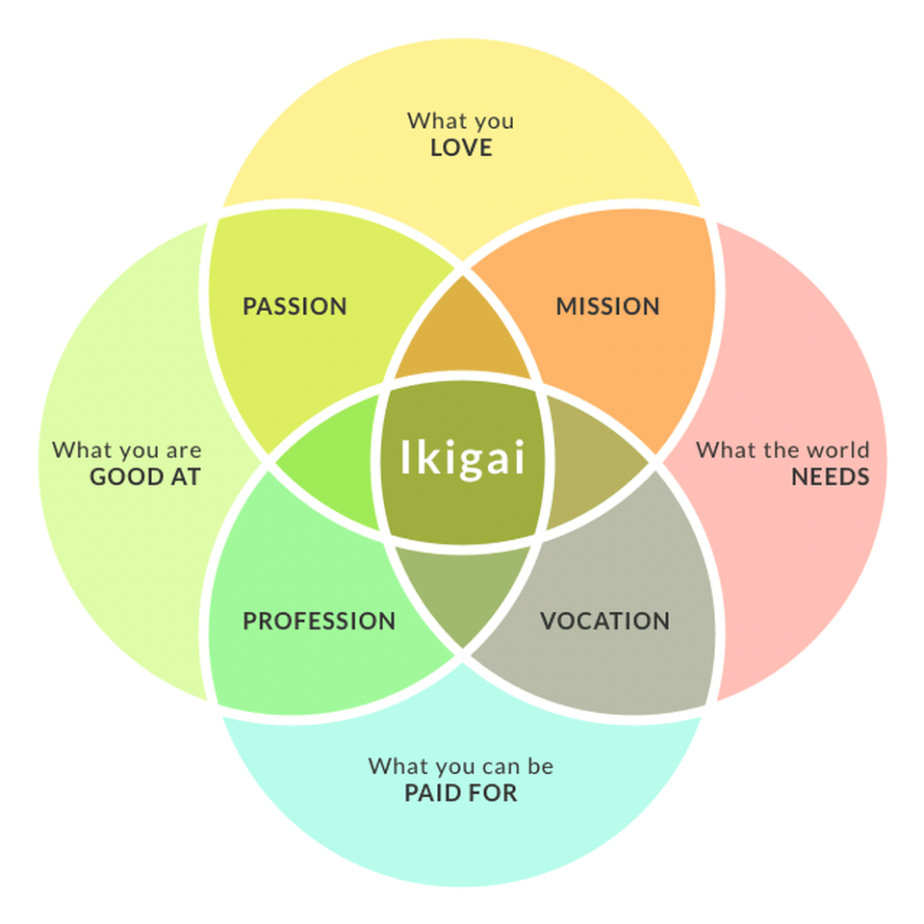
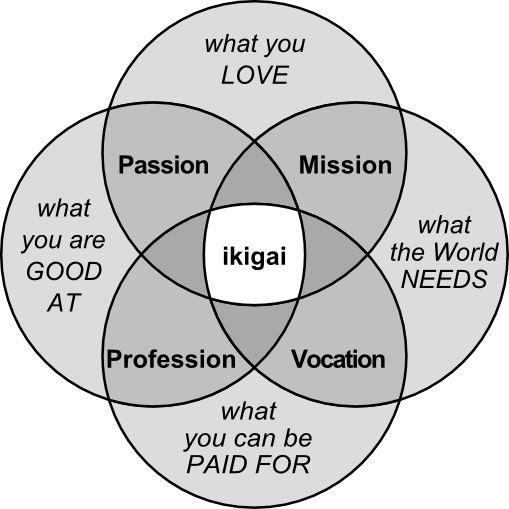
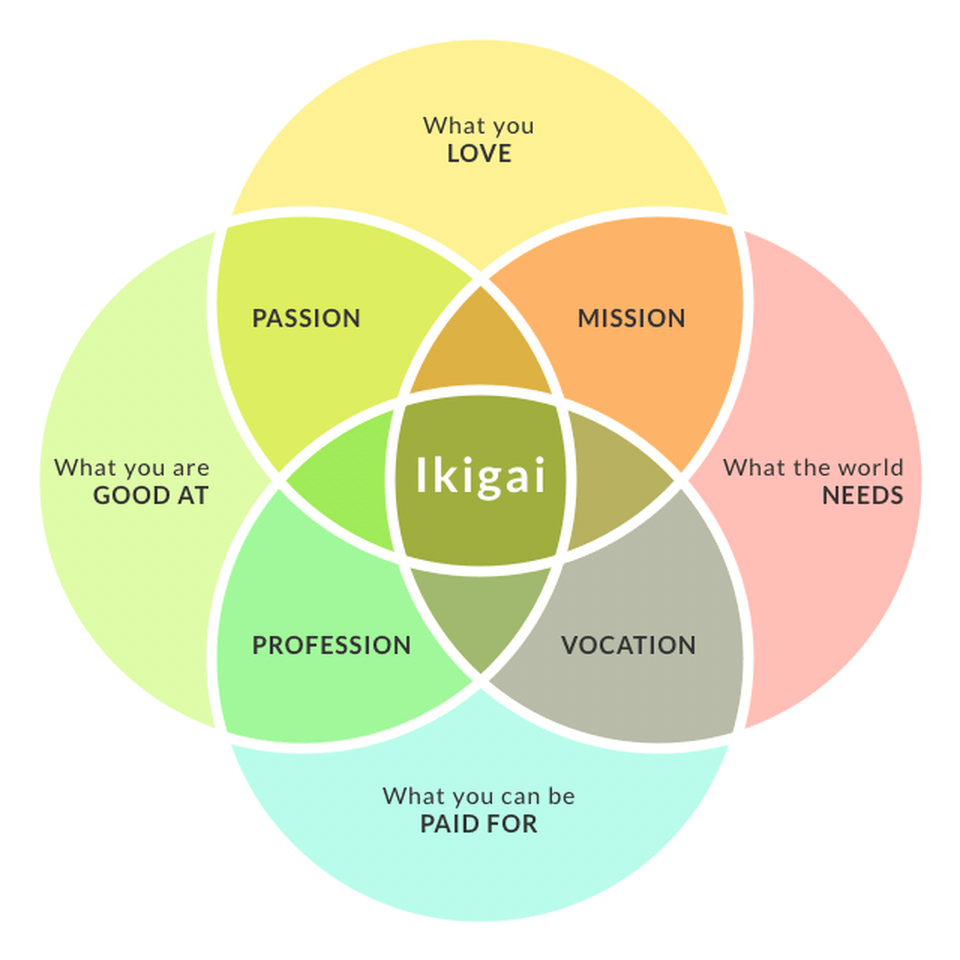
You should also look to work in roles that fit your Why, that align with who you are. The work we do in the world matters. If we are not doing what we are meant to be doing, then resentment and unfulfilment sets in. I recommend using the Ikigai method, where you look at What You Love, What You Are Good At, What You Can Get Paid For and What The World Needs. This will then reveal your Passion, Profession, Vocation and Mission. Knowing your Why will help you fill in these categories and find your Ikigai, your Purpose in life.

Conclusion

When we start with defining our Why we can start to figure out why we do what we do and then what we want to be doing in our life. Once we know our Why we can narrow down what we are meant to be doing, what our Purpose is. And when we live out our purpose, our work feels like a privilege.

Defining Your Purpose

Starting With Yourself

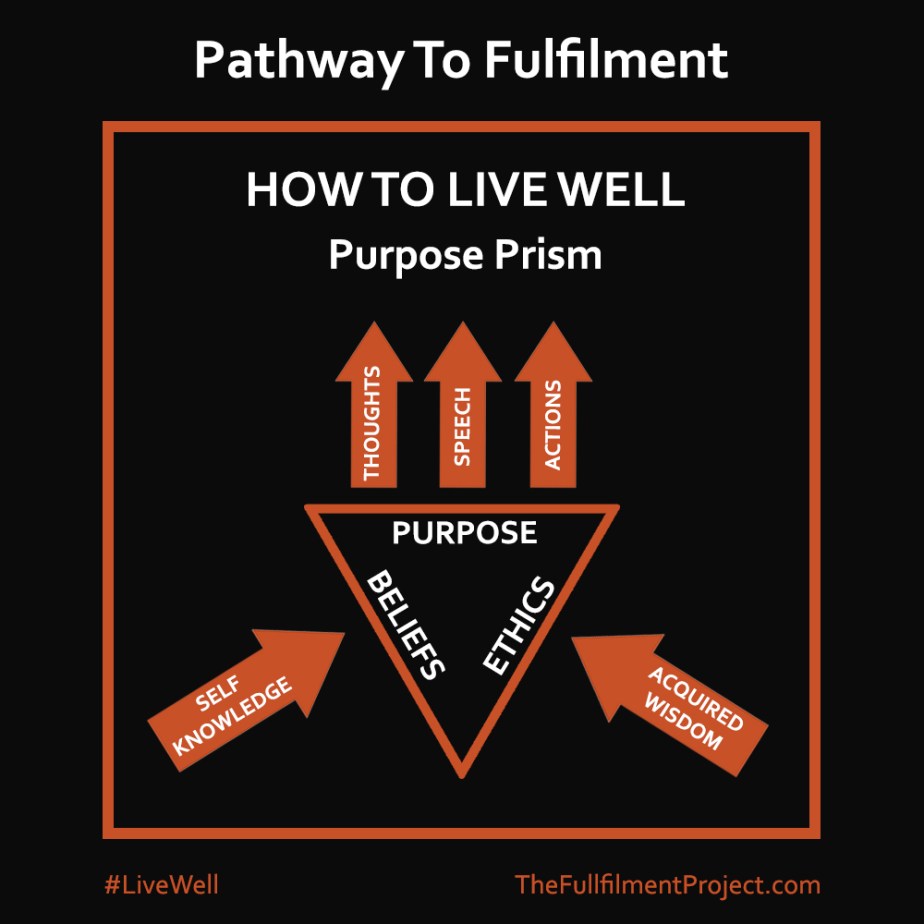
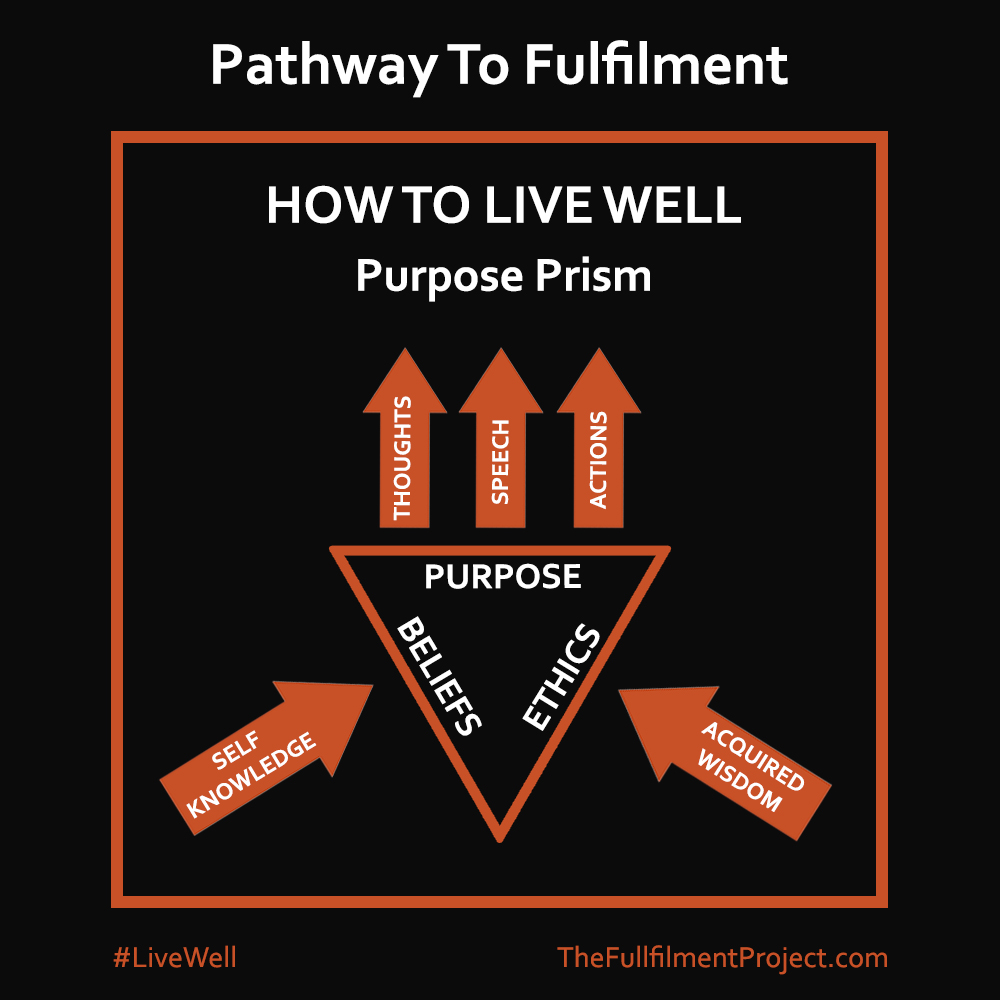
The Pathway To Fulfilment has the steps that it does because the end result are thoughts, speech and actions that are aligned with your purpose that you will define. They come from your Purpose Prism, which includes your beliefs, your ethics and your purpose.

You will have gained deep Self-Knowledge (Step 1), which is when you will define your beliefs and ethics, and you will have Acquired Wisdom (Step 2). A purpose can then be defined aligned with these elements from Step 1 and Step 2 that together will make your thoughts, speech and actions full of altruism and wisdom.

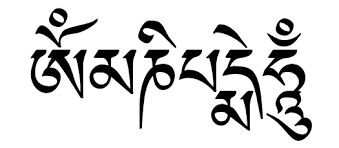
Om Mani Padme Hum

In regards to altruism and wisdom, there is a Buddhist mantra, Om Mani Padme Hum, which explains how, in Buddhist understanding, one reaches enlightenment. Om is made up of through sounds A – U – M. These represent thoughts, speech and actions, and once we are enlightened these are pure. Mani means Jewel, which represents altruism. Padme means Lotus, which represents wisdom. Hum is unity of both infinite altruism and infinite wisdom, both of which are needed to become enlightened, in Buddhist understanding.

The reason I am asking you to begin with self-knowledge, then to acquire wisdom, and to figure out your beliefs and your ethics, is so that your purpose will be imbued with both altruism and wisdom, and that your purpose becomes your unity, your Hum. Your thoughts, speech and actions dictate how your life will be, because whether your life is good or bad, enjoyable or not is firstly based on your thoughts, of how you see the world, and secondly the impact that your speech and actions have on those around you.

How We Walk Through The World

If we walk lightly through the world, trying to live in balance and to help others, then we will live a more fulfilling life. Also, in order for us to find a purpose in life, we need to know ourselves really well, to have gone deep into the parts of our minds that we often shy away from, but also to develop a wise understanding of how the world works and how we can have a positive impact on it.

This is why Defining Your Purpose and Living Your Purpose are Steps 5 and 6. There is work you must do with yourself before a purpose can become clear. This work will not always be easy, but it is necessary, and I will be putting together a guide to help you along this Pathway to Fulfilment. It will take time to put together, as I want the pathway to be simple and the steps to be clearly defined, which means there is a lot to distill down into a clear and effective pathway. The outline of the pathway is set out below.

Something To Think About…

Think about how you currently live your life, how you treat others and how you earn a living. Are these ways that make you feel good? If not, what changes could you make?

Launching The Pathway To Fulfilment

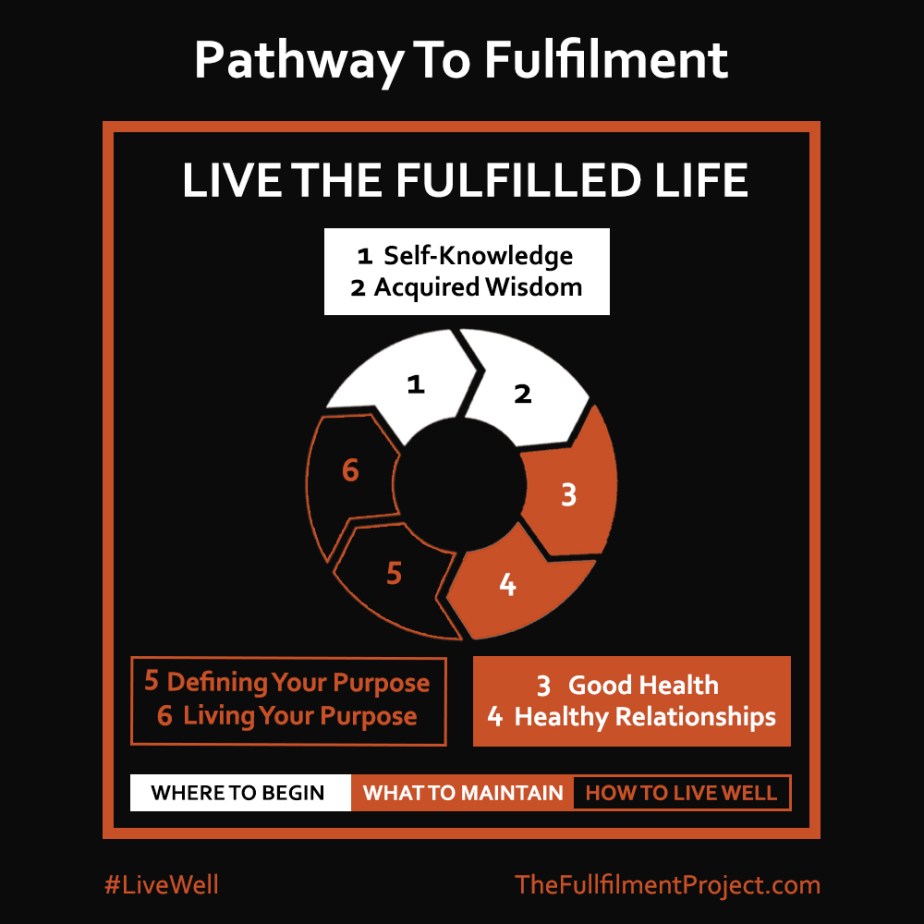
I have done some work on what I have so far called the Fullfilment Framework and renamed it the Pathway To Fulfilment, a more linear and simpler journey. My intention is to create a process by which people can start to live well, and therefore have fulfilment. This is not a life hack or magical cure for what ails you. It is a deeply personal journey of self-discovery, of life balancing and purpose finding. There are four steps of this process which are foundational to a life well lived, they are Self-Knowledge, Acquired Wisdom, Good Health and Healthy Relationships.

The Principles Of A Life Well Lived have been folded into the Acquired Wisdom. I have separated these foundational steps and the other steps of the Pathway To Fulfilment, six steps in total, into Where To Begin, What To Maintain and How To Live Well. Now that I have an outline of a process that I believe will bring about fulfilment in ones life, I aim to add in the detail of the activities and actions you will follow within each step of the journey towards fulfilment and a life well lived. Watch this space and the Facebook Group Community and on Instagram for up and coming updates. This new Pathway To Fullfilment can also be found on the page on this website of the same name.

WHERE TO BEGIN

Step 1: Self-Knowledge

The process begins with getting to know yourself more substantially than you may have before; figuring out what really makes you tick, what you believe and don’t believe, what you think is true and false, what you think is ethical and not ethical, etc. Also, what happiness and success look like to you, personally. It is broad and deep self-knowledge. This is your starting point.

Step 2: Acquired Wisdom

You acquire the wisdom of others, from a variety of sources, spiritual and secular; wisdom that will challenge you and enlighten you, as wisdom should. Often this is achieved by extensive reading, but, with the internet, a lot of this same wisdom can also be obtained through videos, audio books and pod-casts, however you learn best. This wisdom will feed into your self-knowledge, and influence how you see yourself and how you choose to live.

Connected to Acquired Wisdom are ten principles that I believe generate fulfilment, because they are wise principles that will help you navigate the world skilfully and live your life well. I have divided them into those that relate to Yourself and those that relate to Others. The principles related to Self are Growth, Equanimity, Fortitude, Seeking and Self-Competition, and those related to Others are Stewardship, Servant-hood, Reciprocity, Joy Making and Connection. I will be sharing more detail on these moving forward.

WHAT TO MAINTAIN

Step 3: Good Health

Your health should be of great concern, because good health is essential for your well-being and having an active, fulfilling life. I have included the usual physical health and mental and emotional health, and also energy health; all of which could be thought of as a triad of good health. Good physical health includes diet and exercise. Good mental and emotional health includes mastering your emotions and balancing your thoughts. Good energy health includes mastering the Chi (Qi) that flows through your energy system, like blood through your bloodstream, detailed in Traditional Chinese Medicine. To have good health you need to work on all three of these areas.

Step 4: Healthy Relationships

You look at your relationships, and identify those relationships that are good for you and those that are not, and those that are a mixture of the two, that need work to become good. You should continuously work towards all of your relationships being healthy ones; meaning that they bring you happiness rather than stress, they uplift you rather than bring you down. These relationships are in circles of community, which are relationships with yourself, your partner, your family, your friends, your colleagues and your acquaintances, and all are interconnected.

HOW TO LIVE WELL

Step 5: Defining Your Purpose

After working your way through this journey so far, you will have a solid foundation for how to start living your life better. From this knew understanding of yourself, your defined beliefs and ethics form part of what I call your Purpose Prism, the third piece of this prism being your purpose. You will go through a process of building on your beliefs and your ethics, weaving in Acquired Wisdom and Principles Of A Life Well Lived, and define your personal purpose. This prism is the filter through which you will see and experience the world, and it will influence your thoughts, speech and actions, making them wiser in nature. Your purpose comes from a vision of a better world that you want to help create.

Step 6: Living Your Purpose

You will then be set to start applying your beliefs, ethics and purpose to your life, to find your best way to live them out in your thoughts, speech and actions, to act on your vision of a better world through everything that you do. This is living your life on purpose. All of this work will mean that both happiness and success become personal, and therefore fulfilling, all three of which are bi-products of a life well lived. They then feed back into your self-knowledge, acquired wisdom, health, relationships and your beliefs, ethics and purpose, and on it goes, because this journey is a life long endeavour. Follow the path to fulfilment and live well my friends.
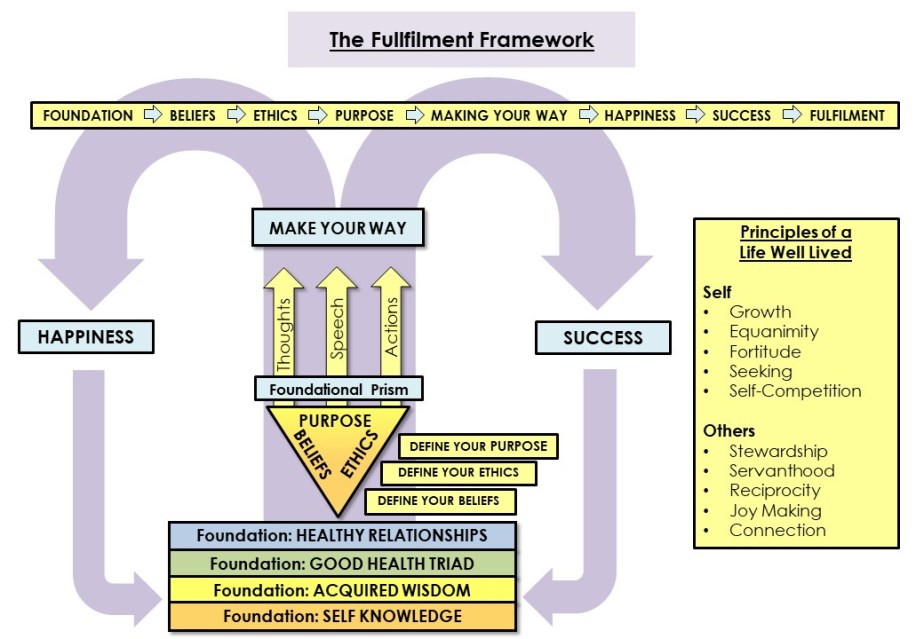
The Fullfilment Framework Remastered

I have reworked my Fullfilment Framework, so it has a better journey towards fulfilment. This is a brief summary of the journey, which I will expand on later on this blog. This summary can be found on the Pathway To Fulfilment page.

Where To Begin

The Fullfilment Framework is a pathway to fulfilment. It is a deeply personal journey of self-discovery, of life balancing and purpose finding. The structure of the Fullfilment Framework begins with getting to know yourself more substantially than you may have before; figuring out what really makes you tick, what you believe and don’t believe, what you think is true and false, what you think is ethical and not ethical. Also, what happiness and success look like to you, personally. It is broad and deep self-knowledge. This is your starting place, the first level of the Foundation of the Fullfilment Framework. Next, you look at the wisdom of others, from a variety of sources; wisdom that will challenge you and enlighten you, as wisdom should. This wisdom will feed into your self-knowledge, and influence how you see yourself and how you should live.

Next, you look at Principles of a Life Well Lived, which are divided into those that relate to Yourself and those that relate to Others. The principles are; Self: Growth, Equanimity, Fortitude, Seeking, Self-Competition, and Others: Stewardship, Servanthood, Reciprocity, Joy Making, Connection. These are very much connected to Acquired Wisdom, because they are wise principles that I believe will help you navigate the world skilfully and live your life well.

What To Maintain

Next, you look at your health, which has three areas of concern in this framework. We have physical health, we have mental and emotional health and we have energy health; all of which make the Good Health Triad. Good physical health includes diet and exercise. Good mental and emotional health includes mastering our emotions and balancing our thoughts. Good energy health includes mastering the Chi (Qi) that flows through our energy system, like nerve signals through our nervous system. To have good health we need to work on all three of these areas.

Next, you look at your relationships, and identify those relationships that are good for you and those that are not, and those that are a mixture of the two, that need work to become good. You work towards all of your relationships being healthy ones; meaning that they bring us happiness rather than stress, they uplift us rather than bringing us down. These relationships are in circles of community, and these circles are relationships with yourself, your family, your friends, your colleagues, your acquaintances, and all are connected.

How To Live Well

After working your way through this journey so far, you will have a solid foundation for how to start living your life better. From this new understanding of yourself, your defined beliefs and ethics form part of what I call your Foundational Prism, the third piece of this prism being your purpose. You will go through a process of building on your beliefs and your ethics, weaving in acquire wisdom and the principles of a life well lived, and define your personal purpose, which completes the Foundational Prism. This prism is the filter through which you will see and experience the world, and it will influence your thoughts, speech and actions, making them wiser in nature. Your purpose is a vision of a better world that you want to help create.

You will then be set to start applying your foundation, principles and purpose to your life, to find your best way to live them out in your thoughts, speech and actions, to act on your vision of a better world through everything that you do. This is living your life on purpose. All of this work will mean that both happiness and success become personal, and therefore fulfilling, all three of which are bi-products of a life well lived, and they feed back into your Foundation and your beliefs, ethics and purpose, and on it goes, because this journey is a life long endeavour. Follow the path to fulfilment and live well my friends.
Always strive to be inspired and inspiring.

#LiveWell

Poem: Having Purpose

Striving and failing, repeatedly.
The defeated fall below their imposed par;
partly theirs, partly someone else's.
We often strive without direction, without purpose
on the treadmill of life, running and staying.
People, teams, businesses; we mistake rewards for purpose,
the spoils with the destination.
When we have no destination and no map or compass to speak of
we fail in our pursuits. Our purpose defines our destination
and our reason for going there. It is the means by which we transform
the world for the better. It is how we uplift others
and help them become their best selves.
To help others find fulfilment is to fulfil what it means to be human.

Self Knowledge: Doing What You Love

There are many ways to ‘find yourself,’ not least the well worn concepts of going to spend time in an ashram or travelling the world, but often we discover at the end of these spiritual or physical journeys that we find ourselves back where we started. It is not the places we go to that cause us to find ourselves, but the experiences we have, the searching we undergo and the inward reflections that we have.

In truth, we can find ourselves right where we are. We do, however, need guidance, ironically the kind that you might in fact find in an ashram. If we do not have our own Guru, we can find wisdom in the writings of others, and processes like Ikigai, a Japanese method to find balance and purpose in life. As I have discussed in my last blog post, recommending a book on the subject of Ikigai, there are four areas to focus on in your life that interact in a Venn diagram layout that creates a centre, which is your Ikigai.

The top area of focus is What You Love, which is an enticing prospect, as doing what you love sounds like great advice, except, those who have rushed out and just done what they loved have often ended up as struggling artists or writers, with no financial plan, or steady income, but are prolific in their work, in the thing they love.

It is not that you should not do what you love, but it should be tempered with the other three areas of the Ikigai Venn diagram; What You Are Good At, What The World Needs and What You Can Get Paid For. Life is a complex meandering journey through strife and happiness, and just doing what you love will not always mean you will automatically live a fulfilling life. It needs to be balanced. Figuring out what you love is important, but the other aspects of Ikigai matter too.

For example, looking at what you can get paid for is important, because money allows you to do things and have things in life, money can be viewed as units of freedom, the more money you have the more freedom you have to do and have things. However, if you only think of yourself, in terms of what you love and what you can get paid for, this can mean others suffer so you can achieve personal goals. The amount of money we have does not equate to how happy we are, because we also need to have good, healthy relationships with other people too in order to be happy in life.

Figuring out what you love is a starting point, as is figuring out what the world needs, or what you are good at, or what you can get paid for. Trying to figure out what you were put on Earth to do is not straight forward, I recommend picking one of the areas of the Ikigai Venn diagram and start figuring out what that means to you and move around all four areas, and when you have a semblance of an answer for each area, then your Ikigai starts to take form and you are on your way to a fulfilling life.

This is, however, a life long pursuit; figuring out our life’s purpose can take a lifetime, and it will be different at different point in our life. So, don’t worry so much about having it all figured out. Start figuring it out and be open to the many, many possibilities that life has for us to explore and start exploring.

Book Recommendation: Ikigai by Justyn Barnes

Book Cover Image Source: Amazon UK

Ikigai Diagram Image Source: ontosomethingnew.org

Buy the book here

Why Read This Book

This is a book that will allow you to clearly figure what your purpose in life is. It is based on a Japanese concept that uses a Venn Diagram to dissect what you do and why you do it to figure out what you want out of life. If you are feeling stuck in a rut or lost in life, this is a must read.

Contents

  • Introduction
  • Aspects of Ikigai
  • What Are You Doing and Why?
  • What You Love
  • What The World Needs
  • What You Can Get Paid For
  • What Are You Good At
  • Finding Your Ikigai
  • Epilogue
  • Recommended Reading
  • Picture Credits

Summary

This book looks at our seven needs, everyday life and how we live longer when we are doing what we are supposed to be doing. It looks at how What You Love and What The World Needs blends to be our Mission, how What the World Needs and What You Can Get Paid for blends to be our Vocation, how What You Can Get Paid For and What You Are Good At blends to be our Profession and How What We Are Good at blends to be our Passion. The centre of all these is our Ikigai, it is a balance life, which incorporates our personal and professional endeavours. This book guides you through the process of completing your own Ikigai diagram to rethink your life.

Are We Addicted To Our Mobile Phones?

“Gadgets helps the solo, not the soul.” 
― Amit Kalantri,Wealth of Words

Witnessing Addiction to Mobile Phones

Recently, standing on the platform of a tram stop waiting for my tram, I saw a lady walking along, headphones in her ears, watching a video on her mobile phone and hardly even looking ahead of her as she walked. My mind was filled with thoughts around how human beings have become slaves to our mobile devices, how we have become a society who craves instant gratification and how addicted we all are. Then, another lady walked passed a moment later holding up a book she was engrossed in as she too walked along the platform.

This stark contrast is only really a contrast in the source of their attention, rather than the activity they were engaged in.  It begs the question, are we missing life by becoming regularly absorbed by activities that do not promote good mental and physical well-being. In our western society, to get drunk and the morning after not remember what we did the night before is lorded as almost a badge of honour. To binge watch whole series of a program on our preferred online streaming platform is a common occurrence too.

Are We Zombies?

It seems we are losing the ability to just be, to be aware of what we are doing when we are doing it. Our search for activities that give us quick wins, and as a result, hits of addictive Dopamine, is turning us into zombies, of sorts. I say this as a fellow zombie, but seeing a lady walking along a tram platform watching something on her mobile, and not able to wait until she was at home or somewhere else more appropriate, and safer, woke me up to the realities of our current quick fix culture.

These observations also beg the age old question of how we should live. Should we follow the crowd and become absent from the world while we stare into our mobile devices, or is there a better way to live. There is some merit for living without the constant availability of entertainment. I am not sure I could do it, but will try to cut back on how much I watch things on my mobile phone.

There is also the question of what we watch. If we watch lectures on the merits of theological or philosophical positions, or we watch instruction videos to help us do yoga or learn a new skill or something else that improves our lives, is this not a good thing? I suppose mobile devices, and by extension social media, are tools that can be used to make our lives, and the world better, or they can be used to simply waste time, which we cannot get back. Time is a currency that can never be bought back. I use Facebook to try and create a community as an extension of this blog, to try and get people to help each other live well. Even social media can be a beneficial in our lives.

The answer to the question of how we should live, I would suggest, trying the improve the lives of others, to help others find meaning and to be happy, and if this means we use mobile devices and social media to achieve this, then I am all for it.

Something to reflect on:

If we let the things we watch, mobile devices and social media dictate our thoughts and actions, then we must ask are they in charge of our lives?