Choose Your Direction In Life

When you stand or sit still you are already moving. The Earth is spinning moving you in one direction, the Earth is orbiting the Sun moving you in another direction, our galaxy is rotating moving you in another direction and the universe is expanding moving you in yet another direction. We don’t feel any of this because the speed is constant in all of these directions, but we are always being moved. When we pick a direction to move in and we start to move then we are choosing our own direction.

In life we are often moved by the will of others or our circumstances, but in each situation we have a choice in how we respond. Be a victim or believe in yourself. Be pushed down by life or rise up. Choose how you move and no matter how the world moves you, you will be in charge of your life.

Focus On The How Not The Why

Life runs away from us backwards into our pasts, giving us the sense that we are being propelled forwards in time, when we think about it. But our speed is constant, which is why we don’t really feel it day to day. The thing to do is to pay attention, be mindful and enjoy the scenary. Time gives us no choice but to age, if we are lucky.

The grey and the wrinkles are gifts. They remind us how far we have come and that we are still here. That we still have choices of how we can live. The how is the most imprtant thing, more so than the why.

Figure out the how and the why will take care of itself.

To Serve First Thrive

Put on your oxygen mask first is the instruction to parents when being given a safety briefing on a plane before the flight begins. The reason is that if you are unconscious, you can not help your child.

Equally, in day to day life, if you spend your time helping others and not looking after yourself, then you will become depleted, and your metaphorical cup will be empty. If you fill up your cup, then you have more to give.

In order to serve, you must first thrive yourself. To give you must first have plenty. This applies to your health, both mental and physical. To help others, you need to thrive so that the energy you give to others leaves you with energy to take care of yourself, too.

You also see the world and other people through the prism of yourself. You see things as you are, not how they are.

What Changes Do You Need To Make?

There were two lumberjacks who spent their days chopping up wood with an axe. They both started and finished at the same time yet one of them would leave in the middle of the day for an hour and would still chop more wood by the end of the day. Frustrated by this the other lumberjack complained about how he chopped more wood but left for an hour each day and asked where he went everyday. He responded by saying that he went home to sharpen his axe.

The point of the story is that effort does not always determine results. Being effective can sometimes matter more. We all have things in our lives that need ‘sharpening,’ things that would change our lives for the better off if we made specific changes or improvements. The question then becomes, what ‘axes’ in your life need to be sharpened.

Overcoming Inner Battles

I’ve been listening to the audiobook of The War of Art by Steven Pressfield on YouTube this week and it cuts deep into all the excuses and rationalisations that we come up with to avoid doing the new ventures or starting anything that will likely be good for us, but would also require change. It brings you face to face with what he calls the Resistance. This is the force that talks you out of beginning anything new. It is the writer’s block and the procrastination monster.

To do battle with the Resistance and do that which our brains try to talk us out of is a courageous act. To fight back and do the thing you are scared to do is to live a life of bravery. It reminds me of a quote from Teddy Roosevelt often quoted by Brene Brown and this is how I want to try and live my life.

"It is not the critic who counts; not the man who points out how the strong man stumbles, or where the doer of deeds could have done them better. The credit belongs to the man who is actually in the arena, whose face is marred by dust and sweat and blood; who strives valiantly; who errs, who comes short again and again... who at the best knows in the end the triumph of high achievement, and who at the worst, if he fails, at least fails while daring greatly."

The Lessons of Chronic Pain

Being in pain most of each and every day has its drawbacks, clearly. It limits ones capacity to live and move in the world, but it has some unexpected benefits. I know this from the personal experience of living with Fibromyalgia. Here’s what I’ve learned.

Carry On Regardless

Being in pain, as I often am, with pain in my muscles and joints, doing the everyday tasks becomes challenging. Let alone going to work and looking after my family, but I must carry on regardless. Necessity becomes the motivation to keep going, and this becomes a skill, the skill to keep going when all you want to do is stop.

Choosing Your State Of Mind

Being in chronic pain can send you into dark places in the mind. Depression is a slippery slope of despair that feels like the only way to think about the circumstances you are in. This is essentially helplessness, but helplessness is a learned mental state, which can be changed to an optimistic state, you can choose your state of mind. You can be in pain and be joyful. This is a skill and one that is very difficult to master, but with practice you can be in good states of mind no matter your circumstances.

Your Health Is Your Responsibility

Often we assume that our bodies will keep on going until we get old. This is why we drink heavily and spend the weekend partying. This is also why we think we can work long hours and not get enough sleep and keep going. Your body is an amazing machine that functions well when it is well maintained and well looked after, but less so when it is not.

We can’t live life at full throttle and when we get sick expect others to fix us. We can’t go to the GP and say fix me. They will often just give us some pills to take which will mask the problem and cause other problems.

The way to ensure we are healthy is in what we eat and drink, what physical activity we do, how good our relationships are and how we think. This is a lesson hard learned when you are in chronic pain, because you just want someone to come along and make it all go away. You have to be your own saviour.

Self Mastery

We have been blessed with amazing faculties of mind and body, but they do not come with an instruction manual, though much can be understood if you know where to get the correct guidance. Your mind and body are connected in a sort of synergy where each effects the other. Self mastery requires mastery of both, but mastery of the mind is the key. Being in chronic pain, you are brought face to face with the necessity of this kind of self mastery. What begins as survival can become thriving. What seems to be coping strategies can become techniques of self mastery.

It comes down to a choice of how you want to live your life.

Change Your Thinking

I saw a Facebook post today that said “Until you change your thinking you will always recycle your experiences.” There is truth in this statement. The way we see things is often based on our thinking. In other words, we don’t see things as they are, we see them as we are.

The way to change the experiences we have is to change our thinking. There are three areas of a person to master, if we are to develop self mastery. Our mind, our body and our chi. The mind is the linchpin, as it controls much of the functioning of the other two. The thoughts we have change the biochemistry that our brains control, because the mind controls the brain. Our thoughts as translated into physical sensations and experiences. Thoughts can ruin our day or uplift our day.

Self mastery begins with mastering our thoughts.

Living A Fulfilling Life

I am discovering through becoming more independent and confident in my job as a Complaint Handler that my health, happiness and success are all in my hands. This is to say that only I can achieve these things for myself, through good daily habits and believing in my own capabilities. Obvious I know, but not always easy to believe.

It begins with wisdom and self mastery, which leads into health and relationships, and ultimately purpose. These are all aspects of a life well lived, a life that in and of itself is a pathway that leads towards fulfilment. When we live well fulfilment is a natural state of being.

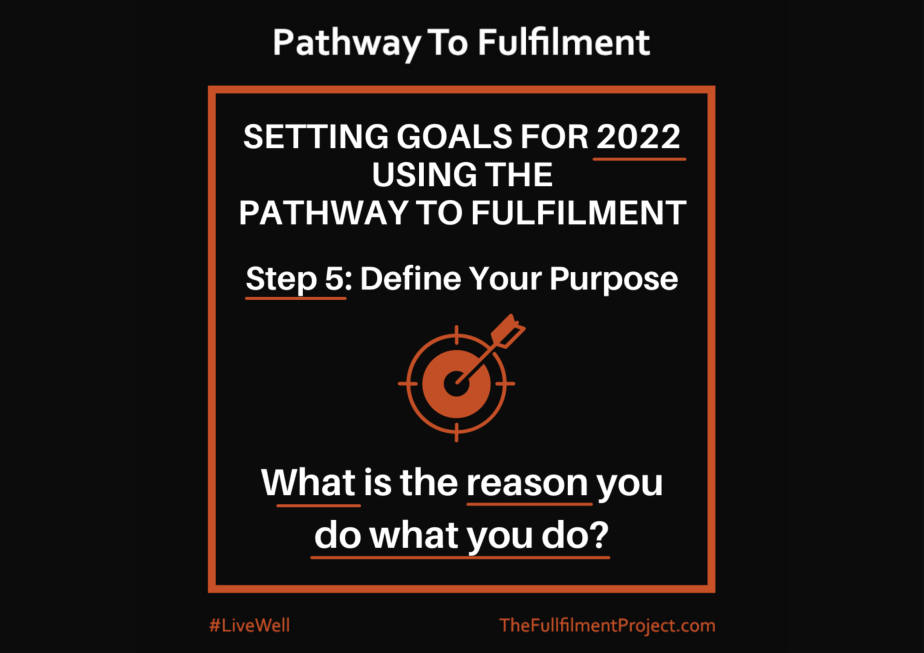
2022 Goals: Defining Your Purpose

There is a lot of talk about finding your Purpose and then everything being good in your life. It is not as simple as that, but it is important to figure it out.

Step 5 in the Pathway To Fulfilment is Defining Your Purpose. This step comes after Step 1 and 2, where you firstly Acquire Wisdom and then develop Self Knowledge and then Self Mastery.

This process involves figuring out what your beliefs, values and ethics are. Then looking at the reason you do everything you do in life. Behind each reason is your Purpose. My Purpose is to help others live well.

So, what will you do this year to work on defining your Purpose?

You could look at what principle you already live by, you could define your beliefs about the important things in life, you could figure what you value or what your ethics are.

2022 Goals: Self Mastery

One thing that all gurus, mentors and motivational coaches advocate for is self mastery. Whether it be mindfulness meditation or achieving goals, understanding and mastering how we think, feel and act allows us to move skilfully through the world.

Step 2 in the Pathway To Fulfilment is Self Mastery, which begins with self knowledge and extends to establishing what you believe, what your values are and what your ethics are. It is a process of self examination and is built on a foundation of acquired wisdom and will lead toward Defining Your Purpose, which is Step 5.

What will you try to develop in yourself this year?

It could be overcoming procrastination or starting a journal. It could be trying new things or mastering what you already do. My advice is to pick no more than two or three things to work on at once, but start, be consistent and set deadlines for your goals, so you can check your progress.

Self Made Possibilities

I was scrolling through my news feed on Facebook and a picture of a purple flower growing out of a brick wall appeared and it struck a chord with me. It reminded me that many people have been successful when they started off with nothing and no one on their side. Also, there have been many who had everything and did nothing with it.

The possibilities we have in life are sometimes given to us through the things we are born with or born into, but much of what is required for success to happen is self made. The possibilities for success have to be seen and then the work done to make them a reality.

Success that is worthwhile pursuing is always self made. Success that is given to us is not really success.

The Art Of Interaction

We don’t often think of how we interact as something to work on or improve. We learn how to communicate with each other during our childhood years and that’s that. However, if we are to make a real difference in the world then we need to master how we interact with each other.

I first came across the concept of the ‘art of interaction’ in Seth Godin’s book Linchpin, where he describes every interaction with a colleague or customer as practicing the art of interaction. It is an integral part of becoming a linchpin within your organisation, someone who is indispensable.

It is also good to practice how to interact with others on a general basis in order to develop good relationships and to uplift others. Treating it as an ‘art’ also means that how you interact with others can be unique to you. It is an art not a science. It is also one of the strings to your bow that are needed in order to have self mastery.

Take It On The Chin

When things go wrong or we make a mistake, often we either blame ourselves and start mentally beating ourselves up or we project blame onto someone else. The first option is clearly self defeating. The second option removes all accountability.

To me taking it on the chin first and foremost means we own up to whatever it is that has gone wrong. We take responsibility. However, we should not just say “it’s my fault.” If we don’t learn from the mistake then we will likely make it again.

I am one for mentally beating myself up, but I believe in being accountable for my actions, so I was often trapped in an anxious cycle of ownership and limiting beliefs. The break through for me has been asking what I can learn from my mistake and what actions I can take to put it right and avoid doing it again.

Taking something on the chin should not be a passive exercise in accountability. It should be an active movement towards self improvement. The only way we can make positive change in the world is if we change ourselves for the better.

Mastering Your Work

While we work we are often asked by our Manager to complete a Personal Development Plan. This is often limited to office based work, but applies to any field of employment. This can be seen as another task to do or it is seen as a tick box exercise. The PDP is in fact a huge opportunity.

It is an opportunity to actively develop yourself, to take ownership of your career and progress to the level or role that gives you the most fulfilment.

In my opinion your PDP should begin with the values of the company you work for as well as your own values. This is because it is important that these values are compatible. You should include how you learn, how you work and what your skills and experience are. This will give you a good foundation to build your PDP from.

Set short goals, usually weekly, mid-term goals, usually quarterly and long term goals, usually yearly. I would also review your progress against these goals on a regular basis. I will be trying daily reviews at the end of my shift to highlight what went well, what I could have done better, what I learned and what actions I will take from the learning.

I feel that daily reviews will speed up my development and make sure it does not plateau at a low level. Try it yourself and see how you go. If it is too frequent, try weekly reviews. You will not regret it.

Developing The Pathway To Fulfilment

My intention is to create a process by which you can start to live well. To me living well means to live in a way that brings about happiness and success, which in turn brings about fulfilment in our lives. This is not a life hack or magical cure for what ails you. It is a deeply personal journey of self-discovery, of life balancing and of purpose finding. This is an evolving process, until I feel a clear and actionable ‘Pathway’ is created, so it can be shared and used effectively.

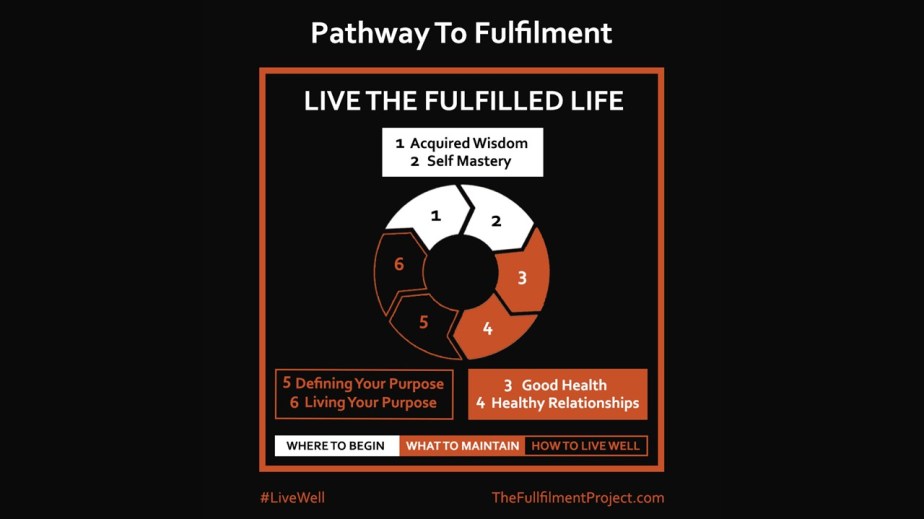
I have reflected on the first two steps to the existing Pathway and have moved Acquired Wisdom to Step 1, as I feel that wisdom gives us a strong foundation from which to build. I have replaced Self Knowledge with Self Mastery and moved it to Step 2, as self knowledge is a useful mental exercise, whereas self mastery is an actionable way of being, which is built on both wisdom and self knowledge. This, I feel, is a more effective part of the journey, as self mastery is required in order to have a life well lived. The six steps  are now Acquired Wisdom, Self Mastery, Good Health, Healthy Relationships, Defining Your Purpose and Living Your Purpose.

The six steps of the Pathway To Fulfilment are divided into Where To Begin, What To Maintain and How To Live Well. Now that I have an outline of a process that I believe will bring about fulfilment in ones life, I aim to add in the detail of the activities and actions you will follow within each step of the journey towards fulfilment and a life well lived. Watch this space and the Facebook Group Community for up and coming updates.

WHERE TO BEGIN

Step 1: Acquired Wisdom

We acquire the wisdom of others from a variety of sources, spiritual and secular. Wisdom challenges us and enlightens us. Often this is achieved by extensive reading, but, with the internet, a lot of this same wisdom can also be obtained through videos, audio books and pod-casts, however you learn best. This wisdom will feed into what you already know about yourself, it will influence how you see yourself and how you choose to live; helping towards self mastery.

There is a lot of wisdom out there to acquire, and it can sometimes be hard to distinguish wisdom from well sounding ignorance, so to simplify things for you I have broken down the wisdom I have found into ten Principles Of A Life Well Lived that will help you navigate the world skilfully. They are what I consider to be the essential wisdom to acquire. I will delve into each principle and explore how it will enhance your life. I have divided the principles into those that relate to Self and those that relate to Others. The principles related to Self are Growth, Equanimity, Fortitude, Seeking and Self Competition, and those related to Others are Stewardship, Servant-hood, Reciprocity, Joy Making and Connection. I will be sharing more detail on these moving forward.

Step 2: Self Mastery

The process of self mastery begins with getting to know yourself more substantially than you may have before; figuring out what really makes you tick, what you believe and don’t believe, what you think is true and false, what you think is ethical and not ethical, etc. It includes figuring out your beliefs and your ethics. Also, what happiness and success look like to you, personally, because our happiness and success are relative to our values, which are very personal to each of us. Our happiness and our success will not bring about fulfilment if they are not aligned with our values.  Self mastery begins with broad and deep self-knowledge and then in order to gain and maintain mastery of yourself you will need to cultivate both body and mind, the tools for which will come from the ten Principles Of A Life Well Lived.

This will primarily be mastery of your thoughts, which is the same whether you are embarking on self-development or a journey of faith. Our mind and body are in a sort of synergy, which means our thoughts effect the chemistry our brains create in our bodies, which in turn creates sickness or wellness. Wellness, being the optimal state to be in. Also, that if we fine tune our body through exercise, through practices such as Yoga, and if we cultivate strong Qi (Chi) in our energy system, through practices like Tai Chi and Qigong, our physical well-being will flourish and allow our mental mastery and well-being to develop too. Self Mastery is both physical and mental, which leads me to Step 3: Good Health.

WHAT TO MAINTAIN

Step 3: Good Health

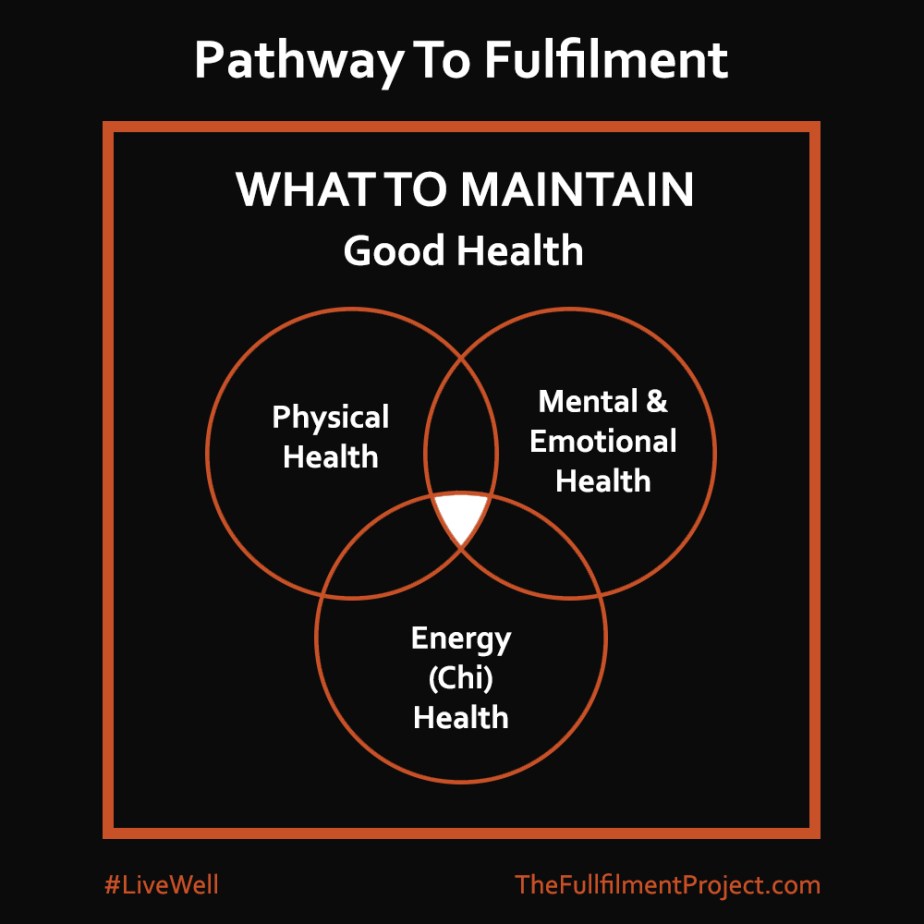
Your health should be of great concern, because good health is essential for your well-being and having an active, fulfilling life. I have included the usual physical health and mental and emotional health, and I have also included energy health; all of which could be thought of as a triad of good health. Good physical health includes diet and exercise. Good mental and emotional health includes mastering your emotions and balancing your thoughts. Good energy health includes mastering the Qi (Chi) that flows through your energy system, like blood through your bloodstream, as detailed in Traditional Chinese Medicine. To have good health you need to work on all three of these areas.

Step 4: Healthy Relationships

In this step you look at your relationships, and identify those relationships that are good for you and those that are not, and those that are a mixture of the two, that need work to become good. You should continuously work towards all of your relationships being healthy ones; meaning that they bring you happiness rather than stress, they uplift you rather than bring you down, and they are aligned with your values and ethics. These relationships are in circles of community, which are relationships with your self, your partner, your family, your friends, your colleagues and your acquaintances, and they are all interconnected.

HOW TO LIVE WELL

Step 5: Defining Your Purpose

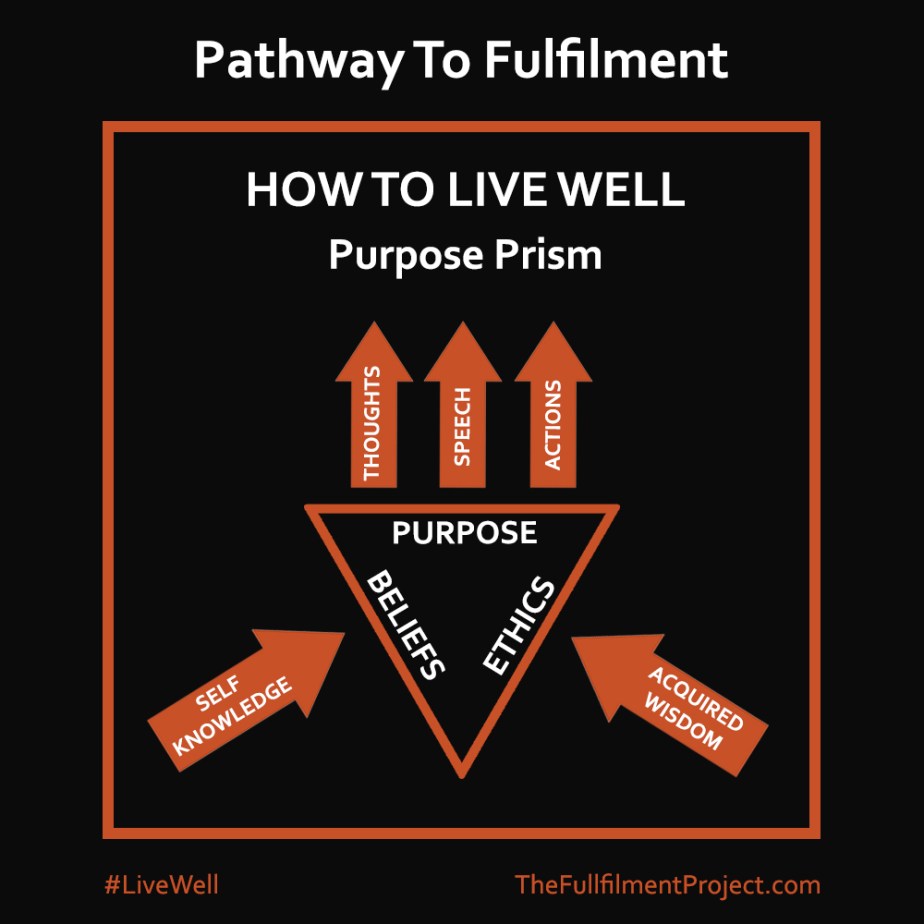
After working your way through this journey so far, you will have a solid foundation for how to start living your life better. From this new understanding of yourself, your defined beliefs and ethics form part of what I call your Purpose Prism, the third piece of this prism being your purpose. You will go through a process of building on your beliefs and your ethics, weaving in Acquired Wisdom and Principles Of A Life Well Lived, and all you have learned from steps 2, 3 and 4 and define your personal purpose. This prism is the filter through which you will see and experience the world, and it will influence your thoughts, speech and actions, making them wiser in nature. Your purpose comes from a vision of a better world that you want to help create.

Step 6: Living Your Purpose

You will then be set to start applying your beliefs, ethics and purpose to your life, to find your best way to live them out in your thoughts, speech and actions; to act on your vision of a better world through everything that you do. This is living your life on purpose. All of this work will mean that both happiness and success become personal, and therefore fulfilling, all three of which are bi-products of a life well lived. When the garden of our lives is tended to properly, these things blossom, but if we focus on achieving them without tending to the important things in our lives then these things will not blossom. Your happiness, success and fulfilment along your journey then feed back into your acquired wisdom, self mastery, health, relationships and your beliefs, ethics and purpose, and on it goes, because this journey is a life long endeavour. Follow the Path To Fulfilment and live well my friends.
Book Recommendation: Managing Oneself by Peter F. Drucker

Source of book cover image: Medium.com

Book can be bought here

Content of book can be read here

Why Read This Book

This is a small book full of deep wisdom around how we function in the workplace, what kind of person we are and what kind of place we should work in. Whether you are young or old, starting your career or further along, this little book can help you both live and work well.

Contents

  • What Are My Strengths?
  • How Do I Perform?
  • What Are My Values?
  • Where Do I Belong?
  • What Should I Contribute?
  • Responsibility for Relationships
  • The Second Half of Your Life
  • About The Author
  • Also By This Author

Summary

This book delves into questions around how we work and questions that we often do not consider when we are choosing where we work and the kind of job we choose to do. Questions like what our values are usually get left out of career conversations. The book goes on to discuss the contributions we make to the workplace and each other, as our relationships matter, and are things we are responsible for growing and maintaining. The book ends with a discussion on the second half of life, and what secondary work we begin in our later years that we are passionate about, whether this be Chair of the church council or Fund Raiser for a charity.

Remedies To A Crisis

“Self-control is strength. Right thought is mastery. Calmness is power.” James Allen

Not Being In Control

We are going through a lot of anxiety across the world at the moment with the outbreak of the Coronavirus, there is much uncertainty around our health, whether we have the virus or if we will get it, whether we will lose our jobs, and when we have lost our jobs how we will pay the bills, whether our loved ones are safe, and how long this will all last. Some countries appear to be managing this crisis better than others, and these countries have been predominantly governed by women, whose natural instinct is often taken care of their people. Male leaders tend to be more head strong and want to appear to be strong.

These are generalisations, and not all male or female leaders fit these archetypes, but the global leadership styles that have kept some citizens safe and others not is quite telling. I think the degree to which people feel their leader(s) are taking care of them in a crisis is the degree to which we feel less or more anxious.

For example, some companies have said that they will guarantee that their staff will get paid, or at least 80% oft their salary, and that no one will be fired. Some smaller companies cannot afford to do this unfortunately, but those who are told that they will be taken care of will do all they can to keep their company going through this crisis, they will collectively protect their company because their leaders protected them.

On an individual level, it can be difficult to cope with the uncertainty, and the anxiety that arises from it, especially if we feel that we are not taken care of. Some express their anxiety through anger, we have seen an increase in domestic violence during this crisis. Some express this through trying to control unusual situations.

I heard a story from a friend of mine, who works on a shop, that an elderly man tried to attack her with a shovel, because she would not give him a refund for it, due to him not being able to provide a receipt. The shovel only cost £3, but I suspect he was trying to control the situation because he did not feel that he had control over other things due to this crisis.

In my experience, and through my research into how to live well, I think there are some crucial remedies to anxiety, especially when the anxiety is related to not feeling in control.

Self-Awareness

If we spend time being with our unpleasant emotions, as difficult as this is, if we can have the bravery to just be with them and not run away into distractions and intoxication then we can begin to see what things trigger our anxiety or our anger, or why we criticise and belittle others, then we can begin to develop deep self-awareness. The longer we spend being with ourselves in this way the more we are able to figure out our triggers for negative thoughts and behaviour and to find ways to handle these things better.

If we can figure out our triggers we can develop techniques to reduce our reactions to them, or if this is not possible, to find ways to avoid the triggers, for the sake of our own wellbeing. This is the life long process of self-improvement that will increase our quality of life and our wellbeing, because it will raise our happiness levels and improve our relationships.

Self-Control

If we can become more self-aware we can take responsibility for our own emotions and respond to situations rather than react to them. If we can begin to manage our emotions better we will have more control over what happens in our lives, because even though we cannot control being in the situations we find ourselves in necessarily, because we are already in them, we have a choice of how we act in the following moments.

If we have self-awareness and have developed self-control, then we have clearer thinking and can act out of compassion and altruism, and we can see further into the future of possibilities and determine our best course of action for a positive outcome. This type of mastery is mastery of the self, and it takes years to develop, but if we do not start then we will spend a lot of our lives reacting, often negatively, to each and every situation we find ourselves in and our happiness levels will plummet and our levels of anxiety will go up, because we will have less certainty.

When we let the uncertain nature of the world shake our sense of being we will always struggle. Self-awareness and self-control build a stoicism that will allow us to weather the storms of life and enjoy the fruits of it too.

Gratitude and Kindness

These are two of the most powerful antidotes to anxiety, in the moment. When we are grateful for the little things in life, then our bodies conspire to make us feel good with the hormones it produces. The same is true of being kind to others. To be grateful and to be kind makes us feel good and it reduces the hormones our bodies produce when we feel anxious.

Simply listing ten things we are grateful for every morning, making sure we smile at people and give them compliments, these are things we can all do, and if they become our daily habits then the crisis we are all in does not seem as bad. We develop the feeling that we are in this together and that we will get through this.

So, spend time with yourself, getting to know how you react and respond to difficult situations. Develop better strategies to manage yourself in these situations. Be more grateful for what you have and kinder to others around you. Do these things and this crisis will be easier to manage and you will be on your way to self mastery and a wonderful life.