Don’t Call It Mental Health

It seems that the idea of mental health permeates Western culture as a requirement of wellbeing and a keen focus for employers and self-help gurus alike. The problem with the term and idea of mental health is that it is innately something that you have or you don’t. To feel that we don’t have it makes us feel that our life and mental state is below par and, therefore, less worthy than those who have it. It can make us feel that we are not enough.

I agree with Simon Sinek that a better term is ‘mental fitness’. It better describes the gradient upon which mental wellness sits. It becomes a scale and a skill to improve. It opens up the idea of working towards mental wellbeing one step at a time, much like building up strength or stamina. It implies a journey and not a binary situation where you have it or not. It allows for bad days and good days and avoids the self degradation that befalls those who do not feel mentally well. This includes those who have experienced war, as a soldier and a civilian.

What Game Are You Playing?

In life there are two types of ‘game’, the finite game and the infinite game. This is discussed by Simon Sinek in his book The Infinite Game, and he discusses it in this video. I have mentioned it on this blog before too.

The finite game is defined as having fixed rules, known players and the point is to win, which is the end of the game. Football for example. The infinite game is defined as having flexible rules, known and unknown players and the point is to stay in the game. Playing catch with your 3 year old for example.

A lot of day to day human activities are infinite; running a business, being in a relationship, customer service, being a parent, etc. However, often, especially in business, we talk about winning or being number 1 or the best at (fill in the blank), without realising that we are playing the wrong game.

There is no such thing as being number 1 at parenting, though many think they are. There is no such thing as being number 1 at customer service, though many companies claim that they are. You cannot win love or be the best at health. Somethings are just without a clear end.

Life is an infinite game. None of us will come out of it alive, but we want to keep living as long as we can. Within the many infinite games we play in our personal and professional lives there are also finite games too. There are also goals that we set which, once completed, stop as a goal and we find another one.

In life we are more likely to be successful if we play by the right rules for the different ‘games’ we play. In our relationships, we want to nourish them for the long term. When it comes to our health, we want to eat, drink and exercise for our long term health. And with anything that improves our wellbeing, if we are competing, we compete with ourselves.

Who Should We Listen To

When we only listen to the news or social media or friends that agree with us then we are in what is referred to as an echo chambers. However, echo chambers can be used to our benefit, but it depends on who we listen to and this depends on what kind of life we want.

If we listen to the religious teachings of Jesus, the Buddha or Mohammed our lives will likely be happier. If we listen to the advice from Tony Robbins, Seth Godin and Simon Sinek our lives will likely be more successful. If we know what kind of life we want and we wilfully enter the appropriate echo chamber we can tune out the cultural noise that is the opposite of what we want, then this will be help.

However, if we have right wing ideas and we listen to the ramblings of Donald Trump, then we will likely go down into an echo chamber of extremism and violence. Echo chambers have their place, as long as we also make ourselves aware of opposing views too. When we completely close off alternative view then we can become extreme and potentially an extremist.

Don’t Quit, Adjust

When a plane sets off from an airport and the wind starts to push it off course the pilot doesn’t turn the plane around and land, so they can try it again. They adjust their altitude and direction to bring the plane back on course. Often in life we quit new ventures before we get very far because we have come across adversity. Here are some of the reasons why and how to keep moving forward.

Perfectionism

Often we feel that new ventures need to be perfect before we begin. Whatever it is that you want to do, the conditions will never be perfect. Sometimes the conditions are a serious hindrance and waiting is the right thing to do, but most of the time the conditions are fair but not ideal.

Hiding behind wanting things to be perfect is a way of avoiding getting started, because we fear failure. The problem is that every success requires failure, and if we build it into our process and we learn from it, failure can be the reason we succeed. So, whatever it is just start, take the plane into the sky and start your journey.

Fixed Mindset

When we come up against adversity, those with a fixed mindset will either keep pushing forward until they crash and burn or they just quit. A fixed mindset is built around believing that you are clever or beautiful or creative or anything permanent. A growth mindset is built around believing that you are hard working or a good problem solver. A growth mindset looks at a problem as an opportunity, a fixed mindset sees a problem as a barrier.

In basketball, when coming up to the basket, defenders will inevitably try to stop you, but once a player has placed both hands on the ball they have to shoot or pass. If a shot is not possible they will pivot, keeping one foot still, and look for another way to get the ball into the basket, they look for and find an opening to another player. When life throws up barriers, see them as an opportunity to find another way and pivot.

Have A Goal

An example that Simon Sinek gave illustrates this well. If you were asked to walk in a straight line and after a few steps I put a chair in front of you then you would likely stop in your tracks. However, if I asked you to walk to the corner of the room and after a few step I put a chair in front of you then you would likely walk around the chair and keep going.

The point is that when we have a clear goal the method we use to get there can be flexible and adversity causes us to rethink our strategy rather than stopping all together. The strategy we use should never be fixed, it should be flexible, and the goal should be fixed.

Finding Your Passion

There is a lot of talk, particularly from motivational coaches, around finding your passion. Some will give the advice that you should do what you love. This is advice I am inclined to disagree with because there is a danger that you will turn what you love into work that you hate to do. There are two other ways to think about this.

Find Your Why

Simon Sinek explained this very well in his book Start With Why. The idea is that once you have figured out the ‘Why’ behind all that you do, the DNA of your decision making and how you treat others, then you can apply this to ‘How’ you live or work and ‘What’ you do, based on your ‘Why.’ This will allow you to be more passionate about what you do because it will be aligned with who you are.

Be Passionate About What You Do

Seth Godin suggests that if we choose to be passionate about the work we are already doing we are empowered by the act of choosing and it is better than expecting the work we do to give us passion. We will be doing what we choose to do, not what we have to do. The narrative changes.

We can then put our energy into making a difference and creating things that were not there before we decided to do them, and we will also be more fulfilled than we would by trying to do what we love.

I feel that both of these approaches are valid and some mixture of the two will certainly be better than doing what you love.

How To Live Your Purpose

“If you have a strong purpose in life, you don’t have to be pushed. Your passion will drive you there.”
Roy T. Bennett

Starting With Your Why

The work of Simon Sinek has popularised the idea of having a Why with his book Start With Why: How Great Leaders Inspire Everyone To Take Action and his TED Talk How Great Leader Inspire Action. However, how can you use your Why to figure out what you should be doing in your life, your purpose?

As Simon Sinek rightly tells us, your Why is your origin story, it is the reason behind why you do the things you do. It is how you were raised, the early experiences you had and the decisions you made leading up to adulthood. In essence it is who we are. It is not always clear how to define your Why, but with self-reflection and self-observation you can find it.

Take me for example, I have a desire to figure out how to live life well and to share this with others. I have led worship in Unitarian churches for several years and worked in customer service and special needs education and started this blog without knowing my Why. It took the discovery of Simon Sinek’s book and some focused self-reflection to realise that my Why is to help others to live well, to find fulfilment. In all the areas of my life that I have mentioned I felt at home when helping others.

You might feel comfortable being a leader, being creative, working in a team or working alone. Whatever you do that makes you feel happy or content, these are clues as to your Why, because you feel good doing these things. Your Why is what defines you as a person. If you need guidance on finding your Why I recommend you read Simon Sinek’s book Find Your Why: A Practical Guide for Discovering Purpose for You and Your

Turning Your Why Into Your Purpose

Once you have defined your Why, you will be able to use it as a compass to direct you towards the things you should be doing. Ideally, your job should be aligned with your Why. In other words your work should make you feel happy, successful and fulfilled.

This is largely effected by the environment you work in, the leader(s) you have and the people you work with. But, if you know your Why then you can choose work that is aligned with it. Work that you can really get your teeth into and make a difference in the world.

At the moment, with the difficulties caused by the Coronavirus pandemic, we have to do the work that is available. As needs must we must go. However, if you are interviewing for a job it is a good opportunity to interview them at the same time.

Choosing The Right Work

A good question to ask interviewers is how they reward performance. If they reward good performance with bonuses, money incentives, for hitting the numbers they set, then the company values your output over you. If they reward good performance in a way that values you as an employee then the environment you would work in will be more fulfilling and you will feel looked after.

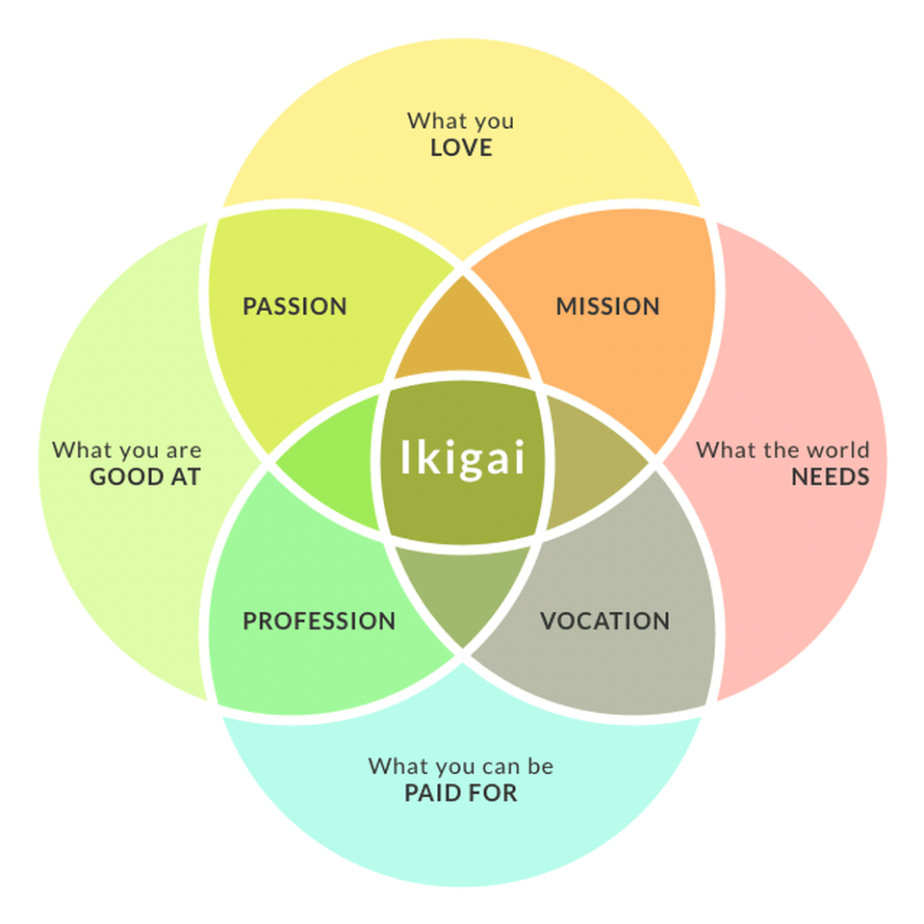
You should also look to work in roles that fit your Why, that align with who you are. The work we do in the world matters. If we are not doing what we are meant to be doing, then resentment and unfulfilment sets in. I recommend using the Ikigai method, where you look at What You Love, What You Are Good At, What You Can Get Paid For and What The World Needs. This will then reveal your Passion, Profession, Vocation and Mission. Knowing your Why will help you fill in these categories and find your Ikigai, your Purpose in life.

Conclusion

When we start with defining our Why we can start to figure out why we do what we do and then what we want to be doing in our life. Once we know our Why we can narrow down what we are meant to be doing, what our Purpose is. And when we live out our purpose, our work feels like a privilege.

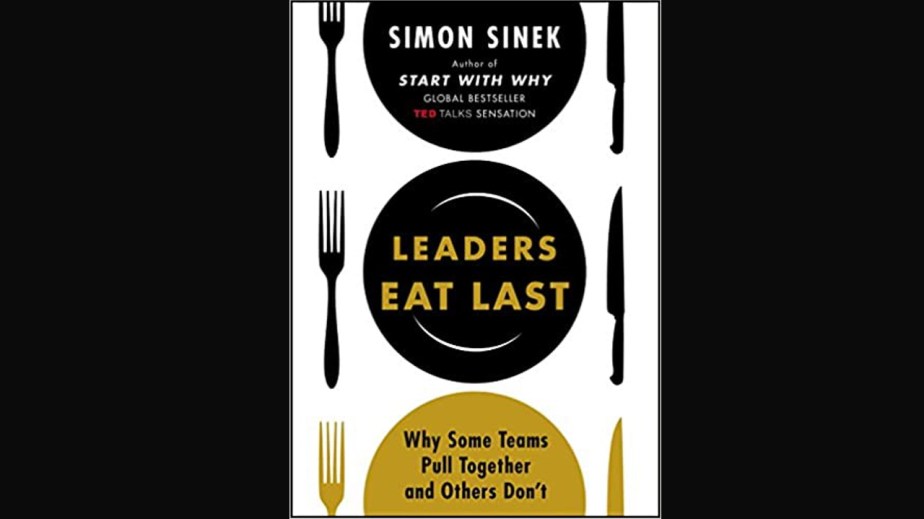
Recommended Book: Leaders Eat Last: Why Some Teams Pull Together and Others Don’t by Simon Sinek

“If your actions inspire others to dream more, learn more, do more and become more, you are a leader.”
― Simon Sinek

Image source: Amazon UK

Buy this book here

Why Read This Book

If you are in a leadership position, or are aspiring to be. this is an essential book to read. Also, if you want to help improve the culture of your workplace or to understand what it means to be a great leader,this is the book for you.

Contents

Part 1: Our need to feel safe

  • Protection from above
  • Employees are people too
  • Belonging
  • Yeah, but . . .

Part 2: Powerful forces

  • When enough is enough
  • E.D.S.O.
  • The big C
  • Why we have leaders

Part 3: Reality

  • The courage to do the right thing
  • Snowmobile in the desert

Part 4: How we got here

  • The boom before the bust
  • The boomers all grown up

Part 5: The abstract challenge

  • Abstraction kills
  • Modern abstraction
  • Managing the abstraction
  • Imbalance

Part 6: Destructive abundance

  • Leadership lesson 1: So goes the culture, so goes the company
  • Leadership lesson 2: So goes the leader, so goes the culture
  • Leadership lesson 3: Integrity matters
  • Leadership lesson 4: Friends matter
  • Leadership lesson 5: Lead the people, not the numbers

Part 7: A society of addicts

  • At the center of all our problems is us
  • At any expense
  • The abstract generation

Part 8: Becoming a leader

  • Step 12
  • Shared struggle
  • We need more leaders.
  • Appendix: A Practical Guide to Leading Millenials
  • Acknowledgements
  • Notes
  • Bibliography
  • Index

Summary

This book primarily explains why it is the role of leadership in organisations to take care of those in their charge, rather than just being in charge. The concept of the circle of safety within an organisation that means we are protected from outside dangers like the effects of the stock market or new innovations, and pandemics, which in turn creates more trust, cooperation and innovation. When we feel like we do not have to protect ourselves from our bosses, who might sack us if our numbers are not as high as they want them to be, then the organisation collectively works harder to protect the company from outside dangers.

The book also talks about how inhuman our decisions can become the further away we get from the people they effect. We have evolved to keep clear social links with around 150 people, so big organisations can mean the leaders at the top do not personally know those at the bottom, and the book talks about how leaders can resolve this by creating the right culture in their organisation. There are five leadership lessons, backed up by examples of both how it can go wrong and how it can go right. And the book ends with advice on becoming a leader and a new additional chapter on leading Millenials.

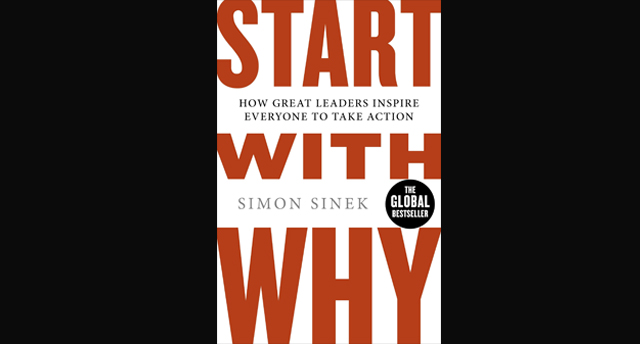
Book Recommendation: Start With Why by Simon Sinek

Image Source: amazon.co.uk

Buy The Book Here

Why Read This Book

This book elegantly explains the importance of knowing your Why, which I believe is integral to living well, to be happy, successful and fulfilled. Defining your Why is an essential part of my Fullfilment Framework, a framework designed to help you live a fulfilling life.

Contents

INTRODUCTION: WHY START WITH WHY?

PART 1: A WORLDS THAT DOES NOT START WITH WHY

  • Assume you know
  • Carrots and sticks

PART 2: AN ALTERNATIVE PERSPECTIVE

  • The golden circle
  • This is not opinion, this is biology
  • Clarity, discipline, and consistency

PART 3: LEADERS NEED A FOLLOWING

  • The emergence of trust
  • How a tipping point tips

PART 4: HOW TO RALLY THOSE WHO BELIEVE

  • Start with WHY, but know HOW
  • Know WHY. Know HOW. Then WHAT?
  • Communication is not about speaking, it’s about listening

PART 5: THE BIGGEST CHALLENGE IS SUCCESS

  • When WHY goes fuzzy
  • Split happens

PART 6: DISCOVER WHY

  • The origins of a WHY
  • The new competition

 Summary

This book explores what it means to have a Why, which is the purpose behind all that we do. It is essentially a sum total of how we were raised and our experiences up to adulthood; it is who we are as an individual. We only have one Why and the level at which we can best use our Why to live a fulfilling life depends on our depth of understanding of it and if we can articulate it.

Simon Sinek used examples from business and history to explain the importance of knowing your Why. He explains what he calls the Golden Circle, which illustrate how we think and make decisions, we go from Why to How to What. He goes to discuss the impact of knowing your Why can have on leadership and how important it is to take care of those around us, especially if we are in a position of leadership. Also, the way that success can make our Why fuzzy and we can potentially deviate from our Why, as individuals and as a company, which causes problems. Therefore it is important to keep our Why in central focus to avoid getting lost.