The Atomic Bomb And The Infinite Scroll

When navigating the world countries and companies will try to invent things to tip the balance in their favour. In the case of the atomic bomb, during the second world war America was concerned that Germany was building a bomb that could destroy entire cities so they set about figuring out how to create an atomic bomb themselves. They put together a team of physicists and others to secretly figure out and build this new bomb. When the first bomb was tested J. Robert Oppenheimer, the lead physicist, is said to have quoted the Bhagavad-Gita with “Now I am become Death, the destroyer of worlds.” He regretted the invention. Then America dropped two atomic bombs in Japan killing many many innocent people and the age of the nuclear bomb began.

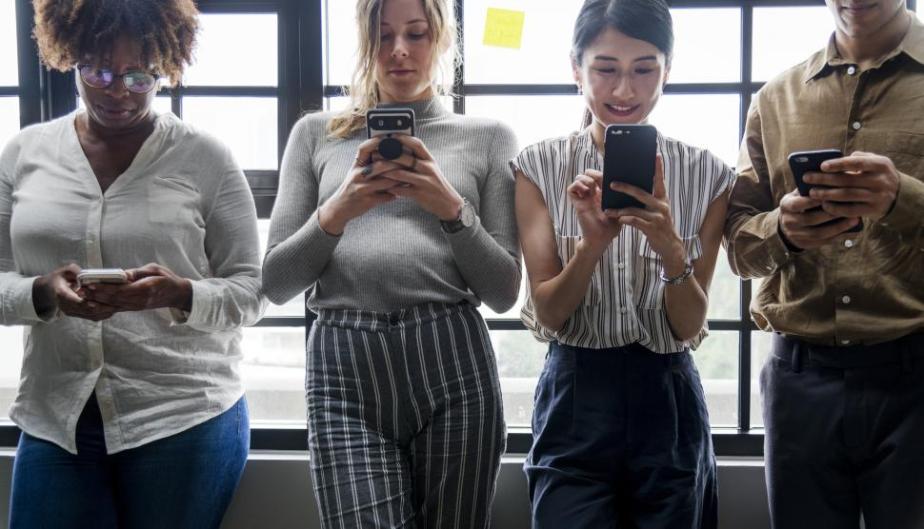
Aza Raskin invented the infinite scroll on mobile devices. This meant that when you scroll down on your social media account new content keeps being generated infinitely. The inventor said afterwards “It’s as if social media companies are taking behavioral cocaine and just sprinkling it all over your interface and that’s the thing that keeps you like coming back and back and back.” Extreme maybe, but the hit of dopamine that you get from finding a new video or post that you like over and over again is creating a society addicted to their devices.

The first example of the Atomic Bomb is far more extreme than the infinite scroll, but the point is that we need to consider the consequences of what we do. Making decisions for moral and ethical reasons could not be needed more. We are seemingly more divided and more obsessed with status and money than we have been before. It is time to live lives with values and principles.

Don’t Rely On Habits

As adults a large percentage of our thoughts and actions each day are automatic. They are habits programmed in and controlled by our subconscious, so we can use our conscious mind for any unique situations that appear in our lives.

These programmed habits are useful for survival, but they often don’t serve us in the modern world, depending on our habits. The habits we develop are often a combination of things to make life easier, influences from advertising and the media and experiences we had as children. If we do not take control of our habits they will run our lives haphazardly and we will rarely feel fulfilled.

We need to live more mindfully, more consciously. To choose what we do in each moment, and when a programmed habits pops up we can analyse it and see if it is serving us. If it is not, then we can replace it with a better habit, thought or intention. Mastering our habits will help us master our minds.

Who Should We Listen To

When we only listen to the news or social media or friends that agree with us then we are in what is referred to as an echo chambers. However, echo chambers can be used to our benefit, but it depends on who we listen to and this depends on what kind of life we want.

If we listen to the religious teachings of Jesus, the Buddha or Mohammed our lives will likely be happier. If we listen to the advice from Tony Robbins, Seth Godin and Simon Sinek our lives will likely be more successful. If we know what kind of life we want and we wilfully enter the appropriate echo chamber we can tune out the cultural noise that is the opposite of what we want, then this will be help.

However, if we have right wing ideas and we listen to the ramblings of Donald Trump, then we will likely go down into an echo chamber of extremism and violence. Echo chambers have their place, as long as we also make ourselves aware of opposing views too. When we completely close off alternative view then we can become extreme and potentially an extremist.

Create Value Not To Win

On 16th July 1945 the first nuclear bomb was tested and one of its creators looked on in horror, regretting what he had done. Robert Oppenheimer said later that a quote from the Bhagavad Gita ran through his mind while he witness the nuclear explosion before him, “Now I am become Death, the destroyer of worlds.”

This quote is often misunderstood, but it highlights the way Robert Oppenheimer was feeling. Presumably, he had not imagined the power of the nuclear bomb and the destruction its use would unfurl on the world while creating it. But once something like this is done it is hard for it to be undone.

In 2006 Aza Raskin invented the infinite scroll that meant social media platforms could be used without hitting a ‘next’ button, new content simply appears when you scroll down. He later said “One of my lessons from infinite scroll: that optimizing something for ease-of-use does not mean best for the user or humanity.” 

The amount of time that people now spend on social media, rather than doing other important things like interacting with the people they are with or doing the work they are avoiding has grown a lot due to this feature. Again, presumably Aza Raskin did not think about the impact this feature would have on the world.

It is not necessarily fair to compare these two inventions in terms of their impact, but the common denominator is that the inventors regret their inventions. The lesson, I think, is that the things we create have a direct impact on the world, so they should be there to serve humanity not to hinder it. When we create anything or do anything we must first ask ourselves if it will serve to bring people together and make the world better, and also if it aligns with our values.

When we create or act for a larger organisation we can often find ourselves serving a goal to beat the competition or to make money rather than making people’s live better. And as we see from the example of Aza Raskin, making things easier does not necessarily make things better.

Disagree More

Often we spend time with those we agree with on the majority of things we have an opinion on. This is good, in that we are spending our time with like minded people, but if we rarely disagree with anyone we can find it difficult to do so and maintain a positive relationship when a disagreement arises.

Social media also does not help with this for two reasons. Firstly, if we disagree with someone that we interact with on social media then we can find it easy to go on a full on rant, as we are not face to face with them, or we can ‘ghost’ them by unfriending and blocking them. An easy solution that does not resolve the disagreement.

Secondly, the content we see on social media is collated to show things similar to what we have liked, commented on and even spoken about within earshot of our device. Google is always listening. This is because the social media companies are selling our attention to the those who pay for it. Our attention is a commodity.

This creates a kind of echo chamber where we only hear our own views reflected back at us in the content we see. This removes the opportunity to develop the skills to disagree with someone respectfully, as many people spend more time online than they do interacting with people face to face.

My advice would be to spend more time interacting with people face to face and to practice disagreeing with them respectfully. Debate topics with people that you trust to be respectful back.

When the opportunity arises to give a different point of view, do it, because what you have to say may well be valuable. We learn more from each other through debate than we do through simply agreeing to avoid conflict. It is not an easy skill to master, but an essential skill to be successful in life.

Communicating With Others

Recently, Facebook, Instagram and WhatsApp stopped working and for many their world suddenly stopped, as they are all owned and operated by Facebook. To be fair it was a shock.

We think of the availability of these apps as a certainty, as if they will always be there, like the air or the sky, but they are just mobile and computer applications and technology does not always work.

There is an argument that we crave other people ‘liking’ or ‘sharing’ one of our posts or someone ‘follows’ us, as if our self worth is tied to it. I think it has more to do with the hit of dopamine we get when we get acknowledgement via a like, share or follow, and how addictive this is.

Many of us use these apps to communicate with others, but often we use social media apps as entertainment or to just sustain our attention, so we can switch off and not have to think.

The problem is that when we get absorbed into the infinite scroll we check out of reality for a while. All sorts could be going on around us but we would have no idea. This is the power of social media.

Communicating with each other is supposed to he done face to face with eye contact and hand shakes and pats on the back. When we spend a lot of time with our eyes down and our attention on a mobile phone we avoid the opportunities to develop the skill of socialising. The ability to make friends and influence people is a skill that is becoming more scarce due to the lack of practice.

I saw the Facebook, Instagram and WhatsApp outage as a blessing to unplug and socialise the old fashioned way. It also highlighted our dependency on technology and social media in particular. We need to rebalance ourselves and reduce screen time and increase actual facetime.

Integrity Matters

There are two types of integrity. The first means that you do what you say you will do, to yourself and to others. This could be seen as just being reliable, but if it is done as a matter of principle, then, for me, it falls into integrity, rather than reliability.

The second is living by your values and beliefs. This is being kind, even to those who treat you badly. It is finishing what you started, because you always do. It is a path less travelled, but an honourable path to walk down. In a social media filtered, fake it til you make it culture, living by your values and beliefs is unusual, but essential.

Rhyming With Who You Are

When we put ideas or thoughts out there into the world inevitably we get feedback from other people. Some think your ideas or thoughts are great, others will think they are not. Often we pin our self worth to what other people think of our ideas and thoughts. This is a mistake, it is giving away our power to others in the hope that they will validate our existence.

Social media is an extreme version of this. Every day people share their lives with followers and ‘friends’ hoping to get a like or a share as validation. What comes back is essentially feedback. If we listen to all of it, then we can become lost in the variety of ways in which other people think we should live. It becomes just noise, like the feedback when a microphone gets too close to the speaker it is linked to.

What we need to do is to provide our own feedback, and follow what is in our hearts. Our ideas and thoughts should rhyme with who we are. Then we will live a life that rhymes with who we are, and this will be a life well lived.

Responsible Social Media

“The greatness of a community is most accurately measured by the compassionate actions of its members.”
– Coretta Scott King

Terror Shakes The World

The recent terrorist attack of the White Supremacist who killed 50 Muslim worshipers, including a 3 year old child, and injured many more in New Zealand, has brought into sharp focus the realities of extremist ideologies in the world today, and how easy they can be spread around the world through the use of social media. The Terrorist streamed the attack live on Facebook, which was then played by several news outlets, after which they apologised.

The impetus with social media is always to share content that we have had an emotional reaction to, whether we find it funny, inspirational or horrifying. The outpouring of love and unity that has galvanised the New Zealand public in support of the Muslim community in their country has created collective inspiration to respond to hate with love. This is a message that should always be shared and encouraged, especially on social media.

The Wrong Message

The Prophet Mohammad and every other prophet across the multitude of world religions said that we should love our neighbour as ourselves and respond to hate with love. This message should be shared on social media to encourage such behaviour in others and to drown out the opposing views of hate and violence that are also spread through social media, including some heads of state like Donald Trump, who spreads divisive ideas through his daily barrage of tweets.

However, New Zealand’s Prime Minister Jacinda Ardern put on a Hijab and held the mourning survivors in a loving embrace. She also made a statement to their Parliament stating that the Terrorist was looking for attention and fame for his actions and extremist ideology, so she will never say his name. This is a powerful reminder to me that just as Politicians and news outlets have the responsibility to make wise decisions on whether they put a spotlight on the actions, motives and ideas of extremists, we too have a responsibility to do the same with the content that we share on social media.

Our Social Responsibility

Every time we share a negative comment, image or video on other people because of their race or religion we not only spread racist ideas we also create a space for this type of content to be acceptable. After the rise of extremist groups that call themselves Muslim who cite the oppression of the West on Muslims as justification for acts of Terror, it has become more acceptable to disrespect and insult Muslims, as if they were part of the problem. There is also a rise in Nationalism across the world, which has consequently encouraged racist comments and actions towards immigrants, who are largely fleeing the violence of wars that the West has a stake in creating in the first place. The Terrorist who attacked Muslims in New Zealand attacked them for being immigrants, but he was himself an immigrant from Australia. There seems to be a double standard depending on the colour of the immigrants skins.

Many White Supremacists, who are classed as Terrorists, are Christian, but we do not associate Christianity with Terrorism. This is because Great Britain and America are seen as Christian nations and it is part of ‘OUR’ identity. Muslims are seen as the ‘OTHER’, which in many people’s minds makes them fair game for criticism and attacks. Remember that the vast majority of world religions talks about loving our neighbour as ourselves. The American Declaration of Independence states “We hold these truths to be self-evident, that all men are created equal, that they are endowed by their Creator with certain unalienable Rights, that among these are Life, Liberty and the pursuit of Happiness.”

We Need Not Stand Divided

It is high time we started treating ‘ALL PEOPLE’ as our neighbours and to love them as ourselves, just like New Zealand did in the wake of this Terrorist attack. There will be exceptions where we come across individuals who act or speak in a way that is in direct opposition to our values and beliefs, but we can always disagree respectfully. If we disagree with the theology of other religions then by all means criticise the theology in the form of theological debate, with arguments for an alternative set of beliefs, but this should never extend to criticising someone because they are Muslim or Christian, Buddhist or Atheist. We all have the right to explore and follow our own beliefs.

It is our actions that we need to monitor and challenge when they infringe on the rights and dignity of others. We have to be responsible when we are deciding to share content on social media. There is an old Sufi maxim about our words passing through three gates before we say them, and I believe that we should consider them when we share content online. Each gate has a question, each of which is very important. These are the three questions.

  1. Is it true?
  2. Is it necessary?
  3. Is it kind?

If we can all be responsible on social media and we share only content that encourages love, compassion, community, inspiration and respect then we can drown out the hate. When Terrorists attack any of us they attack all of us. We are one humanity and, like New Zealand has, we can respond to hate with resounding unity. We can look into the face of those who hate and say not here, not in my community. We are shaped largely by our community because what is permitted becomes normal. We must never late hate become normal. Then we will all lose.

Something to reflect on:

I challenge you to find people in your lives that need a hug, a kind word, a good laugh or a listening ear and be the person who provides it. Lead by example and change your community, whether it be your family, your friends, your neighbourhood or your workplace, by being there for others. They will then do the same for someone else, it is in our nature to do so.

Are We Addicted To Our Mobile Phones?

“Gadgets helps the solo, not the soul.” 
― Amit Kalantri,Wealth of Words

Witnessing Addiction to Mobile Phones

Recently, standing on the platform of a tram stop waiting for my tram, I saw a lady walking along, headphones in her ears, watching a video on her mobile phone and hardly even looking ahead of her as she walked. My mind was filled with thoughts around how human beings have become slaves to our mobile devices, how we have become a society who craves instant gratification and how addicted we all are. Then, another lady walked passed a moment later holding up a book she was engrossed in as she too walked along the platform.

This stark contrast is only really a contrast in the source of their attention, rather than the activity they were engaged in.  It begs the question, are we missing life by becoming regularly absorbed by activities that do not promote good mental and physical well-being. In our western society, to get drunk and the morning after not remember what we did the night before is lorded as almost a badge of honour. To binge watch whole series of a program on our preferred online streaming platform is a common occurrence too.

Are We Zombies?

It seems we are losing the ability to just be, to be aware of what we are doing when we are doing it. Our search for activities that give us quick wins, and as a result, hits of addictive Dopamine, is turning us into zombies, of sorts. I say this as a fellow zombie, but seeing a lady walking along a tram platform watching something on her mobile, and not able to wait until she was at home or somewhere else more appropriate, and safer, woke me up to the realities of our current quick fix culture.

These observations also beg the age old question of how we should live. Should we follow the crowd and become absent from the world while we stare into our mobile devices, or is there a better way to live. There is some merit for living without the constant availability of entertainment. I am not sure I could do it, but will try to cut back on how much I watch things on my mobile phone.

There is also the question of what we watch. If we watch lectures on the merits of theological or philosophical positions, or we watch instruction videos to help us do yoga or learn a new skill or something else that improves our lives, is this not a good thing? I suppose mobile devices, and by extension social media, are tools that can be used to make our lives, and the world better, or they can be used to simply waste time, which we cannot get back. Time is a currency that can never be bought back. I use Facebook to try and create a community as an extension of this blog, to try and get people to help each other live well. Even social media can be a beneficial in our lives.

The answer to the question of how we should live, I would suggest, trying the improve the lives of others, to help others find meaning and to be happy, and if this means we use mobile devices and social media to achieve this, then I am all for it.

Something to reflect on:

If we let the things we watch, mobile devices and social media dictate our thoughts and actions, then we must ask are they in charge of our lives?