Tag: The Fullfilment Project
Choosing unity or division
“The essence of the beautiful is unity in variety.”
– W. Somerset Maugham
In many areas of our lives there are divisions; between the good and the evil, the reds and the blues, parents and children, the religious and non-religious, the rich and the poor, one religion and another, one political party and another, and many more, but there are also those who strive towards unity, towards the acceptance of and respect for others. However, even with such people in the world our society is divided, in many ways. There is a lot of them and us mentality about, which makes any effort towards unity and acceptance very important, in my view. What often gets in the way of working towards unity is the human need to belong to groups. Belonging to any group automatically creates them and a us situation, which creates a division, whether small or large.
Belonging To Groups
So, what is it that makes us want to belong to a group? It happens in all walks of life, all ages, all genders. Whatever country we were born in, or religion we were born into, this too is part of our identity, whether we have left them behind or not. And I do think that we need to belong somewhere in order to fill in a piece of who we are. This could be a hobby, a football team, a religion; whatever group we choose to join the group becomes part of who we are. It tells ourselves and others that we are sporty or religious, or whatever, which is part of why, I think, we are drawn towards belonging to groups.
However, if we don’t conform to any of societies accepted groups, then we can become outsiders and the need to belong and not being accepted might leave a gap in our sense of self. I suppose whichever side of this division we fall on, whether we belong or we don’t belong, this is also a key part of our identity. Our past also inform our present, it is the context within which we understand our place in the present. Without a history, without a story, I suppose we might not have a sense of self at all.
Our Mythologies
This could be why across all of human culture there are many mythologies, stories that explain how everything came to be. These stories vary across the world, but usually place humankind either as owners or caretakers of the world or as an equal part of it. In the novel Ishmael, written by Daniel Quinn, this idea is explained with humankind being labelled as Takers or Leavers. In the novel it is explained that “The premise of the Takers story is ‘the world belongs to man,’…The premise of the Leavers story is ‘man belongs to the world’.” The Takers are those who belong to the cultures of the world who might class themselves as civilized, cultures that try to subdue and control nature. Leavers are those who belong to the indigenous cultures of the world like Native American Indians and Australian Aborigines for example, that try to live in harmony with the world.
These cultural stories, these mythologies, can be a significant part of our lives, explaining how everything that exists came to be, and most importantly where we fit into the grand scheme of things. Some cultures, especially in what we call the West, are becoming secular, and our secular societies have their own story given to us by Science. This story is constantly evolving, as new discoveries are made about the world and the universe in particular, but the story still puts human beings at the top of the pecking order, so to speak, creating a division between human beings and the world.
But what of the “Leavers” in our current world? I have heard it said that Native American Indians see all living creatures as their brothers and sisters, the birds in the air, the fish in the rivers and the animals on the land are all family. All life in this regard is a family community, in need of each other. I think a lot can be learned from these indigenous people. They have a lot of wisdom that we can all benefit from, if we can see past our own cultural mythology and understand the cultural mythology of another.
“At the heart of every division is a conflict, created by the division itself.”
Generally, in our civilisation we have come to regard the world as something to be conquered, something to own. Animals being there for us to eat and hunt and breed. This is, generally, our way of seeing things. It is a perspective shared by many people around the world. Yet, dividing ourselves from anything, I think, causes more problems than it solves. At the heart of every division is a conflict, created by the division itself. The moment a division is created there is an us and a them, whichever side you are on.
Do our groups define us?
Problems occur when we see the groups we divide ourselves into as what defines us, rather than our own personal perspectives. We put our faith in the mythology, in the story that is told by our group, this then separates us from others. Even seeing ourselves as human separates us from the rest of the natural world. This “primary boundary,” as Ken Wilber puts it in his book No Boundary, is, according to him, “…that split between the seer and the seen, the knower and the known, the subject and the object. And once this primary boundary occurs, a chain of inevitable consequences follows. A host of other boundaries ensue, each being built upon its predecessor; the various levels of the spectrum exfoliate; the world as we collectively know it leaps into existence; and we become lost, amazed and enchanted, distracted and complexed, loving and loathing our universe of opposites.”
The main point that Ken Wilber makes in this book is that all boundaries are created by ourselves, in order to make sense of the world. But if these boundaries only exist in our minds, if they truly are our collective view of existence, of the world, then surely we can change how we see the world, change how we see others. We can start to see the good in others, to be grateful for their kindness, to see them as equals in this complex and beautiful world in which we live. This is no small task however, given that we have spent our whole lives learning to see the world as we do. We are very good, on the whole, at community spirit, what we need to do is make our communities bigger than our religion, our town and our country. We need to connect to those outside of the groups that we belong to. Our community is our world; it’s up to us how big that world is going to be.
Mini Reflection: Helping each other be fulfilled
“To help each other live fulfilling lives is to fulfil what it means to be human.”
– The Fullfilment Project
#LiveDeeply #Fulfilment #BeingHuman #BringTheJoy
Fullfilment Friday: Do what is hard

Mastering Your Time
“Until we can manage time, we can manage nothing else.”
– Peter Drucker
Why we should master our time
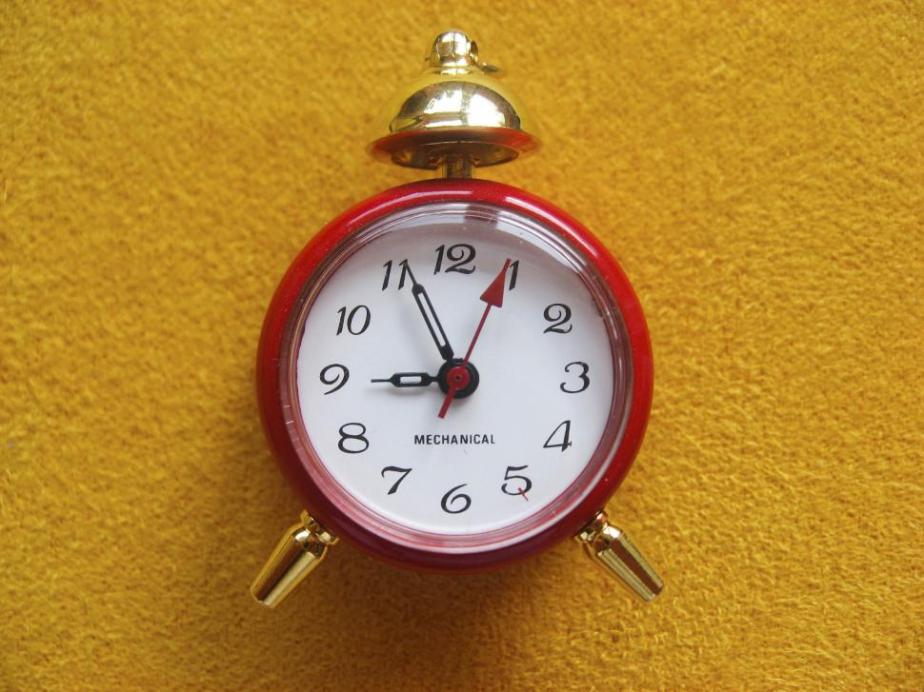
If we do not master our time then we will continually miss opportunities to move closer to success in the areas of life that we care about and our lives will be what happens when we are busy making plans. Time will not stop moving forwards, we cannot control the passage of time, only how we choose to live as time passes by. Therefore, mastering time management is one of the most important skills to have and is a skill that can be learned, with practice and good strategies.
When it comes to mastering your time there are two well used items that are very rarely used to their full potential, these are the calendar and the to-do list. There is a smart way to use them and then there is the way that most people employ, which works against optimal time management. Usually we add things to our calendar as they pop up in our lives so we don’t forget to do or attend them, which on the surface is useful, but success is built on excellent time management, for which we need to be more strategic.
Mastering our calendar
Let’s look at how we can effectively use the calendar. To best use a calendar we need to block out everything that we want to do in blocks of time, both essential and non essential things, so we have some structure to cut down on the amount of time that we waste not working on the things we want to be successful at. For this I suggest using an electronic calendar like Google Calendar, or one of the many other very good alternatives, that allow you to add in items by the minute and allow you to add reminders. Many of these calendars will also allow you to colour code items, for those of you that are visual thinkers like me. These should be events and activities that take up a chunk of time, both recurring things that happen every day or every week like going to work and one off events like weddings. These are not to be confused with tasks, for these we will need to use the to-do list, which I will come onto soon.
Firstly, we block out the things we have to do like our job, family commitments, appointments and the like, important things that have to be prioritised first. I call these the Everyday Essentials. Secondly, we block out the things that are important to us, things that we are passionate about, like meditation, going to the gym, being creative, religious worship and the things we want to become successful at; for me that is this blog. I call these Passion Essentials. Thirdly, we block out the things that are not essential, things like meeting up with friends for a drink or going to watch a movie. I call these the Non-Essentials.
This process of blocking out time should ideally extend to planning out the whole year with everything we know we will be doing, like the hours we will be working and family holidays, as well as one off events we know about. Then as the year progress we will be able to add in more things as they come up, usually over the future month or two. In this way we will know what we will be doing the following day, week and month, which will reduce any time that we would otherwise be wasting figuring out what we are going to do during the day ahead. There will undoubtedly be gaps in the calendar, which is a good thing, because it gives time to fit in unexpected events as well as allowing us to utilise the to-do list to include the tasks we need to complete over the following days and weeks.
Mastering the to-do list
The problem with to-do lists is that they often seem like a long list of things that we do not end up doing because we do not know where to begin, so we do nothing. What we need to do to get the best out of the to-do list is to prioritise the items on the list by importance and how soon they need to be completed. This could be to respond to an email or to work on an assignment or go to a meeting.
First we write out the items that need to be completed and then prioritise the items on the list by writing next to each of them a number to show the importance and a letter to show how soon the item needs to be completed. Either a 1, 2 or 3 and an A, B or C. This is what these numbers and letters mean.
1 – Very important
2 – Important
3 – Not important
A – Complete as soon as possible
B – Complete within the next week
C – Complete in the next month
We can prioritise the items by how soon they need completing and then their importance, so everything with 1A is completed first, then 2A and then 3A. Then we move on to 1B, 2B and 3B and so on. Once we have prioritised the to-do list we can then add these tasks onto our calendar around the things that we have already blocked out.
There are mobile apps that allow you to create to-do lists where the items can be moved around in order and categorised by colour, as well as moving the to-do items onto the app calendar. Some of these apps sync the app calendar with the calendar on the mobile phone and email account, so they will be included in the calendar which we have already blocked out. I recommend the To-Do Calendar Planner by isoTimer, which will sync with the Google calendar linked to the Google account on the mobile phone, if you have a Google account. This app is only available on Android, but is an excellent app.
Final thoughts
Using a calendar to block out the events in our lives and a prioritised to-do list to organise the tasks we need to complete in this way will mean that we end up with less time wasted and more success in our lives. The level to which you plan out each of your days is up to you. You might prefer to leave big parts of your days with nothing in them or you might prefer to account for every minute of every day, the choice is yours, as it is your life. However, I do believe that some degree of structure will allow you to make the most of your days, and therefore your weeks, months and years. I sincerely hope that you have a long and fulfilling life, and that you achieve success in your chosen passion.
1 Year Blogging
“Life finds its purpose and fulfillment in the expansion of happiness.”
– Maharishi Mahesh Yogi
A Vague Beginning
I began my blog one year ago today with the vague intention of figuring out how to live a fulfilled life and then write a book about it in the distant future. It was to be an experiment and a place to put ideas out into the world and see what sticks. As pondered and philosophised, I delved into the depths of my brain and read books and watched YouTube videos to feed my brain. I then began to formulate a sort of framework for fulfilment. It seemed sensible to begin with a foundation of knowing ourselves deeply, because any of us can become successful, but if the thing we have become successful at does not connect with our inner selves, then it will not bear the fruit of happiness and fulfilment. Equally we need to learn from the wisdom of others who have gone before us in order to be happy, successful and ultimately fulfilled. It also occurred to me that for us to be fulfilled we need both happiness and success to do so, which is where the Happiness Principles and Success Principles came in.
Developing the Fullflment Framework
I am a visual person and needed to create a visual representation of the Fullfilment Framework, which can be seen on the Fullfilment Framework page of my blog. This helped me figure out the different concepts within the framework and make it easier for others to understand. However, an explanation was needed to expand on this simplistic diagram, which is also on the Fullfilment Framework page. As I developed my thinking around fulfilment, it became apparent that I had missed out a vital aspect of living a good life, and that was our health. I already knew that this was important, but had not connected it to finding fulfilment yet. Reflecting on what makes good health led me to my concept of the Good Health Triad, which is good mental and emotional health, good physical health and good energy health, all of which are necessary in order to have good health overall. Therefore, the Good Health Triad has now become part of the Foundation of The Fullfilment Framework. The other key parts of the Fullfilment Framework are the Foundational Prism through which we project our values and beliefs in order to make sense of the world, and the finding of our Why and our Way. This framework will undoubtedly evolve over time, but it is my current best understanding of how to find fulfilment.
Head on over to the Fullfilment Framework page on this blog to understanding this framework in full.
Creating a Facebook Community & Finding My Why
Part way through the past year of blogging I created The Fullfilment Project Community group on Facebook, with the intention of creating an online space for people to share their wisdom and the wisdom they find from others, in order to help each other find fulfilment in their lives. Over this past year I have figured out what my “Why” is, what my life philosophy is, which is intimately connected to my blog and this Facebook group. My philosophy is “Fulfilment is a walk we all walk together through helping each other be happy and succeed. Always strive to be inspired and inspiring.” This is what now guides me in whatever I do, and it guided me to create the Facebook community group as a place where I can share the wisdom of others that I find, but as a place for the members of the group to share their own wisdom, so that we can all help each other find fulfilment together. It is also a place where I share my weekly blog posts, as well as content exclusively shared on the Facebook group, aimed at engaging the Fullfilment Project Community to share, comment and communicate with each other. I share a weekly challenge that I set myself and offer the chance for others to do the same and I share a weekly poll to get feedback on a variety of things.
The group also has the option for members to add their own Facebook friends that they think will benefit from being part of this community.
The Future of My Blog
I fully intend to keep doing my blog, learning as I go. Who knows I may well get to a point when I can write a book about fulfilment, but it is no longer my focus, my focus is creating content that will help people get closer to living a fulfilled life full of happiness and success. I will continue to build The Fullfilment Project Community on Facebook, so we can walk the path together towards fulfilment, knowing that it does not lie at the end of the path, but rather on the path we chose to walk, how we choose to walk it and who we choose to walk that path with. May you live deeply, love openly and work every day on your dreams. Always strive to be inspired and inspiring.
 The Fullfilment Project