
How to get empowerment in your life

“The price of greatness is responsibility.”

– Winston Churchill


Disempowering

We all, from time to time, feel like our lives are not fully in our control, that circumstances and the actions of others are somehow working against us, but this is often not the reality. The world does not revolve around individual people, it is a collective creation and a collective experience. What actually dis-empowers us is thinking that our happiness and success are created in the world outside of ourselves. Thinking that we will be happy or successful with more money or more stuff, the right man or women, the right job or the right house. What we are doing when we do this is giving away our power to the whim of the world and the actions of others. These material things might make us feel successful, happy, or even popular, on the surface, but thinking that we need them to have this status or even to be happy is the problem.


Being a Victim

When bad things happen to us in our lives we can often be heard saying either “Why me?” or “Why does this always happen to me?”. The truth is that it does not always happen to us, but if we ask that question our brains will have to come up with an answer as to why, because the brain works like a computer. Thinking such things creates a victim mentality that comes up with lots of reasons or excuses for why bad thing happen to us. The problem is that a victim is never in control of the situation, and thinking that the world is against us means that we force ourselves to become disempowered victims unnecessarily. Becoming a victim is another way of avoiding taking responsibility in our lives. Life can be hard and scary and it can become very easy to blame circumstances or other people for our misfortunes, I have done it myself on many an occasion, but I am becoming more mindful of my mental habits and avoiding having a victim mentality is something I have had to work on quite a bit. It is something that is key to taking control of our lives. We have to free ourselves of thinking that we are a victim by realising that we can control what we do and what we say each and every day.


Taking Responsibility

There is a way that we can become empowered, as I have alluded to above, and it is the thing that many of us would prefer not to do. We become powerful in our lives when we take responsibility for everything that happens within it. Taking responsibility does not mean that it is our fault when everything goes wrong, but it does mean taking responsibility for what we say and what we do in our lives. Part of this is understanding that we cannot control what other people say and do to us, but we can control how we respond. I say ‘respond’ because if we react we do so emotionally without engaging the frontal cortex of the brain, the thinking rational part, and we can say or do something we will regret which makes the situation worse. If we take a moment to think about how to respond to what has happened then we can make wise choices in how we handle the situation.


Our lives are controlled by the decisions that we make and taking responsibility for these decisions is empowering. This is how we become the master of our fate and captain of our souls. There is no quick trick or fix for this, but there is a mental habit that you can use. Every time you hear yourself blaming someone else for something stop for a moment and think about your role in the situation and what you may have done or not done to contribute to it, find your responsibility in the situation. Also, do a review of your life looking at the things that give you energy and the things that drain you of energy. Then think about what it is that you really want out of life and make a plan to cut out the things that drain your energy and work towards your dreams. Only you can make your dreams come true. No one will just come up to you and give you what you want, you have to work for it every day, but first you have to take responsibility for your life. Only then will you move forwards and achieve a life well lived.


“..it is knowing the path and walking the path.”


Set yourself standards of behaviour and attitude and expect them of yourself. Give yourself permission to be great at whatever it is that you want to spend your life doing. You are in control of your life when you decide to be in control and not before. It is up to you, but do not forget to build your support around you as well. Sometimes we fall and we need support to get back up. A life is not a solo mission, it is a path walked with others by your side, but if you decide on which steps you take happiness and success will surely follow, this is the root of fulfilment, it is knowing the path and walking the path.


Choosing unity or division

“The essence of the beautiful is unity in variety.”

– W. Somerset Maugham

In many areas of our lives there are divisions; between the good and the evil, the reds and the blues, parents and children, the religious and non-religious, the rich and the poor, one religion and another, one political party and another, and many more, but there are also those who strive towards unity, towards the acceptance of and respect for others. However, even with such people in the world our society is divided, in many ways. There is a lot of them and us mentality about, which makes any effort towards unity and acceptance very important, in my view. What often gets in the way of working towards unity is the human need to belong to groups. Belonging to any group automatically creates them and a us situation, which creates a division, whether small or large.

Belonging To Groups

So, what is it that makes us want to belong to a group? It happens in all walks of life, all ages, all genders.  Whatever country we were born in, or religion we were born into, this too is part of our identity, whether we have left them behind or not. And I do think that we need to belong somewhere in order to fill in a piece of who we are. This could be a hobby, a football team, a religion; whatever group we choose to join the group becomes part of who we are. It tells ourselves and others that we are sporty or religious, or whatever, which is part of why, I think, we are drawn towards belonging to groups.

However, if we don’t conform to any of societies accepted groups, then we can become outsiders and the need to belong and not being accepted might leave a gap in our sense of self. I suppose whichever side of this division we fall on, whether we belong or we don’t belong, this is also a key part of our identity. Our past also inform our present, it is the context within which we understand our place in the present. Without a history, without a story, I suppose we might not have a sense of self at all.

Our Mythologies

This could be why across all of human culture there are many mythologies, stories that explain how everything came to be. These stories vary across the world, but usually place humankind either as owners or caretakers of the world or as an equal part of it. In the novel Ishmael, written by Daniel Quinn, this idea is explained with humankind being labelled as Takers or Leavers. In the novel it is explained that “The premise of the Takers story is ‘the world belongs to man,’…The premise of the Leavers story is ‘man belongs to the world’.” The Takers are those who belong to the cultures of the world who might class themselves as civilized, cultures that try to subdue and control nature. Leavers are those who belong to the indigenous cultures of the world like Native American Indians and Australian Aborigines for example, that try to live in harmony with the world.

These cultural stories, these mythologies, can be a significant part of our lives, explaining how everything that exists came to be, and most importantly where we fit into the grand scheme of things. Some cultures, especially in what we call the West, are becoming secular, and our secular societies have their own story given to us by Science. This story is constantly evolving, as new discoveries are made about the world and the universe in particular, but the story still puts human beings at the top of the pecking order, so to speak, creating a division between human beings and the world.

But what of the “Leavers” in our current world? I have heard it said that Native American Indians see all living creatures as their brothers and sisters, the birds in the air, the fish in the rivers and the animals on the land are all family. All life in this regard is a family community, in need of each other. I think a lot can be learned from these indigenous people. They have a lot of wisdom that we can all benefit from, if we can see past our own cultural mythology and understand the cultural mythology of another.

“At the heart of every division is a conflict, created by the division itself.”


Generally, in our civilisation we have come to regard the world as something to be conquered, something to own. Animals being there for us to eat and hunt and breed. This is, generally, our way of seeing things. It is a perspective shared by many people around the world. Yet, dividing ourselves from anything, I think, causes more problems than it solves. At the heart of every division is a conflict, created by the division itself. The moment a division is created there is an us and a them, whichever side you are on.

Do our groups define us?

Problems occur when we see the groups we divide ourselves into as what defines us, rather than our own personal perspectives. We put our faith in the mythology, in the story that is told by our group, this then separates us from others. Even seeing ourselves as human separates us from the rest of the natural world. This “primary boundary,” as Ken Wilber puts it in his book No Boundary, is, according to him, “…that split between the seer and the seen, the knower and the known, the subject and the object. And once this primary boundary occurs, a chain of inevitable consequences follows. A host of other boundaries ensue, each being built upon its predecessor; the various levels of the spectrum exfoliate; the world as we collectively know it leaps into existence; and we become lost, amazed and enchanted, distracted and complexed, loving and loathing our universe of opposites.”

The main point that Ken Wilber makes in this book is that all boundaries are created by ourselves, in order to make sense of the world. But if these boundaries only exist in our minds, if they truly are our collective view of existence, of the world, then surely we can change how we see the world, change how we see others. We can start to see the good in others, to be grateful for their kindness, to see them as equals in this complex and beautiful world in which we live. This is no small task however, given that we have spent our whole lives learning to see the world as we do. We are very good, on the whole, at community spirit, what we need to do is make our communities bigger than our religion, our town and our country. We need to connect to those outside of the groups that we belong to. Our community is our world; it’s up to us how big that world is going to be.

1 Year Blogging

“Life finds its purpose and fulfillment in the expansion of happiness.”

– Maharishi Mahesh Yogi


A Vague Beginning

I began my blog one year ago today with the vague intention of figuring out how to live a fulfilled life and then write a book about it in the distant future. It was to be an experiment and a place to put ideas out into the world and see what sticks. As pondered and philosophised, I delved into the depths of my brain and read books and watched YouTube videos to feed my brain. I then began to formulate a sort of framework for fulfilment. It seemed sensible to begin with a foundation of knowing ourselves deeply, because any of us can become successful, but if the thing we have become successful at does not connect with our inner selves, then it will not bear the fruit of happiness and fulfilment. Equally we need to learn from the wisdom of others who have gone before us in order to be happy, successful and ultimately fulfilled. It also occurred to me that for us to be fulfilled we need both happiness and success to do so, which is where the Happiness Principles and Success Principles came in.


Developing the Fullflment Framework

I am a visual person and needed to create a visual representation of the Fullfilment Framework, which can be seen on the Fullfilment Framework page of my blog. This helped me figure out the different concepts within the framework and make it easier for others to understand. However, an explanation was needed to expand on this simplistic diagram, which is also on the Fullfilment Framework page. As I developed my thinking around fulfilment, it became apparent that I had missed out a vital aspect of living a good life, and that was our health. I already knew that this was important, but had not connected it to finding fulfilment yet. Reflecting on what makes good health led me to my concept of the Good Health Triad, which is good mental and emotional health, good physical health and good energy health, all of which are necessary in order to have good health overall. Therefore, the Good Health Triad has now become part of the Foundation of The Fullfilment Framework. The other key parts of the Fullfilment Framework are the Foundational Prism through which we project our values and beliefs in order to make sense of the world, and the finding of our Why and our Way. This framework will undoubtedly evolve over time, but it is my current best understanding of how to find fulfilment.

Head on over to the Fullfilment Framework page on this blog to understanding this framework in full.


Creating a Facebook Community & Finding My Why

Part way through the past year of blogging I created The Fullfilment Project Community group on Facebook, with the intention of creating an online space for people to share their wisdom and the wisdom they find from others, in order to help each other find fulfilment in their lives. Over this past year I have figured out what my “Why” is, what my life philosophy is, which is intimately connected to my blog and this Facebook group. My philosophy is “Fulfilment is a walk we all walk together through helping each other be happy and succeed. Always strive to be inspired and inspiring.” This is what now guides me in whatever I do, and it guided me to create the Facebook community group as a place where I can share the wisdom of others that I find, but as a place for the members of the group to share their own wisdom, so that we can all help each other find fulfilment together. It is also a place where I share my weekly blog posts, as well as content exclusively shared on the Facebook group, aimed at engaging the Fullfilment Project Community to share, comment and communicate with each other. I share a weekly challenge that I set myself and offer the chance for others to do the same and I share a weekly poll to get feedback on a variety of things.

The group also has the option for members to add their own Facebook friends that they think will benefit from being part of this community.

The Future of My Blog

I fully intend to keep doing my blog, learning as I go. Who knows I may well get to a point when I can write a book about fulfilment, but it is no longer my focus, my focus is creating content that will help people get closer to living a fulfilled life full of happiness and success. I will continue to build The Fullfilment Project Community on Facebook, so we can walk the path together towards fulfilment, knowing that it does not lie at the end of the path, but rather on the path we chose to walk, how we choose to walk it and who we choose to walk that path with. May you live deeply, love openly and work every day on your dreams. Always strive to be inspired and inspiring.

Why finding happiness can be so hard

“Be happy for this moment. This moment is your life.”

– Omar Khayyam


I have heard it said that we struggle to find happiness  because of the very act of seeking it. This might sound crazy, but what I mean is, that if we make the pursuit of happiness a demand, something that we feel we must do, then the pressure of this demand can make us unhappy. The desire to be happy becomes twisted into a demand that we think we have to achieve. What we need to do instead is to create the conditions for happiness in our lives. This could be found in enjoying activities for their own sake, much like children do.

When we are engrossed is something we become one with the moment that we are in. There is no past or future, only the now, the moment we are in. When we are engaged in sporting activities, creative activities, good conversations, listening to a fantastic piece of music, we are lost in the moment, we are centred and content. We have all experienced glimpses of this and once we have had a taste of it we generally want more, and I think this fuels our pursuit of happiness.

The problem with life is that with the fantastic moments also come the sad and painful moments, moments that can make us feel that we may find it difficult to find happiness again, so we immerse ourselves in the pursuit of happiness in the world, when the answer is not in our experiences in the world, but in our understanding of those experiences. Happiness is found in how we view the world and all the people and things within it. It involves our beliefs and our opinions, and it involves letting go of our prejudices and judgements. It is a return to the oneness that we began life with.

When we are born experience is all one, there are no divisions. Our senses have not separated into sight, hearing, touch, smell and taste yet. But as we grow and learn and develop we begin to process our experiences into these five separate senses. We then divide up the world into categories, into positives and negatives for example, in order to understand it. This is how we get to understand everything around us, we categorise and label everything.

However, much of this we need to unlearn if we are to find happiness, because tied up in the polar opposites of how we understand the world are judgements and expectations, barriers that often divide people and cultures. When we are good then someone else must be bad. If we are right then someone has to be wrong. In every religion in the world there is mentioned the need to return to a oneness, perhaps the oneness from which we came.

Every living being has the right to be happy, but we should remember that it is OK to be happy with what we already have; we can be content with what we already have. So it can be helpful to think about what in our lives is just as we want it to be, what things don’t need changing, and whatever is left over can become things we aim to improve. Being aware of the good things in our lives first can make us more grateful, and therefore happier without trying to achieve happiness.

We could also set ourselves goals aimed at improving the lives of other people. This could be giving to charity or a food bank, it could be trying to make other people smile each day, whatever we can think of to help other people. In 2018 let us aim to make it a very good year for ourselves and all of those around us, because some of the best goals are those that enrich and improve the lives of other people.

As the Buddha said:

“An act to make another happy, inspires the other to make still another happy, and so happiness is aroused and abounds. Thousands of candles can be lighted from a single candle, and the life of the single candle will not be shortened. Happiness never decreases by being shared.”


Where fulfilment comes from

“The rain began again. It fell heavily, easily, with no meaning or intention but the fulfilment of its own nature, which was to fall and fall.”

– Helen Garner


Many of us, throughout our lives, strive to find fulfilment; something which can often seem illusive. I think the reason we can find it so difficult to achieve it consistently, is that it can be difficult to define in the first place. According to the English Oxford Dictionary ‘Fulfilment’ is defined as “The achievement of something desired, promised, or predicted.” or “Satisfaction or happiness as a result of fully developing one’s potential.” This, to me, means that we must have both happiness and success in order to gain fulfilment. In this understanding of fulfilment, you cannot have it with only one of these things, both are needed.

This poses another problem; how do we define happiness and success. What criteria should we use? Should we judge our happiness and success by other people’s criteria or our own? I have spent quite some time thinking about how one goes about finding happiness and success, and therefore fulfilment, and I think I have figured out at least some contributing factors necessary to experience these things. Part of the problem is that we often treat happiness, success and fulfilment as goals, but I don’t believe that they are things that we can go and get; you cannot buy them, rent them, borrow them or even steal them from others. They are instead, I believe, biproducts of living lives well. The task, therefore, is to figure out how to live our lives well.

We can turn to the knowledge that comes from wise sages, prophets, scientists and philosophers that have come before us and guide us to a deeper understanding of the human condition and how to live a wise and good life. There are some clear ways in which to live our lives well. This wisdom forms the first part of what I call our individual foundation. The second part is a deep understanding of ourselves. Our happiness, success and fulfilment are fundamentally connected to the type of person we are, what we like and don’t like, what our values are and what our beliefs are, which are influenced by the first part of this foundation, and both parts are needed.

With this self-knowledge and wise-knowledge, we will have a solid foundation to decide our values and beliefs on how we should live. It is our values and beliefs which comprise a sort of prism through which we view the world and it influences what we think, say and do in every moment of our lives. If we do not allow the wisdom of humanity to influence our values and beliefs, then we can go astray and behave in ways which detract from our happiness, success and fulfilment, rather than adding to them.

I want to explain here what I mean by happiness and success. Happiness, according to the English dictionary is “The state of being happy.”[1] Simple enough, but I would add that it is the state of being happy ‘consistently.’ True happiness is not fleeting, it is a constant state created by a wisdom and frequent practice of wise actions, which allow us to experience a consistent state of happiness. It is a result of how we live our lives each and every day. Success is defined in the English dictionary as “The accomplishment of an aim or purpose” or “The attainment of fame, wealth, or social status.” What I mean by success is the consistent attainment of the aims and purpose which align with our values and beliefs. If we are to be consistently successful in our lives then it should come from our values and beliefs, otherwise it will not feel genuine and we will move away from experiencing fulfilment. Both happiness and success are similar to fulfilment, in that they too are a bi-product of living a life well.

In order to live our lives well we can try to cultivate wisdom by studying the best of human philosophy, theology and science, and try to understand ourselves more deeply on a daily basis. One of these nuggets of wisdom I have recently learned about is something that Tony Robbins calls ‘choosing your state.’ Tony Robbins is an American author, entrepreneur, philanthropist and life coach. Our state is the emotional and psychological state that we are in. If we let the experiences we have and the people in our lives dictate our state, then we lose control of our sense of self. Actively choosing how we feel about the circumstances we are in is not only empowering, it is also a path to happiness, success and fulfilment. If we have a choice, why would we ever choose to be demoralised, upset, jealous, angry or frustrated? This is not easy, but it is possible with practice.

Viktor E. Frankl knew this more than most, he was a Psychiatrist and a survivor of a Nazi concentration camp, and he witnessed first-hand the horrors the inmates were subjected to and the effect of this on their psyche. In his book Man’s Search For Meaning, he talked about his experiences in the camp and he said:

“We who lived in concentration camps can remember the men who walked through the huts comforting others, giving away their last piece of bread. They may have been few in number, but they offer sufficient proof that everything can be taken from a man but one thing: the last of the human freedoms — to choose one’s attitude in any given set of circumstances, to choose one’s own way.”


This is part of the path to experiencing true fulfilment, to choose one’s own way. There are some practices which help us to achieve this. Two of these practices are contentment and gratitude, both of which are necessary for us to choose the state we are in. Two of the emotions that mess us up the most are fear and anger. You cannot be fearful and grateful at the same time. You cannot be angry and grateful at the same time. Starting each day by spending 5 to 10 minutes reflecting on 3 things to be grateful for can set up a positive mindset for the day. Trying to be content with what you have rather than grasping for new things can bring peace of mind and a sense that you are happy with your life. Gratitude and contentment are states of being that we can control and sustain with daily practice. Striving to make others happy is also a wonderful way to create happiness in our own lives.

The Dalai Lama said “If you make others happy, you’ll be happy. If you make others unhappy, you’ll be miserable.”[2] The same applies to success; if we help others to be successful then we will be successful. If we listen to wisdom and our own inner selves, if we find our own way to live that illuminates the best in others, then we will truly live deeply and fulfilment will be our constant state of being.

[1] https://en.oxforddictionaries.com/definition/happiness

[2] https://twitter.com/DalaiLama/status/528116683810938880

5 Books to help you get your life on track

“Books are the training weights of the mind.”

-Epictetus


Books, it has been said, are windows into the soul and the doorways into dreams, but they also have the function by which we broaden our minds, sharpening our intellect and help ourselves live better lives. They are signposts on the path to happiness, success and fulfilment, the ingredients of a life well lived. These are 5 books that I believe will lead to a life well lived. They span the categories of health, self-improvement and spirituality. All three of these categories relate to the Foundation in my Fullfilment Framework, which is an evolving framework which I believe will lead to living a fulfilled life. (You can click on the titles of the books to take you to Amazon should you wish to buy a copy, though there are many other excellent online outlets where you could buy the books).


1. Start With Why, How Great Leaders Inspire Everyone To Take Action by Simon Sinek


“There are many ways to motivate people to do things, but loyalty comes from the ability to inspire people. Only when the WHY is clear and when people believe what you believe can a true loyal relationship develop.”


I am going to begin with Start With Why, an excellent book for figuring out your own ‘Why’, whether as an individual or as a company. Our ‘Why’ is our purpose, our reason for being, it is the thing that is behind every decision we make and every action we take, it is an essential part of our mind, body and soul. Our ‘Why’ is formed by the time we are in our early 20s, but many of us do not know what it is, or we do but we do not understand it well enough to utilise it in making a fulfilled life for ourselves. It is only now in my mid-thirties that I have figured out my ‘Why’, which is to help others be fulfilled in their lives. My Why is the motivation I use when at work, at church, with friends or with family, it is also the reason I have begun writing this blog.

This book takes us through the world that does not start with Why and the consequences of it. It then goes on to talk about the biology of our human brains and how the concept of Why is in harmony with our biology. It then goes on to discuss the successes various famous people and companies have had because they know their ‘Why’. The book is an excellent introduction to the concept of having a Why and it will help you figure out what your Why is, so you can align your life with it.


2. The Motivation Manifesto by Brendon Burchard


“We must ask: When will we be ready to ascend to another level of existence.”


This book is about focusing your life for success. It begins with ‘The Declaration of Personal Power.’ It is about reclaiming our sense of self and channeling our energy into self renewal and success in our lives. Section One in the book looks at our human nature and how we are affected by freedom, fear and motivation. We have conditioned responses to each of these, but if we were to take control of our responses then we can be free, courageous and generate our own motivation.

Section Two goes through a list of nine declaration on what we shall do, for example, “We Shall Reclaim Our Agenda” and “We Shall Defeat Our Demons.” These declaration empower us to be in the driving seat of our lives so that we can make our lives magnificent. This is something we can all do, every single one of us.


3. Healing Foods, Eat Your Way to a Healthier Life by Neal’s Yard Remedies


“The food we eat has an overreaching effect on our health and well-being, whether we are conscious of it or not.”


This book contains a wealth of knowledge about how food can be used to heal and to help us live a healthy life. It begins with different dietary patterns and diversity from around the world. It compares GM foods to food the way nature intended (organic) and it goes through the benefits of supplements. The main body if the book is an extensive look at the foods that heal. The food types are divided into Fruits, Vegetables, Nuts, Seeds and Sprouts, Medicinal Herbs, Culinary Herbs, Cereals and Grains, Pulses, Spices, Fats and Oils, Fermented Foods, Meats, Oily Fish and Other Foods. There is also a section with some wonderful Recipes That Heal and recipes set out into daily meals and types of foods. For a healthy body and a sense of well-being, our physical health is essential. Everything tat we eat and drink becomes our bodies, we are what we eat.


4. The Way of Qigong, The Art and Science of Chinese Energy Healing by Kenneth S. Cohen


“Qi is the Chinese word for “life energy.”… …Gong means “work” or “benefit acquired through perseverance and practice.” Thus, qigong means working with the life energy, learning how to control the flow and distribution of qi to improve the health and harmony of mind and body.”


Qigong is an ancient practice of generating and controlling the energy that flows through our bodies, which is a distinctly Eastern practice and a major part of Chinese medicine. In the Western model of medicine the focus is on treating the symptoms without trying to find the cause(s). I have experienced this first hand with my onset of Fibromyalgia. I went to see a variety of experts who could only see their specific section of the body and its functions, but having been treated by practitioners of Chinese medicine I can vouch for the fact that the focus is more on the whole body and fixing the cause of the illness, to bring the body back into balance.

This book firstly explains what Qigong is, its history and scientific evidence proving that it works. It then explains Qigong basics, ways of using Qigong to heal yourself and living a Qigong lifestyle. The book goes into a lot of depth, but explains everything in a way that makes sense and is easy to follow, with physical practices that are not very different from Tai Chi. In the West energy healing, or Qigong, is little known about, but it is slowly filtering into our culture in the same way that Martial Arts, Yoga and Tai Chi have done, it is only a matter of time.


5. Spiritual Renegade’s Guide to the Good Life by Lama Marut


“This book is for desperados. It’s for those who know life is short and who are tired of wasting day after day in low-level unhappiness as they wait for the next high-level version… …It’s a guide for those tired of trying to become well-adjusted to a perverse society and who are willing – even eager – to deviate from the norm.”


This book comes from a Buddhist standpoint, but it acknowledges the teachings of other world religions, and takes a common sense view of how to live a spiritual life, which, as every Prophet and Sage has taught, usually goes against the system. In our case it goes against the Capitalist culture we live in, which is designed to keep us unhappy, so we will keep buying things to keep the economy rolling on. Stepping off this hamster wheel and fighting the power by being content is the first step, because contentment is entry level happiness, the first step towards enlightenment, or perfect happiness.

What I like about this book is the short sections within each chapter which allow us to absorb the points made and practices suggested. There is also a Couch Potato Contemplation and an Action Plan at the end of each chapter. The Couch Potato Contemplation is something to reflect on from the chapter that you have just read, but rather than treating it like a serious meditation, it is something to just sit and think about while sat on the couch. The Action Plan is a behaviour to try and embody based on the teachings in the chapter we have just read, something simple but that challenges the status quo for the better. Each section also has a QR code that we can scan with our mobile phone, which takes us to YouTube Videos of Lama Marut giving teachings related to the section we have just read, to embed the learning and explore the ideas presented.


There is a Recommended Reading List on my blog site that has these books and many others under the categories:

  • Happiness, Health and Success
  • Theology and Philosophy
  • History and Science
  • Fiction


Resources


YouTube Channel of Dr John Bergman, who talks about how to achieve good health naturally without chemicals like medication.

YouTube Channel of Lama Marut, a Buddhist Lama who teaches deep Buddhist teachings in easy to understand lectures.

Website of Jim MacRitchie, a Qigong Acupuncturist who teaches Qigong classes (There are free Qigong resources on this website).

Website of Simon Sinek, discussing the concept of ‘Why’ and resources to use this concept to improve your life and that of others.

Making a connection at Christmas

“You cannot connect with anyone

except through reality.”
― Stefan Molyneux

Christmas is a special time for many, whether Christian or not. It is a time when we reconnect with our primary community, our family and friends. We sit around a table to eat far too much food, share bad jokes and revel in the joy of being together. For some, who live away from their family, it is a chance to reconnect. Connection with our primary community of friends and family is at the very core of being human. We are an innately social species, because being social has been an evolutionary advantage over the ages of mankind. Some, however, do not have this primary community to connect with. Some live alone or have difficult relationships with their family or friends. So, it is especially important for us to reach out and connect with anyone we know in this position at Christmas and other times of the year as well. Being connected with others is very important.

As mentioned, in our deep history as a human race we have become social by necessity, but more recently we, as a human race, have developed an ironic behaviour that interferes with our ability to be social, this is the use of social media.  (I suppose there is also an irony in the fact that I am sharing this post on social media). Very often I sit around a table with friends and colleagues who are silently staring at their mobile phones, scrolling through various news feeds on social media. Several people can sit around a table and not even make eye contact with each other. This digital connection with online friends has become a barrier to real life connections with people we are physically with. It has become so endemic in society that it has become a social norm. This has meant that the trial and error of learning how to socialise with each other in person is becoming a lost art, because people are not practicing it.

We also only share on social media what we want others to see of ourselves,  in other words just the best bits of our lives. But our loves do not have filters on them and relationships are built on the good and the bad and navigating our way through these things. Making mistakes and concessions is the interplay of relationship building. We compare our lives of good and bad to the best bits of other people’s lives that they share online, making us feel that we have less worth than they do. We all have great worth that is not dependent on anyone else, we all have ups and downs in life and we all need support from our primary community, in good times and bad. So let’s put away our phones when we are spending time with others and connect with our eyes and our attention to make real world connections for a life lived more deeply.

Mini Reflection: Contentment and progress are not opposites

There is a temptation to discount the idea of contentment in favour of progress, as if they are somehow opposites. I would like to suggest that we need both of these things to feel fulfilled in our lives. The mistake that some make is believing that the acquiring of money and expensive things shows the world that they have progressed, but these shallow achievements will not bring happiness.

If the goal of progressing is to have more things and be more rich, then this will move us further away from contentment, because things and money do not last. Putting our hopes for happiness into these things takes control of our happiness and gives it to things which are out of our control. Things break and money is spent and gone as a result.

However, if our progress is rooted in our self development, in our ability to be better at the things we feel passionate about. If we acquire more knowledge and skills to do more and help more people, then our progress will be closely aligned with our contentment, as long as we are content with how we live our lives. The relationships, the opportunities and the necessities. If we can manage to be both content and to progress then we will live deeply and live well.
– Fullfilment Project

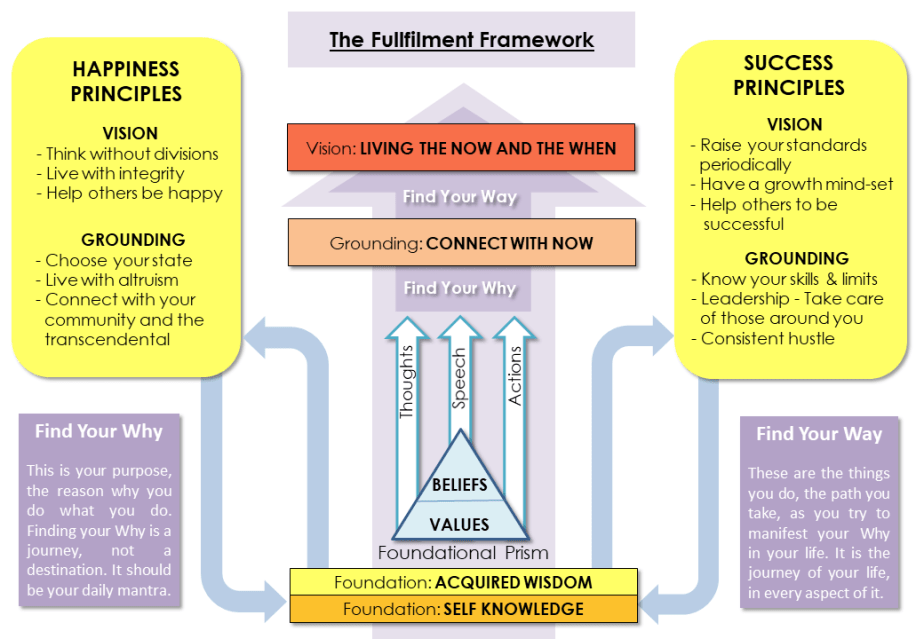
The Fullfilment Framework

This is a summary of the Fullfilment Framework, which is a framework aimed at helping you live a life full of happiness, success and, of course, fulfilment. This forms one of the pages on my blog, but I wanted to share the framework with the world more directly as well, so I am writing it as a blog post as well.

When talking about happiness, success or fulfilment the subject of setting goals is often centre stage, it is often seen as a pre-requisite of achieving these things. However, I believe that none of these three are things that can be ‘achieved’. I believe that they are a result of living well rather than a way of aiming to achieve happiness, success or fulfilment. I believe that fulfilment itself is dependent upon two pillars, the pillars of happiness and success, and each of these is dependent on how we live, rather than having these as the goals we set ourselves. For example, those who help others be happy are happy themselves as a result. Those who help others be successful become successful as a result, because they are trusted, respected and recommended by their peers. So, it makes sense to take actions every day that are in keeping with this philosophy. Many religious, philosophical and secular texts from around the world back this up, which I and many others consider to be wisdom. This is why I believe it is so important to actively acquire wisdom from such sources, on a daily or weekly basis.

I’m not saying that we should not set goals, of course we should, but the goals should be focused on the betterment of ourselves and others. For example, to live with integrity or to hustle (work hard) consistently. Setting the goal to be happy or to be successful is self-defeating, because these are states that we cannot go out and get, they are states of being, they are ways of living and to a large degree they are states of mind. For example, to be content with what we have is a catalyst for being happy in our lives. I believe that to be happy, to be successful and therefore to be fulfilled we have to break things down to key elements; our Foundation, our Why, our Way and our Happiness and Success Principles, which I will explain below.

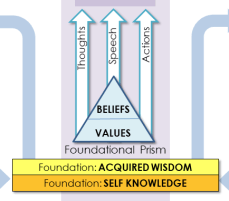
Foundation & Prism-Illustration of the Fullfilment Framework

It is important to have a deep knowledge of ourselves. To know thyself is an age-old command and one that will allow us to act in our best interests and live a good life. The combination of self-knowledge and the acquiring of wisdom culminates in what I call the Foundation of living a fulfilled life. This Foundation then allows us to discover and decide on what our beliefs and values are. This is who we are at our very core, and that which dictates what we think, say and do every day, based on our self-knowledge and acquired wisdom, or lack thereof. Our thoughts, speech and actions open or close doors, they create or obscure opportunities. Being the captain of our soul and the master of our fate, to paraphrase lines from the famous poem Invictus, means that we have a solid foundation, beliefs and values that we live by every day of our lives. Our beliefs and values are what I call our Foundational Prism, through which we see, understand and interact with the world.

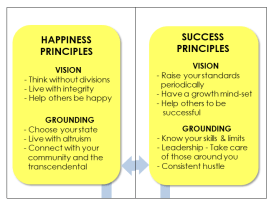
Principles-Illustration of the Fullfilment Framework

Our Foundation and Foundational Prism feed directly into the two pillars of happiness and success, and the principles I have associated with these pillars. The Happiness and Success Principles in the Fullfilment Framework are some of the things which I believe will result in happiness and success respectively. They are not a complete list, but I think they are likely to yield happiness and success. I have split them into actions focused on the present moment, which I refer to as Grounding and into actions focused on the present and the future, which I refer to as Vision. This is intended to be used as a way of being grounded in the present with the intention of living a good life moving forwards. The Vision is of the life we want to have had when we look back while breathing our last breath. It is living our legacy in the present moment.

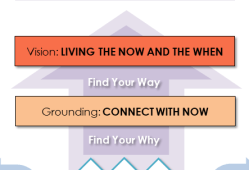
Why and Way-Illustration of the Fullfilment Framework

There is an important step that comes between the Foundation and the Grounding, and that is the finding of our Why. This is a concept popularised by Simon Sinek’s book Start With Why, which is about finding the reason why we individually do what you do, finding our reason for being. Yours or my Why is the star that guides us on our life long path.  Mine is to try and help others live a fulfilled life. Finding our Why can be hard, it takes a lot of soul searching and self-discovery. We have our Why formed by the time we get to our 20s, but many of us spend most of our lives not really identifying what it is. Finding our Why, however, is vital to living a happy, successful and fulfilled life. Once we know our Why the next step is to find what I call our Way. This is the thoughts, speech and actions we make every day to manifest our Why in our lives, and this is done through living the Happiness and Success Principles, and other acquired wisdom, as well as being true to ourselves. Living the Happiness and Success Principles, and other acquired wisdom, each day also feeds back into our self-knowledge, because every day of our life long adventure we learn something new about ourselves, and the cycle continues. All of this, I believe, will result in a fulfilling life.

This may seem like a lot to be able to do, but if you start small, by understanding yourself and reading, watching and listening to the wisdom of others every day, soon you will have your Foundation from which to build and to live your life well. This is not about being the best or the brightest, it is about finding what we were meant to be doing in this life, as well as the fact that a human life is a wonderful opportunity to make the lives of those around us better, to help them live fulfilled lives by helping them be happy and successful, to make the world better for the generations that will follow us, and for setting an example for them to continue in the same way. This is deep living, this is the path of fulfilment that we can all walk together.

Always strive to be inspired and inspiring.

#LiveDeeply    #FullfilmentFramework


Starting the journey towards fulfilment

On the way to experiencing fulfilment we need a place to start. Every journey begins somewhere, but I don’t mean the day we were born or some moment of revelation. What I mean here is the creating of a foundation for our sense of self; the me, the I, the self. I believe that this Foundation has three parts to it.

The first part is a deep knowledge and understanding of ourselves. This comes from continuous  questions and answers about how we tick, how we see the world and what makes us feel the whole spectrum of emotions that we feel. It also means trying out new things and seeing how we respond to them. This can be done at any age but I recommend starting to do this in the first quarter of your lives. If you are further along your life journey like me, begin from where you are, as it is a continuous process. The art of fulfilment is in the act of living our lives well, and to do this we first need to know ourselves deeply.

The second part is the acquiring of wisdom. This should be a constant endeavour. Wisdom enriches our lives and guides us along our life long journey. Reading, watching or listening to wisdom every day will give us the ability to make wise choices, to behave nobly and to help others to live their lives well. Wisdom is never self serving, it is always focused on the greater good. It is the constant mixing of this self knowledge and acquiring of wisdom that builds the Foundation from which we experience and interact with the world.

The third part of this Foundation is what I call our Foundational Prism,  the prism of our values and beliefs that we view the world through. This prism affects what we think, say and do in every moment and is a major key to living a life well, and living a life well is how we can experience fulfilment. This Foundation is a kind of alchemy, a mixture of self knowledge, acquired wisdom, our values and beliefs. Fulfilment is not something we find, it is a biproduct of living our lives well, starting with our Foundation. This is deep living.

What is stopping you from getting to know yourself deeply?

6 Principles to finding happiness 

Many of us, throughout our lives, strive to find happiness; something which can often seem illusive. I think the reason we can find it so difficult to achieve it consistently, is that it our happiness is very individual to us on a surface level, but true happiness is something different.

I want to explain what I mean by happiness. Happiness, according to the English dictionary is “The state of being happy.”  Simple enough, but I would add that it is the state of being happy ‘consistently.’ True happiness is not fleeting, it is a constant state created by wisdom and frequent practice of wise actions, which allow us to experience a consistent state of happiness. It is a result of how we live our lives each and every day. Happiness is similar to success, in that they are both a bi-product of living a life well.

In order to live our lives well we can cultivate wisdom by studying the best of human philosophy, theology and science, and try to understand ourselves more deeply on a daily basis. The wisdom of the present and past also extend to what I call the principles of happiness. These are the attitudes and behaviours which are necessary if we are to be happy consistently. Let’s go through the six principles for finding true happiness.

The first, and most important happiness principle is something that Tony Robbins calls ‘choosing your state.’ Tony Robbins is an American author, entrepreneur, philanthropist and life coach. Our state is the emotional and psychological state that we are in. If we let the experiences we have and the people in our lives dictate our state, then we lose control of our sense of self. Actively choosing how we feel about the circumstances we are in is not only empowering, it is also a path to happiness, and fulfilment. If we have a choice why would we ever choose to be demoralised, upset, jealous, angry or frustrated? This is not easy, but it is possible with practice.

Viktor E. Frankl knew this more than most, he was a Psychiatrist and a survivor of a Nazi concentration camp, and he witnessed first-hand the horrors the inmates were subjected to and the effect of this on their psyche. In his book Man’s Search For Meaning, he talked about his experiences in the camp and he said:

“We who lived in concentration camps can remember the men who walked through the huts comforting others, giving away their last piece of bread. They may have been few in number, but they offer sufficient proof that everything can be taken from a man but one thing: the last of the human freedoms — to choose one’s attitude in any given set of circumstances, to choose one’s own way.”

This is part of the path to experiencing true happiness, to choose one’s own way. There are some practices which help us to achieve this. These practices are contentment and gratitude, both of which are necessary for us to choose the state we are in.

The next happiness principle is humility, the antidote to having a large ego. When we focus on ourselves selfishly at the cost of others this often brings suffering, because of two things. Firstly, selfish actions that seem to promise happiness rarely result in actual happiness. Secondly, if we act in a way that is selfish, we can damage the relationships we have, and this brings negativity into our lives.

The next happiness principle is having no boundaries. This refers to boundaries that are often imposed by others and those we learn. When we see an us and a them, divisions along the lines of race, religious, country, gender, sexuality, education, class or politics, we create conflict in our lives. At every division there is a conflict, but if we try we can see ourselves as one, as one community, one humanity, one universe, then we will have less conflict in our lives. The more unity we have in our mental attitudes, the more connection we will have, which takes us onto the next principle; connection.

If we are going to have more positive human connections then we have to do some daily practices. We must have compassion for others, to motivate us to see them as beautiful amazing people that we want to help and love. This applies to animals and all of nature as well. We must practice empathy, putting ourselves in the shoes of others, so we can better understand where they are coming from. This allows for better understanding and connection. We also must practice forgiveness, both for ourselves and for others. Carrying around hate and distrust is a heavy burden to carry.

Cultivating a connection to the greater oneness of the universe or God or Tao or Bradman, whichever connects with your beliefs. Duly meditation or prayer will allow us to make such a connection.

The next happiness principle is integrity. This connects directly to our values and beliefs and committing to living by them, no matter what temptations or difficulties there are in our lives. This can be very difficult, but I believe that integrity is very important to our happiness, because if we are not true to ourselves we can feel uncomfortable in our own skin and negativity can seep into our sense of self and corrupt our happiness. The final happiness principle is the act of helping others find happiness, this is very important.

The Dalai Lama said “If you make others happy, you’ll be happy. If you make others unhappy, you’ll be miserable.” We have evolved to be social creatures that protect those we care about. If we extend this to all people and all beings we can be very happy indeed.

Know where you are starting from

Sometimes we feel paralysed by life and we feel that we should be doing something greater, something better, but we are unsure what this is. Fear of the future and the regret of the past paralyses us. It is important to pay attention to both the future and the past, but we have to do this in the right way.

When we are fearful of the future or regretful of the past our mind is rarely in the present, we are fully focused on the fear and the regret. If we are not present in the moment then we are preventing ourselves from being happy or successful in the present. We cannot act in the future or the past, but we can act in the present, so to get out of this paralysis we have to focus on what is happening now.

I used to spend a lot of my time thinking about what the future may bring, what my life might be like without knowing what I wanted to do with my life. I was so focused on the future I was missing the present. This is something that many of us do. We either don’t have a clear idea of what we want to achieve or we do have an idea but we aren’t sure what we need to do to reach this achievement, because we haven’t researched what we think we want. To figure out what we want to achieve with our career or our health or our relationships, we need to research our plans and start from where we are. This process has three stages to it: Grounding, Reflection and Decisive Action.

Grounding.

We need to move our focus and ground ourselves in the present. Asking ourselves what we are happy with and what we are unhappy with, what we have control over and what we don’t. This is our base camp and the end goal will be the summit of a theoretical mountain. Knowing ourselves deeply is always the best place to start. If we know ourselves then we will make decisions in our best interests.

Reflection

Next we need to reflect on our past through the prism of our present. We should reflect on our experience, our skills, our strengths, our interests, our values and our beliefs. Understanding how all of these things make up who we are in this present moment is very important.

This will help us to realise two things. What our overarching purpose is in our lives and from this what we want to see manifest in our lives. Our purpose is our why, why we do what we do and the way we do it. My ‘Why’ is “Finding purpose is a path we all walk together, through helping each other find happiness and success,” which is why I write this blog. Your ‘Why’ will help you find what you want to manifest in your life.

When we find our ‘Why’ and what we want to manifest in our life, next we should research it and find out all of its aspects before reverse engineering the steps from where we are now to where we want to be.

These first two stages will not happen over night, becoming grounded in the present involves developing new mental habits, which takes practice and dedication. However, it does help to think of this as creating new habits which will replace old ones, rather than trying to remove the old habits. This is a matter of where we put your focus.

Decisive Action

When we have grounded ourselves in our present circumstances and reflected on our skills and experience, our values and beliefs, then the next step is to set steps to achieve on the way to the goal. These will be metaphorical milestone on the climb up the mountain to achieve what we want to see happen in our lives.

An important step that many miss out is to research the goals we want to achieve in order to clarify what is involved and, importantly, if it is truly what we want to see happen. Some goals are set because something looks or sounds good or others are doing it and it is right for them. Just as we reflect deeply on ourselves, we have to put the same effort into analysing our goals. If the research is not done then we may achieve our intended goal but it may not produce the fulfilment we expect.

We each walk through our lives picking up experiences and memories, skills and understandings. Our sense of self is formed like a sculpture chipped out of rock over time, bearing the marks of these things. Each of our lives is a journey and our happiness and success are shaped by everything we experience and everything we think, say and do. Therefore, in order to live fulfilling lives our goals need to match who we are. Ground yourself in the present, reflect on your past and this will help you reach your desired goals in your future, the summit of that metaphorical mountain.

What is getting in the way of you finding the goals that match your true self?

Fear of others

We live in a more and more insular society where communication is often restricted to the sending and receiving of words and pictures on digital devices. It reminds me of the short story The Machine Stops by E. M. Forster, about a future humankind that lives underground individually in hexagonal room, each exactly the same as the other, all over the world. The machine controls the air temperature, the lighting, the access to food and water and provides a way to communicate with others around the world through screens. No one travels or even leaves their room, life is solitary, lived through a global machine. This is an extreme situation but it resonates, I think, with the way we often communicate, or don’t communicate with each other today.

I often sit in social situations, like a restaurant or a pub, and the majority of people that have clearly come to this place together are not talking to each other, or even looking at each other, they are silently checking their social media on their mobile phones for snippet of other people’s lives and to see who has liked or commented on the snippets of their own lives that they have shared. It seems ludicrous to me that people socialise with others, without socialising with them, without interacting with them, they are just people who know each other that are in the same area. The rise of mobile phone technology and social media has created a rift in our culture between people, created by the lack of social skills needed to navigate human relationships. The generations growing up with this technology are failing to learn the social communication skills of holding a conversation with someone, sharing their thoughts and feelings with someone and are more likely to turn to Facebook than a person when they suffer from mental difficulties like depression or anxiety.

This is the problem, unseen by many, which has two parts to it.  Firstly, the more we use social media to communicate with each other the less able we are to have face to face interactions. The trial and error needed to learn these social skills while growing up happens less because there are less opportunities, due to the time spent on social media. These social skills are needed to have healthy, positive relationships with family and friends, romantic partners and colleagues at work. So many people become daunted by the idea of striking up a conversation with a stranger or an acquaintance, because they have not had the practice while growing up. Secondly, the very nature of social media means that we accumulate social media friends which agree with the things we believe in or do what we do, and it becomes very easy to remove a connection to someone by unfriending them; instantly cutting ties with a person with a click of a button, if their way of being clashes with ours. As a result we rarely engage with people we disagree with, so the skills needed to debate with others or to find our own values and beliefs become lost, because these things come from interacting with people we disagree with.

This all creates a situation where we are less likely to engage with people who are different from us, so we begin to fear people who are different. This might manifest in the belief that our town/city, country, religion, lack of religion, politics, language, culture, skin colour, home, car, family, friends are better than those of other people who are different. This manifests in the dislike of ‘foreigners,’ or people fro a different town or city within our own country, without the realisation that we are foreigners in the eyes of others too. In any culture, whether it is a country or a business, difference is an advantage. Life flourishes in the places where a multitude of species coexist. Creativity flourishes in the same type of environment, where difference is abundant. The ability to accept others who are different from us and to interact with them using an open mind and an open heart is certainly an advantage. When we become so caught up in our own ideologies we become tribalistic, we become extremist, we become intolerant, we become an us, as opposed to a them. In the Bible Jesus said “Love your enemies,” to me this means that if we love our enemies then we will have no enemies. Love is the antidote to fear. When you hear reporters or politicians referring to people from other places in terms of a them, reframe the situation in your mind and think of them as one of us. Our tribe is called mankind and we are in this together. There is only a ‘them’ if we choose to use this term to refer to other people. We are in control of how we see the world and each other. Let us disagree, debate and share our ideas together as a collective, so we can change each other for the better.

Question:

What beliefs or experiences in your life cause you to fear others?

The art of listening 

I have often heard the saying that we have one mouth and two ears, so we should spend twice as long listening than we do talking. Which often gets a smile, but I believe that this deceptively simple idea actually has a deep meaning. If we followed this advice we would know more about each other and therefore would judge each other less, because knowing someone’s personal circumstances can help us better understand what they do and what they say. It also encourages us to build bridges between ourselves and others, rather than separating ourselves in an attempt at self preservation.

Listening well is a skill. There have been times when my mind has started to wander when someone was talking to me. I started thinking about the things I was going to do that day or things that were causing stress in my life at that time. I was not listening to what was being said. There have also been times when I was not listening because I was waiting for a gap to say what I wanted to say. We have all done these things, part of being human is making such self centred mistakes (occasionally). The aim is to notice that we are doing these things so we can make positive changes, but we have to be self confident enough to analyse our behaviour and adjust it for the better.

The more I have reflected on the importance of listening the more I have come to see listening as a gift; it is never about you and it is always about the person speaking. The gift of listening well to others is that they feel listened to, that they count and somebody cares enough to want to know what they have to say. Sometimes this is because they are going through a tough time and they don’t want answers, they just need someone to listen.

Sometimes listening well allows you to make appropriate suggestions that can help the person talking. The art is not only to listen well, but also to know when is the right time to comment or give advice and when you should just listen. It is an art because it is hard to get right. It takes practice, for some more than  others and that is OK.

The benefit of listening also means that you learn new things.  You can learn from every person you meet if you listen to them. When you listen you receive. When you talk this can’t happen. Let us all try to listen more and talk less.

Have you ever successfully helped someone by listening to them?

Don’t let where you’ve come from ruin where you are

There are many of us that have gone through mentally challenging times in our lives, and the memory of these times can be carried with us during each day. These experiences can cause anxiety and stress to permeate the various parts of our lives, causing our past to corrupt our present.

But it doesn’t have to be like that, we don’t have to let where we have come from ruin where we are now. So many people act as if they are still in a bad situation which they have been delivered from, still going on and on about it, talking about how other people couldn’t possibly understand the trauma and the tyrrany they went through. Some experiences that people have gone through will need specialist support allow them to move on and move forward and can be hard to do. What I am talking about is the other bad situations that don’t required specialist support, they just need the person to move on.

The problem is that people will treat you differently depending on how you present yourself, and if you are nothing but negative you might not be invited to that event or hired for that job or asked out on a date, because you are living as if you were still in a past situation. This is one of the ways that people let their past ruin their present.

It is better to put on a fresh attitude, to drop the issues of the past and be positive about the here and now. If you spend your time focused on the past you will miss opportunity after opportunity in the present. Our attitude to our circumstances is the barometer of how others view us, either positively or negatively. What we ideally need to try and do is to be positive about our present circumstances and to leave the past in the past. This can be hard to do sometimes depending on the severity of the circumstances we have been in.

I do think that some people like to have a moan, as a way of getting attention. This is the wrong kind of attention, in terms of building positive relationships. Our relationships are the framework of our lives, they interlink our family life with our friendships with our work life with our hobbies, etc etc. It is our human connections that largely encourage the happiness in our lives, along with how we view these relationships. If those we care about and those we meet for the first time only see the negativity we are emitting then they may well not want to spend time with us or connect with us. Choosing to moan about the negative can be detrimental to our relationships,  which is in turn bad for us.

We are only human, as the saying goes when we refer to our frailties, but we also must take responsibility for how we think, speak and act. If there is an option of being positive or being negative, and there often is a choice if we take a look, then being positive will always be the better option. The more we make the choice to be positive the more it will become a habit, and the old mental pathways connected to our previous negative circumstances get replaced with better mental pathways, better mental habits.

Have you ever felt a shift of positive change happen in your life when you left bad circumstances in the past and focused on the positive circumstances in the present?

Bringing a new focus to this blog

After much consideration I have reshaped the focus of this blog. I have come to realise that happiness and success are in fact the pillars which support fulfilment in one’s life. The goal of life is fulfilment, which is impossible without understanding how to achieve both of these pillars. This is the manifesto for my new blog, which I have renamed The Fullfilment Project, the aim of which is to help people live a full life.

Manifesto

The Fullfilment Project is about inspiring every individual to find fulfilment in their lives. I believe every human being deserves to live a fulfilled life, which stands on two pillars, that of happiness and success. These are two vital intertwined states of being. You may be beaten down by life and circumstances, you may be living a blessed life, either way I aim to inspire you to be a better version of yourself today than you were yesterday, and as a result to find fulfilment.

I will post weekly content aimed at inspiring you to be the best version of yourself that you can be, a self that is happy, successful and fulfilled. I will focus on personal development, setting goals, daily hustle and cooperation with others.

I am on a journey studying the best ways to find fulfilment in life, so that I can share my findings and help as many people as I can to achieve their dreams and feel fulfilled, because I have a vision of a world where everyone cooperates with each other to find happiness and success, and therefore find fulfilment.

If we know the way to find fulfilment then we have a responsibility to guide others to find it and when others know the way we have to be humble enough to follow them. Happiness, success and fulfilment can be found in cooperation with others, because when we help others find these things we find them ourselves. This is our fulfilment manifesto.

Finding your Why

You may have heard this banded about quite a bit recently with people on YouTube offering ways to find your Why. The motivational coaching space seems some what saturated with this since the book Start With Why was written by Simon Sinek and his TED Talk on the subject went viral on the Internet. But here’s the thing, finding your why is essential in order to find both happiness and success. It is your reason for being,  your reason for getting up in the morning. It is the reason why you feel so amazing when you do things that you love, and it should guide everything that you do in your life.

But how do you find your why? You start by find the things that bring you joy, the activities and life events that have a tremendously positive impact on your life, and then finding what links them. It took me until I was 35 years old to find my Why. It is now my philosophy for everything.

“Finding happiness and success is a path we walk together.”

If we collaborate rather than dictate then we find our happiness and success together, inspiring and supporting each other. This is why I write this blog every week, because I want to help others find both happiness and success. I do believe that we can all find both of these and that they are inseparable. This is my Why now go and find yours.

Your happiness begins with you 

The one thing that is consistent in all of our relationships, experiences and life events is us. This is why our happiness has to begin with us. It is an internal awakening. We bring ourselves to every relationship and every situation. So changing our relationship or our situation might not necessarily improve things for us, because we are bringing ourselves along the way. We sometimes have to change ourself first.

This is why happiness begins with us, individually. We each have things that we consider to be essential to either our identity or our lifestyle, but if these things exist outside of ourselves, it can be hard for these things to help us find happiness. This is because the things in the world change, wear out and sometimes disappear.

We need things which are necessity, like food, water, a home and security. Beyond these things is the realm of what we want, not what we need. We sometimes get these things confused. The things that make us happy are things like creativity, connectedness, productivity, etc, things that come from within ourselves, from our interaction with the world. We need to move from being consumers to becoming creators, so we can create the life that allows us to be happy. Happiness is a state, a way of being, it is not something we go and get.

Kindness and success 

Some people will say that nice guys finish last, but I would like to politely disagree. To use a racing metaphor, if it is a sprint the nice person may well finish last, but life and/or a career are not a sprint, they are marathons. Kindness, if mixed with competence and cooperation, will quite often win you the career race, and the life long race. It depends on what you value.

Opportunities are given to those who are trusted, and nothing erodes trust more than back-stabbing and gossip, two behaviours that those who want to be first can often display. Living a meaningful life involves building and maintaining relationships. In relationships we are running metaphorical marathons. I would argue that kindness is an essential ingredient in a life full of both happiness and success. This is the race worth running.

The science of achievement and the art of fulfilment 

Happiness and success can be thought of in terms of units. I believe that both happiness and success work a bit like compound interest, if you don’t cash in on the interest of the happiness and success units invested, but instead take what you’ve learned and double down on what brought the happiness and/or success, then the net result increases more and more.

However, it can be very difficult to find out what makes each of us happy and how we individually find success. This is because we are all individuals. Now we know this intellectually, but we often still go chasing after things that appear to bring these desired results for other people. These things are often external, temporary and ineffective in bringing long term happiness and success. I often put happiness and success together, and I do this on purpose, because I believe that they are so interconnected that it is very difficult to have one without the other.

When we gain material success we rarely find long term happiness, because of the nature of material things. If we can figure out what actually makes us happy, things that bring us joy and contentment, it then becomes clear what type of success will then increase and sustain this happiness for us. This is because our goals for success will be on our terms, they will be what success means to us.

Tony Robbins calls this the Science of Achievement and Art of Fulfilment. If you get both of these right, then you will be happy and you will find success by following your own path, guided by the wisdom and examples of others, rather than following the paths of others guided by someone else’s goals that will not necessarily bring the happiness and success you are looking for. Socrates said “Know thyself,” Tony Robbins added to this “Be thyself.” This is the route to both happiness and success.

Motivation: can versus can’t 

Our subconscious believes what we tell it and if we tell ourselves what we can’t do more often than what we can do our whole self image can become very negative. On the other hand, if we choose to tell ourselves more often the things that we can do, this has a positive effect on how we see ourselves.

Every thought we have either creates new pathways in the brain or reinforces old ones, so that they become strong habits. Simply focusing on what we can do can be very motivating. If a problem pops up in our lives taking a moment to look at our options to see a way through will help. Try starting sentences with “I can…” rather than I can’t and I think you will develop more motivation and more confidence over time. Give it a try, I know you can.

Setting goals for happiness 

We are now into Spring, a time when many celebrate all that Spring gives us and what it represents. It is a time when we reflect on the beauty and life giving aspects of Spring, the fact that we have left the dark, cold days of Winter behind and we look to the bright, warm days of Summer that lie ahead of us. Much like the beginning of the year, to me this feels like a good time to be setting goals, or perhaps re-evaluating the goals we set at the beginning of the year.

Like many people I set myself goals at the beginning of the year, things I intended to do to improve or enrich my life. I’m sure many of you did this too, or at least thought about setting goals for this year. The general impetus is usually the improvement of ourselves and our habits, but underneath all of our goals, I think, is the drive to try and become happier; happier with ourselves and with our lives. We intend to try harder and to do better, to get closer to happiness.

For as long as human beings could conceive of such things, people have been in search of this thing we call happiness, this illusive state that underlies the motives behind much of our thoughts and actions. Aristotle said that “Happiness is the meaning and the purpose of life, the whole aim and end of human existence.” However, it is often something that we experience only in fleeting moments, in brief periods of time that come and then go as we venture on into the future of our lives.

This is often the case because we are seeking happiness out there in the world. We often make the acquiring of things the way in which we try to find happiness. Whether it is a new car, a new TV, recognition for an achievement or becoming wealthier than we currently are, the failure is always going to be in the hope that the things and people in the world are going to match our expectations. Things rarely work out as we expect them to, life is not like that.

If we look at the many religious and philosophical writings of the world we will find a recurring idea, that the route to happiness is to be content with what we already have, rather than the acquiring of worldly things. Also that the best way to make yourself happy is to try and make others happy. In giving you will receive, in many ways. I would advise setting goals that align with your values and that enrich the lives of others. This could be helping your colleagues do better, working better as part of a team or just smiling more. The by-product will be, I think, a happier life.

Mental obsticles and their antidotes 

We all have mental obsticles, thoughts that pop up again and again which seem to sabotage our plans. Often these are minor things that prove to be an inconvenience and nothing more. Sometimes the mental obsticles can be very debilitating. However, there is something we can do about the debilitating mental obsticles, if we can identify them then we can find antidotes for them.

There are three areas I have found where these mental obsticles can appear, they relate to your health, your sense of self and your professional life. For me these were anxiety, anger and procrastination respectively. My job at the time of discovering this was very stressful, which caused great anxiety that had a negative impact on my health. I felt angry at the situation, at my difficulty in finding a different job and at those around me associated with the situation, which was very uncharacteristic of me and something I did not like at all. I also habitually procrastinated when I should have been up-skilling myself to move forward professionally.

My answer was to find three mental antidotes and use them as a mantra when any of the mental obsticles popped up in my thinking. I decided that courage would overcome anxiety, compassion for myself and others would overcome anger and fortitude would overcome procrastination. These were my key words, courage, compassion and fortitude, this is my mantra. It did not fix things immediately, because I needed to rewire my thoughts and make new pathways in my brain, and I still have some work to do on this, but it can help when the mental obsticles popped up in the moment by saying or thinking them.

I recommend you find your mental obsticles (one that is effecting your health, one your sense of self and one your professional life) and then find their antidotes, this will be your healing mantra. Repetition of the mantra is the key. Every morning, every night and any time one or more of the mental obsticles pops up. Instead of being sucked in by the negative mental obsticles, repeat the mantra over and over out loud or, if you prefer, in your head and no one else needs to know.

Something to remember however, is that even though it will help in the moment when it is needed, the mantra is not a quick fix, it is only an aid on the journey to self mastery. You have to put in the time again and again to achieve this.

Taking responsibility

Taking responsibility for the things you have control of in your life can bring immense rewards, the most important of which is that you will move away from feeling like you are a victim in areas or situations in your life. When we feel that our lives are mainly subject to forces outside of our control we feel like victims. A similar mindset allows us to blame these outside forces, or even other people, when things don’t go our way.

Outside forces and people will have their influence over us at times, when it rains and we are standing outside we will get wet, but the degree to which we stand there is the degree to which we get wet. At all times we can decide to take acton to improve things or we can decide to view a situation in a positive light and look for the opportunities. This boils down to taking responsibility for what we do, what we say and most importantly what we think. We cannot control everything but we can control how we respond to the events and situations in our lives.

A word of warning however, do not mistake taking responsibility for blaming yourself. If you made a mistake it can be easy to beat yourself up about it. Whatever we do it will never be perfect. Our lives will always be a work in progress. Embrace this and treat life as a great adventure with every mistake being an opportunity to learn and every challenge an opportunity to either succeed or learn how to.

This is taking responsibility for your life, the fruit of which will be a greater feeling of control in your life and greater opportunities. You will be able to see more opportunities, because you will be looking for them and others will see that you take responsibility, that you are accountable for your actions, and they will give you opportunities. The greatest payoff however will be that you will be happier while you have more control over your life, because you have control of yourself. This is the most important mastery you can achieve.

Buying happiness 

There is a constant message that permeates our lives through the various media channels that exist, whether it be TV, radio, magazines or some other such format, that tries to convince us that happiness can be bought. This message comes from adverts trying to persuade us that what that company is selling will make us happy. The problem is that the thing that they are selling is designed to break or become outdated or will become out of fashion.

The whole consumerist culture is based on the lie that happiness can be bought. We fall for it and buy something to make us happy, and it does for a little while, but soon we want another hit of happiness and we buy something else. This mindset comes directly from the companies advertising, which uses social status as a tool to take people’s money. And the sad thing is that our economy is largely built on this cycle of buying and buying again and again. A very large proportion of the things we buy we do not need. We want them but we do not need them.

The thing is that happiness is actually free, it is a mindset rooted in contentment with what we already have. Happiness is spending time with people you love, doing things you love to do, creating things, helping people and especially helping others be happy. These are all things we can do. Happiness is largely a choice of how we view ourselves in relation to other things and other people. If I tell myself I need a new car to make myself happy, I will work at doing things I don’t like to raise the money to buy the car, and then I will constantly worry that the car will be damaged or will break down, etc, etc.

Things do not bring happiness, how we view them does. This also includes relationships. It boils down to what you value. Knowing this will be a good start.

The power of gratitude 

When it comes to happiness one of the things that is essential is gratitude. It is hard to feel negative emotions like anger or frustration while you focus on being grateful. This is why cultivating a daily practice of reflecting on what you are grateful for can be so powerful.

If you are lucky enough to be born in the West you have effectively won the lottery. There are countries where the citizens do not have access to the Internet or the government controls the media they have access to and people can be executed for things we take for granted in our day to day lives. These are  extreme examples but they are true.

A large percentage of the world’s population live on less than £1 a day. In comparison many of us live a dream life. So perspective can be a great motivator to become more grateful and gratitude is a powerful force that can bring happiness to your life.

An ever winding road

You have probably heard people talk about the paths we take through life, the journey of life, and the choices we make as we walk along our own paths. These kinds of metaphors help us deal with the many complexities and difficulties we each face on a daily basis. They help us visualise what our life might be and they help us put things into perspective. If we think about our past days and years as the ups and downs of the path that we have already walked, this will help us see more clearly where we are now. And when we begin to visualise where we are now, there will be a real mixture of stressful and joyful things that come to mind.

Right now you may feel as if you are carrying heavy burdens. You may have big responsibilities and pressures weighing you down. And just to add in another metaphor, these responsibilities and pressures could be seen as dark clouds that hang above you, but if you look carefully you will see gaps in these clouds where the blue sky beyond can be seen. We need to remember that the blue sky and the sun are always there (during the day) and the dark clouds that obscure them are just passing by.

Whatever troubles and burdens we have in our lives there is always one constant, we can choose how we see each of these clouds. A dark cloud can seem menacing because it blocks out the sun, but it is also full of water that nourishing all living things when it rains down on the world. When hard times come try to find ways to make yourself stronger through the struggle. Personal growth only happens through struggle and strife. Be like water and move with the challenges of life rather than resisting them and use them to find happiness so you can then find success in your life.

Gossip kills trust

When we hear someone gossiping, whether we laugh along or even join in with the gossip, the trust we have for the person gossiping begins to erode. This is because we fear that they do the same about us behind our back.

Gossip kills trust and without trust it is less likely that others will cooperate with us. Both success and happiness are built on cooperation. Happiness is largely a result of the relationships we have with other people and relationships are built on trust too. Success is not something we can achieve completely alone, long term success certainly can’t be achieved this way. Let us create and maintain positive relationships and therefore a good life.

I’m not saying that you have to get on your high horse and tell others not to gossip, but not participating in gossip yourself will undoubtedly improve your relationships and therefore your happiness and success. Other people will start to notice that you don’t engage in gossip and they will trust you more. The greater the trust the greater the cooperation and the greater your happiness and success will be.

Read something amazing every day

I believe that success is closely linked to absorbing knowledge from the world around us. This often takes the form of unconsciously assimilating messages and information from the culture in which we live. This is a passive way of absorbing knowledge.

It is important to be aware of what is going on around us, but I think that if we are to become successful, or even happy, in our lives then we need to be more active about learning new things that are relevant to success in general and in the specific area that we want to succeed in. Knowledge and understanding is power.

I have a recommended reading list on my blog site of books I think would help you find both happiness and success. It is not an exhaustive list, but these are books that I have read and have benefited from the wisdom in their pages.

Exploring happiness and success 

Meaning in life invariably stems from the values we have accumulated from our past experience. And finding meaning is a key component in finding happiness, because without meaning it would be difficult to see the point of doing anything. Yet in our current society success and usefulness are prized over value and if we are to find our own happiness we need to start moving away from the tide of expectations imposed by society and walk our own path.

You may be wondering why I am saying such things given that this blog is in part about finding success, but the success that society preaches is not what I am talking about in this blog. I am not talking about success based on society’s narrow definition of it, I am talking about personal success based on the foundation of personal values and the cultivation of personal happiness. It seems to me that you cannot find personal success without finding this foundation first.