Building Resilience

We have many things in life that can eat away at our resilience, and we all have different level of resilience. Some things are brushed off by some and others will find them very challenging.

A lot of our resilience comes down to our thinking, on whether we have a fixed mindset or a growth mindset, and how we explain positive and negative things to ourselves. A good book on this subject is Learned Optimism by Martin E. P. Seligman, PhD.

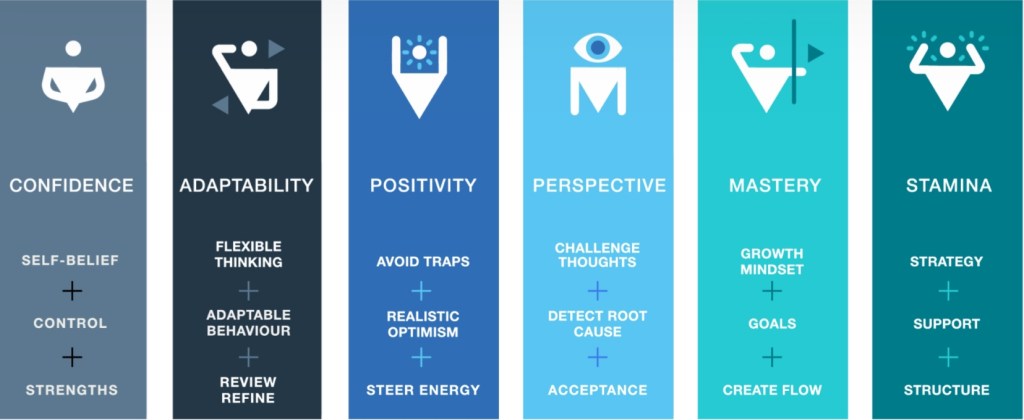
There is also a good model for resilience called the Resilience Edge Model shown below. You can get more information about this model on the website if you follow the link above.

Image Source: resilienceedge.com

What Game Are You Playing?

In life there are two types of ‘game’, the finite game and the infinite game. This is discussed by Simon Sinek in his book The Infinite Game, and he discusses it in this video. I have mentioned it on this blog before too.

The finite game is defined as having fixed rules, known players and the point is to win, which is the end of the game. Football for example. The infinite game is defined as having flexible rules, known and unknown players and the point is to stay in the game. Playing catch with your 3 year old for example.

A lot of day to day human activities are infinite; running a business, being in a relationship, customer service, being a parent, etc. However, often, especially in business, we talk about winning or being number 1 or the best at (fill in the blank), without realising that we are playing the wrong game.

There is no such thing as being number 1 at parenting, though many think they are. There is no such thing as being number 1 at customer service, though many companies claim that they are. You cannot win love or be the best at health. Somethings are just without a clear end.

Life is an infinite game. None of us will come out of it alive, but we want to keep living as long as we can. Within the many infinite games we play in our personal and professional lives there are also finite games too. There are also goals that we set which, once completed, stop as a goal and we find another one.

In life we are more likely to be successful if we play by the right rules for the different ‘games’ we play. In our relationships, we want to nourish them for the long term. When it comes to our health, we want to eat, drink and exercise for our long term health. And with anything that improves our wellbeing, if we are competing, we compete with ourselves.
Being Perfect VS Creating Value

When we avoid putting our work out into the world or suggesting an idea we have, we will often use the excuse that it is not ready or that it is not perfect. This is a form of hiding, hiding from feedback and hiding from potential failure. When we do this the world misses out.

When we say something provides value, we mean that it has benefited a person or people, because it has entered their lives. Things that create value are never perfect, they are invariably led by human interactions, either with a thing created by a person or with a person themselves. The value comes from human connection, empathy and respect. The interaction makes someone’s life better.

To me something that creates value is ‘hand made,’ a person has created it for another person. When you speak to a company and a Customer Service Advisor goes above and beyond, when they ask about your day and mean it, this adds value. When you walk down the street and you says good morning to someone, this adds value.

This type of interaction is invaluable to the quality of life it give others. People sometimes don’t say hello to strangers or have a chat with someone because they don’t feel confident in knowing what to say. Knowing what to say is another form of perfect. You can start with “Good morning. How is your day today?” and see where the conversation goes. Most good conversations are unplanned, but both parties are fully engaged.

So, do you want to hide behind being perfect or do you want to make other people’s lives better by creating value? If you want to create value, then engage with others and see what happens. It will never be perfect, but you will potentially make someone’s day, week or year.

Understanding Vulnerability

When we think of people being vulnerable we often think of young children, old people or those with a disability. However, we can all be vulnerable at some time or other, and it can be temporary, sporadic or permanent. Life events can make us vulnerable. We could lose a loved one, lose our job, have an unexpectedly large bill to pay, suddenly become severely unwell, have a sudden increase in caring responsibilities and the list goes on.

There is a stigma often associated with admitting our vulnerabilities and companies often have a one size fits all approach, which means vulnerabilities are to considered when supporting customers. People often assume others are not vulnerable without even considering the possibility. Vulnerability is something we should be considering and showing empathy towards.

Pre-COVID times a large percentage of UK adults had less than £300 in savings, which means they would have struggled if the boiler broke or their care needed significant repairs, and this has only got worse during the pandemic. Any of us could face a large bill for something unexpected. No one predicted the COVID-19 pandemic but it has left so many people vulnerable.

So, let’s be open about our vulnerabilities and show empathy towards others who may be struggling. Anyone you meet maybe struggling, so be kind, always.

Seeing And Being Seen

Recently, I saw a homeless man asking for change and I stopped to give him some money. I looked at him straight in the eyes, smiled and I said “have a lovely day.” The fact that I acknowledged him and made a human contact seemed to mean more to him than the money. Hundreds of people must walk past him every day and ignore him. I made him feel seen.

This is the power of being seen. Not just looked at but acknowledged and appreciated. Seeing the other person as just as important, as a human being. And when you see other people in this way you make tangible, authentic relationships with them.

To see someone and to be seen by someone are the central connection that creates opportunities to thrive, together.

The Gift Of Giving

Giving is a mind-set, it should not be limited to single acts of generosity. It is something that we can strive to do every moment of our lives. Each time someone shows me kindness by giving me something I try to do something similar for somebody else. I say try, because I do not always get the chance or think to do it, but I do try. And I think in giving back to others that which has been given to us, is putting positive actions out into the world, in the hope that they will be passed onto others again and again, so that we can all build a better world together, just by giving what we can, when we can.

One of the things that I have come to realise is a precious gift to give someone is to listen to them. To give your time to actively listen to what other people want to talk to you about. By ‘actively listen to them’ I mean to not allow your mind to wander, to give the person your full attention and to show them that you are listening to them, with your body language and the way you respond to what they are saying. It doesn’t matter if it is something seemingly unimportant, or something that is very difficult for the other person to deal with, whatever it is, just listening can be a gift.

Stress In The Workplace

There are many jobs which are naturally stressful, like being a Fireman/woman or a Police Officer. There are, however, many jobs which are not inherently stressful, but the working environment makes them so. This is the main cause of stress in the workplace, I would say.

If colleagues are pitted against each other in compitition to earn bonuses, a cut throat, winner take all culture will develop. If colleagues are encouraged to collaborate and find fair outcomes for customers, then a supportive and uplifting culture will develop.

Another consideration is whether things like the values and operating rhythm of the workplace match your own. In other words, are you a good fit for your workplace and your role. Figuring out your own values and how you work best is a great place to start.

Sometimes though, the problem is the view you have of the work you do. I work in complaints and I could say that I speak to angry and rude people all day long, but I don’t. In fact, I speak to people who have problems, often caused by the company I work for, and it is my job to fix the problems and rebuild the relationships between the customers and the company. In other words, see them as human beings first and take responsibility for fixing their issues.

The views we have can blind us to the opportunities that problems provide.

Meet People Where They Are

When we have big plans or we want to bring something new into the world or we are strong with our views, we often forget to see the position other people are in, because we are so focused on our own message.

This way of communicating often feels natural or the right way to behave, but when we do we miss a huge opportunity. When we communicate in this way we meet people where we are, we project 100 percent outwards. This often causes clashes and conflict, because others are doing the same thing.

We could let others communicate 100 percent and become completely passive, but this is not good either. The ideal is to meet people where they are and where we are and aim for a 50/50 exchange. This involves actively listening and caring about the other person and taking turns. All very basic things to do, but often forget to do them.

What To Be Grateful For

Recently I have begun to realise that I am getting on in years. Next year I will have my 40th birthday, a number that seems a lot bigger now it is pending in my life. I’ve also got more grey hair appearing. At first I had the usual fear based reaction that makes you question if you’ve done all that you set out to do and makes you reassess everything.

I felt myself going down a rabbit hole of despair and I caught myself and six words changed my mindset immediately. I am grateful for the grey. Many people do not live to 40. I realised that every year, every day is a privilege many have not had.

Advertising companies and our culture in general will have you wanting to be grateful for material things, things that you can buy and own. In my view these are the wrong things to be grateful for, as nice as they are.

Be grateful for waking up this morning, for have the health that you have, the partner you have, for having a home and food to eat, for having a job that pays the bills, for having friends and colleagues, for the challenges that help you grow, and for having been born at all.

If you are grateful for these things then your life will be so much happier and you will live a more present life.

Always Look For Beauty

For some the day ahead seems to be filled with boredom, for some it is dread. Many have felt the devastating sting of loss that makes it difficult to carry on. Many live the same day every day through the repetition of events and interactions. Many feel lost and don’t know what to do with their day. Many feel as if they have reached rock bottom. Many feel as if they are drowning in debt.

These are realities for a lot of people, but every day there is still beauty in the world. A smile, a sunset, a song, a flower, an opportunity to be generous, an opportunity to be kind. The world is full of beauty and the opportunity to create it. The negative things in life can cause us to be blind to them, so we must actively look for beauty every day. This will increase our sense of gratitude and improve our wellbeing.

It will not solve all of our problems, but it will put us in a better position to solve those problems for ourselves.
Do Something

Often we wait for the right idea, the right job or the right partner before we trying something new. This waiting is a form of hiding, hiding from trying that new thing, because we fear failure or we fear making the wrong choice and wasting our lives.

If we don’t choose something we are wasting our lives. The regrets most elderly people have is the things they did not try. You have time to try and fail and try again. You will also either succeed or learn and then succeed. Failure is essential to success, because we can learn from it.

My advice is this, figure out what your values are, what your beliefs are and what your ethics are. Then go find a project to start, a challenge to take on, a problem to solve or a role to try that aligns with these and see what happens. If it aligns with your values, beliefs and ethics then you will thrive, you will feel empowered and you will feel fulfilled by the work you do.

But you must choose something and start.

Go Ahead And Lead

We think of leaders as big, charismatic characters who lead from the front, who announce their vision and point in the direction they are going in. They inspire us to follow them.

This is not what I mean when I say lead, though to be visionary is certainly needed. To me, leadership is taking care of those around you. It is servant leadership. This type of leadership does not require vision, it requires empathy, compassion, and above all, courage.

It means that you become the solver of other people’s problem and check in with those in your circle, making human connections and taking care of people. Not in big ways but in small uplifting comments or in time spent engaged with someone, and so on. This to me is leadership.

So go ahead and lead.

Which Is Right?

Some find a perfectly mown lawn beautiful, others find a field of wild flowers beautiful. Which is better? Neither is better, because it depends on the context and the option of those looking at them.

If you wanted to play a game of cricket then a field of knee high wild flowers would not be a good place to play. I neatly mown cricket pitch is better. If you want to paint a colourful landscape painting then a field of knee high wild flowers is better.

Some find the neat lines mown on a football pitch to be beautiful. The order and the precision align with their values. Some find the splashes of colours and life giving properties of wild flowers to be beautiful. The randomness and pollination align with their values.

Neither one is better than the other. It depends on context and personal opinion.

Inner And Outer Circles

In the business world there is often what is referred to as an inner circle, a group of high ranking colleagues who have their own circle that the majority are kept out of. There are also examples of inner circles in other types of organisation too.

The problem with inner circles is that they create a division that casts everyone as lesser or below those in the inner circle. I guess you could say that everyone else is in the outer circle.

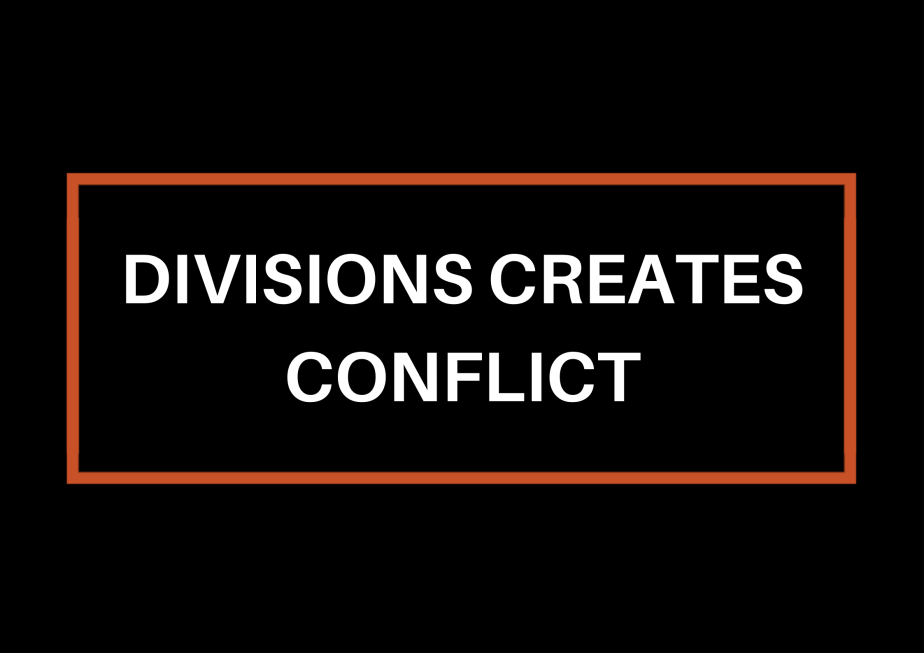
Any division creates conflict and there is an us and a them. Within an organisation if there is division within it, hopes of working together are reduced. The idea of a circle is a positive one though, what matters is how many people are included within it. It is better to be inclusive than exclusive. The more we include the better our society will be.

What We Tell Ourselves

We need to consider the things we tell ourselves about ourselves. When we internalise the voices of others they become part of our inner dialogue. This includes what our parents say, what our friends say, what our employer says, what the news says and also what the teachings of our religion or philosophy says. All of these voices become part of who we are, but if we do nothing to take control of what we allow to become part of our inner voice, then we give up much of our power and self-control to the direction of others.
It is important, I feel, to do some mental spring cleaning every now and again to take a fresh look at what internal voices we want to follow and what internal voices we don’t. Some of this is of course subconscious, so is not obvious, but keeping a journal to put down thoughts, feelings and experiences and questioning these can lead to powerful realisations about why we make the decisions we make. In more extreme situations reaching out for support from a Councillor or Cognitive Behavioural Therapist can be invaluable. For most of us self-reflection and opening up to friends and family will help us figure out a lot of what is holding us back and find better ways to think and act to bring about a more fulfilling life.

I have reflected on this a lot over the past few years and I truly believe that we can be the architects of our own lives. What we tell ourselves can be with us throughout our lives, being careful what we think and say to ourselves is important. If we find ourselves saying that we cannot do something, because we don’t feel ready, equipped or able, then there is a simple thing we can do to help us get out of this trap. If you find yourself saying that you cannot do something out of a belief that it is beyond you, then I encourage you to add the word ‘yet’ to the end of each negative thought. “I can’t drive a car yet.” “I can’t draw yet.” “I can’t lose weight yet.” “I can’t find a new job yet.” “I can’t run a marathon yet.” Whatever it is, there is power in the word ‘yet.’ It opens up the possibility and hope of achieving whatever it is in the future, and it is empowering rather than dis-empowering.

What Is Normal?

When we look at a bottle of shampoo it will often say that it is for Normal Hair. In our culture we have an idea of what normal is, it is what the majority of people we know do or say, or in the case of shampoo, the type of hair that the majority of people have. I would like to suggest that normal is simply what is most popular, it is not a trait by which people should be judged.

In marketing, companies will often aim their interruptions at the majority in the hopes that everyone will pay for their product or service. There is a fundamental problem with that. Either the product or service is designed for a particular kind of person, in which case it is not for everyone, or it is aimed at everyone and therefore no one, because we are not all the same.

In culture, we often want to be ‘normal’ and to fit in, but when we try to act or think in ways that are the most popular then we are not being ourselves. We are performing a role to be accepted, but everyone ends up doing the dance of normality and losing themselves in the process.
What we should do, in my opinion, is to figure out what our values are, what we believe and, importantly, what our ethics are. This will determine which people we will enjoy spending our time with. We can identify our ‘tribe’ and we will then genuinely fit in and thrive. The goal with this is to belong rather than to be accepted, and these are two very different things.

Choosing Hope

We often don’t believe something is possible, that we cannot achieve or do certain things. We have a diminished sense of hope. This belief, I would argue, is a choice, whether made consciously or not. Our life experiences, and the meanings we place on them, direct our thinking when it comes to our abilities.

However, every new experience changes how we understand and view our past experiences and our current selves. This process of new understanding can actually cause our memories to change, because what we remember is always held in our present mind, along with our understanding of it.

We might remember new details which change what we think happened or a change in our understanding of what happened can profoundly alter how we feel about these memories. For example, I have been living with Fibromyalgia for over ten years and for a long time it felt debilitating, with pain in my joints and muscles and feeling exhausted most of the time.

But, as is often the case, this struggle became something that led me to understanding how Chi (Qi), or energy, flows through our bodies and how Chi Kung (Qigong) gives us the ability to master our own Chi. It has put me on a path towards self mastery and a profound understanding that we are in fact our own saviours, we can heal ourselves, if we learn how. Hope very often rises like a phoenix from the ashes of the trauma and challenges in our lives. Hope has a power to transform how we look at ourselves and our circumstances.

As Maya Angelou said in her poem Still I Rise,

Up from a past that’s rooted in pain
I rise

The Art Of Interaction

We don’t often think of how we interact as something to work on or improve. We learn how to communicate with each other during our childhood years and that’s that. However, if we are to make a real difference in the world then we need to master how we interact with each other.

I first came across the concept of the ‘art of interaction’ in Seth Godin’s book Linchpin, where he describes every interaction with a colleague or customer as practicing the art of interaction. It is an integral part of becoming a linchpin within your organisation, someone who is indispensable.

It is also good to practice how to interact with others on a general basis in order to develop good relationships and to uplift others. Treating it as an ‘art’ also means that how you interact with others can be unique to you. It is an art not a science. It is also one of the strings to your bow that are needed in order to have self mastery.

Finding Your Purpose

Purpose is a word loaded with expectations. There is a lot of pressure on those wanting to develop themselves, to find their unique purpose for being born.

My view on finding your purpose is that by the time you are in your 20s you will have a reason behind everything that you do. For some it is to leave things better than they found them. For others it is to generate joy in others. Everyone has a think that makes them tick. This is your purpose.

For me it is helping others to live well, to ultimately have a fulfilling life. It is not one thing that you do, it is the reason behind everything that you do.

Appreciate Where You Are

They say that every season has its purpose. In nature, Autumn bring the falling of leaves which nourish the soil, that then feeds the tree from which the leaves fell. Summer provides lots of sunlight to help plant life to flourish, which helps all life to flourish.

You might feel like you are in a difficult situation that might be likened to the harshness of Winter, but difficulty can help us to develop resilience. If it was like the Summer all of the time then we may not appreciate what we have. Every year Winter shows us what the absence of Summer is like and we appreciate it all the more when it comes around again.

In life we have challenges and we have moments in the Sun. Each has its purpose and we can use them to our advantage, if our mindset is a growth mindset and we look for the opportunities rather than the difficulties.

Read It Yourself

In the 16th Century the Bible started to be translated into European languages from Latin. Previously, Catholic clergy were predominantly the ones who understood Latin and they told their loyal followers what the Bible said. They told their followers what the teachings of the Catholic Church were too.

Once the Bible was available to be read in the common people’s own language, people began to disagree with some of the teachings of the Church. The Reformation began, the understanding of God, Jesus and the Church was reformed into many different viewpoints.

Some say that this is for the better and some for the worse. It is not a debate I intend to start here, and this is not a comment on the teachings of the Catholic Church. My point is that, much like the teachings of the Church at the time, our culture has us believing a number of things that we take for granted; we receive signposts on how to live in a similar way, we are told them. We are told how to be happy, the value of money and what success looks like.

When you read into what actually makes you happy and successful it will likely not match the messages from our culture, because our culture is influenced by those who wish to sell us things. They have an interest in the stories we are told.

So, ask why when our culture tells us to do something. Ask what the purpose is of living how we are expected to live and you will be on the road to a more enlightened way of living, and you will be happier and more successful.

Who Should We Listen To

When we only listen to the news or social media or friends that agree with us then we are in what is referred to as an echo chambers. However, echo chambers can be used to our benefit, but it depends on who we listen to and this depends on what kind of life we want.

If we listen to the religious teachings of Jesus, the Buddha or Mohammed our lives will likely be happier. If we listen to the advice from Tony Robbins, Seth Godin and Simon Sinek our lives will likely be more successful. If we know what kind of life we want and we wilfully enter the appropriate echo chamber we can tune out the cultural noise that is the opposite of what we want, then this will be help.

However, if we have right wing ideas and we listen to the ramblings of Donald Trump, then we will likely go down into an echo chamber of extremism and violence. Echo chambers have their place, as long as we also make ourselves aware of opposing views too. When we completely close off alternative view then we can become extreme and potentially an extremist.

Because It’s Free

Often in life things are offered to us for free. It might be a marketing strategy to give out cans of a new drink to get people to try it and hopefully to start buying it. It might be your friends offering you a bar of chocolate as a kind gesture. Whatever it is, what we often do is get excited and accept it without question, because it’s free.

If we had to pay for it, we would likely ask more questions about whether it was good for us and whether it would create any value for us. So, why is it different when something is free? I think there is a sense that we have somehow won something or we are grateful for the kindness of others.

When we are offered something for free we could ask, does it serve me? Would I normally pay for it? Does it align with my values? Does it align with my goals?

If you are offered a free chocolate bar and you have made the decision to stop eating chocolate, due to you trying to eat healthier, you shouldn’t take it, because it does not align with your goal and it does not serve you. This applies to anything we are offered for free.

Just because something is free does not mean that it has value.

The Value Of Remembrance

Today is a very special day, it is Remembrance Sunday, where churches up and down the country in the UK, and elsewhere, have services that are conducted to remember the fallen from the two world wars and all other wars since.

WE REMEMBER THEM

War is an ugly business and many have died in the pursuit of winning a war, both soldiers and civilians. The purpose of each war is different, due to the different political landscapes and parties with vested interests, but the suffering is the same.

So much is invested in waging war, but little is invested in preventing and ending them it often seems. I don’t know the data on this, but I am confident it is lopsided toward the waging of war.

We have many divisions in our own lives too, small conflicts in comparison to wars between countries, but conflicts never the less. You could argue that even wars between nations began from decisions by individual people, so the best we can each do is to try and resolve our personal conflicts and use forgiveness and respect to move forward.

It is, however, important to remember the fallen soldiers and the civilians who have died in war. It is right to remember them and it helps us to seek peace in our own lives.

WE REMEMBER THEM

Get Out Of Your Own Way

The Resistance is something that effects us all and has been defined by Steven Pressfield as follows. If we try to do anything new, whether creative or not, there is a voice inside our heads that tries to talk us out of it. It says things like “who am I to do this? I don’t have the experience to pull it off” and “I’m too old” or “too young,” and so on.

If being creative or being successful was a film the Resistance would be the villain that needs to be overcome. We all have it and we can all overcome it by just starting and having the discipline to work on what we want to achieve, every day. It is the fear of judgement by others and of failure, this is the Resistance.

If we think of ourselves as amateurs then we will develop habits that allow the Resistance to stop us reaching our full potential. If we think of ourselves as professional then we build in the discipline and the habits to get the work done. When we go to our paid jobs we turn up and work regardless of how we feel, this is being professional.

“Amateurs tweet, Pros get to work.”

– Steven Pressfield

Remembering Peace

Today we remember the fallen, those who died in war, the soldiers and the civilians. The red poppy is a symbol of remembrance and it is important to remember them.

War is a savage divider of humanity and I feel we should also strive to avoid future wars and to end current ones. The white poppy is, for me, a good counterpart to the red poppy.

According to the Peace Pledge Union “The white poppy stands for three things. They represent remembrance for all victims of war, a commitment to peace and a challenge to attempts to glamorise or celebrate war…

…We want to remember British military dead, but they are not the only victims of war. We also remember the many civilians who have died or suffered in war, both in the past and today, in Syria, Yemen and many other places around the world. Suffering does not stop at national borders, and nor should remembrance.” (Reference)

WE REMEMBER THEM

Not My Job

Organisation fall or stumble when individuals regularly say “It’s not my job to do that,” and then pass the buck onto someone else or some other department. Organisations thrive when each member of staff has autonomy to make decisions and take ownership of issues. The attitude becomes “that needs doing,” so they do it.

In life seeing things that need doing and getting on with doing them will mean you become a problem solver and a more productive person. Life becomes easier if your focus is on fixing things rather than avoiding things that need to be fixed, because issues are fixed before they become too big to handle. Life also becomes more fulfilling.

So, become a problem solver.

Divisions Create Conflict

There are many divisions in our lives and this week, more than most, we turn our attention to them. On Thursday it will be 11th November, the date the First World War ended and peace was declared. On Sunday churches around the country will be holding Remembrance Services.

World Wars, and armed conflict of any kind are horrific in their nature and take a toll on humanity. We also have smaller more personal conflicts in our own lives which are born out of division. Any time there is an Us and a Them there is a division and there is some form of conflict in every division.

During this time of Remembrance let us strive to heal the divisions in our lives by removing the need for a Them and including everyone as Us. When we see people as human first we are better able to use empathy and resolve issues.

When Nelson Mandela came out of prison where he spent 27 years of his life he realised that if he continued to hate those he incarcerated him he would never be free. He later led his country, as President, to forgive and heal after the atrocities of Apartheid. He was a remarkable man, but we can each try to heal the divisions in our lives and use examples like Nelson Mandela as a beacon of hope, hope that it can be done.

Create Value Not To Win

On 16th July 1945 the first nuclear bomb was tested and one of its creators looked on in horror, regretting what he had done. Robert Oppenheimer said later that a quote from the Bhagavad Gita ran through his mind while he witness the nuclear explosion before him, “Now I am become Death, the destroyer of worlds.”

This quote is often misunderstood, but it highlights the way Robert Oppenheimer was feeling. Presumably, he had not imagined the power of the nuclear bomb and the destruction its use would unfurl on the world while creating it. But once something like this is done it is hard for it to be undone.

In 2006 Aza Raskin invented the infinite scroll that meant social media platforms could be used without hitting a ‘next’ button, new content simply appears when you scroll down. He later said “One of my lessons from infinite scroll: that optimizing something for ease-of-use does not mean best for the user or humanity.” 

The amount of time that people now spend on social media, rather than doing other important things like interacting with the people they are with or doing the work they are avoiding has grown a lot due to this feature. Again, presumably Aza Raskin did not think about the impact this feature would have on the world.

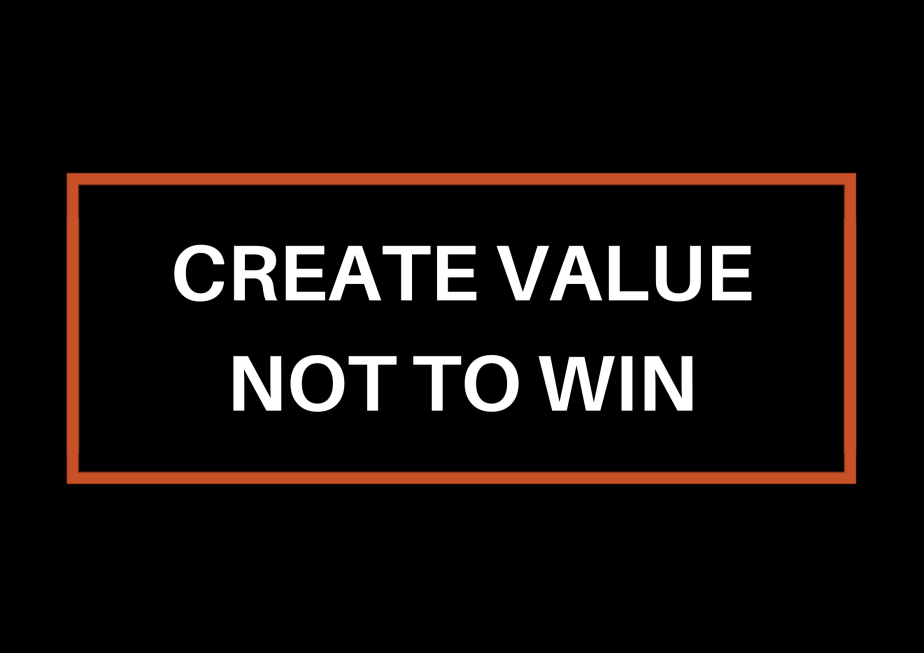
It is not necessarily fair to compare these two inventions in terms of their impact, but the common denominator is that the inventors regret their inventions. The lesson, I think, is that the things we create have a direct impact on the world, so they should be there to serve humanity not to hinder it. When we create anything or do anything we must first ask ourselves if it will serve to bring people together and make the world better, and also if it aligns with our values.

When we create or act for a larger organisation we can often find ourselves serving a goal to beat the competition or to make money rather than making people’s live better. And as we see from the example of Aza Raskin, making things easier does not necessarily make things better.

Embrace Your Struggles

In life we have many struggles, both small and large. There are also struggles that for some are small but for others the same struggle seems insurmountable. This is because, quite clearly, we all see things differently.

There is a way of seeing struggles that is helpful, and that is to see them as opportunities to find and develop strengths. For example, if you were struggling with confrontation you could see this as an opportunity to learn conversational skills that de-escalate situations and turn them around.

Within every struggle there is an opportunity, even if it is to build your resilience to the hardships of life; to bounce back and keep moving forward each and every time.