The Gift Of Listening

Recently I have started to try and really listen to people, to give them my full attention and it has uplifted those I listened to. To be heard is often rare in the age of technology and smart devices that demand our attention. We often spend more time interacting with devices than we do face to face with each other.

We have lived through a pandemic that has made the connection through digital devices a necessity and a lifeline for many, but as we come out of this pandemic and return to the office, and other places of work, we should remember that really listening to someone is a gift, a gift of your time, which is a finite resource for us all.

To be there when people have something to share, no matter how sad or exciting it may be, is an age old activity that bonds you and the other person, even if just a little. In our tribal days, as we hunted and gathered to survive, these sorts of bonds were part of being a tribe. Now we have no tribe as such, but the importance of listening has not faded with our evolution and revolutions, it is in fact more important as devices distract us from being with each other.

Making Plans During A Pandemic

We are approaching the end of the year and the beginning of next year. A time when we would normally be thinking about New Year Resolutions and setting goals. With the possibility of further restrictions in England in the new year, making plans seems difficult.

That being said, I believe we should still set goals for the new year. The goals will likely need to be modified or made to be more realistic, given the limitations of living through a pandemic, but as human beings, if we do not make progress, we can feel that our lives are stagnating.

So, set goals, be daring, think about where you would want to be by the end of next year without the pandemic being a factor, and then plan accordingly. Then consider how you can make those goals a reality safely while considering the pandemic. Much is possible when we have a destination and an open mind to the route to get there.

Understanding Vulnerability

When we think of people being vulnerable we often think of young children, old people or those with a disability. However, we can all be vulnerable at some time or other, and it can be temporary, sporadic or permanent. Life events can make us vulnerable. We could lose a loved one, lose our job, have an unexpectedly large bill to pay, suddenly become severely unwell, have a sudden increase in caring responsibilities and the list goes on.

There is a stigma often associated with admitting our vulnerabilities and companies often have a one size fits all approach, which means vulnerabilities are to considered when supporting customers. People often assume others are not vulnerable without even considering the possibility. Vulnerability is something we should be considering and showing empathy towards.

Pre-COVID times a large percentage of UK adults had less than £300 in savings, which means they would have struggled if the boiler broke or their care needed significant repairs, and this has only got worse during the pandemic. Any of us could face a large bill for something unexpected. No one predicted the COVID-19 pandemic but it has left so many people vulnerable.

So, let’s be open about our vulnerabilities and show empathy towards others who may be struggling. Anyone you meet maybe struggling, so be kind, always.

Being Together

Yesterday we went to a Halloween party as a family. The children played musical statues and musical chairs and everyone ate well, danced and had a great time. It was good to be with other people.

There is something special about coming together for a shared celebration and just having a good time. This is something that left a hole in our lives when such things were banned during the several pandemic lockdowns over last year and this year.

We thrive when we are part of a ‘tribe’ and we celebrate together. The shared experience solidifies relationships and helps us to feel as if we belong. To be happy, successful and ultimately fulfilled in life we need to belong and spend time with those in our tribe, our community.

How To Deal With Change

“Be like water making its way through cracks. Do not be assertive, but adjust to the object, and you shall find a way around or through it. If nothing within you stays rigid, outward things will disclose themselves. Empty your mind, be formless. Shapeless, like water. If you put water into a cup, it becomes the cup. You put water into a bottle and it becomes the bottle. You put it in a teapot, it becomes the teapot. Now, water can flow or it can crash. Be water, my friend.”

– Bruce Lee

We are in a time of the year that we associate with change, the season of Autumn, when we see leaves turn vibrant colours before falling. The Autumn equinox was on 22nd of September, where the length of the day matched the length of the night and it signals the change from Summer to Autumn. It is the mid-point between the Summer and Winter Solstices. Although change is a constant, it is not so clearly expressed in nature as it is in Autumn.

In day to day life change can be seen when cups of tea or coffee go cold, when children become adults and then become old and the future all to quickly becoming the past. It is a fact of life that things will always change, yet often our experience in life is that some things seem to stay the same. This is usually because the change of these things is slow. Yet over a long enough time-line key features of a generation often seem very familiar. The fashion of today seems a little reminiscent of fashions of the past, which I suppose is to be expected, after-all fashion is an aspect of culture, which defines itself by what has come before, either by being different from it, or being the same as it, and it appears to me that the same fashions come around again every twenty to thirty years, in an ever changing cycle, which goes back again and again to where it came from, though is never exactly the same as it was the previous time, or the time before that. This idea is put well in the book Hagakure, The Book of the Samurai. It says this:

“It is said that what is called “the spirit of an age” is something to which one cannot return. That this spirit gradually dissipates is due to the world’s coming to an end. In the same way, a single year does not have just spring or summer. A single day too, is the same.

For this reason, although one would like to change today’s world back to the spirit of one hundred years or more ago, it cannot be done.”

We often wish that things could be as they were when we were younger, or we wish we could go back to a time in our lives when things were better, but, we always look back at our pasts with rose tinted glasses, and if we did go back, I suspect that it would not be as good as we think it would be, and this would ruin the memory we have of that time. Our perspective of the memories that we have changes too, as we experience new things and gain new understanding of the world around us. This all gives us new understanding of our memories as well, which in turn changes the memories we have. There will certainly be memories from the past 18 months that we would prefer to forget, if we could.

From the perspective of many religions from the East, the present is all that exists, and the past only exists in our present mind, there is only the now, which is itself eternal, because it is always here, yet that which exists always changes in a constantly evolving moment. However, that is not to say that memories are not to be treasured, of cause they are. We all have photo albums documenting our lives and the lives of those we care about. Some of the first baby photos of me that my parents showed to my Wife were those in which I was not wearing any clothes, or I had covered myself in food. Photos are put into albums, not only to be treasured by ourselves, but also so that we can easily show them to other people, and in doing so, share the experiences we had. After-all, life is to be shared, is it not? These moments that our photo albums document are themselves, often, moments of change, the first day of school, all dressed up in our school uniforms, our birthdays, weddings, christenings and so on, these are all times in which we were once one thing and we became another. All very personal moments in our life stories.

On a larger scale, all the changes that occur in the culture around us are a kind of background noise, in comparison to these personal changes that each of us make, or have thrust upon us, each day.  For me personally, getting married was not that much of a change, because my Wife and I carried on happily as we did before we were Mr and Mrs, though the wedding day itself was joyous. Becoming a father was much more of a change for me, and demanded a few inner changes to how I saw the world, as well as some changes to how I lived my life, which is continuing to evolve. This is all a natural part of being a parent, as well as wanting our children to be happy and healthy, no matter what changes life might throw at them.

It can be difficult to walk the fine line between fearing change and embracing it, especially after how devastating the COVID-19 pandemic has been in some people’s lives, through losing loved one, losing regular income with the loss of a job or being separated from those we love. We truly do not know what is around the corner in life, but we do need to find balance in all the potential and real chaos. In Taoism, they have the symbol of the Yin and Yang, which is very familiar to most people. It is a circle with one black part and one white part, each of which has a spot of the opposing colour within them. The general principle behind this symbol is that in every good there is bad and in every bad there is good, if you look for it, and that life is constantly an interplay moving back and forth from good to bad and back again. If we understand that this is how life operates, then finding balance to navigate the events of life can be very beneficial. If we put all of our energy into one thing in our lives, even if it is good, other areas in our lives suffer and eventually the thing we are investing our time in stops being so good for us too.

Equally, if we worry about the bad things that are, or might, happen, then our life also gets out of balance. It is like navigating a boat through the waters of our lives, with one leg on the port side and one on the starboard side. If we tip too much one way or another, then we fall in. Finding balance means checking in with ourselves every day to see if we are looking after every part of our lives. Cultivating our relationships, working hard at work, taking care of our family, managing our finances, focusing on our spirituality, etc.

There is another concept you may have heard before, the concept of flow. The state you are in when everything you are doing is effortless and time disappears, because you are fully engaged and really enjoying what you are doing. In Taoist thinking this is referred to as Wu Wei, the art of non-action. To our Western ears this sounds paradoxical, but it has finally sunk in in my head recently and I finally get it. Wu Wei is flow, it is effortless action, it is doing, not worrying or planning or speculating, it is the act of just doing. Put another way, the art of non-action is to embrace flow instead of effort to achieve a result. Living life through Wu Wei is, as Bruce Lee said in the quotation at the top of this blog post, being like water. He said, “Be like water making its way through cracks. Do not be assertive, but adjust to the object, and you shall find a way around or through it.” And with many Eastern things, this is an art more than a science. My advice would be to try to do everything that you are doing with joy, and then this flow state will be more accessible. As Sadhguru, a Guru from India, has said “Anything you do joyfully is always effortless.”

When big changes appear in our lives, the more flexible we are in our thinking, the easier it will be to manage the challenges each big change brings. Some changes are thrust upon us, as we have experienced, they are things that are out of our control, and we have to some how deal with them in the best way that we can, by focusing on what is in our control, which includes choosing to be in a joyful state. These times of major change are times that will test our characters, they will highlight the strengths we have, and tell us how strong we are inside.  The paradox of Wu Wei is that being humble and flexible is stronger than being full of ego and rigid when we want a positive outcome.

For those of us that are not strong in difficult times, such as a tragedy or a pandemic, there are others, to whom we turn, that are strong and who support us through these hard times. We all have people like this in our lives, perhaps you are the person to whom those around you turn when they need a strong pillar to support them. If you are such a person I commend you, because without people like you many of us would not be able to cope. However, you also need to have people around you to whom you can turn in difficult times.

At the end of reading this blog post you will get on with the things you have planned for today, the rest of the week, and the rest of the year. The seasons will change from Autumn to Winter to Spring to Summer and back to Autumn again, the sun will rise and set as it has for millions of years and change will continue to affect our lives. How we choose to respond to the changes we each face is up to us, but I hope that most of the changes in your lives are for the better and the changes that are hard to bear are lessened by those around you, those who care about you, and those you care about. These are the consistencies that allow us to deal with the changes that life throws at us.

I would like to end with another quotation about Autumn, by Albert Camus. “Autumn is a second spring when every leaf is a flower.” 
Building A Better World

“Follow your dreams and use your natural-born talents and skills to make this a better world for tomorrow.”

– Paul Watson

This Summer saw the long awaited 2020 Tokyo Olympics, which was an unusual state of affairs, without the spectators. However, it gave a chance for the people of each country to see their Olympic champions battle it out for the highly held Olympic medals. After the way the 2020 Euros lifted the spirits of the nation, there was a hope that the Olympics could keep the national excitement going. In the end more people watched the Tokyo Olympics than did the Rio 2016 Olympics. Records were broken and Britain came a respectable forth in the medals table, which is all pretty positive. Positivity is in great need after the past 18 months and the uncertainty of coming out of the imposed social distancing guidelines, which has left us all feeling a little unsure how to interact with each other in the new normal.

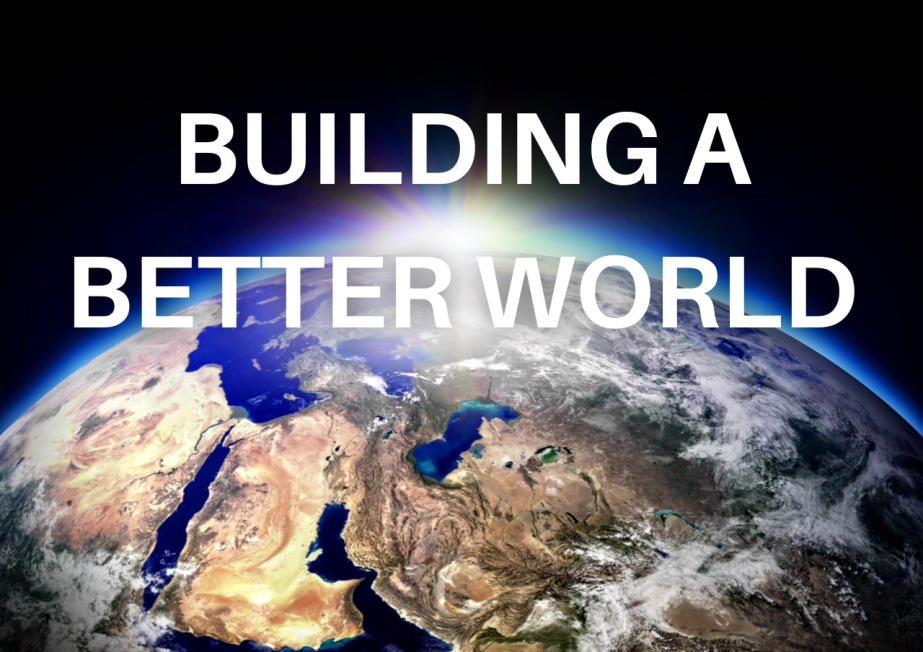
The Olympics have long been held up as the bastion of sportsmanship, of unity in diversity and of excellence. Curious to see the principles behind the organising of the Olympics, I looked up the Vision of the International Olympic Committee, which is “Building A Better World Through Sport.” A worthy vision, and one which is shown in their Values of Excellence, Respect and Friendship. And this got me thinking about how we can make the world a better place after the COVID-19 pandemic put a pause on much of society’s habitual behaviours. During the pandemic the kindness of strangers and the capacity to care flourished amongst neighbours and strangers alike. The concept of Key Workers redefined for many of us who plays an important role in our society and who does not. There was initially talk about going back to normal after the pandemic, or rather a new normal, and it is this idea of a new normal that I want to focus on today.

If we can better choose how we can interact with each other, how we can live together and how we can connect with each other, then this seems like a good time to do it. We can take up the cause of the Olympics of ‘building a better world,’ but not just through sport, but through how we see each other and how we interact with each other. This thing called life is a shared journey from cradle to the grave, but we are capable of lifting each other up, so we may all live better lives.

To illustrate what I am talking about I would like to share a story I saw online recently about a Police Officer in America who pulled a young man over, as his driving licence had expired. The young man explained that he barely had enough money to pay the bills and his rent and could not afford to renew his licence, due to losing his job. He was also on his way to a job interview, in the hope to gain an income and eventually get his licence renewed. The Police Officer left his own car and drove the young man to the job interview and apologised to the Interviewers as he was the reason the young man was late for the interview. The young man got the job and was able to renew his licence in order to legally drive again. Sometimes kindness matters more than the letter of the law. It also matters more than the prejudices and stereotypes that we all have which prevent us from seeing others as equal to ourselves and therefore worthy of kindness.

It is also important to remember how connected we all are. The COVID-19 pandemic showed how our movement around the world can cause diseases to spread, but we can also share our behaviours, our ideas and our values. Kindness and generosity are also infectious. Mother Nature has provided a way to encourage us to be kind and generous. This is how we thrived as a species, by working together. If we are to be generous or kind to someone else without any expectation in return we get a hit of Oxytocin, which makes us feel good. The person we are generous or kind to gets a hit of Oxytocin as well, which means they will likely go and be generous or kind to someone else that day. Even a person just witnessing an act of generosity or kindness will give them a hit a Oxytocin and will encourage them to pay the generosity or kindness forward. We are hard wired to do this, because we are stronger together.

To further show how connected we all are on our planet, here is something from a TV series on Netflix called Connected that blew my mind. It is in the episode on Dust and how important certain dust can be. In Chad, North Africa, in what used to be Lake Mega-Chad, but is now part of the Sahara Desert, there are the remains of fish and other creatures, which once lived in the lake, before the area became a desert. The wind breaks up the skeletons into dust which is then carried by the wind up into the atmosphere and it makes its way all the way to the Amazon Rainforest, in South America, where the dust becomes part of the soil. What is amazing is that the rain in the rainforest washes away most of the nutrients that the plant life needs to grow and survive, but the dust all the way from the Sahara Desert in Chad, North Africa, replenishes it. Around 22,000 tons of phosphorus is deposited in the Amazon Rainforest every year from Lake Mega-Chad, which is about the amount the soil loses every year due to rainfall. Without this process happening, there would be no rainforest. We are truly, globally connected to every other ecosystem on the planet. This is why when we through things away, there is no away. We need to look after our planet as well as each other.

The environmental movement, which includes Greenpeace, sprung to life after a very special photograph was taken when “Apollo 8, the first manned mission to the moon, entered lunar orbit on Christmas Eve, Dec. 24, 1968. That evening, the astronauts-Commander Frank Borman, Command Module Pilot Jim Lovell, and Lunar Module Pilot William Anders-held a live broadcast from lunar orbit, in which they showed pictures of the Earth and moon as seen from their spacecraft. Said Lovell, “The vast loneliness is awe-inspiring and it makes you realize just what you have back there on Earth.” They ended the broadcast with the crew taking turns reading from the book of Genesis.”(1) As they orbited back around the moon toward the Earth the photo Earth Rise was taken as the view of the Earth in the distant blackness of space rose into view over the surface of the moon, which is seen in the foreground of the photo. The sense that if we do not take care of our planet their is no planet B reverberated through the cultures of the West and the rest of the world.

We have now reached a point where taking a trip up to where the Earth’s atmosphere meets outer space is becoming a reality for those who can pay for it. There has been much debate online about the recent endeavours of Billionaires like Sir Richard Branson to develop “rocket planes” that can take people up the edge of space. Sir Richard Branson was the first to have “…successfully reached the edge of space on board his Virgin Galactic rocket plane”(2) recently. The main argument against such endeavours has been why build a rocket plane to take people to the edge of space on tourist trips when there are millions who are homeless, starving and displaced due to war. There are also issues with global warming. It is an argument over priorities and values, over selfishness and selflessness. Tickets to take the Virgin Galactic up to the edge of space cost up to £180,000, again money that could be spent helping our fellow human beings. I guess the main ill feeling comes from the disproportionate distribution of wealth and the fact that there are billionaires in the world where much good can be done if this wealth was shared. If a tenth of the wealth held by the Billionaires of the world was spent on helping those in need, the quality of life for many would be improved. Access to water, electricity and education, for example.

But we are not all Billionaires, far from it. Most of us have enough to survive and a little bit more to save or spend on nice things. This begs the question what can we do to make the world better? If we are to go back to the Vision of the International Olympic Committee, “Building A Better World Through Sport,” we can think about what Vision we might have for our lives. If your Vision began with “Building A Better World Through…” what would come next for you? I would suggest you build a better world through kindness. Kindness to the environment and kindness to the people we interact with each day.

However, it is not always easy to be kind, especially if we are asked to be kind to those we really do not like. In the Bible Jesus asked us to Love our Enemies? You might not think in terms of ‘enemies,’ but you will have people you would rather avoid, people you dislike. How do we build the capacity to be kind to those people? A good place to start is to work on the prejudices and stereotypes we all have, on the barriers we have that create an us and a them, so we can start seeing each other as human first, and then we can increase our generosity and kindness on a daily basis. The more people we are generous and kind to the more people will do the same for others. And you will feel so good at the end of the day.

Reference:

1: https://www.nasa.gov/multimedia/imagegallery/image_feature_1249.html

2: https://www.bbc.co.uk/news/science-environment-57797297

Craving Connection

“We are like islands in the sea, separate on the surface but connected in the deep.”
― William James

Connection

As you will have heard numerous times over the past year, these are unprecedented times where a virus has infiltrated our communities, causing much devastation and causing us to be separated from each other. With the success of the vaccination role-out in the UK we are beginning to ease out of the lockdown, and many have flocked to go shopping or to go for a freshly pulled pint, often queuing for a very long time to feel a bit more normal, and to restore a part of ourselves lost when isolated at home. Other countries, unfortunately, are still struggling to tackling this virus. I hope and pray that they get the support they need from the rest of the world. What we have longed for during this pandemic has been connection, connection with others where we share the same space and time together. We have craved the feeling of spending time around others. In the UK and other countries, as we move out of the lockdown we will be able to do this more and more, all being well.

I think we will see more and more that people will connect remotely through Zoom, or other software, moving forward, as necessity has highlighted the benefits of it. People have had job interviews and begin to work, without ever having met their new colleagues face to face. Doctors appointments have been done over the phone, or video call, when needed. Companies have started to build teams to work on projects regardless of where the team members are located. Many who follow world faiths are connecting via Zoom. Muslims who are fasting are breaking their fast each night with others via Zoom. Some who have been marginalised by religious groups are finding those in these religious groups are connecting with them during this lockdown. Remote connection has brought flexibility and opportunity where it was not their before. When a crisis affects us all, the best of us will always see others as human first.

However, we must reflect on what will be left behind if we are to take advantage of this new way of connecting. Human beings, for thousands of years have survived and thrived because we are inherently social creatures. We need hand shakes and hugs, eye contact and presence, we need to spend time in the company of those we care about. Without this vital physical connection depression and feelings of isolation will go up. Remotely gathering for worship or a quiz has been a Godsend in comparison to isolating ourselves at home and not seeing anyone other than those we live with. But once we can again gather in the real world, we should not exclude this for the wonders that technology provides.

Feeling Connected

That being said, it is also important to remember that we are all, always connected. We are all part of an interconnected web of life. We can be both individuals and drops of water in the same ocean, each with a place and each essential to the place of others. This is something to reflect on in this time where we are physically separated. We are still all connected, through belief in God, through the oneness of the universe, and through connecting to nature. Many of us have spent more time in our gardens or going for our daily exercise in nature, to connect to something greater than ourselves, and something unaffected by this pandemic. It is comforting to see that Spring is still rising as it has through the metronome of the seasons throughout the existence of our planet earth. To know that nature is still blossoming and new life is beginning all around us can bring some peace to us at this time.

The seasons that return time and time again each year affect each of us, but not always in the same way. For example, during the months of Winter a homeless person experiences this season very differently from those who have a home. When I was living in Liverpool some years ago, around November time, I was heading to our local mini supermarket and spotted a homeless person sat outside. It was a man who was sat against the outside bin crying. A lot of people were walking past him, avoiding eye contact. I decided to stop and have a conversation, and possibly cheer him up a bit. He told me that it was his birthday and he was 40 years old and there was no one he could share it with. He also told me that he was on a waiting list for a hostel, but he had to wait 12 weeks, just as Winter was beginning. I told him to stay where he was and went into the shop to buy him some food. I also went home and filled a bag with warm clothes and a woolly hat and gloves to get him through the cold months ahead until he could move to a hostel. Much like the Good Samaritan in the Bible reading we heard earlier, what I did was not extraordinary, it was simply a willingness to connect with another person in need and providing the help they needed; it is the ability to be compassionate and empathetic.

Prejudice and Peace

When we decide that there are some we do not want to engage with we are choosing not to connect with them. Many do this across cultural, political and religious lines, some across country or county lines, and some between the homeless ad the rest of us. The prejudices and assumptions we have about others divide us and prevent the possibility of connection, which may greatly enrich our lives. However, when we appreciate that we are because others are, that we all Inter-are, then we open the possibilities for collaboration and we cross pollinate ideas. The value of whole the human race is always greater than any one part of it.

And on that note, I would like to end with an extract from a book called Stillness Is The Key by Ryan Holiday. A small book full of wisdom.

“The less we are convinced of our exceptionalism, the greater ability we have to understand and contribute to our environment, the less blindly driven we are by our needs, the more clearly we can appreciate the needs of those around us, the more we can appreciate the larger ecosystem of which we are a part.

Peace is when we realize that victory and defeat are almost identical spots on one long spectrum. Peace is what allows us to take joy in the success of others and to let them take joy in our own. Peace is what motivates a person to be good, to treat every other living thing well, because they understand that it is a way to treat themselves well.”

Something to reflect on…

Our relationships are the glue that holds our lives together. They need our attention and care if we are to avoid loneliness.

Setting Goals For 2021

“It must be borne in mind that the tragedy of life doesn’t lie in not reaching your goal. The tragedy lies in having no goals to reach.” — Benjamin E. Mays

Another year has begun, and like many people I have set myself goals for the coming year, things I intend to do to improve or enrich my life. I’m sure many of you have at least thought about making new years resolutions, it is something that seems to be a requirement of starting a new year. Often our goals are based on what we have done or not done in the previous year. 2020 has been a very different year for us all. Much of what we had planned at the beginning of the year had to be set aside as we navigated the challenges of living through a pandemic.

We have had to connect through screens to feel close to the people we love, our families, our friends, and many used Zoom to maintain team cohesion at work and fellowship in collective worship. The year 2020 will be a year that we will want to leave behind us. It has taken its toll on us in many ways. However, with the vaccine being rolled out we can look at the year ahead with more optimism. We can hold true to the very human notion that better things are coming our way. There is hope that we will return to a sense of normality. More than ever in our lives, the end of one year and the beginning of another brings with it a sense of both relief and hope. Hope for a better year to come. More than ever, this is also a good time to look at setting goals for what we want to achieve in the year ahead, Coronavirus permitting.

As we set these goals we could consider some of the top new years resolutions, like being more organised, quitting smoking or learning something new. These are all good resolutions to aim for. The general impetus is the improvement of ourselves and our habits, but underneath all of them, I think, is the drive to try and become happier; happier with ourselves and with our lives.

For as long as human beings could conceive of such things, people have been in search of this thing we call happiness, this illusive state that underlies the motives behind much of our thoughts and actions. Aristotle said that “Happiness is the meaning and the purpose of life, the whole aim and end of human existence.” However, it is often something that we experience only in fleeting moments, in brief periods of time that come and then go as we venture on into the future of our lives.

This is often the case because we are seeking happiness out there in the world. We often make the acquiring of things the way in which we try to find happiness. Whether it is a new car, a new TV, recognition for an achievement or becoming wealthier than we currently are, the failure is always going to be in the hope that the things and people in the world are going to match our expectations. Things rarely work out as we expect them to, life, as we have discovered over this passed year, is often not like that. If we look at the many religious and philosophical writings of the world we will find a recurring idea, that the root to happiness is to be found within ourselves rather than in the acquiring of worldly things.

In the Bible in the Gospels of Matthew, Mark and Luke it says “It is easier for a camel to go through the eye of a needle than for someone who is rich to enter the kingdom of God.” A parable I think many of us have frequently heard, and what Jesus means by the ‘Kingdom of God’ is heaven, a place or state where we would have complete and unending happiness. You may not believe that there is such a place or state as heaven, and you are well within your rights to do so. Beliefs are personal and personal beliefs should be respected. But if there was such a thing as unending happiness, it would be such a wonderful thing that most, if not all, of the world religions have this desire at their very heart. Indeed it is at the very heart of what it means to be human. Whether we call it heaven, moksha or nirvana the experience of it will be the same.

Just before the passage in the Bible about the camel and the eye of a needle, Jesus says “Truly I tell you, anyone who will not receive the kingdom of God like a little child will never enter it.” Here I think Jesus means that if we try to receive heaven with expectations then we will never receive it. In other words, if we seek happiness with expectations then we will not become happy, because, as I have said, life rarely conforms to our expectations of it. I say this because one of the main things that separates children from adults is that children begin from a place without expectations, they do things for the pure joy of doing them. They spin around on swings, climb trees, dance and run around because they enjoy doing so. They do not think about the end result of spinning around on a swing, they just do it. We can learn a lot from children; I think we loose a lot when we transition into adulthood.

In the Tao Te Ching, a text written around 500 BCE by Lao Tzu, a Chinese sage, teacher, and scribe, it says,

“Better to stop short than fill to the brim. Oversharpen the blade, and the edge will soon blunt. Amass a store of gold and jade, and no one can protect it. Claim wealth and titles, and disaster will follow. Retire when the work is done. This is the way of heaven.”

To be and to do, this is what is important, rather than to get and to have.

I have heard it said that we struggle to find happiness  because of the very act of seeking it. This might sound crazy, but what I mean is, that if we make the pursuit of happiness a demand, something that we feel we must do, then the pressure of this demand can make us unhappy. The desire to be happy becomes twisted into a demand that we think we have to achieve. What we need to do instead is to create the conditions for happiness in our lives. This could be found in enjoying activities for their own sake, much like children do. When we are engrossed in something we become one with the moment that we are in. There is no past or future, only the now, the moment we are in. When we are engaged in sporting activities, creative activities,  good conversations, listening to a fantastic piece of music, we are lost in the moment, we are centred and content. We have all experienced glimpses of this and once we have had a taste of it we generally want more, and I think this fuels our pursuit of happiness.

The problem with life is that with the fantastic moments also come the sad and painful moments, moments that can make us feel that we may find it difficult to find happiness again, so we immerse ourselves in the pursuit of happiness in the world, when the answer is not in our experiences in the world, but in our understanding of those experiences. Happiness is found in how we view the world and all the people and things within it. It involves our beliefs and our opinions, and it involves letting go of our prejudices and judgements.

There is something else which is important, especially in times such as these, and that is building resilience. Some people are generally more resilient to challenges in their lives, and some really struggle. I recently watched a TED Talk on The Three Secrets of Resilient People and I think they are good pieces of advice. The first is that resilient people now that challenges happen, that everything is not all a bunch of roses, they are realistic about the ups and downs of life. They also do not say to themselves, “why does this happen to me,” which would put them in the position of a victim, which takes away any control they think they have in the situation.

The second is that resilient people are careful where they choose to put their attention. They focus on what they can change and not what they cannot. We are hard wired through evolution to pay attention to the negative, to the things that could harm us, but we no longer have to worry about a sabre-toothed tiger being around the corner. In short, resilient people tune into the good things in life, they focus on being grateful every day. In fact studies show that if we think of three things to be grateful for each day over a period of months our tendency towards depression decreases and we become happier.

The third is that resilient people ask themselves, “is what I am thinking or doing helpful or harmful” and if it is harmful they they stop and change to something more helpful. They are kinder to themselves, and this puts them in the drivers seat of their lives. It gives them control over the decisions they make.

These three actions are things that we can all do, and we are all people who have and will have challenging times, especially at the moment. Following these three steps can make the challenges we face easier to bear and make us more proactive in our own happiness making.

This all being said, should we still make new years resolutions? Of course we should. Without setting goals we will never progress or achieve anything, but I would suggest we should firstly think about what it is we really want, what personal problems we are currently facing and how we might change our thinking or our actions to make them better. However, these goals should come from a desire rather than a demand, within a context of the changes we can make in our lives that will allow our goals to happen. This is creating the conditions for happiness to find us, rather than seeking the happiness we want.

Every living being has the right to be happy, but we should remember that it is OK to be happy with what we already have; we can be content with what we already have. So it can be helpful to think about what in our lives is just as we want it to be, what things don’t need changing, and whatever is left over can become things we aim to improve. Being aware of the good things in our lives first can make us more grateful, and therefore happier without trying to achieve happiness.

We could also set ourselves goals aimed at improving the lives of other people. This could be giving to charity or a food bank, it could be trying to make other people smile each day, whatever we can think of to help other people. Whether we did or didn’t achieve our goals last year let us strive to achieve our goals this year. Let us aim to make it a very good year for ourselves and all of those around us, because some of the best goals are those that enrich and improve the lives of other people.

2020 was a very challenging year, but we got through it. People came together and did extraordinary things in the service of others. The human spirit persevered. We take this energy through to a new year. Let us make it a wonderful year, for us all.

Making The Most Of 2021

“There is nothing magical about the flip of the calendar, but it represents a clean break, a new hope, and a blank canvas.”

― Jason Soroski

The year of 2020 will go down as possibly the worst year we have lived through, especially for those born after World War Two. The Coronavirus has ravaged our health services, our economies and our personal lives through loss and separation. The end of 2020 and the beginning of 2021 was an emotional one for many, as it means that even though we still need to remain vigilant around keeping ourselves and our loved ones safe, through social-distancing measures, 2020 is behind us.

In 2020, many of us had to adjust to living more solitary lives, with us not being able to mix with friends and family as we normally would, and many had to learn new skills around working from home. The term Key Worker took on new meanings, as supermarket assistants became essential to keeping us all going. Those on the front line in hospitals in our battle with this virus went through seemingly unending heartbreak with a kind of hardy stoicism that made them into superheroes in our eyes. The use of technology like Zoom became the way we remained connected to loved ones, to congregations from places of worship and to colleagues for team meetings, where we gathered remotely. Much of which we will be taking with us through to the coming year.

All of the normal things are true about starting a new year. The days will be getting longer and warmer, we get to set goals for the year ahead and there is a new beginning before us; we can rethink what we want out of life and we can reinvent ourselves to a degree. This is our moment to decide what we want our 2021 to be like. There will still be much that we cannot control, as is the nature of life, but if we accept what we cannot control we can put our focus and our energy into the things we can. The prime example of this is our attitude to the circumstances we are in. If we are working from home, we can see this as a barrier to team cohesion or we can see it as an opportunity to learn new skills and work in a more flexible manner to get our work done. If we have to use technology like Zoom to keep in touch we friends and family, we can learn new ways to connect and be grateful that this pandemic is happening now and not before the invention of the internet.

So, when it comes to setting goals for the coming year I would like you to consider that one of the reasons that new year’s resolutions tend not to work is that as we are resolving to make the changes for the year ahead, by default, we are not thinking of them as permanent changes, therefore we are often not 100% committed. Research on this tells us that even if we are 98% committed, we often do not follow through, because that 2% matters. Instead, if we see the new resolutions as life resolutions with 100% commitment, then the decision is made, it is done, and we do not need to deliberate it any more. We are all in on the new changes we are making.

The areas I recommend you look at making goals in are your health, your career, your relationships and in your self mastery. The last one is around developing a growth mindset, seeing confidence, optimism and resilience as skills to be developed. Also, to go all in on the project, the plans or the challenge you have been putting off. If we have learned anything from 2020 it is that life is precious and a long life is not a guarantee. So, let’s go and make 2021 an amazing year, full of ambitions achieved, kindness shared and joy generated.

How To Make The Best Out Of Life

“One way to get the most out of life is to look upon it as an adventure.” William Feather

How do we make the best out of our lives? This is an age-old question that has seen many different suggested ways of achieving it. I believe that we find this question so hard to answer because we have grown up in a world that favours things more than relationships. If there is a scale of what makes people happy, I believe there would be relationships at the happy end and things somewhere towards the other end of the scale. I’m not saying that things can’t make us feel good; buying a new car, a new piece of clothing or a new mobile phone can make us feel good, but this is not happiness. This is a good feeling created because our bodies release dopamine, a hormone released by the brain.

Whenever we achieve something or we get something we want, our brain releases dopamine to make us feel good. This is partly how our ancestors survived, because finding food or a mate felt good, making us want to do it more and more, it is a survival mechanism. There are many other hormones that our brains release in different situations, causing us to be in different states, whether we are anxious or angry, sad or hungry, the state we are in can dictate how we behave and what we do or say. What state we are in matters, and I believe that we can, to some degree, affect what state we are in, by choosing what we focus on and how we respond to the circumstances that we find ourselves in.

If we let our circumstances dictate our lives, we will be like a ship without a rudder or a sale, and we may be thrown against the rocks by our circumstances. To illustrate this, I have an extreme example of how some, even under the most horrendous circumstances, can choose how they respond to these said circumstances. Viktor Frankl, a Jew, who survived being an Auschwitz concentration camp inmate, imprisoned by the Nazis during World War Two, years later wrote the book Man’s Search For Meaning, a reflection on his time in the concentration camp. Viktor Frankl’s experience and his training as a neurologist and psychiatrist gave him a unique perspective on finding meaning in the worst of circumstances.

In this book he wrote “We who lived in the concentration camps can remember the men who walked through the huts comforting others, giving away their last piece of bread. They may have been few in number, but they offer sufficient proof that everything can be taken from a man but one thing: the last of the human freedoms — to choose one’s attitude in any given set of circumstances, to choose one’s own way.” This is an extreme example, as I have said, but I believe what was said in the quote applies to any human experience. Some circumstances will undoubtedly make it very difficult to “choose one’s attitude,” but I believe that this is the key to making the most out of our lives and how we can lead a happy life rather than the opposite. I know from personal experience that this is not easy, but with practice it is possible.

Another example from history is that of Nelson Mandela, who is famous for memorising the poem Invictus, which was read to you earlier, and how the poem helped him stand when all he wanted to do was lie down, during his time in prison. On the first day he arrived at the prison on Robben Island, that would become his home for the majority of his 27 years in prison, he insisted that the guards address him as Mr Mandela, he would not respond to anything else. In the end, the guards gave in and did so. Nelson Mandela chose his attitude to the circumstances and demanded to be treated as an equal. 27 years later, as he was released from prison, becoming a free man, he realised that if he continued to hate those who imprisoned him, he would never be free. He decided to forgive, and in doing so he lead the whole country as its President to peace through forgiveness.

Choosing one’s attitude to the circumstances we find ourselves in is a powerful way to get the most out of life, it puts us in the driving seat of our lives. It allows us to respond to circumstances rather than react to them. One way to do this, that I have found helps me, is to focus on being grateful for as many things as possible. Grateful for having a family, for having a home, for the air I breath, for the relationships I have, for the challenges that test my patience, for opportunities that life sends my way. It is very hard to be angry and grateful, or sad and grateful.

If you are lucky enough to be born in the western world you have effectively won the lottery. There are countries where the citizens do not have access to the Internet or the government controls the media they have access to and people can be executed for things we take for granted in our day to day lives. These are extreme examples but they are true. A large percentage of the world’s population live on less than £1 a day. In comparison, many of us live a dream life. So, perspective can be a great motivator to become more grateful, and gratitude is a powerful force that can bring happiness to your life.

Sometimes life can seem to give us challenge after challenge to the point where we struggle to keep ourselves going. The impact of the Coronavirus pandemic have brought us many struggles, financial and social, many have lost loved ones or have felt the difficulties of isolation, as we keep our distance from each other in order to keep each other safe. Sometimes life can seem out to break us, but what can keep us strong is the relationships we have. Our strength often comes from other people, others pick us up when we are knocked down by life and we pick up others in the same way. We all live in a community of human connections. We may sometimes feel that we have to go on alone, to stand strong by ourselves, but just asking for a little help can change our whole perspective on what is happening.

Sometimes, when life becomes hard, we can feel that we are not making any progress, we might be making little steps forward towards our goals, but because they are little steps they don’t feel significant. However, baby steps still count, as long as we are moving forward. When life is hard we can end up focusing on the negative, which does two things, it can make us feel miserable and it can mean we miss opportunities that come into our lives. This is when we need to consciously focus on the positive and to create an opportunity mindset, which everyday looks for opportunities. You may believe in God, you may believe in Karma, you may believe in luck, but if we don’t see the opportunities that come into our lives then we will miss out. This reminds me of a story I once heard about a flood that left a man stranded on the roof of his house, surrounded by water. A man came past the house in a small boat to help people to safety, but the man refused the help and said, “God will save me.” Then a helicopter came to pick him up and again he refused saying “Gods will save me.” Soon the water level rose above the house and the man drowned. When he went up to heaven he asked God “Why did you not save me?” and God said “I tried, I sent you a boat and I sent you a helicopter.” Sometimes we need to open our eyes to get the most out of life.

Some say that religion can help you live a good life, which I believe is partly true, it depends on how you apply the teachings of the religion. Most religions have good teachings, but like in the Biblical reading, if the teachings are taken to heart, they do form a strong foundation for our lives. The teachings of the world religions invariably preach forgiveness, gratitude and love, they promote the necessity of community and that we should be generous in spirit, these are the ways in which we can make the most out of our lives. We all know this, but we do not always put it into practice. I am guilty of this myself, as we all are, but if we try every day to be better than we were the day before, then we can make our lives a wondrous experience, full of hope and joy, of friendship and love. We can create a community that includes as many people as we choose to include.

Our lives are not just our place of worship community, our job community, our family and friends community, we often live at the intersection of the relationships we have with others, but this is not a bad thing. The best in life exists on the boarders of two neighbouring places, just look at the edges of jungles and open land, or where fresh water meets the sea. Life thrives in these places, and it is the same in our own lives. Our relationships are in a way the framework of our lives. Our beliefs are our foundation and both are needed to be strong enough to withstand the storms of life. Let us all strive to be grateful and generous, joyful and respectful, loving and open to new opportunities, and focused on building positive relationships with those in our lives.

Making The Most Of Lockdown

“The oak fought the wind and was broken, the willow bent when it must and survived.”
― Robert Jordan

Challenging Times

It looks like it might be here again in England, full lockdown. We will find out this week, when Parliament debate it. At the start of this week panic buying began again, made worse by the sudden need to Christmas shop, just in case the lockdown continues into December. The fear and the loneliness. The uncertainty and the financial stress. These are challenging time.

Some might say that having a bit more time to ourselves could be used for self-development or devoted to a hobby or passion. It is not so easy if we are worrying if we can pay our bills or our rent or mortgage. However, sometimes deepening a spiritual practice or devoting time to an activity we love can heal the soul, just a little.

Can Escapism Help?

I am not saying that meditating more or finding a hobby will solve everything, but it can certainly help. These sort of things do bring a form of escapism, in some cases, and in others can bring meaning to the experiences we have, both good and bad. Much in religious literature, for example, is guidance on how to deal with suffering.

Mostly, we do not have the time to devote to such nourishing activities, because life has a way of becoming busy. We take on responsibilities in order to progress and our personal lives can be filled with family time and relationship time. Often time for personal activities is at the bottom of our priorities. The irony is often that more focus on doing what we care about or what we love brings more joy and meaning, and we become better and more productive at the other stuff in life.

Attitude Is Everything

Lockdown could be seen as forced imprisonment and restrictions, but on the flip side it can be seen as more available time, time being a resource that cannot be replaced. Even if your finances are becoming uncertain or insufficient, or you are separated from your loved ones, finding something creative or fun or spiritual can build some resilience and lift your spirits.

In life one of the few things we have control over is our attitude to our present circumstances. Something that Viktor Frankl writes about in their book Man’s Search For Meaning, which recounted their experiences as a prisoner in Nazi concentration camps. Some prisoners would give up where as others would go around making sure everyone was as comfortable and reassured as they could be. They chose a mission, to take care of those around them, and it got them through the horrors they were facing.

Our attitude to our circumstances is our first line of defense against despair and depression. If we chose to take care of those around us, whether friend, family, colleague or acquaintance, we choose to make our situation and theirs better. If we choose to use our time wisely, when a lockdown provides us with more of this finite resource, our life becomes fuller and nourishing. 

Conclusion

We can find a way forward, no matter the apparent bleakness before us. So paint, draw, dance, learn, share, sing, build, pray, meditate, contemplate the meaning of things, use your time constructively and this part of your life will be the beginning of better tomorrows.

Gratitude For What We Can Give

“Remember this: Whoever sows sparingly will also reap sparingly, and whoever sows generously will also reap generously.”

Bible, 2 Corinthians 9; 6

Thanksgiving

I have been reflecting this past week on what it is that we can be grateful for, given that we, and so many others, have suffered under the pervasive effects of the Coronavirus pandemic. Primarily, this will be the good health of our family and friends, though we have been separated from them, in many cases. Traditionally, at this time of year we would bring in the crop and store it away for the Winter months, and we would give thanks for the harvest we have received. We would thank God for the blessings of nature and take pride in the work of the community to plant and tend and harvest the crops. It is a time of thanksgiving, as it is referred to across the pond in America.

I am also reminded that the turning of the seasons and the times of the year that certain plants grows and come to their fullest occurs without human involvement, but we have harnessed the cycles of nature to our advantage through farming year after year, working with nature to sustain our community, which is now a global community.

It has been an unusual year this year, to say the least, with many of us having to adjust to staying at home, working from home, and being away from our loved ones. It has tested us, individually and as communities. Many have stepped up and supported others in this time of crisis, with neighbours doing the weekly shop for those who have had to self-isolate,  activities have been set up using Zoom, and other online platforms, to allow us to connect, if only virtually, and many raising money and showing support for our incredible NHS, who have above and beyond the call of duty during this pandemic.

Generally speaking, we no longer have the need to plant, tend and harvest crops as a community, so much of our food is sourced from around the world, and we only need to buy the food we need from the supermarket or local shops. In that sense we are out of touch with nature, our lives are not so integrally connected to the ebb and flow of the seasons as they used to be. Our source of food is not dependent on us having worked to produce it, only having the money to pay for it.

Sharing What We Can

Something that has been difficult for some as their hours at work have been reduced or stopped all together, and many have been furl-owed, causing an uptake in those needing to access Food Banks. I recommend that when you are doing your shopping in the supermarket that you buy extra non-perishable goods and put them in the Food Bank baskets on your way out. We are in this together, and if we can share the food we can buy with those who cannot afford to, then we should. We are never a divided society, unless we choose to be, and the greatest we can be is when we take care of the least of us, so we may all thrive.

What has amazed me over these many months of the pandemic is the extraordinary generosity of spirit that has prevailed. The kindness and the love shown by people. There has been fear and confusion. There was panic buying and there was conspiracy theories, as there still are, there are some that like to see division in the world, because they can profit from it, but the vast majority of us have become our better selves, we have risen to the moment. And if we are talking about what we have been able to reap from this year, I think the community spiritedness of the many across the world is something to be extremely grateful for.

Harvest time is also a key time of the year, the changing of the season from Summer to Autumn. The apparent dying back of nature and the transition to the cold, dark and wet Winter months to come. For me it is a reminder that change is constant in our lives, but as Autumn always proves, the journey is beautiful. Even Winter has it’s own beauty, as do all the seasons.

The Cycles of Life

We can also think of our lives in seasons, as we often do, saying that someone is in their Autumn years, for example. What is interesting about this metaphor is that the seasons are cyclical, they go in a cycle, from Spring back around to Spring again, for millions of years, long before the Human species appeared on the Earth. Our lives, though appearing to be linear, have cycles within them. Our relationships begin and end and new ones begin, our careers often begin in one field and change to another, we have significant parts of our lives that teach us important life lessons, causing a wiser understanding and a new way of living. The Native American Indians see life as a circle. In the words of Black Elk, from the book Black Elk Speaks,

“You have noticed that everything an Indian does [is] in a circle, and that is because the Power of the World always works in circles, and everything tries to be round… …Everything the power of the world does is done in a circle. The sky is round and I have heard that the earth is round like a ball and so are all the stars. The wind, in its greatest power, whirls. Birds make their nests in circles, for theirs is the same religion as ours. The sun comes forth and goes down again in a circle. The moon does the same and both are round. Even the seasons form a great circle in their changing and always come back again to where they were.

The life of a man is a circle from childhood to childhood, and so it is in everything where power moves. Our teepees were round like the nests of birds, and these were always set in a circle, the nation’s hoop, a nest of many nests, where the Great Spirit meant for us to hatch our children.”

Native American Indians see their Elders as returning to a kind of childhood, with their wider vision and fewer boundaries on things. The wisdom of the Elders then being passed onto the younger members of their tribe. There is something to be learned from thinking of our lives as moving in circles, much like the metronome of the seasons, which pre-dates us and will continue to circle around long into the future, as the earth circles the Sun and the Moon circles our planet Earth.

Together Is Better

Much of what has helped us get through this pandemic thus far has been the wisdom of collective responsibility, the fact that the least of us is just as important as the rest of us. It has been revealed that those some saw as lesser, who work in customer services, have been essential in this pandemic, and that they always have been. Without them, how could we buy the food that we need. Also, those that have delivered what we have needed, food and other things. Many of these people that keep society working. All people should be given respect, compassion and empathy. A “thank you” and a “good afternoon” can raise the spirits of someone, especially during times such as these.

Along with collective responsibility, there is also the idea that sometimes we plant the seeds of trees in the knowledge that others will benefit from their shade. We sow the seeds knowing that the harvest will be enjoyed by others. Giving without expecting anything in return. A lesson we can take from this harvest time of year and the way many have risen up to help others during this pandemic. If we all thought in this way, relinquishing the need for our actions to have some self-interest, what a world it would be. This is the path of all spiritual seekers, the path of altruism.

Something to think about…

Think about what it is that you have been given, and what of that you can share with others.

Remedies To A Crisis

“Self-control is strength. Right thought is mastery. Calmness is power.” James Allen

Not Being In Control

We are going through a lot of anxiety across the world at the moment with the outbreak of the Coronavirus, there is much uncertainty around our health, whether we have the virus or if we will get it, whether we will lose our jobs, and when we have lost our jobs how we will pay the bills, whether our loved ones are safe, and how long this will all last. Some countries appear to be managing this crisis better than others, and these countries have been predominantly governed by women, whose natural instinct is often taken care of their people. Male leaders tend to be more head strong and want to appear to be strong.

These are generalisations, and not all male or female leaders fit these archetypes, but the global leadership styles that have kept some citizens safe and others not is quite telling. I think the degree to which people feel their leader(s) are taking care of them in a crisis is the degree to which we feel less or more anxious.

For example, some companies have said that they will guarantee that their staff will get paid, or at least 80% oft their salary, and that no one will be fired. Some smaller companies cannot afford to do this unfortunately, but those who are told that they will be taken care of will do all they can to keep their company going through this crisis, they will collectively protect their company because their leaders protected them.

On an individual level, it can be difficult to cope with the uncertainty, and the anxiety that arises from it, especially if we feel that we are not taken care of. Some express their anxiety through anger, we have seen an increase in domestic violence during this crisis. Some express this through trying to control unusual situations.

I heard a story from a friend of mine, who works on a shop, that an elderly man tried to attack her with a shovel, because she would not give him a refund for it, due to him not being able to provide a receipt. The shovel only cost £3, but I suspect he was trying to control the situation because he did not feel that he had control over other things due to this crisis.

In my experience, and through my research into how to live well, I think there are some crucial remedies to anxiety, especially when the anxiety is related to not feeling in control.

Self-Awareness

If we spend time being with our unpleasant emotions, as difficult as this is, if we can have the bravery to just be with them and not run away into distractions and intoxication then we can begin to see what things trigger our anxiety or our anger, or why we criticise and belittle others, then we can begin to develop deep self-awareness. The longer we spend being with ourselves in this way the more we are able to figure out our triggers for negative thoughts and behaviour and to find ways to handle these things better.

If we can figure out our triggers we can develop techniques to reduce our reactions to them, or if this is not possible, to find ways to avoid the triggers, for the sake of our own wellbeing. This is the life long process of self-improvement that will increase our quality of life and our wellbeing, because it will raise our happiness levels and improve our relationships.

Self-Control

If we can become more self-aware we can take responsibility for our own emotions and respond to situations rather than react to them. If we can begin to manage our emotions better we will have more control over what happens in our lives, because even though we cannot control being in the situations we find ourselves in necessarily, because we are already in them, we have a choice of how we act in the following moments.

If we have self-awareness and have developed self-control, then we have clearer thinking and can act out of compassion and altruism, and we can see further into the future of possibilities and determine our best course of action for a positive outcome. This type of mastery is mastery of the self, and it takes years to develop, but if we do not start then we will spend a lot of our lives reacting, often negatively, to each and every situation we find ourselves in and our happiness levels will plummet and our levels of anxiety will go up, because we will have less certainty.

When we let the uncertain nature of the world shake our sense of being we will always struggle. Self-awareness and self-control build a stoicism that will allow us to weather the storms of life and enjoy the fruits of it too.

Gratitude and Kindness

These are two of the most powerful antidotes to anxiety, in the moment. When we are grateful for the little things in life, then our bodies conspire to make us feel good with the hormones it produces. The same is true of being kind to others. To be grateful and to be kind makes us feel good and it reduces the hormones our bodies produce when we feel anxious.

Simply listing ten things we are grateful for every morning, making sure we smile at people and give them compliments, these are things we can all do, and if they become our daily habits then the crisis we are all in does not seem as bad. We develop the feeling that we are in this together and that we will get through this.

So, spend time with yourself, getting to know how you react and respond to difficult situations. Develop better strategies to manage yourself in these situations. Be more grateful for what you have and kinder to others around you. Do these things and this crisis will be easier to manage and you will be on your way to self mastery and a wonderful life.

Poem: Unity in a Crisis, Two Sides of Humanity

I made a mistake, I panicked,
I bought too many, more than I needed,
I raised my voice and was unkind,
I blamed others for our collective situation,
I became divisive and against the ‘other’.

You bought more than you needed,
Because the extra was for your neighbour,
You spoke gentle words full of forgiveness and kindness,
Because that is what is needed,
You took responsibility for those around you, to care for them,
Because this is what leadership looks like,
You spread joy and laughter, inspiration and unity,
Because these are remedies for hurt.

The crisis is a catastrophe, but you were a beacon of hope,
I made it worse, but you forgave me and showed me a better way.

Now I buy for my neighbour, because they need it,
Now I show forgiveness and kindness to others, because we need it,
Now I take responsibility and care for those around me, because it is right,
Now I spread joy and laughter, inspiration and unity, 
Because we are one humanity, we always have been, 
But it took a crisis that shook the world to see it.

Lockdown Blues or an Opportunity in Disguise

“There is no power for change greater than a community discovering what it cares about.” – Margaret J. Wheatley

The global pandemic we know as the Coronavirus has had a wide ranging impact on the lives of so many across the world, on our health, our wellbeing and our finances, hitting some much harder than others. Many of us have had to go into self isolation, due to illness or being at high risk. Schools have closed and children are being educated at home through the wonders of the internet. Many adults are also working from home via the internet as well or have lost their jobs and some companies will not survive this pandemic. The way we do everything, including basic things like our shopping, has changed. These are challenging times.

Every Challenge is an Opportunity for a New Possibility

When challenges arise in our lives we really have two ways of looking at them, either to look at the negative impact of the challenge on our lives and how we feel or to look at the things the situation can teach us and the opportunities it provides. Resilience is built on overcoming adversity. If you are in lockdown, imposed by your government, or in self-isolation, as you are following the sensible advice to stay at home, this is an opportunity to reconnect with what is important in your lives and reevaluate your priorities.

Panic at the Supermarket

Panic does not help in situations like this. Panic buying hurts others and therefore it hurts us. When we panic we go into a fight or flight mode of thinking, which only helps when you are in immediate danger, and it should end once that immediate danger is gone. Generally speaking, we are not in immediate danger, this very moment, there is not a tiger about to eat us or a madman with a gun pointed at us, we are in a dangerous situation that requires reasonable steps to keep ourselves and others safe, so we should follow the advice of our Government and health care system.

If those in our society that are supporting us through this pandemic cannot get what they need to live, how can they help us to get through this. Equally, if we are ignorant of the sensible measures we need to implement, then we put ourselves and others in danger. For example, there are some in America who have said that as they are Christian and are covered in the blood of Jesus they are able to go to church with lots of other people and they cannot see that they could get sick or pass the Coronavirus on to others.

I have no issues with the beliefs of others, people can believe what they want, but when people’s actions could cause hurt to others then this is not good. One reaction to a situation like the one we find ourselves in is to dive into our beliefs in religious teachings to make us feel less afraid. The problem here though is that, if taken to an extreme, it is all focused on the individual, the fear makes us selfish and irrational. Part of me does not blame these people for being hijacked by their fight or flight system, but actions do have consequences, and ignorance is no excuse.

Good Health Is Foundational

As we all know our health is important. I would say that our health is central to our entire wellbeing and should be a daily focus, not just when a pandemic hits the fan. We can take this pandemic as a trigger to turn our attention to our health, and if you have to stay at home you have more time to focus on improving your diet, and your physical, mental and energy health. Take up yoga, meditate, go for walks or runs, journal your experiences and take the time to improve your overall health, to either recover from an illness or prepare your body to fend off whatever illnesses you may have to come, even if they are not a global pandemic. We have access to pretty much the entire culmination of human understanding on every topic via the internet. We have to be careful to make sure we check the sources of information when we get it online. I would advise checking at least three different sources to see if they agree, and remember that Wikipedia can be edited by anyone.

Recentre and Recalibrate

It is also a chance to find ourselves again, to spend time with ourselves away from the normal busy lives we lead. To look at our priorities, what we care about and what we should not bother with. It is a perfect time to look at defining our Why, as well as our values and beliefs, as I mention in my Fullfilment Framework. To do some self reflection and set some goals. We do not normally get so much time to do this sort of thing.

Some of you are ‘Key Workers’ and may not have the same time available because you are literally saving lives and supporting our economy, but the effect of this pandemic will be massive on all of us and, like all traumatic situations, we can be crippled by it or rise to the occasion and become better versions of ourselves. All those who are helping others at this difficult time I salute you, you are the best of humanity and the guardian angels that we all need right now. If you are not a Key Worker then please do what you can to support your neighbours, family and friends, and if advised stay at home.

Necessity is the Mother of Invention

We have all had to change how we connect with others, primarily via the internet. Zoom has become and invaluable way for people to connect. Teams at work, exercise classes, spiritual groups, you name it we are gathering together via Zoom. Facebook groups and email groups are exploding into a ferver of interaction to discuss the pandemic and support each other. Positivity is bringing so many people together. It is strange to feel so much community spirit without physically spending time with others, but the best of humanity is coming out to play and it is awesome. I am currently playing a game of chess with my elderly Father via WhatsApp message and he is beating me.

The Importance of Our Relationships

This has all highlighted how important our relationships are, they are the glue that holds our wellbeing together. What this pandemic has highlighted to me is how we cannot deepen our relationships with friends, family or colleagues through a screen as easily as we can face to face. It is the little moments of conversation and interaction, asking how the other person is doing and caring about the answer. It is the difference between a hug and the picture of a hug or a handshake and an emoji of a hi five. Physical connection is vital to healthy relationships and once this pandemic is over we need to not go back to interacting primarily through a device like a mobile phone, but to spend face to face time with those in our lives. This is one of the greatest lessons to learn from this situation.

Final Thoughts

I think this pandemic has also caused much of the superficial things that we thought divided us to drop to the wayside, as this crisis has created a shared human story that we are all experiencing. People out on their daily exercises are waving hi to strangers when they never would have before; we are beginning to see each other as human beings first. This is something I hope we do not lose when this is all over and we find a new normal, one of shared values, of oneness, of an understanding that all aspects of society are important. Without those who work in a supermarket being there for us at this difficult time we would not be able to live. Let’s hope the paradigm shifts to one of equality and respect, and that this paradigm stays for the foreseeable future.