
Principles To Live By

“A people that values its privileges above its principles soon loses both.”
― Dwight D. Eisenhower

There are many sets of rules or principles in our culture that act as guides of how to live, if we choose to follow them. There are religious ones, self-improvement ones and business success ones. One of the oldest known in modern culture are the Ten Commandments, found in the Hebrew bible and the Old Testament in the Christian bible. There are others however.


There is the Golden Rule, ‘do to others what you would have them do to you.’ Which is found in most religious writings across the world, in one form or another. One of my favourite sets of rules is from the small but excellent book, The Go-Giver: A Little Story About a Powerful Business Idea by Bob Burg and John D. Mann. In it the protagonist learns 5 laws of stratospheric success. It is business orientated, but they apply to every day life as well. Here they are:

  1. The Law of Value: Your true worth is determined by how much more you give in value than you take in payment.
  2. The Law of Compensation: Your income is determined by how many people you serve and how well you serve them.
  3. The Law of Influence: Your influence is determined by how abundantly you place other people’s interests first.
  4. The Law of Authenticity: The most valuable gift you have to offer is yourself.
  5. The Law of Receptivity: The key to effective giving is to stay open to receiving.

In life however, I think living by rules can sometimes feel restrictive, as constructive as they might be. I personally think it is better to live by principles. This means you have a reason why you do what you do and what you do and how you do it are more flexible, as long as they align with your principles. I have put together ten principle as part of my reworking or the Fullfilment Framework. This is a work in progress, so as ever, feedback is welcomed in the comments.


Principles of a Life Well Lived


I have distilled down principles that are good to live by to ten specific principles that I believe will collectively help us feel happy and successful in life and as a result feel fulfilled. These are the principles of a life well lived, categorised into Self and Others.


Self: Growth

As human beings if we feel we are not growing as individuals then our lives feel like they are stagnating to some degree and we lose any kind of fulfilment. We need to develop in our jobs, if not in our spiritual or personal realms. To gain deeper understandings and to improve is a inner drive that is greater or smaller depending on your personality, but I would say it is always there.

We also need to have a growth mindset to get the best out of life. To have a destination in mind but to be flexible on the route. To favour hard work and problem solving over believing that we have fixed, innate qualities like being creative or not being good with numbers. We become good at anything with learning and practice. Water flows around obstacles and makes its own paths. Equally, a tree that bends in the wind will not break and it continues to grow, as this is its nature, much like growth is part of our nature.


Self: Equanimity

This is very difficult, it is the art of being calm and collected in any given situation, good or bad. It is mastery over our emotions. It is not getting emotionally pulled into situations so much that the situation dictates how we feel and what we do. Self-mastery includes equanimity, keeping experiences in perspective in the greater scheme of things. It is not abstaining from emotions; it is Mastery over them.


Self: Fortitude

We all have challenges in our lives, some are overcoming procrastination to work on something important to us and some are life changing events that threaten derail our whole lives. When we have a goal in life, a North Star that we are aiming for, we need the drive to work on this every day. No matter what our challenges are, having the fortitude to keep going when life pushes back will mean we achieve the good success we deserve.

Self: Seeking

Part of the Fullfilment Foundation is Acquiring Wisdom, which is part of Seeking. What I mean by Seeking is the act of exploring the unknown, to yearn for explanations of why things happen the way they do, but also to have the courage to step into the unknown in life when the prospect fills us with fear. This can be in our job, in relationships and in personal projects, and it can potentially challenge the values and beliefs that we have defined for ourselves.

This is part of the process of seeking, it is being open to change when new experiences bring new information, new wisdom that we have not been aware of before.It is following a spiritual path or a path of self-exploration, depending on your theological beliefs. It is the path of the wisdom warrior, to courageously seek a deeper understanding.


Self: Self-Competition

In life, we often compare ourselves to others, we compete with them, even if this is only in our own minds. This will either make us feel self-important if we are ahead, or feel bad about ourselves, if we are behind. This is not productive at all if winning is everything. Comparing a standard of work with others can be useful, but it is best to compare our current selves with our previous selves. To be better today than we were yesterday.


This is how all the great achievers think, whether individuals or companies, those who innovate and change the world compete with themselves, not their competition. This means they can focus their Why, on bringing to life the vision they have developed from their Why.


Others: Stewardship

Greatness comes from leaving things better than you found them. Not being satisfied with the status quo because it kind of works OK. When this is done with the intention of improving things for others the benefit is magnified for yourself and others. It is planting trees when you know others will benefit from its shade. This is a kind of entrepreneurial spirit, the act of looking for things that need to be improved and making changes to achieve this.


Others: Servanthood

A good leader takes care of those around them, it is not a rank, it is a mindset. A good leader serves others. In life, we do not need to be in the position of a Manager or a Supervisor to be a leader, but we do need to have others who will follow us in our endeavours, to help us advance our vision. Servanthood is a rewarding mindset to have because our biochemistry rewards acts of generosity, kindness and compassion, and it is key to our happiness and feeling of fulfilment. However, it is not about being a dog’s body, it is a partnership of giving and receiving. It builds trust and cooperation and our relationships begin to thrive.


Others: Reciprocity

It is important to give, but it is also important to be humble enough to receive as well. It gives others the opportunity to give. Also, when we help others, we feel a sense of fulfilment, we feel good. Fulfilment itself is reciprocal because it requires the helping of others to find fulfilment in their lives. To help others grow and achieve, to feel joy and happiness. When we do this in our relationships and in our work, we feel fulfilled at the end of each day, but we must be able to accept the help from others too.

Others: Joy Making

Joy is different from happiness, because happiness evokes the idea that we are striving for something. Joy on the other hand is about bringing laughter and smiles to people’s faces. It is enjoying the moment, and we can bring this into our own lives through the attitude that we have, we can be joyful; and when we are the joy spreads. When we bring joy into the interactions, we have with others it feeds the souls, so to speak, it increases our wellbeing ten-fold and our lives and the lives of those around us are better for it. To be joyful is to enjoy life to its fullest, to be an ambassador of joy is to bring joy into the lives of others.


Others: Connection

There are two ways I think we should strive to be connected, with the people in our lives and what is often called the Great Mystery; God, Tao, Brahman, or just the Universe itself, that which is bigger that all of us but contains all of us. In life we need healthy relationships, in our personal lives and in our professional lives.

This involves things like regular contact, spending time together, preferably in person rather than via a device, and caring about the wellbeing of the people we know. When we are waiting for a meeting to start at work, or some other situation, asking how people are and listening to the answer, rather than checking our social media status or emails. This is how we build trust and loyalty, how we build depth into our relationships. Above all else it is caring about the other person beyond how you know them, compassion, empathy and love build strong bonds.

The Great Mystery or God can make some feel uncomfortable, even angry when the subject is brought up. However, I am not suggesting that you have to become religious if you are not. I feel that your beliefs should be dictated by your own conscience based, on your experiences and knowledge, and not the opinions or beliefs of others.

That being said, when we do not feel that we are connected to something greater than ourselves, then I think we can feel separated in our existence or full of self-importance, as if we are what is most important. Feeling connected to something larger than ourselves, even if this is the Universe itself, does two things. It helps us feel like we belong here and it keeps us humble to think of ourselves as like a drop of water in an ocean, an essential part of the greater whole.


Final Thoughts

These principles that I am suggesting will, I think, help you feel happy and successful. You might pick a few of them to follow and leave the rest. That is fine, it is not a definitive list, but I believe that they are the core of what it means to live well.

Something To Think About

Which of these principles would you follow? Also, what other principles have you already decided to follow or could you follow?

Remedies To A Crisis

“Self-control is strength. Right thought is mastery. Calmness is power.” James Allen

Not Being In Control

We are going through a lot of anxiety across the world at the moment with the outbreak of the Coronavirus, there is much uncertainty around our health, whether we have the virus or if we will get it, whether we will lose our jobs, and when we have lost our jobs how we will pay the bills, whether our loved ones are safe, and how long this will all last. Some countries appear to be managing this crisis better than others, and these countries have been predominantly governed by women, whose natural instinct is often taken care of their people. Male leaders tend to be more head strong and want to appear to be strong.

These are generalisations, and not all male or female leaders fit these archetypes, but the global leadership styles that have kept some citizens safe and others not is quite telling. I think the degree to which people feel their leader(s) are taking care of them in a crisis is the degree to which we feel less or more anxious.

For example, some companies have said that they will guarantee that their staff will get paid, or at least 80% oft their salary, and that no one will be fired. Some smaller companies cannot afford to do this unfortunately, but those who are told that they will be taken care of will do all they can to keep their company going through this crisis, they will collectively protect their company because their leaders protected them.

On an individual level, it can be difficult to cope with the uncertainty, and the anxiety that arises from it, especially if we feel that we are not taken care of. Some express their anxiety through anger, we have seen an increase in domestic violence during this crisis. Some express this through trying to control unusual situations.

I heard a story from a friend of mine, who works on a shop, that an elderly man tried to attack her with a shovel, because she would not give him a refund for it, due to him not being able to provide a receipt. The shovel only cost £3, but I suspect he was trying to control the situation because he did not feel that he had control over other things due to this crisis.

In my experience, and through my research into how to live well, I think there are some crucial remedies to anxiety, especially when the anxiety is related to not feeling in control.

Self-Awareness

If we spend time being with our unpleasant emotions, as difficult as this is, if we can have the bravery to just be with them and not run away into distractions and intoxication then we can begin to see what things trigger our anxiety or our anger, or why we criticise and belittle others, then we can begin to develop deep self-awareness. The longer we spend being with ourselves in this way the more we are able to figure out our triggers for negative thoughts and behaviour and to find ways to handle these things better.

If we can figure out our triggers we can develop techniques to reduce our reactions to them, or if this is not possible, to find ways to avoid the triggers, for the sake of our own wellbeing. This is the life long process of self-improvement that will increase our quality of life and our wellbeing, because it will raise our happiness levels and improve our relationships.

Self-Control

If we can become more self-aware we can take responsibility for our own emotions and respond to situations rather than react to them. If we can begin to manage our emotions better we will have more control over what happens in our lives, because even though we cannot control being in the situations we find ourselves in necessarily, because we are already in them, we have a choice of how we act in the following moments.

If we have self-awareness and have developed self-control, then we have clearer thinking and can act out of compassion and altruism, and we can see further into the future of possibilities and determine our best course of action for a positive outcome. This type of mastery is mastery of the self, and it takes years to develop, but if we do not start then we will spend a lot of our lives reacting, often negatively, to each and every situation we find ourselves in and our happiness levels will plummet and our levels of anxiety will go up, because we will have less certainty.

When we let the uncertain nature of the world shake our sense of being we will always struggle. Self-awareness and self-control build a stoicism that will allow us to weather the storms of life and enjoy the fruits of it too.

Gratitude and Kindness

These are two of the most powerful antidotes to anxiety, in the moment. When we are grateful for the little things in life, then our bodies conspire to make us feel good with the hormones it produces. The same is true of being kind to others. To be grateful and to be kind makes us feel good and it reduces the hormones our bodies produce when we feel anxious.

Simply listing ten things we are grateful for every morning, making sure we smile at people and give them compliments, these are things we can all do, and if they become our daily habits then the crisis we are all in does not seem as bad. We develop the feeling that we are in this together and that we will get through this.

So, spend time with yourself, getting to know how you react and respond to difficult situations. Develop better strategies to manage yourself in these situations. Be more grateful for what you have and kinder to others around you. Do these things and this crisis will be easier to manage and you will be on your way to self mastery and a wonderful life.

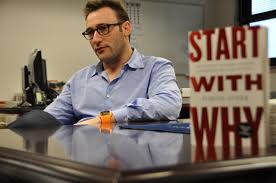
Book Recommendation: Start With Why by Simon Sinek

Image Source: amazon.co.uk

Buy The Book Here

Why Read This Book

This book elegantly explains the importance of knowing your Why, which I believe is integral to living well, to be happy, successful and fulfilled. Defining your Why is an essential part of my Fullfilment Framework, a framework designed to help you live a fulfilling life.

Contents

INTRODUCTION: WHY START WITH WHY?

PART 1: A WORLDS THAT DOES NOT START WITH WHY

  • Assume you know
  • Carrots and sticks

PART 2: AN ALTERNATIVE PERSPECTIVE

  • The golden circle
  • This is not opinion, this is biology
  • Clarity, discipline, and consistency

PART 3: LEADERS NEED A FOLLOWING

  • The emergence of trust
  • How a tipping point tips

PART 4: HOW TO RALLY THOSE WHO BELIEVE

  • Start with WHY, but know HOW
  • Know WHY. Know HOW. Then WHAT?
  • Communication is not about speaking, it’s about listening

PART 5: THE BIGGEST CHALLENGE IS SUCCESS

  • When WHY goes fuzzy
  • Split happens

PART 6: DISCOVER WHY

  • The origins of a WHY
  • The new competition

 Summary

This book explores what it means to have a Why, which is the purpose behind all that we do. It is essentially a sum total of how we were raised and our experiences up to adulthood; it is who we are as an individual. We only have one Why and the level at which we can best use our Why to live a fulfilling life depends on our depth of understanding of it and if we can articulate it.

Simon Sinek used examples from business and history to explain the importance of knowing your Why. He explains what he calls the Golden Circle, which illustrate how we think and make decisions, we go from Why to How to What. He goes to discuss the impact of knowing your Why can have on leadership and how important it is to take care of those around us, especially if we are in a position of leadership. Also, the way that success can make our Why fuzzy and we can potentially deviate from our Why, as individuals and as a company, which causes problems. Therefore it is important to keep our Why in central focus to avoid getting lost.


New Beginnings: It Takes Courage

“Fear wins or freedom wins. And so let us ask ourselves, will my life be about aversion or ascension?” 

Brendon Burchard

In our lives you could argue that every moment is a new beginning, in which we always have a choice in how we respond to the circumstances we find ourselves in. Perhaps a choice of either Fear or Freedom, often a difficult choice to make when the harsh realities of life seem set against us. This is the question that connects the two opening chapters of the book The Motivation Manifesto by Brendon Burchard.

The first chapter is entitled On Freedom and the second is entitled On Fear. The opening words in the third chapter, On Motivation, sum up the opening message of this book. “The dominant motives of Humankind involve either freedom or fear; there are no other pathways in our psychology. One demands engagement with our true self and ambitions, and inevitably leads to independence, growth, happiness, and transcendence. The other causes us to skirt around challenges, avoiding struggle as much as possible – despite struggle often being the very thing required for growth.” [The Motivation Manifesto by Brendon Burchard, page 51]

Whether you agree with this or not, it does bring up the question of how we ourselves respond to the events within our lives. Do we respond with the confidence to tackle the challenges in our lives or do we avoid conflict and therefore forfeit the potential rewards that lie on the other side of these challenges, if we were to tackle them rather than run from them?

We each have our own ways of making decisions, of dealing with the demands that beset our lives. So, what is your default setting, so to speak, when you are faced with a challenge? Most of us are not aware of the how and the why of our decision-making process. It is not until we start to question ourselves, and start to observe ourselves that we get a sense of whether we fall prey to fear or if we embrace freedom.

It has been said that every moment is full of potential and all around us there are metaphorical doors opening to new possibilities, but most of the time we choose not to take opportunities when they appear in our lives. We are too busy, we don’t want to deviate from what we are used to or we are just uncertain of what the outcome might be. When we do take opportunities that come our way, things can go wrong for us, but wonderful things can also happen too.

You may be thinking that it is all well and good suggesting that we take more opportunities when they come our way, but how do we know which opportunities will bring positive results and which will bring negative results? Unfortunately, we don’t really know what the results will be until we walk through the doors of opportunity and see what happens. It is like the act of being brave, you have to do something that scares you, even though you may be terrified, and the bravery comes afterwards. The more opportunities we take the more experience we get and we start to realise which might be good opportunities and which might not be.

We can think about our experiences in similar situations and make a judgement call. It is the difference between intelligence and wisdom, you could say. Intelligence is knowing lots of things, but wisdom is intelligence plus experience. It is the culmination of trying and failing over and over until we don’t fail as often, because we have learned from our experiences and applied some intelligence to our decision making. This is why elders are so respected in so many cultures, because they have the experience that gives them wisdom. I for one would someday like to be an elderly person who has made lots of mistakes, but has not been afraid to keep trying.

I think that as we get older we can develop an instinct for good opportunities, perhaps it is a little bit of wisdom. We can look at an opportunity and have a good or a bad feeling about it, and I think this can guide our decision making. I definitely feel that my good opportunity radar is beginning to work fairly well. I sometimes get the feeling that I should do something and I have tried to trust in this feeling and go with it and see what happens. Don’t get me wrong, it is scary trusting in these feelings, but in my experience trusting in my good opportunity radar has brought good things into my life.

This might be the divine in the world at work, guiding me, I don’t know. I like to think of these situations are karmic sign posts pointing to good things, as the Buddhist in me believes in karma. You may well see these kinds of situations in your own lives in a different way, depending on your own beliefs and experience. You may think that it is God guiding you or that there is no divine hand guiding you or anyone else. Whatever your theological beliefs I do believe that when we begin to trust our feelings about whether we should try something new, or take a chance, then we invite more positive outcomes and experiences into our lives.

Every moment is full of potential, there are doors of opportunity all around us, but it is up to us to walk through these metaphorical doors and try something new, whether this is a new job, a new relationship, rekindling an old relationship, a chance to learn something new or a chance to try something you have never done before, we will always grow as individuals. The outcome might not always be a positive one, but every mistake is an opportunity to learn in itself, even this can lead to making better decisions in the future and therefore a better future, as we become wiser with every mistake we make and every challenge we try to overcome. Go forth, try new things and keep going, and if you fall, fall forwards, pick your self up and try again.

Something To Think About

What opportunities are thee in your life that you are fearful of taking? How would it feel if you give it a try and it works out well for you?


Brexit: Them and Us

“Not one of us can rest, be happy, be at home, be at peace with ourselves, until we end hatred and division.”

– John Lewis

Them and Us

We have officially left the EU and have become an island unto ourselves. Times they are a changing, as the song goes, and it is important to reflect on the consequences of this change. There are two other growing parallel changes in the world as we move forward into the 21st century. Over the past few years, there has been a resurgence of nationalism is America and in countries across Europe, including the United Kingdom. Our departure from the EU has elevated the idea of ‘Britain First’ from the small conversations of the few into a more national conversation. You may have voted to remain or to leave the EU, you may now wish you had voted differently. Either way, we must be careful not to fall into the trap of thinking we are above or better than the countries of Europe, just because we say we are.

There has also been a rise in those who wish to protect our planet from the global, environmental crisis, which is becoming a movement that spans the world. This is being led by our youth, the ones who will be living in the world to come. They are trying to save their future, as the adults of the world appear to be trying to save their own national and personal priorities. Our strengths are always evident when we come together to achieve great things. Our weaknesses are evident when we separate into factions and try to take care only of our own.

Tribes

There is something inside human beings that pushes us towards trying to belong to a group. Wanting to belong to a group is a drive that is part of our evolution. In caveman times, it was safer to be in a group of people who would look out for our wellbeing; that would keep watch while we slept and would catch food so that everyone in the group could eat. Being part of a group, or a tribe, is a very human thing to do, and most of the time there is nothing wrong with this.

We support football teams, we belong to congregations, we are identified by the country in which we were born, the religion we follow, the ethnic roots we have. It is normal and adds to the variety of our communities and gives the individual, whether child or adult, a sense of not only safety, but also an understanding of themselves. However, what we need to be careful of is other people hijacking our drive to belong to a group, by setting us against people who belong to other groups. This is when we have real division, which then breads conflict. This happens in many places in the different areas of our lives; in the workplace, in schools, in social groups and in families.

Conflict On Demand

This is where division comes from, the dividing up of them and us. It happens with small groups of people and with countries, it happens with religions and with ethnicities, it happens between popular people and those who are not popular. We are fed conflict as entertainment, whether it is in the Big Brother house or characters in a soap opera, there is a pervasive message in modern culture that conflict between individuals or groups of people is entertaining.

If you think about the plays of Shakespeare, blockbuster films and programs on TV, there is very little that does not have a strong element of conflict. It would seem that there is a human desire to experience conflict, but when this spills out into our lives and we argue with other people, when we try to dominate other people or we create division between other people, this is when our actions and words bring conflict into the world.

The tensions and conflicts around the world, pose complex issues steeped in a human history of conflict across both national and religious lines, including the Crusades, the World Wars and the so-called War on Terror. What we need is exceptional leadership to guide us out of the darkness into the light. But that leaves people like you and me with a problem, what can we do to stem the flow towards division and conflict.

What Can We Do?

Well, what we do and what we say shapes the world we live in. Through our interactions we co-create our relationships, which in turn creates our society, which in turn creates our nations and our cultures. How we choose to live our lives will influence everything else, even if just a little.

What we need is a harmony revolution, because the only sensible way to counteract division in our own lives is to bring people together in harmony. By harmony I mean, to use a metaphor, the bringing together of very different instruments into an orchestra to create beautiful music. When we come together as human beings and we share what makes us unique, then we can collaborate, cooperate, and co-create. We can make the world a better place to be.

Often the best way to stop others trying to create an argument with us, or fight with us, on an individual level, is to not participate in the conflict, because then it fizzles out. If a fire has no fuel it will go out. A conflict needs two participating sides, if one side comes to the situation with peace, compassion and forgiveness, then healing can take place, because every attempt to create conflict does wound the other person, but if they do not retaliate then healing and harmony is possible. And when this happens, both sides are healed.

Those who are the angriest are the ones who suffer the most, because to be angry is to suffer. The best way to respond to anger is with compassion, because they are suffering, and compassion can extinguish anger. Nelson Mandela taught the world that forgiveness can free the soul and can break the cycle of fear and violence that can seem inescapable. There are inspirations in our global culture that lead us towards the light of freedom, forgiveness, compassion and love.

Healing Ourselves First

The words of the 1991 song by Micheal Jackson, Heal the World come to mind, “Heal The World, Make It A Better Place, For You And For Me, And The Entire Human Race.” And I believe that we can heal the world, one human interaction at a time, but we must start with ourselves. If we heal the divisions within ourselves; the prejudices and the grudges, we are more able to heal the divisions between ourselves and those in our lives.

I am not in any way negating the realities of the challenging daily lives in which we live. I am not assuming a totally peaceful Utopian ideal world is at our fingers tips either, but if each of us, in our own way, considers small ways in which we can connect more with our friends and families, neighbours and work colleagues on a more human level, this would be a great start. Taking the time, when possible, to make perhaps a bit more of an effort in ways that you may already be doing, to chat and ask after each other’s wellbeing, share a story or a joke. Our children and others will see this and perhaps change their own behaviour for the better.

Even though it seems such a small thing to do, there is evidence of efforts of this kind having a genuinely positive effect on those doing this and on those around them. So, I ask of you, in your own way, to have a think about what you can do, and what you may have thought about doing, along these lines, but have not done yet, because for one reason or another you just haven’t. Make that call to that friend or relative, knock on that door. Lift your head and give a sign of greeting and even stop for a quick chat with that neighbour or colleague at work. Connect with your eyes, words and smiles. Chances are the world will start smiling back at you a lot more often too.

5 Actions To Make 2020 The Best Year Yet

“Don’t mistake activity with achievement.”

― John Wooden

Figuring Out Your Beliefs and Values

This might seem a little too hippy for you to think about doing, but our beliefs and values are the prism through which we experience and act in the world. They are the reasons we do what we do and how we do it. If we believe it is wrong to steal we won’t, if we believe it is right to be generous then we will be.

Our beliefs are what we believe to be right and how we believe the world, and the universe, works. It is not just religious beliefs, which do also matter, but also beliefs about right and wrong, our morals and how people should behave. We also have beliefs about ourselves and how we allow ourselves to be treated. If we believe we are not worthy of respect, we will let people walk all over us, but if we believe we are worthy of respect, then we will expect it, or perhaps demand it.

Figuring out our values and beliefs sets the parameters for our lives. It gives us tools to navigate the world, to make good choices and will impact how our coming year and the rest of our lives will work out. If we don’t clearly define our beliefs and values we are kind of hitting and hoping with how we live our lives, which is certainly not a recipe for a successful, happy and fulfilling life.

Reviewing Your Priorities

Once we have our values and beliefs clarified we can set our priorities for the year ahead and look at how we are spending our time. If we look at our day or week we can see what percentage of our time we spend working, with friends, with family, engaging in hobbies, keeping fit, attending our place of worship, working on our goals etc.

Often we get stressed out because our life is out of balance. We sometimes spend too much time working or doing things for other people and not enough time for ourselves. Conversely, it is also not good to spend too much time doing personal activities and neglecting our loved ones or our jobs.

Finding a balance is a personal thing and therefore reviewing all the areas in our lives and thinking about what we care about is important. It may take a bit of time but it will mean your level of happiness, satisfaction and fulfilment in life will grow exponentially.

Removing The Bad Relationships

We all have relationships with other people, that is obvious, but the quality of those relationships matters. If someone in your life brings you down, makes you feel small, disrespects you on a regular basis or is just not good for you then you have two options.

The first option is to try and mend the relationship, to confront them on how they are treating you and stand up for your own wellbeing. All relationships should be built on equality and respect. They should include kindness, encouragement and generosity, if they do not then odds are they are having a detrimental effect on your wellbeing.

The second option is to cut them out of your life. If they are having a significantly negative impact on your life and confronting them on it either did not work or is not an option then they are not worth having in your life. Your life is wonderful opportunity to reach your full potential, to experience joy, success and fulfilment. No one has the right to get in the way of this and it your responsibility to manage your relationships, no one can do it for you.

Cultivating The Positive Relationships

On the flip side, we all have relationships in our lives that are very positive. People who give us love, encouragement, support and their time. These are the people we should be building our relationships. It can be easy to take these people for granted and assume that they will always be our friends and partner without any effort to cultivate these relationships.

However, if we do not spend time with these people, ask after their wellbeing, support them when they need us, and be a good friend or partner then we will grow apart and friends become acquaintances and partners move out of our lives.

it is also important to maintain and cultivate our relationships with workmates. These are people we spend a significant amount of time with and in order for the companies we work for, the team we work with and for us to thrive we need to build strong relationships with trust, loyalty and collaboration. All of these come from spending time with each other, face to face. Human being are social animals and we only trust people we know. We cannot do this over social media or by video conferencing, etc.

Reverse Engineer Your Dreams

We all have something we want to achieve, something big that lingers in the back of our minds, but seems too big to be able to get done. We usually tell ourselves that we will get around to working on this goal but life always get in the way. The reason we are not working towards this goal, whatever it might be, is that we are not prioritising it, we are not allocating time for it.

This might be because we have a mega busy lifestyle or it might be because the goal seems too big and we don’t think we will ever achieve, so we never start it. The first reason can be solved by breaking the goal into very small chunks and find time to slot these in during our day. For example, if you take public transport this is a perfect opportunity to read up on the goal in question or write assignments, notes, plans, etc.

The second reason is a lack of self belief. Depending on how deep this is you might just need encouragement from others or you might need something like Cognitive Behaviour Therapy if the issue is based on underlying bad experiences. If the latter is true there is no harm in seeking professional help to improve your well-being and quality of life, it can really help and is private.

Also, for the first reason asking someone who has a positive impact on your life to be an accountability partner can really help. Someone who knows your goal and who can check in with you on a regular basis to see how you are getting on and to give you encouragement and tips.

All of this is good, but you also don’t want the journey to your goal to take too long, so you need to speed up the process. To do this I recommend finding someone that you admire that has achieved the goal that you are seeking to achieve and study how they got there. Then you can reverse engineer the steps they took and take the same steps.

Some of the steps might not be applicable to you, or be things that are not available to you, but it will give you a road map. It will take some creative thinking and persistence. Once you have a plan it is important to set daily, weekly and monthly goals. Have a check list for time-frames like 3 months, 6 months, 1 year and 5 years. Take a course, read books, listen to podcasts, whatever it takes, you can do it. Have faith in yourself and go for it. We regret what we do not do more that the things that we do.

When you are at the end of your life in a nursing home don’t let this goal be a regret you wish you had tried to achieve. Good luck my friends, you can do great things with effort and persistence.

Something to think about

The limits we have in our lives are often created by ourselves, based on what we think the world expects of us. These limits are flexible barriers that can be changed or even removed. You are in charge of your reality.

The Foundation To A Life Well Lived

“Time well spent leads to life well lived.”

― Martin Uzochukwu Ugwu

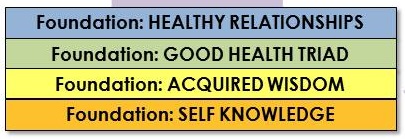
I have been working on my Fullfilment Framework and have made some developmental changes to it, which I will unveil fully in another blog post. I would like to focus on just one aspect of this new framework model in this post. That is the Foundation.

The Foundation is now made up of four sections, with the new addition of Healthy Relationships. This means that the four sections are Self Knowledge, Acquired Wisdom, Good Health Triad and Healthy Relationships. I realised through reflection and exploring what makes life fulfilling that I had omitted a significant aspect of all our lives, which is the relationships that we have. I will go into this in more detail later in this blog post.

Self Knowledge

I have put Self Knowledge at the bottom of the Foundation, as I believe self knowledge is the rock upon which we can build the foundation of our lives. If we do not know ourselves well then how can we know what we want out of life, what we value and what we believe. Self knowledge is the basis of what we think, say and do. If we do not have a good understanding of ourselves then we will be guessing what we want out of life and everything in it will be half-hearted and will not bring about fulfilment. We will also be living life either reacting to the events within it, not really having any direction or plan, or we will be living out other peoples plans for us, and our true selves become lost in a life wasted.

It has been a philosophical imperative since the days of Socrates to “Know Thyself.” It is also sage advice, as it will dictate what we get out of life, and whether you believe we only have one life or not, if we follow the path of others and do not explore what makes us who we are we will likely not spend our lives well, because we will not be forging our own paths through life.

Acquired Wisdom

Self knowledge will only get us so far in life. It will help crystallize what we want out of life and how we want to live, but we can still make mistakes along the way. Part of a life well lived is being wise about the choices we make and how we spend our time. The wisdom of others can help us here.

Whether you are a religious person or not our human history is filled with the words of wiser people than us. The wisdom of humanity comes from religious and philosophical writings, from scientists, from the native peoples of the world and from our own parents.

It is important not only to listen to the wise words of those around us, but also to become avid readers. Acquiring the wisdom of others and applying it to our lives can mean that not only do we not have to rely solely on trial and error, but also we spend the time we have exponentially better. It helps us live more deeply and to be able to look back at the end of life and say we lived well.

Good Health Triad

The Good Health Triad is three areas where we should aim to have good health in order to have good wellbeing. The first is the most obvious, it is good physical health. Going to the gym once in a while won’t be enough. We need to consistently exercise to our level in ways that are not detrimental to our health. For some gentle and often is better, especially if they are physically disabled. For some running marathons is good for them. Find your exercise routine at your level.

This also means a good diet. Not just eating everything that we are told is good for us, but rather figuring out the best diet for your body. This could be more vegetables than fruit to keep your diet more alkaline than acidic, it could mean spicy food or not, it could be dairy free. There are lots of options. This involves research, listening to your body and trying different types of food. Most diet advice is good, but don’t go for every fad diet that pops up in the media. Find your best diet and go to see a nutritionist if needs be.

The third element of the Good Health Triad is good energy health. As Chinese medicine discovered a long time ago, and Western medicine is slowly accepting, we have an energy system that allows Qi or Chi to flow along the meridians within our body. Much like our blood flows through our veins and nerve signals travel through our nervous system, our Chi flows through our meridian system. If our Chi does not flow freely or is unbalanced our health deteriorates.

Practicing Qigong or Tai Chi every day can help, as well as going for Acupuncture or Qigong Acupuncture, which is done using the practitioners own Chi instead of needles, will help to maintain good, healthy Chi. Ensuring we cover all three areas of this Good Health Triad will mean we live longer and feel better, so we are more able to achieve what we want to achieve, do what we want to do and live fulfilling lives.

Healthy Relationships

We all have relationships, with our family, our friends, our partner, our work colleagues, and so on. Some relationships are better than others, but I would argue that they should all be healthy relationships. What I mean by this is ideally we should not have any relationships in our lives that are detrimental to our wellbeing. Relationships that cause us stress, anxiety or self loathing need to be removed from our lives. Stress is something that can have such a negative impact on our health that people can die due to the consequences of stress on their bodies.

Those we have relationships with, in whatever area of our lives, should lift us up and make us feel connected. They should make us feel like we are part of something, a collective of good people. Our relationships should make us happy more than sad.

We should also try to cultivate our good relationships so that they grow and become stronger too. All relationships need maintaining through spending time with those people, finding out what is going on with them, being there for them when they need us and not only caring about ourselves.

The biggest barrier to healthy relationships in our current culture is mobile phones and tablets. People are spending more time on their devices than with each other, even if they are together they are looking at screens. If there is a momentary lull in the conversation there is an urge to pull out our mobile phones and scroll through our social media feeds.

Relationships are built on the little moments between other things, when we are waiting for a meeting to start or for a bus to arrive we can strike up a conversation, ask how someone’s day is going, etc. This is how we build strong, healthy relationships. We should also avoid things like gossip, which are corrosive to trust and cooperation.

Something to think about

What three changes will you make in line with this Foundation to improve your life and wellbeing in 2020?

Stepping Into The Unknown

“How can you know what you’re capable of if you don’t embrace the unkown?”
― Esmeralda Santiago, Conquistadora

In life there are many avenues to go down, many paths to take, or not as the case may be. Some of these paths lead to dead ends and some to wonderful opportunities. The challenge we have is that we never know beforehand, for certain, if making a particular choice will bring a positive outcome or not. Each time we are stepping into the unknown. We can, however, as the saying goes, learn from our mistakes and use our experience to weigh up the options and then make a decision. Some say we should go with our gut, with what feels right, but if this is not tempered with wisdom and experience, then we will only be following our instincts, which are primed for survival, not necessarily leading a fulfilling life.

The unknown could be a new job, a new relationship, trying a new hobby or something that changes lots of things in our lives, like moving to another town or city. We make these sorts of changes every day, but they still come with uncertainty and some anxiety. Each new change begins with a decision and leads to more decisions along the way. I would argue that no approach to making decisions is the best or the worst, as we each live individual lives and we are all individual people, but there are some things that can help when we are stepping into the unknown, which I will come onto in a moment.

However, first of all I would like to explore why we might feel the need to step into the unknown. It has long been part of the human spirit to push beyond our boundaries into uncharted territories. Human history is full of examples of men and women that have strived beyond the boundaries of their day to create new innovations and break records, whether this is manned powered flight or reaching the South Pole on foot.

For most of us such challenging goals are not things that we aim to do, partly because we are interested in other things and partly because we have commitments in our lives that need our attention and focus. That being said, we all have things that we are passionate about, things that we would happily do for free if time and circumstances permitted. This is the unknown territory that I want to talk about today, the venturing into the things that we are passionate about. Often, we don’t jump into our passions because we have responsibilities that we feel we must commit to or we lack the confidence to do so.

More often than not we do not follow our passions because we have had bad experiences trying new things in the past and we think that the same thing will happen again. There is an important principle connected to this that I have recently been trying to apply in my life, which is that the past does not equal the future. A lot of people, including myself, are held back by failure, because based on past experience we expect to fail again. The problem is that we see failure as a negative thing because of our past experiences. If we accept that we will fail sometimes then we can employ all of the resources that we have to make it work and to succeed.

We also live in a time when almost everything is instant. Whatever it is you want to buy, often there is an option to have it delivered the same day. We can do our banking on our mobile phones, we can send an email to someone and they will receive it a few seconds later, no matter where in the world they are, as long as they have an internet connection. Innovation has made our lives a lot more convenient, but not easier. This is because we expect everything to be instant, but many of the important things in life take time and effort. For example, relationships take time and effort to become strong and durable through the ups and downs of life. It is the little moments of asking how someone’s day is going and caring about the answer, of engaging in small talk in the moments between doing other things. These things help to build strong, healthy relationships.

Too often we are spending time with people without spending time with them. I’ve seen couples at restaurants where they are both on their mobile phones and not looking at or communicating with the person they came to the restaurant with. It has become an accepted thing to do to scroll through our Facebook feed on our mobile phones, instead of making a connection with the person we are with. This has had a knock-on effect that means young people are finding it difficult to build relationships, because the social skills that are normally built up through trial and error as a child cannot be practiced if they are looking at a screen and not a person.

Failure also seems all the more magnified because if we expect things to be instantly successful, and if we fall at the first hurdle, we give up. We are becoming conditioned for insecurity when we should be conditioned to fail our way to success. I guarantee that every successful person who is famous for their success has failed more times than most other people have tried. It is not about how many times you get knocked down, it is about how many times you keep getting up and try again. Having this sort of mentality will enable us to stride forth into the unknown with the confidence to fail and try again.

For this to work, however, we need to have the right motivation. Wanting to be successful so that we can be rich is a motivation, but it will inevitably lead to an emptiness, because you cannot buy happiness. If, on the other hand, we want to be financially successful so that we can help more people live better lives, then fulfilment will be our reward. Motivation is key and it has to fit with our values and beliefs, this above all else is important, because to live a fulfilling life our thoughts, speech and actions should reflect what we value and what we believe.

But where do our beliefs and values come from? They are manifestations from the culture and community we grow up in, the examples our parents give us and how they raised us, as well as the education and experiences that we have had. Through all of this input we piece together what we believe and what we value. All of this then effects the decisions that we make on a day to day basis, but I believe that if we are to make wise decisions in life then we should be wisdom seekers, and I believe that wisdom can be found in any of the many religious scriptures and philosophical texts from around the world, amongst other places. If we have wise guidelines or principles to follow, then stepping into the unknown will seem less scary.

Something else that can help us in our ventures into the unknown is to have an attitude of asking ourselves “what if…?” What if we tried something new, what if we gave it a go, what if? Being open to the many positive possibilities that could result from trying something new means that we will more likely have a positive outcome. It is also a way of getting past the barrier of failure, a way to overcome our fear of criticism or looking like a fool; what if we succeeded, what if we achieved our dreams. This allows us to consider the possibility of actually succeeding, rather than becoming consumed by the thought of failure.

For me, this is a call to action, for us all to be a beacon of light, because we went first, we stepped into the unknown unsure what will happen, but with faith in the idea that there are benefits in both failure and success, and that our values and beliefs will guide us towards a better world. To strive for a world where everyone respects the inherent worth and dignity of every person. If we strive to be the light for those around us, then we will become beacons for good and we can dispel the bad in the world, bit by bit. It also means that others will be the light for us as well, this is what being part of a community and a fellowship is all about. If we can achieve this, then we can walk into the unknown and bravely accept what is before us on our path.

I would like to end with a poem entitled, Our Deepest Fear by Marianne Williamson, which speaks to what I have been discussing today. It mentions God in the poem, but if your beliefs that do not include God, then please think of the word God in the context of your own beliefs.

Our Deepest Fear
By Marianne Williamson

Our deepest fear is not that we are inadequate.
Our deepest fear is that we are powerful beyond measure.
It is our light, not our darkness
That most frightens us.

We ask ourselves
Who am I to be brilliant, gorgeous, talented, fabulous?
Actually, who are you not to be?
You are a child of God.

Your playing small
Does not serve the world.
There’s nothing enlightened about shrinking
So that other people won’t feel insecure around you.

We are all meant to shine,
As children do.
We were born to make manifest
The glory of God that is within us.

It’s not just in some of us;
It’s in everyone.

And as we let our own light shine,
We unconsciously give other people permission to do the same.
As we’re liberated from our own fear,
Our presence automatically liberates others.

Poem: Life’s Covenant

Infinite is our space and time.
Infinite is our consciousness.
Life blooms and fades, ebbing and flowing
from and back to the great eternity.
The Brahman, the Tao, the Emptiness,
the Universe, the Ubuntu.
Our divisions are all of our own creation;
Red versus Blue,
White versus Black,
Me versus You,
Us versus Them.
We were born of the flourishing planet
that we ride through the cosmos,
built from the elements of our eternal universe.
We exchange breath and energy and food,
our survival is a dance of coexistence,
our thriving comes from our collective
respect, cooperation and love.
We are intertwined and inseparable.
This is the truth under all other truths; we are one.
To create division seems to be a violation
of the very covenant of life itself.
Let us see others as ourselves and rise together
to our greatest happiness, joy and potential.

How To Achieve Your Dreams

Cherish your visions and your dreams as they are the children of your soul, the blueprints of your ultimate achievements.

Napoleon Hill

Imagine swimming through jellyfish and shark infested water for 53 hours without stopping. Imagine the training necessary in order to prepare to swim such a distance. There is a stretch of water between Cuba and Florida that is 111 miles that no one, since it became a goal in the 1950s, has been able to swim across. Diana Nyad is a marathon swimmer who had a dream of swimming this stretch of treacherous water. She has a team of around 30 people, shark experts, nutritionists, navigators, etc and they had tried 4 time before. She almost died on one attempt due to being stung by a Box Jellyfish.

In 2013 Diana Nyad at the age of 64, on her 5th attempt, made it across this stretch of water. The only person that I am aware of to have ever done so. Her mantra on this attempt was “Find a way.” She said in a TED Talk entitled “Never, ever give up“, where she talks about this dream and achieving it, that she is in the prime of her life at 64 years old, and I believe her. When she staggered up onto the beach in Florida after more than two days of constant swimming, she had three messages. Number 1, you should never, ever give up. Number 2, you are never too old to chase your dreams. Number 3, it looks like a solitary sport, but it’s a team.

Now, we are not all going to be endurance swimmers, or even want to be. The message is not about specifically what Diana did, it is about how she did it. She had a dream and rather than let the pursuit of that dream fall into apathy she studied everything she needed to know, she trained consistently, and she never, ever gave up. No matter what she found a way. We all have dreams, for some of us it is a hazy inkling of an idea, for some of us it is crystal clear, but for all of us the dream will not achieve itself. It takes drive and passion and consistent effort, and above all else the willingness to fail trying until we succeed. It is about failing our way to success.

In my opinion, life should always be a striving to live life well, to find fulfilment, joy and happiness, and to bring these things into other people’s lives as well. Life, like Diana said about marathon swimming, sometimes can appear like a solitary sport, but it takes a team. Our dreams are individual, but to achieve them it takes a community of friends, family and colleagues.

So, firstly we need to figure out what our dream is, something that is individual to us. Secondly, we need to research how we can achieve this dream. Thirdly, we need to create a plan to get from where we are to where we want to get to. Fourthly, we need act on that plan everyday, even if the steps are small. Fifthly, we need to look for and accept help from those around us, life is always a community effort. And lastly, never, ever give up.

Something to think about:

What dreams have you heard that others have that resonate with you? What do you value in life? What makes you happy? What pursuit could be your dream? Think about these questions and figure out what your dream is and how you can work towards it. #LiveDeeply my friend.

Responsible Social Media

“The greatness of a community is most accurately measured by the compassionate actions of its members.”
– Coretta Scott King

Terror Shakes The World

The recent terrorist attack of the White Supremacist who killed 50 Muslim worshipers, including a 3 year old child, and injured many more in New Zealand, has brought into sharp focus the realities of extremist ideologies in the world today, and how easy they can be spread around the world through the use of social media. The Terrorist streamed the attack live on Facebook, which was then played by several news outlets, after which they apologised.

The impetus with social media is always to share content that we have had an emotional reaction to, whether we find it funny, inspirational or horrifying. The outpouring of love and unity that has galvanised the New Zealand public in support of the Muslim community in their country has created collective inspiration to respond to hate with love. This is a message that should always be shared and encouraged, especially on social media.

The Wrong Message

The Prophet Mohammad and every other prophet across the multitude of world religions said that we should love our neighbour as ourselves and respond to hate with love. This message should be shared on social media to encourage such behaviour in others and to drown out the opposing views of hate and violence that are also spread through social media, including some heads of state like Donald Trump, who spreads divisive ideas through his daily barrage of tweets.

However, New Zealand’s Prime Minister Jacinda Ardern put on a Hijab and held the mourning survivors in a loving embrace. She also made a statement to their Parliament stating that the Terrorist was looking for attention and fame for his actions and extremist ideology, so she will never say his name. This is a powerful reminder to me that just as Politicians and news outlets have the responsibility to make wise decisions on whether they put a spotlight on the actions, motives and ideas of extremists, we too have a responsibility to do the same with the content that we share on social media.

Our Social Responsibility

Every time we share a negative comment, image or video on other people because of their race or religion we not only spread racist ideas we also create a space for this type of content to be acceptable. After the rise of extremist groups that call themselves Muslim who cite the oppression of the West on Muslims as justification for acts of Terror, it has become more acceptable to disrespect and insult Muslims, as if they were part of the problem. There is also a rise in Nationalism across the world, which has consequently encouraged racist comments and actions towards immigrants, who are largely fleeing the violence of wars that the West has a stake in creating in the first place. The Terrorist who attacked Muslims in New Zealand attacked them for being immigrants, but he was himself an immigrant from Australia. There seems to be a double standard depending on the colour of the immigrants skins.

Many White Supremacists, who are classed as Terrorists, are Christian, but we do not associate Christianity with Terrorism. This is because Great Britain and America are seen as Christian nations and it is part of ‘OUR’ identity. Muslims are seen as the ‘OTHER’, which in many people’s minds makes them fair game for criticism and attacks. Remember that the vast majority of world religions talks about loving our neighbour as ourselves. The American Declaration of Independence states “We hold these truths to be self-evident, that all men are created equal, that they are endowed by their Creator with certain unalienable Rights, that among these are Life, Liberty and the pursuit of Happiness.”

We Need Not Stand Divided

It is high time we started treating ‘ALL PEOPLE’ as our neighbours and to love them as ourselves, just like New Zealand did in the wake of this Terrorist attack. There will be exceptions where we come across individuals who act or speak in a way that is in direct opposition to our values and beliefs, but we can always disagree respectfully. If we disagree with the theology of other religions then by all means criticise the theology in the form of theological debate, with arguments for an alternative set of beliefs, but this should never extend to criticising someone because they are Muslim or Christian, Buddhist or Atheist. We all have the right to explore and follow our own beliefs.

It is our actions that we need to monitor and challenge when they infringe on the rights and dignity of others. We have to be responsible when we are deciding to share content on social media. There is an old Sufi maxim about our words passing through three gates before we say them, and I believe that we should consider them when we share content online. Each gate has a question, each of which is very important. These are the three questions.

  1. Is it true?
  2. Is it necessary?
  3. Is it kind?

If we can all be responsible on social media and we share only content that encourages love, compassion, community, inspiration and respect then we can drown out the hate. When Terrorists attack any of us they attack all of us. We are one humanity and, like New Zealand has, we can respond to hate with resounding unity. We can look into the face of those who hate and say not here, not in my community. We are shaped largely by our community because what is permitted becomes normal. We must never late hate become normal. Then we will all lose.

Something to reflect on:

I challenge you to find people in your lives that need a hug, a kind word, a good laugh or a listening ear and be the person who provides it. Lead by example and change your community, whether it be your family, your friends, your neighbourhood or your workplace, by being there for others. They will then do the same for someone else, it is in our nature to do so.

Are We Addicted To Our Mobile Phones?

“Gadgets helps the solo, not the soul.” 
― Amit Kalantri,Wealth of Words

Witnessing Addiction to Mobile Phones

Recently, standing on the platform of a tram stop waiting for my tram, I saw a lady walking along, headphones in her ears, watching a video on her mobile phone and hardly even looking ahead of her as she walked. My mind was filled with thoughts around how human beings have become slaves to our mobile devices, how we have become a society who craves instant gratification and how addicted we all are. Then, another lady walked passed a moment later holding up a book she was engrossed in as she too walked along the platform.

This stark contrast is only really a contrast in the source of their attention, rather than the activity they were engaged in.  It begs the question, are we missing life by becoming regularly absorbed by activities that do not promote good mental and physical well-being. In our western society, to get drunk and the morning after not remember what we did the night before is lorded as almost a badge of honour. To binge watch whole series of a program on our preferred online streaming platform is a common occurrence too.

Are We Zombies?

It seems we are losing the ability to just be, to be aware of what we are doing when we are doing it. Our search for activities that give us quick wins, and as a result, hits of addictive Dopamine, is turning us into zombies, of sorts. I say this as a fellow zombie, but seeing a lady walking along a tram platform watching something on her mobile, and not able to wait until she was at home or somewhere else more appropriate, and safer, woke me up to the realities of our current quick fix culture.

These observations also beg the age old question of how we should live. Should we follow the crowd and become absent from the world while we stare into our mobile devices, or is there a better way to live. There is some merit for living without the constant availability of entertainment. I am not sure I could do it, but will try to cut back on how much I watch things on my mobile phone.

There is also the question of what we watch. If we watch lectures on the merits of theological or philosophical positions, or we watch instruction videos to help us do yoga or learn a new skill or something else that improves our lives, is this not a good thing? I suppose mobile devices, and by extension social media, are tools that can be used to make our lives, and the world better, or they can be used to simply waste time, which we cannot get back. Time is a currency that can never be bought back. I use Facebook to try and create a community as an extension of this blog, to try and get people to help each other live well. Even social media can be a beneficial in our lives.

The answer to the question of how we should live, I would suggest, trying the improve the lives of others, to help others find meaning and to be happy, and if this means we use mobile devices and social media to achieve this, then I am all for it.

Something to reflect on:

If we let the things we watch, mobile devices and social media dictate our thoughts and actions, then we must ask are they in charge of our lives?

Making The Most Of 2019

“There is a plan and a purpose, a value to every life, no matter what its location, age, gender or disability.”

– Sharron Angle

Why new year resolutions are hard

At the first month of every year the same phrases are banded around, “new year, new you,” “make 2019 your year,” etc. It is also the time when we set new year resolutions that we rarely keep past the end of January. I think this is because we set resolutions that are picked from the collection of universal resolutions that are suggested by our culture. The key, I think, is not to find a resolution that we want to do, though this is important, but to figure out why we want to do it. Why do we want to lose the weight or give up smoking. What is our motivation?

Resolutions are typically hard to keep up, which is why we tend to give up on them a few weeks in. We will give up on anything that is hard unless there is a compelling reason to continue. This reason has to be either a serious one that affects our health or well-being if we don’t, or it is in alignment with our ‘why’, our reason for being.

Finding your purpose

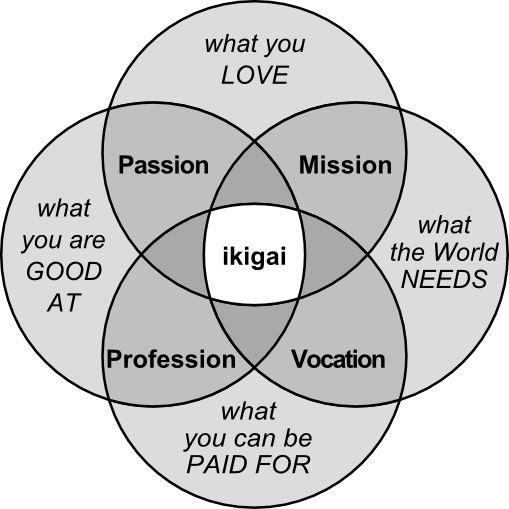
The beginning of a new year is always a good time to take stock of our lives, look back at where we have been and decide on where we are going, but more important, I believe, is to figure out our why. This is a key component of living a fulfilling life. I recommend that you have a look at something called Ikigai, pronounced ikee-guy. This is a Japanese method of figuring out your priorities and motivations, to find your purpose for being.

It works by asking you to put things from your life into a Venn diagram with four categories and four cross-over areas.

Finding Your Reason For Being

I found it beneficial to start with What You Love, then What You Are Good At, then What You Can Be Paid For and finally What The World Needs. Then to fill in the things that fit both categories in the cross-over areas called Passion, Profession, Vocation and Mission. This order worked for me, but you can do it in any order you wish. The aim of Ikigai is to figure out what your passion, profession, vocation and mission are, and they should be based on deep self knowledge. Ikigai is achieved when all of these are aligned with each other in your life. It is the sweet spot of purpose and being.

Once you have found your Ikigai you will have your mission, your profession, your vocation and your passion. Whatever order you decide to complete you Ikigai Venn diagram in, I believe that our mission should be the driving force behind all areas of our lives, it is essentially our Why. Your profession is important because it is necessary to work, so you can pay your bills, but it also affords the biggest opportunity to bring your mission to life, because we spend most of our time each day working.

If you are going to set a goal for 2019, if you have not already, I would work through the process of figuring out your Ikigai and find one big change that you want to make, something embedded in your Ikigai. If you do, it will bring into view the metaphorical mountain that you are going to climb. The summit is your destination, your life’s purpose will show you a big achievement that you want to complete. Once you figure this out you will be at your base camp looking up at your mountain.

Finding a mountain to climb

Next, plot your path to the summit. Like all good mountain climbers, reverse engineer your journey from the summit back to the base camp and then get started. It is time to take the metaphorical mountain that you have been putting off or have not been aware of. Once you have a big 2019 goal don’t let yourself get in the way. Build rituals and habits that support your climb and jettison your unhelpful habits. And don’t forget to use your Ikigai Venn diagram as your compass, because every decision, your thoughts, speech and actions, should come from your Ikigai diagram.

This might all seem like a big undertaking, but remember, small steps count too, as long as you are going forwards. Draw on the support you have around you and find someone that you trust to share your big 2019 goal with, so they can be your accountability partner to keep you on track. Many believe that you only get one life, but even if you believe in reincarnation, it is best to make the most of this human life. I wish you good Ikigai my friends, so that you can live blessed lives in order to be a blessing to others.

Something to reflect on:

Purpose in life should be an equal balance of following our heart and making the world a better place than it was the day you were born into it.

Bring on 2019

“Everything can be taken from a man but one thing: the last of the human freedoms—to choose one’s attitude in any given set of circumstances, to choose one’s own way.” 

– Viktor E. Frankl, Man’s Search For Meaning

Bad experiences 

Many of us, if we think back to our childhood, our teens or our early adulthood, we can think of bad experiences that we have had, like bullying, breaking an arm or leg, parent’s separating or big disappointments. I sincerely hope these experiences for you were not too traumatic, but I feel safe in saying that no one grows up without some of, what we could consider to be, bad experiences. Often these bad experiences involve being embarrassed, upset, humiliated or injured.

All of the bad experiences we have get carried around by us as we grow, mostly unconsciously, metaphorically speaking. They even have an impact on our day to day decisions and on our relationships. They become part of the prism through which we see the world.

Fear of the past becoming the future

These bad experiences can become underlying fears or anxieties that shape our behaviour, sometimes in unusual ways. We often gravitate towards  what we know, even if it is bad for us, because it is familiar, it is not the unknown, which we can be the most afraid of. In evolutionary terms we have a deep, ingrained suspicion of the unknown. Historically, this has kept our species alive. To be suspicious of a shadow could mean that humans avoided being eaten by wild animals. Today, we are often suspicious of other people’s motives when they are nice to us or of experiences that are alien to what we have experienced before. 

However, this suspicion becomes a present fear when it comes from a bad experience we have had in the past, and if we allow it to remain unresolved in our minds the fear can grow and become a barrier to our happiness and success. The fear manifests as anxiety, and the more extreme the bad experience the greater the anxiety usually, especially if there is an unknown element to the situation that we are anxious about.

Attitude is everything

Something that has helped me overcome my anxieties is to figure out the unhelpful belief that is creating the anxiety. Often this is unconscious and some work is needed to figure this out. Writing a journal about your anxiety can help. Once we have the unhelpful belief we can then find a belief that will act as an antidote, something we can use to replace the unhelpful belief.

An important way to think about all of this is that often we let our bad experiences in the past control our present and our future. We let the drive to avoid experiencing the same bad situation dictate our decision making and the things we say and do. We let our past control our future because we, whether unconsciously or not, believe that our past will be repeated. But I am here to tell you that your past does not equal your future. We have more control than we think about what our futures will be like, because our future is largely a result of our decisions, actions and behaviours of our present.

It is true that our present is a result of our past, and we cannot control or change the exact present moment, because of this, but we all have control over how we respond to the present and what our future will be like. In any situation the one thing we can always control, if we practice enough, is our attitude. Even in the Nazi concentration camps, in the most dire of situations, there were inmates who would go around making sure everyone else had food, water and whatever minor comforts where available. As evidenced in Viktor Frankl’s book Man’s Search For Meaning, which documents his experiences in such a camp.

Taking on a newyear

So, if 2018 was not a particularly good year for you it does not mean that 2019 will be the same. The same is true if you had a good 2018. We cannot control everything that will happen in our lives, but if we firstly control our attitude to the events in our present and our past experiences, we can live positively and make positive decisions in each moment to make our future’s as awesome as they could be.

If we develop positive beliefs that we use to replace negative beliefs we can build our resilience to the difficulties in life, so we can rise above them and begin to fly. It is not about how many times we get knocked down by life, but rather the act of getting up every single time and taking on whatever lies before us on our path.

In 2019, build up your resilience, grow your relationships, build up your health, and seek opportunities. The opportunities are always there, but we have to have a positive mindset in order to see them and then take advantage of them. The world needs the things that only you can bring into it. You are needed to make the world a better place. I wish you a happy new year and an awesome 2019 and beyond.

Something to reflect on

Normally at this time of year we set new year resolutions, which we often do not continue with beyond January. However, I suggest you endeavour to have a positive attitude whatever the circumstances, however difficult this may be.

Having a generous spirit

“You often say, ‘I would give, but only to the deserving.’ The trees in your orchard say not so, nor the flocks in your pasture. They give that they may live, for to withhold is to perish.”

– Kahlil Gibran, The Prophet


Christmas Spirit

Christmas is always a time for giving. Whether it be the cultural act of gathering and giving presents or the big push by advertising companies to get people to buy their products as Christmas gifts, there is no getting away from it at this time of year. It is a time when we put a lot of thought into the gifts we buy for our loved ones, because we want our gift to make them happy, to make them smile when they open it. The good feeling is a shared experience; they feel good when they get something they want and we feel good to see them so happy.

It is not the gift itself that makes us happy, as such, it is largely the act of giving and receiving that brings out our happy. So why is it that we are not as generous, generally, throughout the rest of the year. Obviously we cannot afford to be buying presents for people all year round. However, if the real meaning of generosity is in the act of giving, then we can choose how we are generous in ways that do not cost any money at all. They do however cost time and energy, two things that we all have.


Generosity is a Mindset

At any time we can give someone a smile, we can actually listen to someone, we can ask how someone’s day is going and care about the answer, we can help someone carry their bags up some stairs, we can hold the lift doors open so someone who needs the lift doesn’t have to wait for the next lift to be available, we can complement someone, we could wish someone good day, we could give our time to help someone with something that we are skilled at and they are not. There are countless things we could do to give our time, our energy and our words.


“Imagine if we could spread a little

happiness just by being nice to other people.”


As we gather together this Christmas and become more generous, loving and sharing let us begin to imagine what the world would be like if we treated everyone with the same love and respect as we do our own loved ones. Imagine if we could spread a little happiness just by being nice to other people. Imagine how happier you will be as a result of so much giving. We feel good when we give, so let us bring the Christmas spirit into our hearts and let it linger there beyond the New Year and on for the rest of the year.


Give more smiles, wish more people well, and if you are someone who prays, pray for everyone we encounter who is going through difficulty, even those we do not get along with. To be angry, jealous, frustrated or sad is to suffer, so let us spread a little love and start a generous revolution. Our world is shaped by how we interact in it, so let us shape our world to be a kinder, more loving place that we all want to be a part of.


Something to reflection on:

The way we perceive the world is our reality. Our actions in the world help to build someone else’s perception of the world. Positive thoughts, words and actions can change the world for others and ourselves.

Fearlessness is a dangerous road

“I learned that courage was not the absence of fear, but the triumph over it. The brave man is not he who does not feel afraid, but he who conquers that fear.”

– Nelson Mandela


Fearlessness

In our culture today there is a great emphasis on the need to be fearless. It is found in common turns of phrase, the media. It is also found in advertising, whether it be men’s aftershave or energy drinks, the word ‘fearless’ is banded around as if it was held at the same level as integrity or fortitude. I think we are mistaking being fearless with having courage, and they are not the same thing. The problem with being fearless that it encourages us to mask or block out our emotions and to discount our very natural physical responses to danger and stress, responses that have developed throughout the evolution of human beings in order to keep us safe.

If we were truly fearless then we would have no fear of running in front of a car or train, or skydiving without a parachute. These are extreme example, but this is the point, to be fearless means that there is less preventing us from going too far and putting ourselves  and others in danger. It would be profoundly stupid to skydive without a parachute, and our intellect and experience would tell us that this would not be a good idea. However, there are situations that have unknown aspects and if we leap without looking, without consulting our intelligence, our experience and our capacity for rational thought then we do not know if we are putting ourselves in danger. A balance is needed.

The other extreme is to be so paralysed by anxiety that we do not try anything new and we retreat into our selves, even becoming housebound by our anxiety. I have had my own challenges with anxiety, that caused me to have pain in my chest and my hands to shake when in certain circumstances. This is not a good place to be, to put it mildly. As I have worked through the roots of my anxiety and developed strategies to reduce it, I have found a profound truth about fear that can put us on a more even keel. Fear is an essential part of our defense mechanism, it is integral to our survival, but it is supposed to appear when we are in danger and then dissipate when the danger has gone. To use a well worn example, if our cave man ancestors mistook a rock for a tiger in the long grass, causing then to run fast in the other direction, they would be safe. If they mistook a tiger for a rock and didn’t run, then they would have been the tiger’s lunch.

Finding A Better Path

Some of this is obvious to point out, but I feel in a climate and culture where being fearless is seen as a lordable quality, especially in men, then I think the obvious truth of the situation needs to be pointed out. We should not be pushed into either being fearless or to living with anxiety, a middle road is needed. There is one quality that I feel should be the focus of our intention in life, and that it the quality of courage.

Courage is not the same as being fearless, it is in fact acting in a positive way in spite of fear. It is feeling the fear and doing it anyway. As Nelson Mandela tells us “…courage was not the absence of fear, but the triumph over it.” This of course needs to be reserved for situations that are not life threatening. We are are not, after all, talking about being a soldier or anything like that. I am talking about having the courage to go to job interviews, to tell someone that we love them, to stand up to those who bully us, to stand up for what we think is right, to follow our dreams, to try and improve our skill-set. All of these things are about living a fully, deeper life.

I do think that it is important to try new things and to push past our current limitations, to grow and improve our skill-set, especially in our careers. To live at the edge of our skill-set is a very courageous thing to do. There is also a very important reason we should try and get very familiar with the things that scare us in life. If we run from the things that scare us then we internally harden our hearts. We close down our compassion and we restrict our love. We close ourselves off from having meaningful, deep relationships with people. The people we care about becomes limited to family, friends and those who share our beliefs and values. We become tribal and divided, we get aggressive,  even violent in extreme cases. We become part of the problem that divides up the world into us and them.

If we can extend our compassion to include others we disagree with, those who look different from us, even those who treat us badly, then the world will be better for it. Be warned though, it take courage to love your enemies, but if you can do it, then you will have no enemies.

Something to reflect on:

If you can get familiar with the things that scare you, and have the courage to live there, then the fear will dissolve and you will be stronger for it.

How to find fulfilment

“Your soul is the power and

core of who you are.

Feed it well.”

– Anonymous


Recently I have been reflecting a lot on what is meant by fulfilment, whether it is selfish or generous to seek it. How it is that we might find fulfilment and what it actually is. As human beings, we are all unique in our likes and dislikes, our personality and our passions, our behaviours and our tendencies. So, it makes sense that fulfilment would be an individual attainment, it would not be the same for everyone.

cropped-the-fullfilment-project-logo-profile-pic-black-white-red-v32.jpg

Since February last year I have been writing this blog about fulfilment, which I call The Fullfilment Project, with Fulfilment spelt with ‘FULL’ at the beginning, to signify a full life. I have been exploring happiness and success and what they mean in relation to fulfilment and I have come to believe that for fulfilment to occur we need to have both happiness and success, which to some degree is obvious. However, many who are looking for either happiness or success, I believe, focus on unfulfilling goals, as they are misguided by our culture and unhelpful beliefs. I am not now or have I previously claimed to have figured out the way to find fulfilment, I am an explorer looking for answers by asking questions and diving into hypotheses, and I have found some conclusions along the way, which I would like to share with you in this blog post.

I have created what I call a Fullfilment Framework, pieces of the puzzle of how to live a fulfilling life. These are drawn from personal experience and meditations, as well as seeking wisdom from both secular and religious sources. Wisdom comes in many forms, but it is still wisdom. In order to live a fulfilling life, I believe we need to begin with a good foundation, which is the core of a life well lived. There are three things I think we need in our fulfilment foundation.

Firstly, we need good self-knowledge, a deep understanding of ourselves, through self-reflection, knowing our values and beliefs and being tested in difficult situations and seeing how we deal with them. Secondly, we need acquired wisdom. Self-knowledge is not enough to guide us on a fruitful path, we also need to be steeped in wisdom, from secular, philosophical and religious sources. Thirdly, we need what I call the Good Health Triad. This is focusing on building for ourselves good mental health, good physical health and good energy or Chi health. Chi is an Eastern word for the life energy that flows within us and to have good health we need good Chi. All of these things we cannot do alone, we need friendships, companionship, and sometimes professional support, we need to learn good dietary and exercise habits and ways to boost and maintain our chi, all of which are good things.

From this Foundation comes our values and beliefs, which are like a prism through which we see the world, through which we think, speak and act in the world. The next level of finding fulfilment, I think, is to find out our ‘why’, our reason for doing all that we do. It is the purpose that guides us, distilled from our values and beliefs, from our self-knowledge and acquired wisdom. It can be difficult to figure out our ‘why’ with clarity. Often, we borrow from quotations or religious and philosophical ideas. I attend a Unitarian church, which was built on the idea that each individual person has a right to explore their own theology, to search for their spiritual truth rather than be told what The Truth is. All Unitarians connect with that, which is why they gather together and attend a Unitarian church. However, for each of them this may not be their personal ‘why’, because everyone is an individual, with different histories, experiences, values and beliefs. This is why I believe it is so important for each of us to search for what we believe our purpose to be in this life. It should be our North Star that guides us through both the calm and the troubled waters of life.

“…our North Star that guides us through both

the calm and the troubled waters of life.”


Simon Sinek-Start With WhyThen, when we discover our ‘Why’ we must discover how we are going to bring this ‘Why’ to life in our day to day lives. This is what I call our ‘Way’. In his book, Start With Why, Simon Sinek sets out the importance of finding your ‘why’ in order to live a purposeful life. He talks about how companies also need to clearly define their ‘why’, companies such as Apple have a clearly defined Why, to empower the individual against the big system. He also gives individual examples of Martin Luther King Junior who gave the “I have a dream” speech, not the “I have a plan speech”, as Simon Sinek puts it, and the Wright Brothers, who figured out powered manned flight for the first time, working out of their bicycle shop, with the intention of changing the world with their invention.
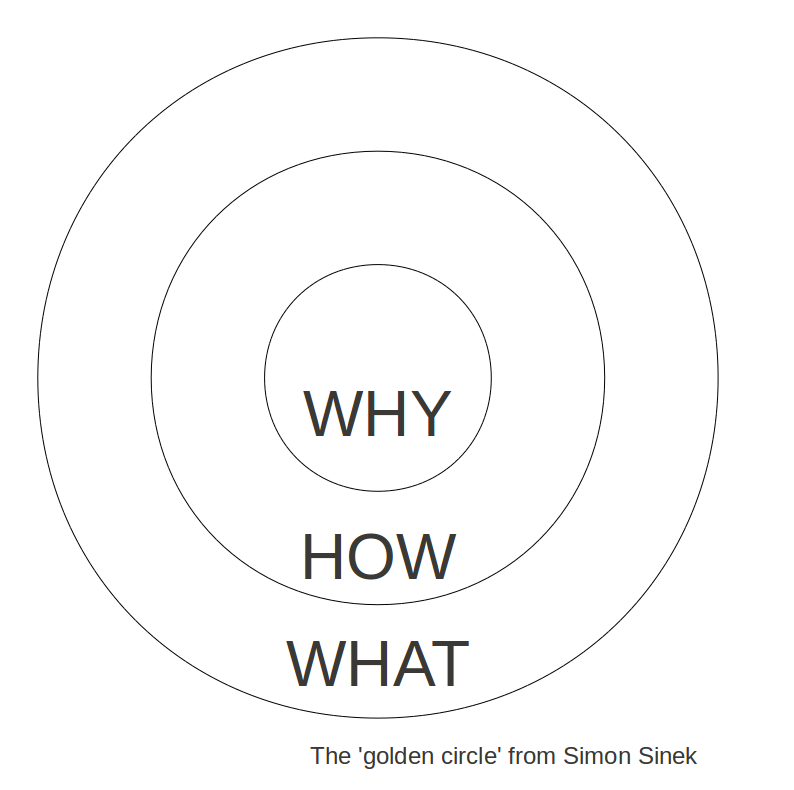
Simon Sinek says that we need to have clarity of our why first, then we can work outGolden_circle ‘how’ we express this why and then finally ‘what’ we do to prove the why we have. He calls this the Golden Circle, in the centre is the Why, then next the How and on the outside of the circle is the What, and it looks a bit like a bullseye. The important point here is that our human brains work from the why to the what when making decisions. The part of the brain that is responsible for decision making and our feelings like trust and loyalty is the Limbic Brain, which has no capacity for language. This is why we more easily agree with things that match our values and beliefs, not the details and the factual information.
My personal exploration of fulfilment has led me to a phrase that has hit home for me. The phrase is “To help others find fulfilment is to fulfil what it means to be human.” When this phrase first popped into my head I dismissed it as flippant and without substance, but through further reflection and meditation on this I have come to think that it has a certain depth to it that I did not initially appreciate.

“To help others find fulfilment is to

fulfil what it means to be human.”

On an evolutionary level we have evolved to be social animals, and during caveman times there would have been some in the group hunting and gathering food while others in the group would perform other functions for the survival of the collective whole. We evolved to have what Simon Sinek describes as a circle of safety, that everyone in the tribe made sure that they were all protected from the dangers outside of the tribe, whether this be the weather, dangerous animals or the scarce food and resources. It is hard-wired into our DNA to uplift those in our tribe, whether this is our family, our team or our congregation.

To encourage us to behave in a way that supports the tribe, evolution gave us some hormones that control certain behaviours. Our bodies produce Dopamine when we make achievements, it is an incentive to progress and we get a hit of Dopamine whenever we hit a milestone or tick something off our to-do list. Our bodies produce Serotonin when we perceive that others like or respect us. Our bodies produce Oxytocin when we are with our closest friends or trusted colleagues, it is the feeling of friendship, love and deep trust. All of which feel good.

The point I am making is that we have evolved to have hormones that actively encourage us to build meaningful, deep relationships, to strive for progress and try and get the affection and respect of those we care about. In other words, to feel happy and successful, on a biological level, we need other people. We need friends and family, loved ones and people we love. These relationships are key to living a fulfilling life. There is a problem though when we actively look to get these feelings that come from these hormones in unhelpful ways. For example, when we use social media and we get a like or a notification we get a hit of Dopamine, which feels really good, so we do it more, effectively replacing people with a device.

Life is beter in flip flopsAdvertising companies tell us that we will become either happy or successful if we buy their product or service, only to be told a few months down the line that a new product or service will do the same, but neither a product or a service will make us happy, as they are invariably transient, they change or break and the happiness promised is really only excitement and joy. We are often told that the measure of success is the amount of money we have or the amount of things we own, but it really does depend on how we measure success, as individuals.

I believe that success is very much intertwined with happiness and that you cannot have one without the other. As human beings we are hardwired to strive after progress, but if we are deeply unhappy or depressed, progress is not a clear focus for us. So, you could say that we need to be happy to succeed and we need to succeed to be happy, but the success really does need to be in an area that we passionately care about, something that is in line with our values and beliefs, in line with our ‘why.’ Which is why it is so important to figure out what our ‘why’ is.

Many religious scriptures tell us that in order to be happy we must first help others be happy. I think this is partly because we are hard-wired with our hormones to feel good when we help others to be happy in their lives. Their smile makes us smile, especially if we are the cause of it. However, this comes with a warning, we must ensure that we take care of ourselves as well. If we are not careful we can spend all of our time making sure everyone else is OK and we do not look after ourselves. A balance is needed, which is why we need a good fulfilment foundation.

When it comes to success, achieving success with others feels more magnified than a solo achievement. Even athletes who take part in sports events individually could not achieve success without a coach and their loved ones supporting them. When we focus on goals that are innately selfish, like earning a large amount of money, we often sacrifice our relationships to earn the money, which is an empty success when achieved, because it brings very little happiness. But if we do it with the motivation to help others we feel great happiness when we succeed, because of the positive effect we have on others.

I am now a firm believer that both happiness and success are reciprocal, in that they are received, in part, when we give them to others. And as fulfilment is largely dependent on both happiness and success, fulfilment is reciprocal as well, but it is not something that we can go out and find, like a treasure hunt, fulfilment is a sense of being that comes from living life well, through positive relationships, a good understanding of ourselves, the wisdom of others, good health, and living in a way that brings more joy, love and peace into the world than their opposites. To help others find fulfilment is to fulfil what it means to be human.


Something to reflect on:

Whether you believe that we only get one life or not, to live deeply is to live well. cultivate positive relationships, help others when you can and strive to be your best self, so you can help other to do the same. This is a worthy goal and we need a worthy goal to live a fulfilling life.

Just Do It

“Success is not final, failure is not fatal: it is the courage to continue that counts.”

– Winston Churchill


The slogan of Nike is “Just Do It”, which is a call to action, but the action is deeply personal. When we hear Just Do It we are directed in our minds to the thing we are unsure about, the thing we are scared to do, but we are drawn to doing. We all have things that we want to do but we don’t think we are able to do or we feel that it will end in failure, so we don’t even try. I think having such doubts comes from previous failure that hurt us deeply in the past, and have become a forgotten wound that has healed and left a scare deep in our subconscious.

There is a moment between when we think about doing this thing we are scared to do and our brains talking us out of it. It is this moment of a few seconds when if we don’t act then it is unlikely that we will Just Do It. Many of us feel that we need confidence before we can do new things or that we need courage to do it. Both of these are often true, but there is something that comes before confidence and courage. Before we can have confidence, or courage, I believe that we first need clarity, we need to know what our Why is. If we understand the reason why we do what we do we can understand everything that we do. It is the act of discovering our raison d’être, our reason for being. When we know our reason for being we develop confidence in our own abilities, fueled by our passion for what we value. First we need clarity, then we get confidence and then we take the step of Just Doing It by having the courage to give it a go.

Courage, by the way, is not having the confidence to do something before you do it, no, it is giving it a go even if you are scared. The courage always comes with being scared, and the more scared you are the more courage you need to give it a go anyway. The clarity we have in what we believe and value is a sort of compass pointing us in the direction our soul wants us to go to and our confidence is a platform we can use to jump from when we take risks and try new things.

I have had a difficult time over the past decade when my confidence has been shaken to its core and anxiety seemed to take over my everything. However, I am taking back my confidence and my courage by finding clarity and being willing to give new things a go. I know that you can do the same. We have all had things that have knocked us down, but it is not about how many times we get knocked down but how many times we get back up. If we always get up one more time than we get knocked down we can rebuild, restore and move forwards. As long as we are moving forwards baby steps count too. So think of that thing you are putting off doing and Just Do It.


Something to reflect on:

Knowing thyself is the key to success at anything. Clarity leads to confidence, which leads to courage. Whatever is in your heart to do, just do it.


The Power of Yet

“I truly believe in positive synergy,

that your positive mindset gives you

a more hopeful outlook, and belief

that you can do something great

means you will do something great.”

-Russell Wilson


It is all in the mindset

Much in life comes down to whether we think we can do something or if we cannot. These choices can sometimes seem fixed, but nothing could be further from the truth. Our brains are in a constant flux of change. Every new experience changes how we understand and view our past experiences and our memories can change as a result. Often there is a tendency to tell ourselves that we cannot do something, because either the evolution of our brains is trying to keep us safe by sticking to a cautious approach or we have had bad experiences trying new things in the past and we consequently back away from anything that is new or difficult.


It is our mindsets that are either fixed or flexible. The terms fixed mindset and growth mindset describe mental states that are both self imposed and imposed by our environment. If we are told that we have been successful because we are smart then we assume unconsciously that success comes from fixed personality traits. People with this mindset crumble when they hit a challenge beyond their capabilities. They do not have the mental flexibility to navigate around a challenge. If we are told that we are successful because we work hard then we assume unconsciously that success comes from hard work and determination. People with this mindset become lateral thinkers, they think outside of the box and when a challenge is beyond them they are more likely to keep trying until the challenge is overcome.


We are the architects of our lives

What we tell our children about their success becomes part of their mindset throughout life. Importantly what we tell ourselves can be with us throughout our lives as well. If you find yourself saying that you cannot do something out of a belief that it is beyond you then I encourage you to add the word ‘yet’ to the end of the sentence. “I can’t drive a car yet.” “I can’t draw yet.” “I can’t play the guitar yet.” “I can’t find a new job yet.” “I can’t run a marathon yet.” Whatever it is, there is power in the word ‘yet.’ Give it a try.


Something to reflect on:

Your power or your weakness is often based on a belief that you hold, whether consciously or not. Behaviour is based on conscious and unconscious beliefs. What beliefs do you have that are holding you back?

The importance of leadership

“Leadership is not about the next election,

it’s about the next generation.”

– Simon Sinek


Imagine a world where there was no leadership, what would it be like. There would undoubtedly be an upsurge in chaos throughout every sphere of human culture. What about good leadership? What happens when we have no good leadership? To me good leadership is about taking care of those around you as much as it is about having a vision and leading people towards that vision. If people in any organisation are not looked after, whether it be within a voluntary organisation like a church or a business with a thousand employees or more, these people will invariably become self serving and feel that they have to watch there back in fear of losing their job. Anxiety goes up, well-being goes down and eventually the organisation collapses under the strain through the self serving actions of people create splits into tribalism or the selfish actions of some cause massive detriment to others in the organisation and those outside of it as well.


Morality in leadership

The price of bad leadership is very high. Just look at what is happening in the US at the moment. Almost all of the actions President Donald Trump makes are self serving, which causes those around him to compromise on their own ethics and the office of the President, which is supposed to lead and support the people, becomes eroded. This highlights very strongly in my eyes that good leadership requires a higher morality, either taken from religious, philosophical or secular ideals. This higher morality must come from something outside of ourselves, something that is a guiding star in all decisions and actions made by a leader.


Inspiration in leadership

It is well understood that good leaders inspire others to follow them, but many leaders fall back on the default of managing those they lead rather than inspiring them. If you only manage the work of others then they will do their job but they will rarely show any brilliance in what they do, they will do the minimum and go home at the end of the day unfulfilled. A good leader creates leaders in others, they actively encourage others to strive towards an ideal that allows them to be more than they believe that they can be, because the vision laid out be the leadership demands it. This is how innovation happens, how social action happens, how people change the world for the better, through the creation of a vision of a better world.


Humility in leadership

There is a term which gets bounded around quite a bit when talking about leadership and that is ‘servant leader’. A servant leader is someone who’s primary drive is to take care of those they lead, someone who lifts people up, who builds confidence and skills in others so that they can excel at what they do. When someone is looked after by the leadership in their organisation then they will do everything they can to move that organisation forwards. This is not top-down leadership, this is ubuntu leadership. Ubuntu is a South African word that means “I am because of you.” It is absolute respect and compassion for every other human being. When this is the focus of the leadership then those they lead will feel like there organisation is more like a family than a workplace.


“Everyone who takes care of

those around them can be a leader.”


If these three things can be manifested in leadership then the world will be better for it. You might be reading this blog post and be thinking that you could not be a leader, but I would politely disagree. Everyone who takes care of those around them can be a leader. If at your workplace you make sure that everyone else is OK, if you regularly ask them how they are doing and offer them solutions to their problems you are a leader. Even if you are not in an obvious leadership role, but you look after your team and help them move forwards in what they are doing you are a leader. To be a great leader we must also have the capacity to inspire others to follow a vision of a better world and to have a strong moral compass to guide us through the tough times.


Something to reflect on:

In your life who would you consider to be a good leader and who would you consider to be a great leader? What is it that make them such a good or great leader? Are these things that you could do to become a great leader yourself? Leadership is a mindset with actions to back this mindset up. Let us lead humanity to a better place.

Stepping into the unknown

“Until you step into the unknown,

you don’t know what you’re made of.”

― Roy T. Bennett


Making choices

In life there are many avenues to go down, many paths to take, or not as the case may be. Some of these paths lead to dead ends and some to wonderful opportunities. The challenge we have is that we never know beforehand, for certain, if making a particular choice will bring a positive outcome or not. Each time we are stepping into the unknown. We can, however, as the saying goes, learn from our mistakes and use our experience to weigh up the options and make a decision. Some say we should go with our gut, with what feels right, but if this is not tempered with wisdom and experience then we will only be following our instincts, which are primed for survival, not necessarily leading a fulfilling life.


The unknown could be a new job, a new relationship, trying a new hobby or something that changes lots of things in our lives like moving to another town or city. We make these sorts of changes every day, but they still come with uncertainty and some anxiety. Each new change begins with a decision and leads to more decisions along the way. I would argue that no approach to making decisions is the best or the worst, as we each live individual lives and we are all individual people, but there are some things that can help when we are stepping into the unknown, which I will come onto in a moment.


Why do we step into the unknown?

However, first of all I would like to explore why we might feel the need to step into the unknown. It has long been part of the human spirit to push beyond our boundaries into uncharted territories. Human history is full of examples of men and women that have strived beyond the boundaries of their day to create new innovations and break records, whether this is manned powered flight or reaching the South Pole on foot.


For most of us such challenging goals are not things that we aim to do, partly because we are interested in other things and partly because we have commitments in our lives that need our attention and focus. That being said, we all have things that we are passionate about, things that we would happily do for free if time and circumstances permitted. This is the unknown territory that I want to talk about today, the venturing into the things that we are passionate about. Often, we don’t jump into our passions because we have responsibilities that we feel we must commit to or we lack the confidence to do so.


“…the past does not equal the future.”


More often than not we do not follow our passions because we have had bad experiences trying new things in the past and we think that the same thing will happen again. There is an important principle connected to this that I have recently being trying to apply in my life, which is that the past does not equal the future. A lot of people, including myself, are held back by failure, because based on past experience we expect to fail again. The problem is that we see failure as a negative thing because of our past experiences. If we accept that we will fail sometimes then we can employ all of the resources that we have to make it work and to succeed.


Not everything is instantly obtainable

We also live in a time when almost everything is instant. Whatever it is you want to buy, often there is an option to have it delivered the same day. We can do our banking on our mobile phones, we can send an email to someone and they will receive it a few seconds later, no matter where in the world they are. Innovation has made our lives a lot more convenient, but not easier. This is because we expect everything to be instant, but many of the important things in life take time and effort. For example, relationships take time and effort to become strong and durable through the ups and downs of life. It is the little moments of asking how someone’s day is going and caring about the answer, of engaging in small talk in the moments between doing other things. These things help to build strong, healthy relationships.


Too often we are spending time with people without spending time with them. I’ve seen couples in restaurants where they are both on their mobile phones and not looking at or communicating with the person they came to the restaurant with. It has become an accepted thing to do to scroll through our Facebook feed instead of making a connection with the person we are with. This has had a knock-on effect that means young people are finding it difficult to build relationships, because the social skills that are normally built up through trial and error as a child cannot be practiced if they are looking at a screen and not a person.


Failure also seems all the more magnified because if we expect something to be instantly successful, and we fall at the first hurdle, we give up. We are becoming conditioned for insecurity when we should be conditioned to fail our way to success. I guarantee that every successful person who is famous for their success has failed more times than most other people have. It is not about how many times you get knocked down, it is about how many times you keep getting up. Having this sort of mentality will enable us to stride forth into the unknown with the confidence to fail and try again.


For this to work, however, we need to have the right motivation. Wanting to be successful so that we can be rich is a motivation, but it will inevitably lead to an emptiness, because you cannot buy happiness. If, on the other hand, we want to be successful so that we can help more people live better lives, then fulfilment will be our reward. Motivation is key and it has to fit with our values and beliefs, this above all else is important, because to live a fulfilling life our thoughts, speech and actions should reflect what we value and what we believe.


Wisdom guides us

But where do our beliefs and values come from? They are manifestations from the culture and community we grow up in, the examples our parents give us and how they raised us, as well as the experiences that we have had. Through all of this input we piece together what we believe and what we value. All of this then effects the decisions that we make on a day to day basis, but I believe that if we are to make wise decisions in life then we should seek out wisdom, which can be found in any of the many religious scriptures, philosophical and secular texts from around the world. If we have wise guidelines or principles to follow, then stepping into the unknown will seem less scary. I suggest firstly analysing what is holding you back from stepping into the unknown and try to overcome it, through seeking wisdom and figuring out your beliefs and values. These things will guide you on your path. It helps to accept whatever is in front of you on your path and then figure out how to deal with it.


Something to reflect on:

Often what is holding us back is our own misguided beliefs and the baggage we carry from past experiences. Holding on to bad experiences weighs us down. Once we let them go we are more free to move forwards. This is not easy but essential if we are to live a fulfilling life.

What are we looking for?

“Don’t Look For Anything,

Just Learn to Look”

– Sadhguru


In his blog post on 30/04/18 Sadhguru reflects on the difference between looking to find a conclusion in life and the art of just looking. It is true that in our culture we are very focused on outcomes, achieving goals and reaching success, but in our path of life the important things like happiness and love, and even success, should not be end goals, not really. Real happiness, love or success are experiences felt in the moment, within ourselves, and they are very personal.


Looking in the wrong place

If you take any of these three things you can say that they are different for each individual person, because they are manifestations from our individual interactions with the people and the world around us, and when our circumstances and our relationships with other people and the world are in alignment with our values and beliefs then happiness, love and success manifest in our lives. The point here is that we spend too much time in search of attaining these things, as if they are out there in the world, as if we could possess them, if only we can live the right life, buy the right things and do the right actions. Happiness, joy, love, pleasure, satisfaction, success and many other human goals are all things that we experience within ourselves, we can never find them by looking for them out there in the world.


“The ability to look without motive

is missing in the world today.

Everyone is a psychological creature,

wanting to assign meaning to everything.”

– Sadhguru


Just looking

Many sages talk about being mindful, of being fully conscious of the moment we are in and not being distracted by our regrets of the past or worries about the future. The point that Sadhguru is making in his blog post referenced above is that our capacity to experience life in it’s fullest form is dependent on whether or not we focus on just looking so that we understand what we are looking at more deeply, it is curiosity for curiosity’s sake. He says “Spirituality is not about looking for God, truth or the ultimate. It is about enhancing your perception, your very faculty of seeing.” In this way you could say that the path to enlightenment, or just happiness or success, is in fact the path itself. All of these positive experiences that I have been talking about can be experienced instantly if we have the right mindset and if we look at the world and ourselves without expectation of a goal.


Something to reflect on:

How do you try to manifest happiness, love and success in your life? Are you seeing them as goals or as experiences in the moment?

How to be happy in your life

“Attitude is a little thing

that makes a big difference.”

– Winston Churchill


Attitude

Part of self mastery is choosing our attitude in any set of circumstances. This is undoubtedly one of the most difficult things that we can do, but it is possible. There are many examples in our history of people in extraordinarily awful situations and yet they manage to find a positive outcome, because their attitude to the situation was a positive one. This begins with building the habit of looking for the positive in every situation.  Being caught in traffic means that you will be late for work, but you can still enjoy the view, or use the time to listen to your favourite music or a self development CD in the car. This is a habit we need to build up in every situation that makes us feel uncomfortable, unsettled or unhappy. If we can find little things to be positive about then we can build up a resilience that will include the power to choose our attitude in any set of circumstances.


Beliefs and values

A large part of what makes us unhappy in life is our beliefs and values. Now, before you become defensive about your beliefs and values please hear me out. As I have shown in my Fullfilment Framework (Summary Explanation Resource), we begin with our Foundation of self knowledge, acquired wisdom and good health, but it is our beliefs and values that are a prism through which we see and understand the world. Whether we see something as good or bad affects how we behave and think about it. For example, if we believe that certain behaviours are bad we will label the people who display those behaviour as bad, whether intentionally or not. This could be a lifestyle choice, the clothes that someone wears or the religion they follow. This then causes us to compartmentalise the world into categories of right and wrong, good or bad, etc.


To a degree we have to separate out the world into categories so we can function in it, but often it the beliefs and values that we hold about ourselves that cause us to become unhappy. For example, if we don’t think that we deserve to be happy, this will be a significant obstacle to becoming happy. Some of us do this without consciously realising that we are doing it. We might believe that in order to be happy we have to own certain things, like a car or a house. This will never bring about lasting happiness, because things in the world are fleeting and therefore we constantly strive for something new to make us happy.


Advertising companies and the media tap into this to sell us things or encourage us to watch specific TV channels. This is the equivalent of a hamster running on a hamster wheel and expecting to get somewhere. Our beliefs around happiness have to begin with contentment, this is entry level happiness, without which we cannot reach the higher levels of happiness.


Thoughts, speech and actions

The things that have the biggest influence on our beliefs and values are our thoughts, speech and actions as they reinforce them with everything we think, say and do. Being mindful of what we say and do is very important because they have an impact on the world and the people we spend our lives with. Managing our speech and actions allows us to have a well managed life outside of ourselves. However, more important is the thoughts that we have, because they impact our mind and our inner wellbeing.


“…the most important relationship

we have is with ourselves.”


Many of the things we say to ourselves in our own heads we would never say to someone else, because they are too cruel. We would not want to hurt the feelings of the people in our lives, but the most important relationship we have is with ourselves. If we make a conscious effort to be kind, compassionate and supportive to ourselves in the thoughts that we have, then our level of happiness with multiply exponentially.


The path we walk and the way we walk it

Many of us have goals that we want to achieve in our lifetime, but there is one goal that I believe should come above all others. That is the goal to be able to look back at the end of our lives with no regrets and gratitude for a life well lived. This goal can be achieve by focusing on two things, the path we walk and the way we walk it. The path we walk is the journey from where we are right now to the place we want to be in the future. It is very important to have a life goal, something that you strive for every day. It might be a career in a particular company or to learn something new or to complete a degree in the thing you are passionate about.


However, it is equally important to know the way that you will be walking this path. The way we walk our life long paths comes from a number of sources. Our personality plays a big part, whether we are kind or courageous, dedicated or disciplined. We are influenced by our environment, the people we love and those we spend the most time with. Many of us have a religious tradition that we follow, or at the very least a life philosophy. All of these things are factors that affect the way we walk our path, but usually we do not have control over these things, they evolve and they come and go so we end up living from moment to moment rather than in a considered and constructive way.


In order to live a life well I believe that we need to begin with a Foundation of self knowledge, acquired wisdom and good health, have beliefs and values that come from our Foundation as a beginning, but then we need to dig deep inside ourselves and figure our what our ‘Why’ is, what our purpose for living is. Mine is to help others be their best selves. Everybody’s ‘Why’ is unique to them and can take years to figure out, but it is a worthwhile endeavour. This Why then becomes why we do what we do in every aspect of our lives. The second part is to figure out our ‘Way’, the way in which we are to live our lives every day, it is how we express our Why in our lives. To find out our Why and to live our Way is at the very centre of what it means to be human, and what it means to live a happy life.

The blessings of bordom

“Boredom always precedes

a period of great creativity.”

– Robert M. Pirsig


In the age of instant food, TV and same day delivery there is very little that we have to wait for anymore. There was a time when we had to wait a whole week to see the next episode of a TV series, but now we can binge watch a whole series in one sitting if we want to. The rise in technological communication has meant that we have a world of both knowledge and entertainment accessible anytime anywhere through a variety of devices that can access the internet. So why is it that we feel the urge to reach for our mobile phones after having nothing to do for more than 30 seconds?


The rise of convenience

Part of the problem is that it has become so convenient to download and access a plethora of apps that can do almost anything you could imagine, if you can think of it then there is probably an app for it. As the app market became big business the gaps in the market began to be filled and someone built a app to fit each of these gaps, not necessarily to improve the lives of people or to better enable humanity to become our best selves, but to fill the gaps in the market. Often the apps that we can see as we scroll through the options in the Apple Store or Google Play are manifestations from the ebbs and flows of fads and popular culture, like the variety of bottle flip games for example. Convenience has become such a market commodity that the experience of having to wait for things has become a rarity.


Addiction to devices

Another part of the problem is that unwittingly we have become addicted to our mobile phones, and more specifically social media. There are a number of studies I am sure that back up the fact that more and more of us have become addicted to our mobile phones, we are never really separated from them. We use them as alarm clocks to wake us up, then we check our emails and Facebook notifications before getting out of bed, we spend time scrolling down the news feeds liking post after post, then we share some posts that we like and wait for others to like our post. Then we spend time through out the day with our heads down transfixed by our devices instead of interacting with the people we are physically ‘spending time’ with. We impatiently keep checking our Facebook posts to see how many people have liked them, refreshing our timeline every few seconds to see if the number of likes has gone up.


This is an extreme example, but many of us, including me, do some of these things on a regular basis, but we think that it is OK, as it has become the new normal in our culture. We can sit with work mates during lunch or with our friends or relatives in a restaurant and no one is talking to each other because everyone is looking at their mobile phones. People in their early 20s and younger are losing the art of conversation, it seems, because, having grown up with mobile phones from an early age they have not practiced the art of having a conversation face to face. Relationships are suffering because the skills needed to have successful relationships are practiced while awkwardly bumbling through social interactions as a teenager onward.


There is now scientific evidence that the use of mobile phones, and specifically social media, generate Dopamine in our bodies, which is one of our feel good chemicals which is also released when people drink, take drugs and gamble. Addiction to these things is really an addiction to Dopamine, and we are allowing children to have access to mobile phones and social media from a very young age, which needless to say, will not have a positive outcome. I am not saying that I am somehow above such things, I too have a mobile phone and go on social media, but I am trying to be mindful of its negative aspects so I can avoid my mobile phone ruling my life. Social media and mobile phones are tools to be used by us for the greater good, if you can see them that way.


The blessings of boredom

When I was a child I spent a lot of time climbing trees, building dens and going on ‘adventures’ with my friends and I have very few memories of being bored, because when I was growing up in the 1980s and 1990s we largely had to make our own fun. It was the very fact that we would have had periods of boredom that we began to invent things to do, often very creative things. I remember trying to build a zip wire in my back garden, which incidentally didn’t work, and making our own Scooby Doo style horror films with a camcorder and whatever costumes we could cobble together. Being bored is a gift that can precede the most wonderfully creative projects.


In our modern culture there seems to be an aversion to boredom, because it is uncomfortable and the marketing messages that we receive day in day out from companies trying to sell us distractions tell us that boredom is almost a sin. If we drown out our uncomfortable experiences with distractions then we are censoring our emotions, which is akin to clipping the wings of a bird. If we do not allow ourselves to experience life in it’s fullness then how can we ever learn to fly.

In search of truth

“If you really look for truth,

don’t assume anything – just seek.”

– Sadhguru


Presenting Truth

In every religion there is a prophet or sage that presents us with, what I am calling, universal truths, presented in a way that is understandable by the people they are preaching to. If we take the Bible as a case in point, as we have just finished the Easter weekend. We can look at the parables of Jesus and take from them truths, which we can then apply to our lives. Those who preach truth inevitably disrupt the status quo, much to the frustration of those who rely on the status quo, who have their own version of truth that is often aimed at either distracting or manipulating the masses. A contemporary example of this is the mass media who share their own narrative of what you can buy to bring you happiness. This is often why prophets and sages are so dis-barraged. A poignant and extreme example of this is the crucifixion of Jesus, someone who preached peace, love and selfless actions. Something that is prominent in our minds as we end the Easter week of the Christian calendar.


Accepting, Not Accepting and Seeking Truth

We have to be careful when receiving truth from anyone, even prophets and sages, because if someone tells us something claiming that it is a universal truth, and we believe them, it will not bring us closer to truth. If we decide not to believe them then we do not get closer to truth. However, if we admit that we do not know and we go seeking truth, then we will become closer to it, because it is in the seeking that we find truth.

“Do not accept any of my words on faith…

Only accept what passes the test

by proving useful and beneficial in your life.”

– The Buddha


Applying Truth To Our Lives

It is the application of universal truths within our lives that allows us to seek and find these truths. It is important to listen to prophets and sages, as well as scientists and historians, when seeking truths. Many have become wise through seeking and applying truths and seeing what works and what doesn’t, so listening to them can give us short cuts and sign posts towards truth. Part of the human condition is to look beyond our survival instincts and needs and look for meaning in our lives.


This is the main reason we search for universal truths, because we hope that these truths will equal meaning. Often we hope that if we are told what is the truth then we will also be given meaning, but neither truth nor meaning can be attained by the receipt of parables. We have to go looking for truth and then to apply it to our lives and see what sticks, what makes a difference. Truth is a life long pursuit, it is not the collecting of stories or even facts, it is goal we seek and the journey to get there as well. When held up in this regard it becomes a kind of catalyst for positive change in our lives. Do not settle for the truth you are told, see if it works in your life and then share it with those who need to hear it, so they can see if it works in their lives as well, as we can all be seekers and teachers of truth.


The problem with division

“When fear displaces reason, the result is often irrational hatred and division.”

– Al Gore


We have all experienced division in one form or another, often in the groups of people we share our lives with, because we interact with them the most and opinions and beliefs can cause friction and division.


Division and disagreement are not the same

Having a difference of opinion is not the same as division, though in the many public spheres of society it is seen as such, especially in politics and religion, as cliche as this is. Disagreeing and division can be seen as the same thing, as if to have a point of view you have to be one extreme or another. This creates the unfortunate paradigm of a polarised society. We have seen this in the recent presidential elections in America and the confrontational tweets, comments and rants from President Trump.


We also see it in the politics in the UK, with many feeling that they have to be either Conservative or Labour supporters, and these are seen by many as polar opposites. This disagreeing in a society that appears to value, and in some cases promote, a them and us mentality has brought about a situation where there is little room for people to debate and disagree and still remain on good terms. It is definitely something that is promoted in the media and in TV programs because it improves the ratings, because, though we might not openly admit it, many of us enjoy watching other people at loggerheads. This has given rise to the era of reality TV, soap operas and gossip magazines. Rarely in these type of programs and magazines are people getting along and being nice to each other.


Division creates conflict

At the heart of every division is a conflict created by the very division itself. This begins when we are born into the world and all of our senses are jumbled up and we have not yet learned to differentiate between things. Slowly we learn to know the difference between ourselves and others, between colours and object, and this goes on until we have categorised everything so that we can understand the world and operate within it. This often then leads onto catetorising groups of people, almost as tribes, like football  teams and religions groups.


Many of the great sages and prophets from the variety of world religions and philosophies from around the world have promoted the idea that we have to unlearn these categories, as they are in effect divisions which set one thing against another, such as man and nature or culture and culture or person and person. But deeper than that they promote the idea of an overall oneness to the universe that, once acknowledged, will allow us to temper our conflicts and remove them, because once the divisions are gone then so are the conflicts.


We all have a part to play

Often when we are in the middle of a conflict with someone we are offended largely because we see the conflict as the other persons fault and their responsibility to walk away or solve the conflict, because they started it. However, this is massively dis-empowering, because this leaves all of the power with the other person. In every conflict that we are apart of we have a part to play, either because we in some way contributed to the conflict by our behaviour or lack of actions, or we have a chance to end the conflict with what we choose to say and do, or not say and not do.


For example, if someone is very angry and shouting at you, putting ourselves in their shoes or asking questions and listening actively we can find out the cause of their behaviour. Often when we do this we can easily resolve the problem by focusing on the cause rather than the behaviour. Taking some responsibility in every situation gives us the power to make change in the world and help more people than we hinder. Division and conflict are things that we can all work to minimise in our lives, and as a result we can have a positive impact on the world, leaving it better than we found it.