Principles To Live By

“A people that values its privileges above its principles soon loses both.”
― Dwight D. Eisenhower

There are many sets of rules or principles in our culture that act as guides of how to live, if we choose to follow them. There are religious ones, self-improvement ones and business success ones. One of the oldest known in modern culture are the Ten Commandments, found in the Hebrew bible and the Old Testament in the Christian bible. There are others however.


There is the Golden Rule, ‘do to others what you would have them do to you.’ Which is found in most religious writings across the world, in one form or another. One of my favourite sets of rules is from the small but excellent book, The Go-Giver: A Little Story About a Powerful Business Idea by Bob Burg and John D. Mann. In it the protagonist learns 5 laws of stratospheric success. It is business orientated, but they apply to every day life as well. Here they are:

  1. The Law of Value: Your true worth is determined by how much more you give in value than you take in payment.
  2. The Law of Compensation: Your income is determined by how many people you serve and how well you serve them.
  3. The Law of Influence: Your influence is determined by how abundantly you place other people’s interests first.
  4. The Law of Authenticity: The most valuable gift you have to offer is yourself.
  5. The Law of Receptivity: The key to effective giving is to stay open to receiving.

In life however, I think living by rules can sometimes feel restrictive, as constructive as they might be. I personally think it is better to live by principles. This means you have a reason why you do what you do and what you do and how you do it are more flexible, as long as they align with your principles. I have put together ten principle as part of my reworking or the Fullfilment Framework. This is a work in progress, so as ever, feedback is welcomed in the comments.


Principles of a Life Well Lived


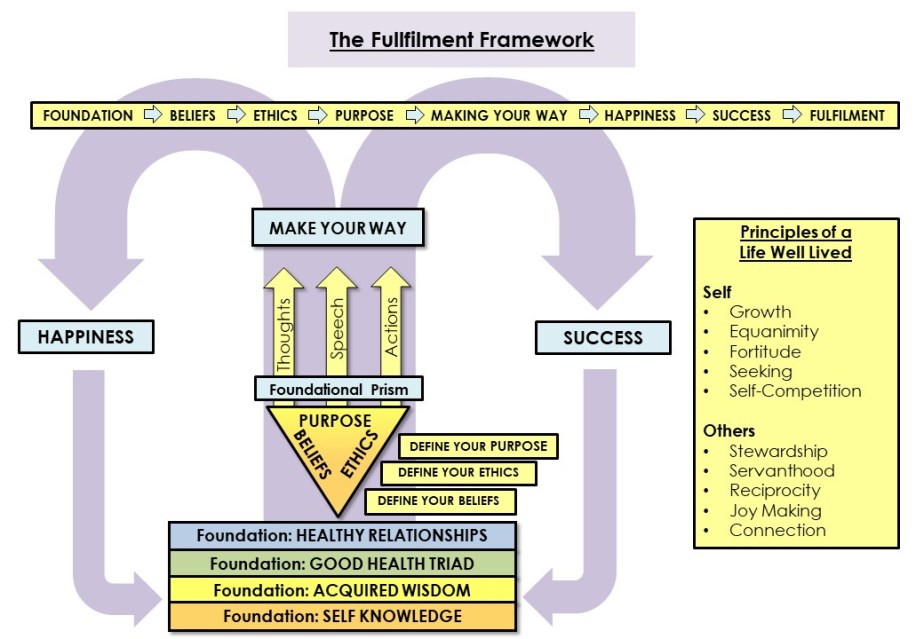
I have distilled down principles that are good to live by to ten specific principles that I believe will collectively help us feel happy and successful in life and as a result feel fulfilled. These are the principles of a life well lived, categorised into Self and Others.


Self: Growth

As human beings if we feel we are not growing as individuals then our lives feel like they are stagnating to some degree and we lose any kind of fulfilment. We need to develop in our jobs, if not in our spiritual or personal realms. To gain deeper understandings and to improve is a inner drive that is greater or smaller depending on your personality, but I would say it is always there.

We also need to have a growth mindset to get the best out of life. To have a destination in mind but to be flexible on the route. To favour hard work and problem solving over believing that we have fixed, innate qualities like being creative or not being good with numbers. We become good at anything with learning and practice. Water flows around obstacles and makes its own paths. Equally, a tree that bends in the wind will not break and it continues to grow, as this is its nature, much like growth is part of our nature.


Self: Equanimity

This is very difficult, it is the art of being calm and collected in any given situation, good or bad. It is mastery over our emotions. It is not getting emotionally pulled into situations so much that the situation dictates how we feel and what we do. Self-mastery includes equanimity, keeping experiences in perspective in the greater scheme of things. It is not abstaining from emotions; it is Mastery over them.


Self: Fortitude

We all have challenges in our lives, some are overcoming procrastination to work on something important to us and some are life changing events that threaten derail our whole lives. When we have a goal in life, a North Star that we are aiming for, we need the drive to work on this every day. No matter what our challenges are, having the fortitude to keep going when life pushes back will mean we achieve the good success we deserve.

Self: Seeking

Part of the Fullfilment Foundation is Acquiring Wisdom, which is part of Seeking. What I mean by Seeking is the act of exploring the unknown, to yearn for explanations of why things happen the way they do, but also to have the courage to step into the unknown in life when the prospect fills us with fear. This can be in our job, in relationships and in personal projects, and it can potentially challenge the values and beliefs that we have defined for ourselves.

This is part of the process of seeking, it is being open to change when new experiences bring new information, new wisdom that we have not been aware of before.It is following a spiritual path or a path of self-exploration, depending on your theological beliefs. It is the path of the wisdom warrior, to courageously seek a deeper understanding.


Self: Self-Competition

In life, we often compare ourselves to others, we compete with them, even if this is only in our own minds. This will either make us feel self-important if we are ahead, or feel bad about ourselves, if we are behind. This is not productive at all if winning is everything. Comparing a standard of work with others can be useful, but it is best to compare our current selves with our previous selves. To be better today than we were yesterday.


This is how all the great achievers think, whether individuals or companies, those who innovate and change the world compete with themselves, not their competition. This means they can focus their Why, on bringing to life the vision they have developed from their Why.


Others: Stewardship

Greatness comes from leaving things better than you found them. Not being satisfied with the status quo because it kind of works OK. When this is done with the intention of improving things for others the benefit is magnified for yourself and others. It is planting trees when you know others will benefit from its shade. This is a kind of entrepreneurial spirit, the act of looking for things that need to be improved and making changes to achieve this.


Others: Servanthood

A good leader takes care of those around them, it is not a rank, it is a mindset. A good leader serves others. In life, we do not need to be in the position of a Manager or a Supervisor to be a leader, but we do need to have others who will follow us in our endeavours, to help us advance our vision. Servanthood is a rewarding mindset to have because our biochemistry rewards acts of generosity, kindness and compassion, and it is key to our happiness and feeling of fulfilment. However, it is not about being a dog’s body, it is a partnership of giving and receiving. It builds trust and cooperation and our relationships begin to thrive.


Others: Reciprocity

It is important to give, but it is also important to be humble enough to receive as well. It gives others the opportunity to give. Also, when we help others, we feel a sense of fulfilment, we feel good. Fulfilment itself is reciprocal because it requires the helping of others to find fulfilment in their lives. To help others grow and achieve, to feel joy and happiness. When we do this in our relationships and in our work, we feel fulfilled at the end of each day, but we must be able to accept the help from others too.

Others: Joy Making

Joy is different from happiness, because happiness evokes the idea that we are striving for something. Joy on the other hand is about bringing laughter and smiles to people’s faces. It is enjoying the moment, and we can bring this into our own lives through the attitude that we have, we can be joyful; and when we are the joy spreads. When we bring joy into the interactions, we have with others it feeds the souls, so to speak, it increases our wellbeing ten-fold and our lives and the lives of those around us are better for it. To be joyful is to enjoy life to its fullest, to be an ambassador of joy is to bring joy into the lives of others.


Others: Connection

There are two ways I think we should strive to be connected, with the people in our lives and what is often called the Great Mystery; God, Tao, Brahman, or just the Universe itself, that which is bigger that all of us but contains all of us. In life we need healthy relationships, in our personal lives and in our professional lives.

This involves things like regular contact, spending time together, preferably in person rather than via a device, and caring about the wellbeing of the people we know. When we are waiting for a meeting to start at work, or some other situation, asking how people are and listening to the answer, rather than checking our social media status or emails. This is how we build trust and loyalty, how we build depth into our relationships. Above all else it is caring about the other person beyond how you know them, compassion, empathy and love build strong bonds.

The Great Mystery or God can make some feel uncomfortable, even angry when the subject is brought up. However, I am not suggesting that you have to become religious if you are not. I feel that your beliefs should be dictated by your own conscience based, on your experiences and knowledge, and not the opinions or beliefs of others.

That being said, when we do not feel that we are connected to something greater than ourselves, then I think we can feel separated in our existence or full of self-importance, as if we are what is most important. Feeling connected to something larger than ourselves, even if this is the Universe itself, does two things. It helps us feel like we belong here and it keeps us humble to think of ourselves as like a drop of water in an ocean, an essential part of the greater whole.


Final Thoughts

These principles that I am suggesting will, I think, help you feel happy and successful. You might pick a few of them to follow and leave the rest. That is fine, it is not a definitive list, but I believe that they are the core of what it means to live well.

Something To Think About

Which of these principles would you follow? Also, what other principles have you already decided to follow or could you follow?

Remedies To A Crisis

“Self-control is strength. Right thought is mastery. Calmness is power.” James Allen

Not Being In Control

We are going through a lot of anxiety across the world at the moment with the outbreak of the Coronavirus, there is much uncertainty around our health, whether we have the virus or if we will get it, whether we will lose our jobs, and when we have lost our jobs how we will pay the bills, whether our loved ones are safe, and how long this will all last. Some countries appear to be managing this crisis better than others, and these countries have been predominantly governed by women, whose natural instinct is often taken care of their people. Male leaders tend to be more head strong and want to appear to be strong.

These are generalisations, and not all male or female leaders fit these archetypes, but the global leadership styles that have kept some citizens safe and others not is quite telling. I think the degree to which people feel their leader(s) are taking care of them in a crisis is the degree to which we feel less or more anxious.

For example, some companies have said that they will guarantee that their staff will get paid, or at least 80% oft their salary, and that no one will be fired. Some smaller companies cannot afford to do this unfortunately, but those who are told that they will be taken care of will do all they can to keep their company going through this crisis, they will collectively protect their company because their leaders protected them.

On an individual level, it can be difficult to cope with the uncertainty, and the anxiety that arises from it, especially if we feel that we are not taken care of. Some express their anxiety through anger, we have seen an increase in domestic violence during this crisis. Some express this through trying to control unusual situations.

I heard a story from a friend of mine, who works on a shop, that an elderly man tried to attack her with a shovel, because she would not give him a refund for it, due to him not being able to provide a receipt. The shovel only cost £3, but I suspect he was trying to control the situation because he did not feel that he had control over other things due to this crisis.

In my experience, and through my research into how to live well, I think there are some crucial remedies to anxiety, especially when the anxiety is related to not feeling in control.

Self-Awareness

If we spend time being with our unpleasant emotions, as difficult as this is, if we can have the bravery to just be with them and not run away into distractions and intoxication then we can begin to see what things trigger our anxiety or our anger, or why we criticise and belittle others, then we can begin to develop deep self-awareness. The longer we spend being with ourselves in this way the more we are able to figure out our triggers for negative thoughts and behaviour and to find ways to handle these things better.

If we can figure out our triggers we can develop techniques to reduce our reactions to them, or if this is not possible, to find ways to avoid the triggers, for the sake of our own wellbeing. This is the life long process of self-improvement that will increase our quality of life and our wellbeing, because it will raise our happiness levels and improve our relationships.

Self-Control

If we can become more self-aware we can take responsibility for our own emotions and respond to situations rather than react to them. If we can begin to manage our emotions better we will have more control over what happens in our lives, because even though we cannot control being in the situations we find ourselves in necessarily, because we are already in them, we have a choice of how we act in the following moments.

If we have self-awareness and have developed self-control, then we have clearer thinking and can act out of compassion and altruism, and we can see further into the future of possibilities and determine our best course of action for a positive outcome. This type of mastery is mastery of the self, and it takes years to develop, but if we do not start then we will spend a lot of our lives reacting, often negatively, to each and every situation we find ourselves in and our happiness levels will plummet and our levels of anxiety will go up, because we will have less certainty.

When we let the uncertain nature of the world shake our sense of being we will always struggle. Self-awareness and self-control build a stoicism that will allow us to weather the storms of life and enjoy the fruits of it too.

Gratitude and Kindness

These are two of the most powerful antidotes to anxiety, in the moment. When we are grateful for the little things in life, then our bodies conspire to make us feel good with the hormones it produces. The same is true of being kind to others. To be grateful and to be kind makes us feel good and it reduces the hormones our bodies produce when we feel anxious.

Simply listing ten things we are grateful for every morning, making sure we smile at people and give them compliments, these are things we can all do, and if they become our daily habits then the crisis we are all in does not seem as bad. We develop the feeling that we are in this together and that we will get through this.

So, spend time with yourself, getting to know how you react and respond to difficult situations. Develop better strategies to manage yourself in these situations. Be more grateful for what you have and kinder to others around you. Do these things and this crisis will be easier to manage and you will be on your way to self mastery and a wonderful life.

Lockdown Blues or an Opportunity in Disguise

“There is no power for change greater than a community discovering what it cares about.” – Margaret J. Wheatley

The global pandemic we know as the Coronavirus has had a wide ranging impact on the lives of so many across the world, on our health, our wellbeing and our finances, hitting some much harder than others. Many of us have had to go into self isolation, due to illness or being at high risk. Schools have closed and children are being educated at home through the wonders of the internet. Many adults are also working from home via the internet as well or have lost their jobs and some companies will not survive this pandemic. The way we do everything, including basic things like our shopping, has changed. These are challenging times.

Every Challenge is an Opportunity for a New Possibility

When challenges arise in our lives we really have two ways of looking at them, either to look at the negative impact of the challenge on our lives and how we feel or to look at the things the situation can teach us and the opportunities it provides. Resilience is built on overcoming adversity. If you are in lockdown, imposed by your government, or in self-isolation, as you are following the sensible advice to stay at home, this is an opportunity to reconnect with what is important in your lives and reevaluate your priorities.

Panic at the Supermarket

Panic does not help in situations like this. Panic buying hurts others and therefore it hurts us. When we panic we go into a fight or flight mode of thinking, which only helps when you are in immediate danger, and it should end once that immediate danger is gone. Generally speaking, we are not in immediate danger, this very moment, there is not a tiger about to eat us or a madman with a gun pointed at us, we are in a dangerous situation that requires reasonable steps to keep ourselves and others safe, so we should follow the advice of our Government and health care system.

If those in our society that are supporting us through this pandemic cannot get what they need to live, how can they help us to get through this. Equally, if we are ignorant of the sensible measures we need to implement, then we put ourselves and others in danger. For example, there are some in America who have said that as they are Christian and are covered in the blood of Jesus they are able to go to church with lots of other people and they cannot see that they could get sick or pass the Coronavirus on to others.

I have no issues with the beliefs of others, people can believe what they want, but when people’s actions could cause hurt to others then this is not good. One reaction to a situation like the one we find ourselves in is to dive into our beliefs in religious teachings to make us feel less afraid. The problem here though is that, if taken to an extreme, it is all focused on the individual, the fear makes us selfish and irrational. Part of me does not blame these people for being hijacked by their fight or flight system, but actions do have consequences, and ignorance is no excuse.

Good Health Is Foundational

As we all know our health is important. I would say that our health is central to our entire wellbeing and should be a daily focus, not just when a pandemic hits the fan. We can take this pandemic as a trigger to turn our attention to our health, and if you have to stay at home you have more time to focus on improving your diet, and your physical, mental and energy health. Take up yoga, meditate, go for walks or runs, journal your experiences and take the time to improve your overall health, to either recover from an illness or prepare your body to fend off whatever illnesses you may have to come, even if they are not a global pandemic. We have access to pretty much the entire culmination of human understanding on every topic via the internet. We have to be careful to make sure we check the sources of information when we get it online. I would advise checking at least three different sources to see if they agree, and remember that Wikipedia can be edited by anyone.

Recentre and Recalibrate

It is also a chance to find ourselves again, to spend time with ourselves away from the normal busy lives we lead. To look at our priorities, what we care about and what we should not bother with. It is a perfect time to look at defining our Why, as well as our values and beliefs, as I mention in my Fullfilment Framework. To do some self reflection and set some goals. We do not normally get so much time to do this sort of thing.

Some of you are ‘Key Workers’ and may not have the same time available because you are literally saving lives and supporting our economy, but the effect of this pandemic will be massive on all of us and, like all traumatic situations, we can be crippled by it or rise to the occasion and become better versions of ourselves. All those who are helping others at this difficult time I salute you, you are the best of humanity and the guardian angels that we all need right now. If you are not a Key Worker then please do what you can to support your neighbours, family and friends, and if advised stay at home.

Necessity is the Mother of Invention

We have all had to change how we connect with others, primarily via the internet. Zoom has become and invaluable way for people to connect. Teams at work, exercise classes, spiritual groups, you name it we are gathering together via Zoom. Facebook groups and email groups are exploding into a ferver of interaction to discuss the pandemic and support each other. Positivity is bringing so many people together. It is strange to feel so much community spirit without physically spending time with others, but the best of humanity is coming out to play and it is awesome. I am currently playing a game of chess with my elderly Father via WhatsApp message and he is beating me.

The Importance of Our Relationships

This has all highlighted how important our relationships are, they are the glue that holds our wellbeing together. What this pandemic has highlighted to me is how we cannot deepen our relationships with friends, family or colleagues through a screen as easily as we can face to face. It is the little moments of conversation and interaction, asking how the other person is doing and caring about the answer. It is the difference between a hug and the picture of a hug or a handshake and an emoji of a hi five. Physical connection is vital to healthy relationships and once this pandemic is over we need to not go back to interacting primarily through a device like a mobile phone, but to spend face to face time with those in our lives. This is one of the greatest lessons to learn from this situation.

Final Thoughts

I think this pandemic has also caused much of the superficial things that we thought divided us to drop to the wayside, as this crisis has created a shared human story that we are all experiencing. People out on their daily exercises are waving hi to strangers when they never would have before; we are beginning to see each other as human beings first. This is something I hope we do not lose when this is all over and we find a new normal, one of shared values, of oneness, of an understanding that all aspects of society are important. Without those who work in a supermarket being there for us at this difficult time we would not be able to live. Let’s hope the paradigm shifts to one of equality and respect, and that this paradigm stays for the foreseeable future.

The Foundation To A Life Well Lived

“Time well spent leads to life well lived.”

― Martin Uzochukwu Ugwu

I have been working on my Fullfilment Framework and have made some developmental changes to it, which I will unveil fully in another blog post. I would like to focus on just one aspect of this new framework model in this post. That is the Foundation.

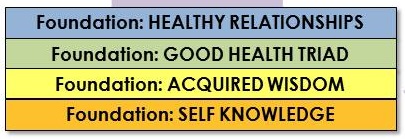
The Foundation is now made up of four sections, with the new addition of Healthy Relationships. This means that the four sections are Self Knowledge, Acquired Wisdom, Good Health Triad and Healthy Relationships. I realised through reflection and exploring what makes life fulfilling that I had omitted a significant aspect of all our lives, which is the relationships that we have. I will go into this in more detail later in this blog post.

Self Knowledge

I have put Self Knowledge at the bottom of the Foundation, as I believe self knowledge is the rock upon which we can build the foundation of our lives. If we do not know ourselves well then how can we know what we want out of life, what we value and what we believe. Self knowledge is the basis of what we think, say and do. If we do not have a good understanding of ourselves then we will be guessing what we want out of life and everything in it will be half-hearted and will not bring about fulfilment. We will also be living life either reacting to the events within it, not really having any direction or plan, or we will be living out other peoples plans for us, and our true selves become lost in a life wasted.

It has been a philosophical imperative since the days of Socrates to “Know Thyself.” It is also sage advice, as it will dictate what we get out of life, and whether you believe we only have one life or not, if we follow the path of others and do not explore what makes us who we are we will likely not spend our lives well, because we will not be forging our own paths through life.

Acquired Wisdom

Self knowledge will only get us so far in life. It will help crystallize what we want out of life and how we want to live, but we can still make mistakes along the way. Part of a life well lived is being wise about the choices we make and how we spend our time. The wisdom of others can help us here.

Whether you are a religious person or not our human history is filled with the words of wiser people than us. The wisdom of humanity comes from religious and philosophical writings, from scientists, from the native peoples of the world and from our own parents.

It is important not only to listen to the wise words of those around us, but also to become avid readers. Acquiring the wisdom of others and applying it to our lives can mean that not only do we not have to rely solely on trial and error, but also we spend the time we have exponentially better. It helps us live more deeply and to be able to look back at the end of life and say we lived well.

Good Health Triad

The Good Health Triad is three areas where we should aim to have good health in order to have good wellbeing. The first is the most obvious, it is good physical health. Going to the gym once in a while won’t be enough. We need to consistently exercise to our level in ways that are not detrimental to our health. For some gentle and often is better, especially if they are physically disabled. For some running marathons is good for them. Find your exercise routine at your level.

This also means a good diet. Not just eating everything that we are told is good for us, but rather figuring out the best diet for your body. This could be more vegetables than fruit to keep your diet more alkaline than acidic, it could mean spicy food or not, it could be dairy free. There are lots of options. This involves research, listening to your body and trying different types of food. Most diet advice is good, but don’t go for every fad diet that pops up in the media. Find your best diet and go to see a nutritionist if needs be.

The third element of the Good Health Triad is good energy health. As Chinese medicine discovered a long time ago, and Western medicine is slowly accepting, we have an energy system that allows Qi or Chi to flow along the meridians within our body. Much like our blood flows through our veins and nerve signals travel through our nervous system, our Chi flows through our meridian system. If our Chi does not flow freely or is unbalanced our health deteriorates.

Practicing Qigong or Tai Chi every day can help, as well as going for Acupuncture or Qigong Acupuncture, which is done using the practitioners own Chi instead of needles, will help to maintain good, healthy Chi. Ensuring we cover all three areas of this Good Health Triad will mean we live longer and feel better, so we are more able to achieve what we want to achieve, do what we want to do and live fulfilling lives.

Healthy Relationships

We all have relationships, with our family, our friends, our partner, our work colleagues, and so on. Some relationships are better than others, but I would argue that they should all be healthy relationships. What I mean by this is ideally we should not have any relationships in our lives that are detrimental to our wellbeing. Relationships that cause us stress, anxiety or self loathing need to be removed from our lives. Stress is something that can have such a negative impact on our health that people can die due to the consequences of stress on their bodies.

Those we have relationships with, in whatever area of our lives, should lift us up and make us feel connected. They should make us feel like we are part of something, a collective of good people. Our relationships should make us happy more than sad.

We should also try to cultivate our good relationships so that they grow and become stronger too. All relationships need maintaining through spending time with those people, finding out what is going on with them, being there for them when they need us and not only caring about ourselves.

The biggest barrier to healthy relationships in our current culture is mobile phones and tablets. People are spending more time on their devices than with each other, even if they are together they are looking at screens. If there is a momentary lull in the conversation there is an urge to pull out our mobile phones and scroll through our social media feeds.

Relationships are built on the little moments between other things, when we are waiting for a meeting to start or for a bus to arrive we can strike up a conversation, ask how someone’s day is going, etc. This is how we build strong, healthy relationships. We should also avoid things like gossip, which are corrosive to trust and cooperation.

Something to think about

What three changes will you make in line with this Foundation to improve your life and wellbeing in 2020?

How To Achieve Your Dreams

Cherish your visions and your dreams as they are the children of your soul, the blueprints of your ultimate achievements.

Napoleon Hill

Imagine swimming through jellyfish and shark infested water for 53 hours without stopping. Imagine the training necessary in order to prepare to swim such a distance. There is a stretch of water between Cuba and Florida that is 111 miles that no one, since it became a goal in the 1950s, has been able to swim across. Diana Nyad is a marathon swimmer who had a dream of swimming this stretch of treacherous water. She has a team of around 30 people, shark experts, nutritionists, navigators, etc and they had tried 4 time before. She almost died on one attempt due to being stung by a Box Jellyfish.

In 2013 Diana Nyad at the age of 64, on her 5th attempt, made it across this stretch of water. The only person that I am aware of to have ever done so. Her mantra on this attempt was “Find a way.” She said in a TED Talk entitled “Never, ever give up“, where she talks about this dream and achieving it, that she is in the prime of her life at 64 years old, and I believe her. When she staggered up onto the beach in Florida after more than two days of constant swimming, she had three messages. Number 1, you should never, ever give up. Number 2, you are never too old to chase your dreams. Number 3, it looks like a solitary sport, but it’s a team.

Now, we are not all going to be endurance swimmers, or even want to be. The message is not about specifically what Diana did, it is about how she did it. She had a dream and rather than let the pursuit of that dream fall into apathy she studied everything she needed to know, she trained consistently, and she never, ever gave up. No matter what she found a way. We all have dreams, for some of us it is a hazy inkling of an idea, for some of us it is crystal clear, but for all of us the dream will not achieve itself. It takes drive and passion and consistent effort, and above all else the willingness to fail trying until we succeed. It is about failing our way to success.

In my opinion, life should always be a striving to live life well, to find fulfilment, joy and happiness, and to bring these things into other people’s lives as well. Life, like Diana said about marathon swimming, sometimes can appear like a solitary sport, but it takes a team. Our dreams are individual, but to achieve them it takes a community of friends, family and colleagues.

So, firstly we need to figure out what our dream is, something that is individual to us. Secondly, we need to research how we can achieve this dream. Thirdly, we need to create a plan to get from where we are to where we want to get to. Fourthly, we need act on that plan everyday, even if the steps are small. Fifthly, we need to look for and accept help from those around us, life is always a community effort. And lastly, never, ever give up.

Something to think about:

What dreams have you heard that others have that resonate with you? What do you value in life? What makes you happy? What pursuit could be your dream? Think about these questions and figure out what your dream is and how you can work towards it. #LiveDeeply my friend.

Are We Addicted To Our Mobile Phones?

“Gadgets helps the solo, not the soul.” 
― Amit Kalantri,Wealth of Words

Witnessing Addiction to Mobile Phones

Recently, standing on the platform of a tram stop waiting for my tram, I saw a lady walking along, headphones in her ears, watching a video on her mobile phone and hardly even looking ahead of her as she walked. My mind was filled with thoughts around how human beings have become slaves to our mobile devices, how we have become a society who craves instant gratification and how addicted we all are. Then, another lady walked passed a moment later holding up a book she was engrossed in as she too walked along the platform.

This stark contrast is only really a contrast in the source of their attention, rather than the activity they were engaged in.  It begs the question, are we missing life by becoming regularly absorbed by activities that do not promote good mental and physical well-being. In our western society, to get drunk and the morning after not remember what we did the night before is lorded as almost a badge of honour. To binge watch whole series of a program on our preferred online streaming platform is a common occurrence too.

Are We Zombies?

It seems we are losing the ability to just be, to be aware of what we are doing when we are doing it. Our search for activities that give us quick wins, and as a result, hits of addictive Dopamine, is turning us into zombies, of sorts. I say this as a fellow zombie, but seeing a lady walking along a tram platform watching something on her mobile, and not able to wait until she was at home or somewhere else more appropriate, and safer, woke me up to the realities of our current quick fix culture.

These observations also beg the age old question of how we should live. Should we follow the crowd and become absent from the world while we stare into our mobile devices, or is there a better way to live. There is some merit for living without the constant availability of entertainment. I am not sure I could do it, but will try to cut back on how much I watch things on my mobile phone.

There is also the question of what we watch. If we watch lectures on the merits of theological or philosophical positions, or we watch instruction videos to help us do yoga or learn a new skill or something else that improves our lives, is this not a good thing? I suppose mobile devices, and by extension social media, are tools that can be used to make our lives, and the world better, or they can be used to simply waste time, which we cannot get back. Time is a currency that can never be bought back. I use Facebook to try and create a community as an extension of this blog, to try and get people to help each other live well. Even social media can be a beneficial in our lives.

The answer to the question of how we should live, I would suggest, trying the improve the lives of others, to help others find meaning and to be happy, and if this means we use mobile devices and social media to achieve this, then I am all for it.

Something to reflect on:

If we let the things we watch, mobile devices and social media dictate our thoughts and actions, then we must ask are they in charge of our lives?

Bring on 2019

“Everything can be taken from a man but one thing: the last of the human freedoms—to choose one’s attitude in any given set of circumstances, to choose one’s own way.” 

– Viktor E. Frankl, Man’s Search For Meaning

Bad experiences 

Many of us, if we think back to our childhood, our teens or our early adulthood, we can think of bad experiences that we have had, like bullying, breaking an arm or leg, parent’s separating or big disappointments. I sincerely hope these experiences for you were not too traumatic, but I feel safe in saying that no one grows up without some of, what we could consider to be, bad experiences. Often these bad experiences involve being embarrassed, upset, humiliated or injured.

All of the bad experiences we have get carried around by us as we grow, mostly unconsciously, metaphorically speaking. They even have an impact on our day to day decisions and on our relationships. They become part of the prism through which we see the world.

Fear of the past becoming the future

These bad experiences can become underlying fears or anxieties that shape our behaviour, sometimes in unusual ways. We often gravitate towards  what we know, even if it is bad for us, because it is familiar, it is not the unknown, which we can be the most afraid of. In evolutionary terms we have a deep, ingrained suspicion of the unknown. Historically, this has kept our species alive. To be suspicious of a shadow could mean that humans avoided being eaten by wild animals. Today, we are often suspicious of other people’s motives when they are nice to us or of experiences that are alien to what we have experienced before. 

However, this suspicion becomes a present fear when it comes from a bad experience we have had in the past, and if we allow it to remain unresolved in our minds the fear can grow and become a barrier to our happiness and success. The fear manifests as anxiety, and the more extreme the bad experience the greater the anxiety usually, especially if there is an unknown element to the situation that we are anxious about.

Attitude is everything

Something that has helped me overcome my anxieties is to figure out the unhelpful belief that is creating the anxiety. Often this is unconscious and some work is needed to figure this out. Writing a journal about your anxiety can help. Once we have the unhelpful belief we can then find a belief that will act as an antidote, something we can use to replace the unhelpful belief.

An important way to think about all of this is that often we let our bad experiences in the past control our present and our future. We let the drive to avoid experiencing the same bad situation dictate our decision making and the things we say and do. We let our past control our future because we, whether unconsciously or not, believe that our past will be repeated. But I am here to tell you that your past does not equal your future. We have more control than we think about what our futures will be like, because our future is largely a result of our decisions, actions and behaviours of our present.

It is true that our present is a result of our past, and we cannot control or change the exact present moment, because of this, but we all have control over how we respond to the present and what our future will be like. In any situation the one thing we can always control, if we practice enough, is our attitude. Even in the Nazi concentration camps, in the most dire of situations, there were inmates who would go around making sure everyone else had food, water and whatever minor comforts where available. As evidenced in Viktor Frankl’s book Man’s Search For Meaning, which documents his experiences in such a camp.

Taking on a newyear

So, if 2018 was not a particularly good year for you it does not mean that 2019 will be the same. The same is true if you had a good 2018. We cannot control everything that will happen in our lives, but if we firstly control our attitude to the events in our present and our past experiences, we can live positively and make positive decisions in each moment to make our future’s as awesome as they could be.

If we develop positive beliefs that we use to replace negative beliefs we can build our resilience to the difficulties in life, so we can rise above them and begin to fly. It is not about how many times we get knocked down by life, but rather the act of getting up every single time and taking on whatever lies before us on our path.

In 2019, build up your resilience, grow your relationships, build up your health, and seek opportunities. The opportunities are always there, but we have to have a positive mindset in order to see them and then take advantage of them. The world needs the things that only you can bring into it. You are needed to make the world a better place. I wish you a happy new year and an awesome 2019 and beyond.

Something to reflect on

Normally at this time of year we set new year resolutions, which we often do not continue with beyond January. However, I suggest you endeavour to have a positive attitude whatever the circumstances, however difficult this may be.

Having a generous spirit

“You often say, ‘I would give, but only to the deserving.’ The trees in your orchard say not so, nor the flocks in your pasture. They give that they may live, for to withhold is to perish.”

– Kahlil Gibran, The Prophet


Christmas Spirit

Christmas is always a time for giving. Whether it be the cultural act of gathering and giving presents or the big push by advertising companies to get people to buy their products as Christmas gifts, there is no getting away from it at this time of year. It is a time when we put a lot of thought into the gifts we buy for our loved ones, because we want our gift to make them happy, to make them smile when they open it. The good feeling is a shared experience; they feel good when they get something they want and we feel good to see them so happy.

It is not the gift itself that makes us happy, as such, it is largely the act of giving and receiving that brings out our happy. So why is it that we are not as generous, generally, throughout the rest of the year. Obviously we cannot afford to be buying presents for people all year round. However, if the real meaning of generosity is in the act of giving, then we can choose how we are generous in ways that do not cost any money at all. They do however cost time and energy, two things that we all have.


Generosity is a Mindset

At any time we can give someone a smile, we can actually listen to someone, we can ask how someone’s day is going and care about the answer, we can help someone carry their bags up some stairs, we can hold the lift doors open so someone who needs the lift doesn’t have to wait for the next lift to be available, we can complement someone, we could wish someone good day, we could give our time to help someone with something that we are skilled at and they are not. There are countless things we could do to give our time, our energy and our words.


“Imagine if we could spread a little

happiness just by being nice to other people.”


As we gather together this Christmas and become more generous, loving and sharing let us begin to imagine what the world would be like if we treated everyone with the same love and respect as we do our own loved ones. Imagine if we could spread a little happiness just by being nice to other people. Imagine how happier you will be as a result of so much giving. We feel good when we give, so let us bring the Christmas spirit into our hearts and let it linger there beyond the New Year and on for the rest of the year.


Give more smiles, wish more people well, and if you are someone who prays, pray for everyone we encounter who is going through difficulty, even those we do not get along with. To be angry, jealous, frustrated or sad is to suffer, so let us spread a little love and start a generous revolution. Our world is shaped by how we interact in it, so let us shape our world to be a kinder, more loving place that we all want to be a part of.


Something to reflection on:

The way we perceive the world is our reality. Our actions in the world help to build someone else’s perception of the world. Positive thoughts, words and actions can change the world for others and ourselves.

Fearlessness is a dangerous road

“I learned that courage was not the absence of fear, but the triumph over it. The brave man is not he who does not feel afraid, but he who conquers that fear.”

– Nelson Mandela


Fearlessness

In our culture today there is a great emphasis on the need to be fearless. It is found in common turns of phrase, the media. It is also found in advertising, whether it be men’s aftershave or energy drinks, the word ‘fearless’ is banded around as if it was held at the same level as integrity or fortitude. I think we are mistaking being fearless with having courage, and they are not the same thing. The problem with being fearless that it encourages us to mask or block out our emotions and to discount our very natural physical responses to danger and stress, responses that have developed throughout the evolution of human beings in order to keep us safe.

If we were truly fearless then we would have no fear of running in front of a car or train, or skydiving without a parachute. These are extreme example, but this is the point, to be fearless means that there is less preventing us from going too far and putting ourselves  and others in danger. It would be profoundly stupid to skydive without a parachute, and our intellect and experience would tell us that this would not be a good idea. However, there are situations that have unknown aspects and if we leap without looking, without consulting our intelligence, our experience and our capacity for rational thought then we do not know if we are putting ourselves in danger. A balance is needed.

The other extreme is to be so paralysed by anxiety that we do not try anything new and we retreat into our selves, even becoming housebound by our anxiety. I have had my own challenges with anxiety, that caused me to have pain in my chest and my hands to shake when in certain circumstances. This is not a good place to be, to put it mildly. As I have worked through the roots of my anxiety and developed strategies to reduce it, I have found a profound truth about fear that can put us on a more even keel. Fear is an essential part of our defense mechanism, it is integral to our survival, but it is supposed to appear when we are in danger and then dissipate when the danger has gone. To use a well worn example, if our cave man ancestors mistook a rock for a tiger in the long grass, causing then to run fast in the other direction, they would be safe. If they mistook a tiger for a rock and didn’t run, then they would have been the tiger’s lunch.

Finding A Better Path

Some of this is obvious to point out, but I feel in a climate and culture where being fearless is seen as a lordable quality, especially in men, then I think the obvious truth of the situation needs to be pointed out. We should not be pushed into either being fearless or to living with anxiety, a middle road is needed. There is one quality that I feel should be the focus of our intention in life, and that it the quality of courage.

Courage is not the same as being fearless, it is in fact acting in a positive way in spite of fear. It is feeling the fear and doing it anyway. As Nelson Mandela tells us “…courage was not the absence of fear, but the triumph over it.” This of course needs to be reserved for situations that are not life threatening. We are are not, after all, talking about being a soldier or anything like that. I am talking about having the courage to go to job interviews, to tell someone that we love them, to stand up to those who bully us, to stand up for what we think is right, to follow our dreams, to try and improve our skill-set. All of these things are about living a fully, deeper life.

I do think that it is important to try new things and to push past our current limitations, to grow and improve our skill-set, especially in our careers. To live at the edge of our skill-set is a very courageous thing to do. There is also a very important reason we should try and get very familiar with the things that scare us in life. If we run from the things that scare us then we internally harden our hearts. We close down our compassion and we restrict our love. We close ourselves off from having meaningful, deep relationships with people. The people we care about becomes limited to family, friends and those who share our beliefs and values. We become tribal and divided, we get aggressive,  even violent in extreme cases. We become part of the problem that divides up the world into us and them.

If we can extend our compassion to include others we disagree with, those who look different from us, even those who treat us badly, then the world will be better for it. Be warned though, it take courage to love your enemies, but if you can do it, then you will have no enemies.

Something to reflect on:

If you can get familiar with the things that scare you, and have the courage to live there, then the fear will dissolve and you will be stronger for it.

How to find fulfilment

“Your soul is the power and

core of who you are.

Feed it well.”

– Anonymous


Recently I have been reflecting a lot on what is meant by fulfilment, whether it is selfish or generous to seek it. How it is that we might find fulfilment and what it actually is. As human beings, we are all unique in our likes and dislikes, our personality and our passions, our behaviours and our tendencies. So, it makes sense that fulfilment would be an individual attainment, it would not be the same for everyone.
cropped-the-fullfilment-project-logo-profile-pic-black-white-red-v32.jpg

Since February last year I have been writing this blog about fulfilment, which I call The Fullfilment Project, with Fulfilment spelt with ‘FULL’ at the beginning, to signify a full life. I have been exploring happiness and success and what they mean in relation to fulfilment and I have come to believe that for fulfilment to occur we need to have both happiness and success, which to some degree is obvious. However, many who are looking for either happiness or success, I believe, focus on unfulfilling goals, as they are misguided by our culture and unhelpful beliefs. I am not now or have I previously claimed to have figured out the way to find fulfilment, I am an explorer looking for answers by asking questions and diving into hypotheses, and I have found some conclusions along the way, which I would like to share with you in this blog post.

I have created what I call a Fullfilment Framework, pieces of the puzzle of how to live a fulfilling life. These are drawn from personal experience and meditations, as well as seeking wisdom from both secular and religious sources. Wisdom comes in many forms, but it is still wisdom. In order to live a fulfilling life, I believe we need to begin with a good foundation, which is the core of a life well lived. There are three things I think we need in our fulfilment foundation.

Firstly, we need good self-knowledge, a deep understanding of ourselves, through self-reflection, knowing our values and beliefs and being tested in difficult situations and seeing how we deal with them. Secondly, we need acquired wisdom. Self-knowledge is not enough to guide us on a fruitful path, we also need to be steeped in wisdom, from secular, philosophical and religious sources. Thirdly, we need what I call the Good Health Triad. This is focusing on building for ourselves good mental health, good physical health and good energy or Chi health. Chi is an Eastern word for the life energy that flows within us and to have good health we need good Chi. All of these things we cannot do alone, we need friendships, companionship, and sometimes professional support, we need to learn good dietary and exercise habits and ways to boost and maintain our chi, all of which are good things.

From this Foundation comes our values and beliefs, which are like a prism through which we see the world, through which we think, speak and act in the world. The next level of finding fulfilment, I think, is to find out our ‘why’, our reason for doing all that we do. It is the purpose that guides us, distilled from our values and beliefs, from our self-knowledge and acquired wisdom. It can be difficult to figure out our ‘why’ with clarity. Often, we borrow from quotations or religious and philosophical ideas. I attend a Unitarian church, which was built on the idea that each individual person has a right to explore their own theology, to search for their spiritual truth rather than be told what The Truth is. All Unitarians connect with that, which is why they gather together and attend a Unitarian church. However, for each of them this may not be their personal ‘why’, because everyone is an individual, with different histories, experiences, values and beliefs. This is why I believe it is so important for each of us to search for what we believe our purpose to be in this life. It should be our North Star that guides us through both the calm and the troubled waters of life.

“…our North Star that guides us through both

the calm and the troubled waters of life.”
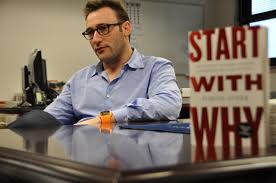
 

Simon Sinek-Start With WhyThen, when we discover our ‘Why’ we must discover how we are going to bring this ‘Why’ to life in our day to day lives. This is what I call our ‘Way’. In his book, Start With Why, Simon Sinek sets out the importance of finding your ‘why’ in order to live a purposeful life. He talks about how companies also need to clearly define their ‘why’, companies such as Apple have a clearly defined Why, to empower the individual against the big system. He also gives individual examples of Martin Luther King Junior who gave the “I have a dream” speech, not the “I have a plan speech”, as Simon Sinek puts it, and the Wright Brothers, who figured out powered manned flight for the first time, working out of their bicycle shop, with the intention of changing the world with their invention.

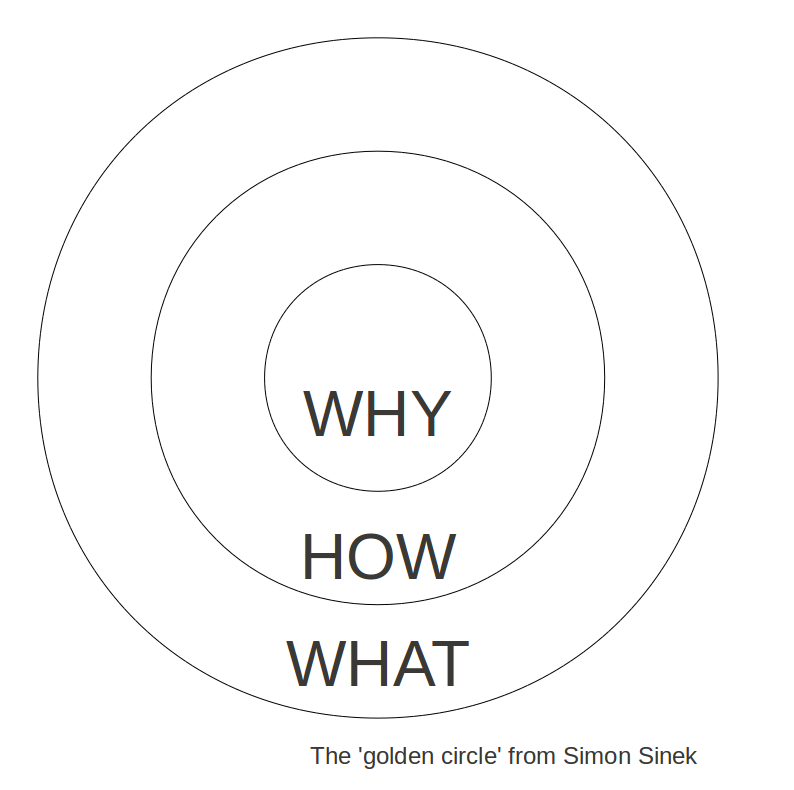
Simon Sinek says that we need to have clarity of our why first, then we can work outGolden_circle ‘how’ we express this why and then finally ‘what’ we do to prove the why we have. He calls this the Golden Circle, in the centre is the Why, then next the How and on the outside of the circle is the What, and it looks a bit like a bullseye. The important point here is that our human brains work from the why to the what when making decisions. The part of the brain that is responsible for decision making and our feelings like trust and loyalty is the Limbic Brain, which has no capacity for language. This is why we more easily agree with things that match our values and beliefs, not the details and the factual information.
My personal exploration of fulfilment has led me to a phrase that has hit home for me. The phrase is “To help others find fulfilment is to fulfil what it means to be human.” When this phrase first popped into my head I dismissed it as flippant and without substance, but through further reflection and meditation on this I have come to think that it has a certain depth to it that I did not initially appreciate.

“To help others find fulfilment is to

fulfil what it means to be human.”

On an evolutionary level we have evolved to be social animals, and during caveman times there would have been some in the group hunting and gathering food while others in the group would perform other functions for the survival of the collective whole. We evolved to have what Simon Sinek describes as a circle of safety, that everyone in the tribe made sure that they were all protected from the dangers outside of the tribe, whether this be the weather, dangerous animals or the scarce food and resources. It is hard-wired into our DNA to uplift those in our tribe, whether this is our family, our team or our congregation.

To encourage us to behave in a way that supports the tribe, evolution gave us some hormones that control certain behaviours. Our bodies produce Dopamine when we make achievements, it is an incentive to progress and we get a hit of Dopamine whenever we hit a milestone or tick something off our to-do list. Our bodies produce Serotonin when we perceive that others like or respect us. Our bodies produce Oxytocin when we are with our closest friends or trusted colleagues, it is the feeling of friendship, love and deep trust. All of which feel good.

The point I am making is that we have evolved to have hormones that actively encourage us to build meaningful, deep relationships, to strive for progress and try and get the affection and respect of those we care about. In other words, to feel happy and successful, on a biological level, we need other people. We need friends and family, loved ones and people we love. These relationships are key to living a fulfilling life. There is a problem though when we actively look to get these feelings that come from these hormones in unhelpful ways. For example, when we use social media and we get a like or a notification we get a hit of Dopamine, which feels really good, so we do it more, effectively replacing people with a device.
Life is beter in flip flopsAdvertising companies tell us that we will become either happy or successful if we buy their product or service, only to be told a few months down the line that a new product or service will do the same, but neither a product or a service will make us happy, as they are invariably transient, they change or break and the happiness promised is really only excitement and joy. We are often told that the measure of success is the amount of money we have or the amount of things we own, but it really does depend on how we measure success, as individuals.

I believe that success is very much intertwined with happiness and that you cannot have one without the other. As human beings we are hardwired to strive after progress, but if we are deeply unhappy or depressed, progress is not a clear focus for us. So, you could say that we need to be happy to succeed and we need to succeed to be happy, but the success really does need to be in an area that we passionately care about, something that is in line with our values and beliefs, in line with our ‘why.’ Which is why it is so important to figure out what our ‘why’ is.

Many religious scriptures tell us that in order to be happy we must first help others be happy. I think this is partly because we are hard-wired with our hormones to feel good when we help others to be happy in their lives. Their smile makes us smile, especially if we are the cause of it. However, this comes with a warning, we must ensure that we take care of ourselves as well. If we are not careful we can spend all of our time making sure everyone else is OK and we do not look after ourselves. A balance is needed, which is why we need a good fulfilment foundation.

When it comes to success, achieving success with others feels more magnified than a solo achievement. Even athletes who take part in sports events individually could not achieve success without a coach and their loved ones supporting them. When we focus on goals that are innately selfish, like earning a large amount of money, we often sacrifice our relationships to earn the money, which is an empty success when achieved, because it brings very little happiness. But if we do it with the motivation to help others we feel great happiness when we succeed, because of the positive effect we have on others.

I am now a firm believer that both happiness and success are reciprocal, in that they are received, in part, when we give them to others. And as fulfilment is largely dependent on both happiness and success, fulfilment is reciprocal as well, but it is not something that we can go out and find, like a treasure hunt, fulfilment is a sense of being that comes from living life well, through positive relationships, a good understanding of ourselves, the wisdom of others, good health, and living in a way that brings more joy, love and peace into the world than their opposites. To help others find fulfilment is to fulfil what it means to be human.


Something to reflect on:

Whether you believe that we only get one life or not, to live deeply is to live well. cultivate positive relationships, help others when you can and strive to be your best self, so you can help other to do the same. This is a worthy goal and we need a worthy goal to live a fulfilling life.
Stepping into the unknown

“Until you step into the unknown,

you don’t know what you’re made of.”

― Roy T. Bennett


Making choices

In life there are many avenues to go down, many paths to take, or not as the case may be. Some of these paths lead to dead ends and some to wonderful opportunities. The challenge we have is that we never know beforehand, for certain, if making a particular choice will bring a positive outcome or not. Each time we are stepping into the unknown. We can, however, as the saying goes, learn from our mistakes and use our experience to weigh up the options and make a decision. Some say we should go with our gut, with what feels right, but if this is not tempered with wisdom and experience then we will only be following our instincts, which are primed for survival, not necessarily leading a fulfilling life.


The unknown could be a new job, a new relationship, trying a new hobby or something that changes lots of things in our lives like moving to another town or city. We make these sorts of changes every day, but they still come with uncertainty and some anxiety. Each new change begins with a decision and leads to more decisions along the way. I would argue that no approach to making decisions is the best or the worst, as we each live individual lives and we are all individual people, but there are some things that can help when we are stepping into the unknown, which I will come onto in a moment.


Why do we step into the unknown?

However, first of all I would like to explore why we might feel the need to step into the unknown. It has long been part of the human spirit to push beyond our boundaries into uncharted territories. Human history is full of examples of men and women that have strived beyond the boundaries of their day to create new innovations and break records, whether this is manned powered flight or reaching the South Pole on foot.


For most of us such challenging goals are not things that we aim to do, partly because we are interested in other things and partly because we have commitments in our lives that need our attention and focus. That being said, we all have things that we are passionate about, things that we would happily do for free if time and circumstances permitted. This is the unknown territory that I want to talk about today, the venturing into the things that we are passionate about. Often, we don’t jump into our passions because we have responsibilities that we feel we must commit to or we lack the confidence to do so.


“…the past does not equal the future.”


More often than not we do not follow our passions because we have had bad experiences trying new things in the past and we think that the same thing will happen again. There is an important principle connected to this that I have recently being trying to apply in my life, which is that the past does not equal the future. A lot of people, including myself, are held back by failure, because based on past experience we expect to fail again. The problem is that we see failure as a negative thing because of our past experiences. If we accept that we will fail sometimes then we can employ all of the resources that we have to make it work and to succeed.


Not everything is instantly obtainable

We also live in a time when almost everything is instant. Whatever it is you want to buy, often there is an option to have it delivered the same day. We can do our banking on our mobile phones, we can send an email to someone and they will receive it a few seconds later, no matter where in the world they are. Innovation has made our lives a lot more convenient, but not easier. This is because we expect everything to be instant, but many of the important things in life take time and effort. For example, relationships take time and effort to become strong and durable through the ups and downs of life. It is the little moments of asking how someone’s day is going and caring about the answer, of engaging in small talk in the moments between doing other things. These things help to build strong, healthy relationships.


Too often we are spending time with people without spending time with them. I’ve seen couples in restaurants where they are both on their mobile phones and not looking at or communicating with the person they came to the restaurant with. It has become an accepted thing to do to scroll through our Facebook feed instead of making a connection with the person we are with. This has had a knock-on effect that means young people are finding it difficult to build relationships, because the social skills that are normally built up through trial and error as a child cannot be practiced if they are looking at a screen and not a person.


Failure also seems all the more magnified because if we expect something to be instantly successful, and we fall at the first hurdle, we give up. We are becoming conditioned for insecurity when we should be conditioned to fail our way to success. I guarantee that every successful person who is famous for their success has failed more times than most other people have. It is not about how many times you get knocked down, it is about how many times you keep getting up. Having this sort of mentality will enable us to stride forth into the unknown with the confidence to fail and try again.


For this to work, however, we need to have the right motivation. Wanting to be successful so that we can be rich is a motivation, but it will inevitably lead to an emptiness, because you cannot buy happiness. If, on the other hand, we want to be successful so that we can help more people live better lives, then fulfilment will be our reward. Motivation is key and it has to fit with our values and beliefs, this above all else is important, because to live a fulfilling life our thoughts, speech and actions should reflect what we value and what we believe.


Wisdom guides us

But where do our beliefs and values come from? They are manifestations from the culture and community we grow up in, the examples our parents give us and how they raised us, as well as the experiences that we have had. Through all of this input we piece together what we believe and what we value. All of this then effects the decisions that we make on a day to day basis, but I believe that if we are to make wise decisions in life then we should seek out wisdom, which can be found in any of the many religious scriptures, philosophical and secular texts from around the world. If we have wise guidelines or principles to follow, then stepping into the unknown will seem less scary. I suggest firstly analysing what is holding you back from stepping into the unknown and try to overcome it, through seeking wisdom and figuring out your beliefs and values. These things will guide you on your path. It helps to accept whatever is in front of you on your path and then figure out how to deal with it.


Something to reflect on:

Often what is holding us back is our own misguided beliefs and the baggage we carry from past experiences. Holding on to bad experiences weighs us down. Once we let them go we are more free to move forwards. This is not easy but essential if we are to live a fulfilling life.

What are we looking for?

“Don’t Look For Anything,

Just Learn to Look”

– Sadhguru


In his blog post on 30/04/18 Sadhguru reflects on the difference between looking to find a conclusion in life and the art of just looking. It is true that in our culture we are very focused on outcomes, achieving goals and reaching success, but in our path of life the important things like happiness and love, and even success, should not be end goals, not really. Real happiness, love or success are experiences felt in the moment, within ourselves, and they are very personal.


Looking in the wrong place

If you take any of these three things you can say that they are different for each individual person, because they are manifestations from our individual interactions with the people and the world around us, and when our circumstances and our relationships with other people and the world are in alignment with our values and beliefs then happiness, love and success manifest in our lives. The point here is that we spend too much time in search of attaining these things, as if they are out there in the world, as if we could possess them, if only we can live the right life, buy the right things and do the right actions. Happiness, joy, love, pleasure, satisfaction, success and many other human goals are all things that we experience within ourselves, we can never find them by looking for them out there in the world.


“The ability to look without motive

is missing in the world today.

Everyone is a psychological creature,

wanting to assign meaning to everything.”

– Sadhguru


Just looking

Many sages talk about being mindful, of being fully conscious of the moment we are in and not being distracted by our regrets of the past or worries about the future. The point that Sadhguru is making in his blog post referenced above is that our capacity to experience life in it’s fullest form is dependent on whether or not we focus on just looking so that we understand what we are looking at more deeply, it is curiosity for curiosity’s sake. He says “Spirituality is not about looking for God, truth or the ultimate. It is about enhancing your perception, your very faculty of seeing.” In this way you could say that the path to enlightenment, or just happiness or success, is in fact the path itself. All of these positive experiences that I have been talking about can be experienced instantly if we have the right mindset and if we look at the world and ourselves without expectation of a goal.


Something to reflect on:

How do you try to manifest happiness, love and success in your life? Are you seeing them as goals or as experiences in the moment?

How to get empowerment in your life

“The price of greatness is responsibility.”

– Winston Churchill


Disempowering

We all, from time to time, feel like our lives are not fully in our control, that circumstances and the actions of others are somehow working against us, but this is often not the reality. The world does not revolve around individual people, it is a collective creation and a collective experience. What actually dis-empowers us is thinking that our happiness and success are created in the world outside of ourselves. Thinking that we will be happy or successful with more money or more stuff, the right man or women, the right job or the right house. What we are doing when we do this is giving away our power to the whim of the world and the actions of others. These material things might make us feel successful, happy, or even popular, on the surface, but thinking that we need them to have this status or even to be happy is the problem.


Being a Victim

When bad things happen to us in our lives we can often be heard saying either “Why me?” or “Why does this always happen to me?”. The truth is that it does not always happen to us, but if we ask that question our brains will have to come up with an answer as to why, because the brain works like a computer. Thinking such things creates a victim mentality that comes up with lots of reasons or excuses for why bad thing happen to us. The problem is that a victim is never in control of the situation, and thinking that the world is against us means that we force ourselves to become disempowered victims unnecessarily. Becoming a victim is another way of avoiding taking responsibility in our lives. Life can be hard and scary and it can become very easy to blame circumstances or other people for our misfortunes, I have done it myself on many an occasion, but I am becoming more mindful of my mental habits and avoiding having a victim mentality is something I have had to work on quite a bit. It is something that is key to taking control of our lives. We have to free ourselves of thinking that we are a victim by realising that we can control what we do and what we say each and every day.


Taking Responsibility

There is a way that we can become empowered, as I have alluded to above, and it is the thing that many of us would prefer not to do. We become powerful in our lives when we take responsibility for everything that happens within it. Taking responsibility does not mean that it is our fault when everything goes wrong, but it does mean taking responsibility for what we say and what we do in our lives. Part of this is understanding that we cannot control what other people say and do to us, but we can control how we respond. I say ‘respond’ because if we react we do so emotionally without engaging the frontal cortex of the brain, the thinking rational part, and we can say or do something we will regret which makes the situation worse. If we take a moment to think about how to respond to what has happened then we can make wise choices in how we handle the situation.


Our lives are controlled by the decisions that we make and taking responsibility for these decisions is empowering. This is how we become the master of our fate and captain of our souls. There is no quick trick or fix for this, but there is a mental habit that you can use. Every time you hear yourself blaming someone else for something stop for a moment and think about your role in the situation and what you may have done or not done to contribute to it, find your responsibility in the situation. Also, do a review of your life looking at the things that give you energy and the things that drain you of energy. Then think about what it is that you really want out of life and make a plan to cut out the things that drain your energy and work towards your dreams. Only you can make your dreams come true. No one will just come up to you and give you what you want, you have to work for it every day, but first you have to take responsibility for your life. Only then will you move forwards and achieve a life well lived.


“..it is knowing the path and walking the path.”


Set yourself standards of behaviour and attitude and expect them of yourself. Give yourself permission to be great at whatever it is that you want to spend your life doing. You are in control of your life when you decide to be in control and not before. It is up to you, but do not forget to build your support around you as well. Sometimes we fall and we need support to get back up. A life is not a solo mission, it is a path walked with others by your side, but if you decide on which steps you take happiness and success will surely follow, this is the root of fulfilment, it is knowing the path and walking the path.

1 Year Blogging

“Life finds its purpose and fulfillment in the expansion of happiness.”

– Maharishi Mahesh Yogi


A Vague Beginning

I began my blog one year ago today with the vague intention of figuring out how to live a fulfilled life and then write a book about it in the distant future. It was to be an experiment and a place to put ideas out into the world and see what sticks. As pondered and philosophised, I delved into the depths of my brain and read books and watched YouTube videos to feed my brain. I then began to formulate a sort of framework for fulfilment. It seemed sensible to begin with a foundation of knowing ourselves deeply, because any of us can become successful, but if the thing we have become successful at does not connect with our inner selves, then it will not bear the fruit of happiness and fulfilment. Equally we need to learn from the wisdom of others who have gone before us in order to be happy, successful and ultimately fulfilled. It also occurred to me that for us to be fulfilled we need both happiness and success to do so, which is where the Happiness Principles and Success Principles came in.


Developing the Fullflment Framework

I am a visual person and needed to create a visual representation of the Fullfilment Framework, which can be seen on the Fullfilment Framework page of my blog. This helped me figure out the different concepts within the framework and make it easier for others to understand. However, an explanation was needed to expand on this simplistic diagram, which is also on the Fullfilment Framework page. As I developed my thinking around fulfilment, it became apparent that I had missed out a vital aspect of living a good life, and that was our health. I already knew that this was important, but had not connected it to finding fulfilment yet. Reflecting on what makes good health led me to my concept of the Good Health Triad, which is good mental and emotional health, good physical health and good energy health, all of which are necessary in order to have good health overall. Therefore, the Good Health Triad has now become part of the Foundation of The Fullfilment Framework. The other key parts of the Fullfilment Framework are the Foundational Prism through which we project our values and beliefs in order to make sense of the world, and the finding of our Why and our Way. This framework will undoubtedly evolve over time, but it is my current best understanding of how to find fulfilment.

Head on over to the Fullfilment Framework page on this blog to understanding this framework in full.


Creating a Facebook Community & Finding My Why

Part way through the past year of blogging I created The Fullfilment Project Community group on Facebook, with the intention of creating an online space for people to share their wisdom and the wisdom they find from others, in order to help each other find fulfilment in their lives. Over this past year I have figured out what my “Why” is, what my life philosophy is, which is intimately connected to my blog and this Facebook group. My philosophy is “Fulfilment is a walk we all walk together through helping each other be happy and succeed. Always strive to be inspired and inspiring.” This is what now guides me in whatever I do, and it guided me to create the Facebook community group as a place where I can share the wisdom of others that I find, but as a place for the members of the group to share their own wisdom, so that we can all help each other find fulfilment together. It is also a place where I share my weekly blog posts, as well as content exclusively shared on the Facebook group, aimed at engaging the Fullfilment Project Community to share, comment and communicate with each other. I share a weekly challenge that I set myself and offer the chance for others to do the same and I share a weekly poll to get feedback on a variety of things.

The group also has the option for members to add their own Facebook friends that they think will benefit from being part of this community.

The Future of My Blog

I fully intend to keep doing my blog, learning as I go. Who knows I may well get to a point when I can write a book about fulfilment, but it is no longer my focus, my focus is creating content that will help people get closer to living a fulfilled life full of happiness and success. I will continue to build The Fullfilment Project Community on Facebook, so we can walk the path together towards fulfilment, knowing that it does not lie at the end of the path, but rather on the path we chose to walk, how we choose to walk it and who we choose to walk that path with. May you live deeply, love openly and work every day on your dreams. Always strive to be inspired and inspiring.

Why finding happiness can be so hard

“Be happy for this moment. This moment is your life.”

– Omar Khayyam


I have heard it said that we struggle to find happiness  because of the very act of seeking it. This might sound crazy, but what I mean is, that if we make the pursuit of happiness a demand, something that we feel we must do, then the pressure of this demand can make us unhappy. The desire to be happy becomes twisted into a demand that we think we have to achieve. What we need to do instead is to create the conditions for happiness in our lives. This could be found in enjoying activities for their own sake, much like children do.

When we are engrossed is something we become one with the moment that we are in. There is no past or future, only the now, the moment we are in. When we are engaged in sporting activities, creative activities, good conversations, listening to a fantastic piece of music, we are lost in the moment, we are centred and content. We have all experienced glimpses of this and once we have had a taste of it we generally want more, and I think this fuels our pursuit of happiness.

The problem with life is that with the fantastic moments also come the sad and painful moments, moments that can make us feel that we may find it difficult to find happiness again, so we immerse ourselves in the pursuit of happiness in the world, when the answer is not in our experiences in the world, but in our understanding of those experiences. Happiness is found in how we view the world and all the people and things within it. It involves our beliefs and our opinions, and it involves letting go of our prejudices and judgements. It is a return to the oneness that we began life with.

When we are born experience is all one, there are no divisions. Our senses have not separated into sight, hearing, touch, smell and taste yet. But as we grow and learn and develop we begin to process our experiences into these five separate senses. We then divide up the world into categories, into positives and negatives for example, in order to understand it. This is how we get to understand everything around us, we categorise and label everything.

However, much of this we need to unlearn if we are to find happiness, because tied up in the polar opposites of how we understand the world are judgements and expectations, barriers that often divide people and cultures. When we are good then someone else must be bad. If we are right then someone has to be wrong. In every religion in the world there is mentioned the need to return to a oneness, perhaps the oneness from which we came.

Every living being has the right to be happy, but we should remember that it is OK to be happy with what we already have; we can be content with what we already have. So it can be helpful to think about what in our lives is just as we want it to be, what things don’t need changing, and whatever is left over can become things we aim to improve. Being aware of the good things in our lives first can make us more grateful, and therefore happier without trying to achieve happiness.

We could also set ourselves goals aimed at improving the lives of other people. This could be giving to charity or a food bank, it could be trying to make other people smile each day, whatever we can think of to help other people. In 2018 let us aim to make it a very good year for ourselves and all of those around us, because some of the best goals are those that enrich and improve the lives of other people.

As the Buddha said:

“An act to make another happy, inspires the other to make still another happy, and so happiness is aroused and abounds. Thousands of candles can be lighted from a single candle, and the life of the single candle will not be shortened. Happiness never decreases by being shared.”


Where fulfilment comes from

“The rain began again. It fell heavily, easily, with no meaning or intention but the fulfilment of its own nature, which was to fall and fall.”

– Helen Garner


Many of us, throughout our lives, strive to find fulfilment; something which can often seem illusive. I think the reason we can find it so difficult to achieve it consistently, is that it can be difficult to define in the first place. According to the English Oxford Dictionary ‘Fulfilment’ is defined as “The achievement of something desired, promised, or predicted.” or “Satisfaction or happiness as a result of fully developing one’s potential.” This, to me, means that we must have both happiness and success in order to gain fulfilment. In this understanding of fulfilment, you cannot have it with only one of these things, both are needed.

This poses another problem; how do we define happiness and success. What criteria should we use? Should we judge our happiness and success by other people’s criteria or our own? I have spent quite some time thinking about how one goes about finding happiness and success, and therefore fulfilment, and I think I have figured out at least some contributing factors necessary to experience these things. Part of the problem is that we often treat happiness, success and fulfilment as goals, but I don’t believe that they are things that we can go and get; you cannot buy them, rent them, borrow them or even steal them from others. They are instead, I believe, biproducts of living lives well. The task, therefore, is to figure out how to live our lives well.

We can turn to the knowledge that comes from wise sages, prophets, scientists and philosophers that have come before us and guide us to a deeper understanding of the human condition and how to live a wise and good life. There are some clear ways in which to live our lives well. This wisdom forms the first part of what I call our individual foundation. The second part is a deep understanding of ourselves. Our happiness, success and fulfilment are fundamentally connected to the type of person we are, what we like and don’t like, what our values are and what our beliefs are, which are influenced by the first part of this foundation, and both parts are needed.

With this self-knowledge and wise-knowledge, we will have a solid foundation to decide our values and beliefs on how we should live. It is our values and beliefs which comprise a sort of prism through which we view the world and it influences what we think, say and do in every moment of our lives. If we do not allow the wisdom of humanity to influence our values and beliefs, then we can go astray and behave in ways which detract from our happiness, success and fulfilment, rather than adding to them.

I want to explain here what I mean by happiness and success. Happiness, according to the English dictionary is “The state of being happy.”[1] Simple enough, but I would add that it is the state of being happy ‘consistently.’ True happiness is not fleeting, it is a constant state created by a wisdom and frequent practice of wise actions, which allow us to experience a consistent state of happiness. It is a result of how we live our lives each and every day. Success is defined in the English dictionary as “The accomplishment of an aim or purpose” or “The attainment of fame, wealth, or social status.” What I mean by success is the consistent attainment of the aims and purpose which align with our values and beliefs. If we are to be consistently successful in our lives then it should come from our values and beliefs, otherwise it will not feel genuine and we will move away from experiencing fulfilment. Both happiness and success are similar to fulfilment, in that they too are a bi-product of living a life well.

In order to live our lives well we can try to cultivate wisdom by studying the best of human philosophy, theology and science, and try to understand ourselves more deeply on a daily basis. One of these nuggets of wisdom I have recently learned about is something that Tony Robbins calls ‘choosing your state.’ Tony Robbins is an American author, entrepreneur, philanthropist and life coach. Our state is the emotional and psychological state that we are in. If we let the experiences we have and the people in our lives dictate our state, then we lose control of our sense of self. Actively choosing how we feel about the circumstances we are in is not only empowering, it is also a path to happiness, success and fulfilment. If we have a choice, why would we ever choose to be demoralised, upset, jealous, angry or frustrated? This is not easy, but it is possible with practice.

Viktor E. Frankl knew this more than most, he was a Psychiatrist and a survivor of a Nazi concentration camp, and he witnessed first-hand the horrors the inmates were subjected to and the effect of this on their psyche. In his book Man’s Search For Meaning, he talked about his experiences in the camp and he said:

“We who lived in concentration camps can remember the men who walked through the huts comforting others, giving away their last piece of bread. They may have been few in number, but they offer sufficient proof that everything can be taken from a man but one thing: the last of the human freedoms — to choose one’s attitude in any given set of circumstances, to choose one’s own way.”


This is part of the path to experiencing true fulfilment, to choose one’s own way. There are some practices which help us to achieve this. Two of these practices are contentment and gratitude, both of which are necessary for us to choose the state we are in. Two of the emotions that mess us up the most are fear and anger. You cannot be fearful and grateful at the same time. You cannot be angry and grateful at the same time. Starting each day by spending 5 to 10 minutes reflecting on 3 things to be grateful for can set up a positive mindset for the day. Trying to be content with what you have rather than grasping for new things can bring peace of mind and a sense that you are happy with your life. Gratitude and contentment are states of being that we can control and sustain with daily practice. Striving to make others happy is also a wonderful way to create happiness in our own lives.

The Dalai Lama said “If you make others happy, you’ll be happy. If you make others unhappy, you’ll be miserable.”[2] The same applies to success; if we help others to be successful then we will be successful. If we listen to wisdom and our own inner selves, if we find our own way to live that illuminates the best in others, then we will truly live deeply and fulfilment will be our constant state of being.

[1] https://en.oxforddictionaries.com/definition/happiness

[2] https://twitter.com/DalaiLama/status/528116683810938880

6 Principles to finding happiness 

Many of us, throughout our lives, strive to find happiness; something which can often seem illusive. I think the reason we can find it so difficult to achieve it consistently, is that it our happiness is very individual to us on a surface level, but true happiness is something different.

I want to explain what I mean by happiness. Happiness, according to the English dictionary is “The state of being happy.”  Simple enough, but I would add that it is the state of being happy ‘consistently.’ True happiness is not fleeting, it is a constant state created by wisdom and frequent practice of wise actions, which allow us to experience a consistent state of happiness. It is a result of how we live our lives each and every day. Happiness is similar to success, in that they are both a bi-product of living a life well.

In order to live our lives well we can cultivate wisdom by studying the best of human philosophy, theology and science, and try to understand ourselves more deeply on a daily basis. The wisdom of the present and past also extend to what I call the principles of happiness. These are the attitudes and behaviours which are necessary if we are to be happy consistently. Let’s go through the six principles for finding true happiness.

The first, and most important happiness principle is something that Tony Robbins calls ‘choosing your state.’ Tony Robbins is an American author, entrepreneur, philanthropist and life coach. Our state is the emotional and psychological state that we are in. If we let the experiences we have and the people in our lives dictate our state, then we lose control of our sense of self. Actively choosing how we feel about the circumstances we are in is not only empowering, it is also a path to happiness, and fulfilment. If we have a choice why would we ever choose to be demoralised, upset, jealous, angry or frustrated? This is not easy, but it is possible with practice.

Viktor E. Frankl knew this more than most, he was a Psychiatrist and a survivor of a Nazi concentration camp, and he witnessed first-hand the horrors the inmates were subjected to and the effect of this on their psyche. In his book Man’s Search For Meaning, he talked about his experiences in the camp and he said:

“We who lived in concentration camps can remember the men who walked through the huts comforting others, giving away their last piece of bread. They may have been few in number, but they offer sufficient proof that everything can be taken from a man but one thing: the last of the human freedoms — to choose one’s attitude in any given set of circumstances, to choose one’s own way.”

This is part of the path to experiencing true happiness, to choose one’s own way. There are some practices which help us to achieve this. These practices are contentment and gratitude, both of which are necessary for us to choose the state we are in.

The next happiness principle is humility, the antidote to having a large ego. When we focus on ourselves selfishly at the cost of others this often brings suffering, because of two things. Firstly, selfish actions that seem to promise happiness rarely result in actual happiness. Secondly, if we act in a way that is selfish, we can damage the relationships we have, and this brings negativity into our lives.

The next happiness principle is having no boundaries. This refers to boundaries that are often imposed by others and those we learn. When we see an us and a them, divisions along the lines of race, religious, country, gender, sexuality, education, class or politics, we create conflict in our lives. At every division there is a conflict, but if we try we can see ourselves as one, as one community, one humanity, one universe, then we will have less conflict in our lives. The more unity we have in our mental attitudes, the more connection we will have, which takes us onto the next principle; connection.

If we are going to have more positive human connections then we have to do some daily practices. We must have compassion for others, to motivate us to see them as beautiful amazing people that we want to help and love. This applies to animals and all of nature as well. We must practice empathy, putting ourselves in the shoes of others, so we can better understand where they are coming from. This allows for better understanding and connection. We also must practice forgiveness, both for ourselves and for others. Carrying around hate and distrust is a heavy burden to carry.

Cultivating a connection to the greater oneness of the universe or God or Tao or Bradman, whichever connects with your beliefs. Duly meditation or prayer will allow us to make such a connection.

The next happiness principle is integrity. This connects directly to our values and beliefs and committing to living by them, no matter what temptations or difficulties there are in our lives. This can be very difficult, but I believe that integrity is very important to our happiness, because if we are not true to ourselves we can feel uncomfortable in our own skin and negativity can seep into our sense of self and corrupt our happiness. The final happiness principle is the act of helping others find happiness, this is very important.

The Dalai Lama said “If you make others happy, you’ll be happy. If you make others unhappy, you’ll be miserable.” We have evolved to be social creatures that protect those we care about. If we extend this to all people and all beings we can be very happy indeed.

The art of listening 

I have often heard the saying that we have one mouth and two ears, so we should spend twice as long listening than we do talking. Which often gets a smile, but I believe that this deceptively simple idea actually has a deep meaning. If we followed this advice we would know more about each other and therefore would judge each other less, because knowing someone’s personal circumstances can help us better understand what they do and what they say. It also encourages us to build bridges between ourselves and others, rather than separating ourselves in an attempt at self preservation.

Listening well is a skill. There have been times when my mind has started to wander when someone was talking to me. I started thinking about the things I was going to do that day or things that were causing stress in my life at that time. I was not listening to what was being said. There have also been times when I was not listening because I was waiting for a gap to say what I wanted to say. We have all done these things, part of being human is making such self centred mistakes (occasionally). The aim is to notice that we are doing these things so we can make positive changes, but we have to be self confident enough to analyse our behaviour and adjust it for the better.

The more I have reflected on the importance of listening the more I have come to see listening as a gift; it is never about you and it is always about the person speaking. The gift of listening well to others is that they feel listened to, that they count and somebody cares enough to want to know what they have to say. Sometimes this is because they are going through a tough time and they don’t want answers, they just need someone to listen.

Sometimes listening well allows you to make appropriate suggestions that can help the person talking. The art is not only to listen well, but also to know when is the right time to comment or give advice and when you should just listen. It is an art because it is hard to get right. It takes practice, for some more than  others and that is OK.

The benefit of listening also means that you learn new things.  You can learn from every person you meet if you listen to them. When you listen you receive. When you talk this can’t happen. Let us all try to listen more and talk less.

Have you ever successfully helped someone by listening to them?

Bringing a new focus to this blog

After much consideration I have reshaped the focus of this blog. I have come to realise that happiness and success are in fact the pillars which support fulfilment in one’s life. The goal of life is fulfilment, which is impossible without understanding how to achieve both of these pillars. This is the manifesto for my new blog, which I have renamed The Fullfilment Project, the aim of which is to help people live a full life.

Manifesto

The Fullfilment Project is about inspiring every individual to find fulfilment in their lives. I believe every human being deserves to live a fulfilled life, which stands on two pillars, that of happiness and success. These are two vital intertwined states of being. You may be beaten down by life and circumstances, you may be living a blessed life, either way I aim to inspire you to be a better version of yourself today than you were yesterday, and as a result to find fulfilment.

I will post weekly content aimed at inspiring you to be the best version of yourself that you can be, a self that is happy, successful and fulfilled. I will focus on personal development, setting goals, daily hustle and cooperation with others.

I am on a journey studying the best ways to find fulfilment in life, so that I can share my findings and help as many people as I can to achieve their dreams and feel fulfilled, because I have a vision of a world where everyone cooperates with each other to find happiness and success, and therefore find fulfilment.

If we know the way to find fulfilment then we have a responsibility to guide others to find it and when others know the way we have to be humble enough to follow them. Happiness, success and fulfilment can be found in cooperation with others, because when we help others find these things we find them ourselves. This is our fulfilment manifesto.

Finding your Why

You may have heard this banded about quite a bit recently with people on YouTube offering ways to find your Why. The motivational coaching space seems some what saturated with this since the book Start With Why was written by Simon Sinek and his TED Talk on the subject went viral on the Internet. But here’s the thing, finding your why is essential in order to find both happiness and success. It is your reason for being,  your reason for getting up in the morning. It is the reason why you feel so amazing when you do things that you love, and it should guide everything that you do in your life.

But how do you find your why? You start by find the things that bring you joy, the activities and life events that have a tremendously positive impact on your life, and then finding what links them. It took me until I was 35 years old to find my Why. It is now my philosophy for everything.

“Finding happiness and success is a path we walk together.”

If we collaborate rather than dictate then we find our happiness and success together, inspiring and supporting each other. This is why I write this blog every week, because I want to help others find both happiness and success. I do believe that we can all find both of these and that they are inseparable. This is my Why now go and find yours.

Your happiness begins with you 

The one thing that is consistent in all of our relationships, experiences and life events is us. This is why our happiness has to begin with us. It is an internal awakening. We bring ourselves to every relationship and every situation. So changing our relationship or our situation might not necessarily improve things for us, because we are bringing ourselves along the way. We sometimes have to change ourself first.

This is why happiness begins with us, individually. We each have things that we consider to be essential to either our identity or our lifestyle, but if these things exist outside of ourselves, it can be hard for these things to help us find happiness. This is because the things in the world change, wear out and sometimes disappear.

We need things which are necessity, like food, water, a home and security. Beyond these things is the realm of what we want, not what we need. We sometimes get these things confused. The things that make us happy are things like creativity, connectedness, productivity, etc, things that come from within ourselves, from our interaction with the world. We need to move from being consumers to becoming creators, so we can create the life that allows us to be happy. Happiness is a state, a way of being, it is not something we go and get.

Kindness and success 

Some people will say that nice guys finish last, but I would like to politely disagree. To use a racing metaphor, if it is a sprint the nice person may well finish last, but life and/or a career are not a sprint, they are marathons. Kindness, if mixed with competence and cooperation, will quite often win you the career race, and the life long race. It depends on what you value.

Opportunities are given to those who are trusted, and nothing erodes trust more than back-stabbing and gossip, two behaviours that those who want to be first can often display. Living a meaningful life involves building and maintaining relationships. In relationships we are running metaphorical marathons. I would argue that kindness is an essential ingredient in a life full of both happiness and success. This is the race worth running.

The science of achievement and the art of fulfilment 

Happiness and success can be thought of in terms of units. I believe that both happiness and success work a bit like compound interest, if you don’t cash in on the interest of the happiness and success units invested, but instead take what you’ve learned and double down on what brought the happiness and/or success, then the net result increases more and more.

However, it can be very difficult to find out what makes each of us happy and how we individually find success. This is because we are all individuals. Now we know this intellectually, but we often still go chasing after things that appear to bring these desired results for other people. These things are often external, temporary and ineffective in bringing long term happiness and success. I often put happiness and success together, and I do this on purpose, because I believe that they are so interconnected that it is very difficult to have one without the other.

When we gain material success we rarely find long term happiness, because of the nature of material things. If we can figure out what actually makes us happy, things that bring us joy and contentment, it then becomes clear what type of success will then increase and sustain this happiness for us. This is because our goals for success will be on our terms, they will be what success means to us.

Tony Robbins calls this the Science of Achievement and Art of Fulfilment. If you get both of these right, then you will be happy and you will find success by following your own path, guided by the wisdom and examples of others, rather than following the paths of others guided by someone else’s goals that will not necessarily bring the happiness and success you are looking for. Socrates said “Know thyself,” Tony Robbins added to this “Be thyself.” This is the route to both happiness and success.

Motivation: can versus can’t 

Our subconscious believes what we tell it and if we tell ourselves what we can’t do more often than what we can do our whole self image can become very negative. On the other hand, if we choose to tell ourselves more often the things that we can do, this has a positive effect on how we see ourselves.

Every thought we have either creates new pathways in the brain or reinforces old ones, so that they become strong habits. Simply focusing on what we can do can be very motivating. If a problem pops up in our lives taking a moment to look at our options to see a way through will help. Try starting sentences with “I can…” rather than I can’t and I think you will develop more motivation and more confidence over time. Give it a try, I know you can.

Setting goals for happiness 

We are now into Spring, a time when many celebrate all that Spring gives us and what it represents. It is a time when we reflect on the beauty and life giving aspects of Spring, the fact that we have left the dark, cold days of Winter behind and we look to the bright, warm days of Summer that lie ahead of us. Much like the beginning of the year, to me this feels like a good time to be setting goals, or perhaps re-evaluating the goals we set at the beginning of the year.

Like many people I set myself goals at the beginning of the year, things I intended to do to improve or enrich my life. I’m sure many of you did this too, or at least thought about setting goals for this year. The general impetus is usually the improvement of ourselves and our habits, but underneath all of our goals, I think, is the drive to try and become happier; happier with ourselves and with our lives. We intend to try harder and to do better, to get closer to happiness.

For as long as human beings could conceive of such things, people have been in search of this thing we call happiness, this illusive state that underlies the motives behind much of our thoughts and actions. Aristotle said that “Happiness is the meaning and the purpose of life, the whole aim and end of human existence.” However, it is often something that we experience only in fleeting moments, in brief periods of time that come and then go as we venture on into the future of our lives.

This is often the case because we are seeking happiness out there in the world. We often make the acquiring of things the way in which we try to find happiness. Whether it is a new car, a new TV, recognition for an achievement or becoming wealthier than we currently are, the failure is always going to be in the hope that the things and people in the world are going to match our expectations. Things rarely work out as we expect them to, life is not like that.

If we look at the many religious and philosophical writings of the world we will find a recurring idea, that the route to happiness is to be content with what we already have, rather than the acquiring of worldly things. Also that the best way to make yourself happy is to try and make others happy. In giving you will receive, in many ways. I would advise setting goals that align with your values and that enrich the lives of others. This could be helping your colleagues do better, working better as part of a team or just smiling more. The by-product will be, I think, a happier life.

Mental obsticles and their antidotes 

We all have mental obsticles, thoughts that pop up again and again which seem to sabotage our plans. Often these are minor things that prove to be an inconvenience and nothing more. Sometimes the mental obsticles can be very debilitating. However, there is something we can do about the debilitating mental obsticles, if we can identify them then we can find antidotes for them.

There are three areas I have found where these mental obsticles can appear, they relate to your health, your sense of self and your professional life. For me these were anxiety, anger and procrastination respectively. My job at the time of discovering this was very stressful, which caused great anxiety that had a negative impact on my health. I felt angry at the situation, at my difficulty in finding a different job and at those around me associated with the situation, which was very uncharacteristic of me and something I did not like at all. I also habitually procrastinated when I should have been up-skilling myself to move forward professionally.

My answer was to find three mental antidotes and use them as a mantra when any of the mental obsticles popped up in my thinking. I decided that courage would overcome anxiety, compassion for myself and others would overcome anger and fortitude would overcome procrastination. These were my key words, courage, compassion and fortitude, this is my mantra. It did not fix things immediately, because I needed to rewire my thoughts and make new pathways in my brain, and I still have some work to do on this, but it can help when the mental obsticles popped up in the moment by saying or thinking them.

I recommend you find your mental obsticles (one that is effecting your health, one your sense of self and one your professional life) and then find their antidotes, this will be your healing mantra. Repetition of the mantra is the key. Every morning, every night and any time one or more of the mental obsticles pops up. Instead of being sucked in by the negative mental obsticles, repeat the mantra over and over out loud or, if you prefer, in your head and no one else needs to know.

Something to remember however, is that even though it will help in the moment when it is needed, the mantra is not a quick fix, it is only an aid on the journey to self mastery. You have to put in the time again and again to achieve this.

Taking responsibility

Taking responsibility for the things you have control of in your life can bring immense rewards, the most important of which is that you will move away from feeling like you are a victim in areas or situations in your life. When we feel that our lives are mainly subject to forces outside of our control we feel like victims. A similar mindset allows us to blame these outside forces, or even other people, when things don’t go our way.

Outside forces and people will have their influence over us at times, when it rains and we are standing outside we will get wet, but the degree to which we stand there is the degree to which we get wet. At all times we can decide to take acton to improve things or we can decide to view a situation in a positive light and look for the opportunities. This boils down to taking responsibility for what we do, what we say and most importantly what we think. We cannot control everything but we can control how we respond to the events and situations in our lives.

A word of warning however, do not mistake taking responsibility for blaming yourself. If you made a mistake it can be easy to beat yourself up about it. Whatever we do it will never be perfect. Our lives will always be a work in progress. Embrace this and treat life as a great adventure with every mistake being an opportunity to learn and every challenge an opportunity to either succeed or learn how to.

This is taking responsibility for your life, the fruit of which will be a greater feeling of control in your life and greater opportunities. You will be able to see more opportunities, because you will be looking for them and others will see that you take responsibility, that you are accountable for your actions, and they will give you opportunities. The greatest payoff however will be that you will be happier while you have more control over your life, because you have control of yourself. This is the most important mastery you can achieve.

Buying happiness 

There is a constant message that permeates our lives through the various media channels that exist, whether it be TV, radio, magazines or some other such format, that tries to convince us that happiness can be bought. This message comes from adverts trying to persuade us that what that company is selling will make us happy. The problem is that the thing that they are selling is designed to break or become outdated or will become out of fashion.

The whole consumerist culture is based on the lie that happiness can be bought. We fall for it and buy something to make us happy, and it does for a little while, but soon we want another hit of happiness and we buy something else. This mindset comes directly from the companies advertising, which uses social status as a tool to take people’s money. And the sad thing is that our economy is largely built on this cycle of buying and buying again and again. A very large proportion of the things we buy we do not need. We want them but we do not need them.

The thing is that happiness is actually free, it is a mindset rooted in contentment with what we already have. Happiness is spending time with people you love, doing things you love to do, creating things, helping people and especially helping others be happy. These are all things we can do. Happiness is largely a choice of how we view ourselves in relation to other things and other people. If I tell myself I need a new car to make myself happy, I will work at doing things I don’t like to raise the money to buy the car, and then I will constantly worry that the car will be damaged or will break down, etc, etc.

Things do not bring happiness, how we view them does. This also includes relationships. It boils down to what you value. Knowing this will be a good start.

The power of gratitude 

When it comes to happiness one of the things that is essential is gratitude. It is hard to feel negative emotions like anger or frustration while you focus on being grateful. This is why cultivating a daily practice of reflecting on what you are grateful for can be so powerful.

If you are lucky enough to be born in the West you have effectively won the lottery. There are countries where the citizens do not have access to the Internet or the government controls the media they have access to and people can be executed for things we take for granted in our day to day lives. These are  extreme examples but they are true.

A large percentage of the world’s population live on less than £1 a day. In comparison many of us live a dream life. So perspective can be a great motivator to become more grateful and gratitude is a powerful force that can bring happiness to your life.